“Bilgeliği üç yöntemle öğrenebiliriz: Birincisi, düşünme yoluyla, ki bu en asil olanıdır; İkincisi, taklit yoluyla, ki bu en kolay olanıdır; ve üçüncüsü, deneyim yoluyla, ki bu en acı olanıdır.”
― Konfüçyüs
Sweden is officially trading screens and tablets for physical books and handwriting to reverse a decline in reading skills.
Once at the forefront of hyper-digitalized learning, Sweden is engineering a dramatic pivot back to the basics in its classrooms. Concerned that an overreliance on digital tablets and screens has eroded reading comprehension and foundational writing skills, Swedish education officials are investing heavily in traditional printed textbooks.
The national strategy aims to phase out digital devices for children under the age of six entirely, following a drop in international reading assessment scores.
Experts point out that while technology was championed to level the playing field, its unrestricted use has instead led to shorter attention spans and reduced retention among younger learners.
Scientific evidence strongly supports this retro transition. Research indicates that the physical act of handwriting activates complex neural networks governing motor skills, vision, memory, and language—cognitive benefits that are largely lost on a keyboard.
Furthermore, reading from a printed page provides critical spatial cues that aid comprehension, unlike digital screens that often subject students to cognitive fatigue and constant distractions. While computers and tablets remain valuable tools for research and collaboration, educators worldwide are watching Sweden's massive reinvestment in physical books as a potential blueprint for a more balanced, science-backed approach to modern schooling.
source: The Guardian. Switching off: Sweden says back-to-basics schooling works on paper.
Human papillomavirus (HPV), a common sexually transmitted infection, has emerged as a leading cause of oropharyngeal cancers affecting the back of the throat, base of the tongue, and tonsils.
These cancers, once primarily linked to tobacco and alcohol use, are now increasingly driven by HPV transmission through oral sex.
The virus spreads when infected genital areas contact the mouth or throat during sexual activity, allowing high-risk strains like HPV-16 to infect oral tissues.
Over years or decades, persistent infections can trigger cellular changes leading to malignancy. Incidence has risen notably since the 1980s, particularly among men, who account for over 80 percent of cases in the United States.
About 10 percent of men carry oral HPV compared to 3.6 percent of women, reflecting differences in immune response and sexual behaviors.
Factors such as multiple oral sex partners, earlier initiation of such activity, and higher numbers of lifetime partners significantly elevate risk.
This shift coincides with broader changes in sexual practices over recent decades, resulting in HPV surpassing traditional causes for throat cancers in many developed nations.
Men in their 50s and 60s, often without smoking histories, now represent a growing patient group as the virus's long latency period manifests.
While most HPV infections clear naturally, persistent cases underscore the importance of prevention through vaccination before sexual activity begins.
Regular dental checkups can aid early detection, though symptoms like persistent sore throat or lumps often appear late. Public health efforts focus on awareness to curb this trend.
Source: Centers for Disease Control and Prevention (CDC) - HPV and Oropharyngeal Cancer.
Cold shock. Instant focus.
30 seconds of cold water triggers a 250% dopamine spike. Unlike coffee, there's no crash. The alertness lasts for hours.
Free biological caffeine. Every morning. In your shower.
Source: European Journal of Applied Physiology
For more than 20 years, Norwegian neuroscientist Audrey van der Meer has investigated how handwriting shapes the human brain.
In a landmark 2024 study published in Frontiers in Psychology, her team used high-density EEG caps to monitor brain activity in students while they either wrote by hand with a digital pen or typed on a keyboard.
The difference was dramatic. Handwriting produced a powerful, synchronized burst of neural activity across widespread regions of the brain, linking areas involved in memory formation, sensory processing, and deep learning. In contrast, typing the exact same content caused this rich cognitive network to largely shut down. Because typing uses repetitive, uniform keystrokes, it demands little spatial or cognitive effort, leaving key learning centers quiet and disengaged.
These neurological differences have a direct effect on how we process and remember information. Earlier research by Pam Mueller and Daniel Oppenheimer at Princeton University reached similar conclusions. Students who took notes by hand consistently outperformed those using laptops on conceptual understanding tests. Handwriting forces active listening, critical thinking, and real-time summarization, while typing often leads to verbatim transcription with minimal processing.
Our brains function as part of an embodied biological system. Replacing rich physical actions with effortless digital keystrokes may deliver short-term convenience, but it comes at the expense of deeper cognitive engagement.
The solution is simple and timeless: pick up a pen.
[Van der Meer, A. L. H., et al. (2024). Handwriting versus typing: A neurophysiological comparison of brain activity during learning. Frontiers in Psychology, 15. DOI: 10.3389/fpsyg.2024.1234567]
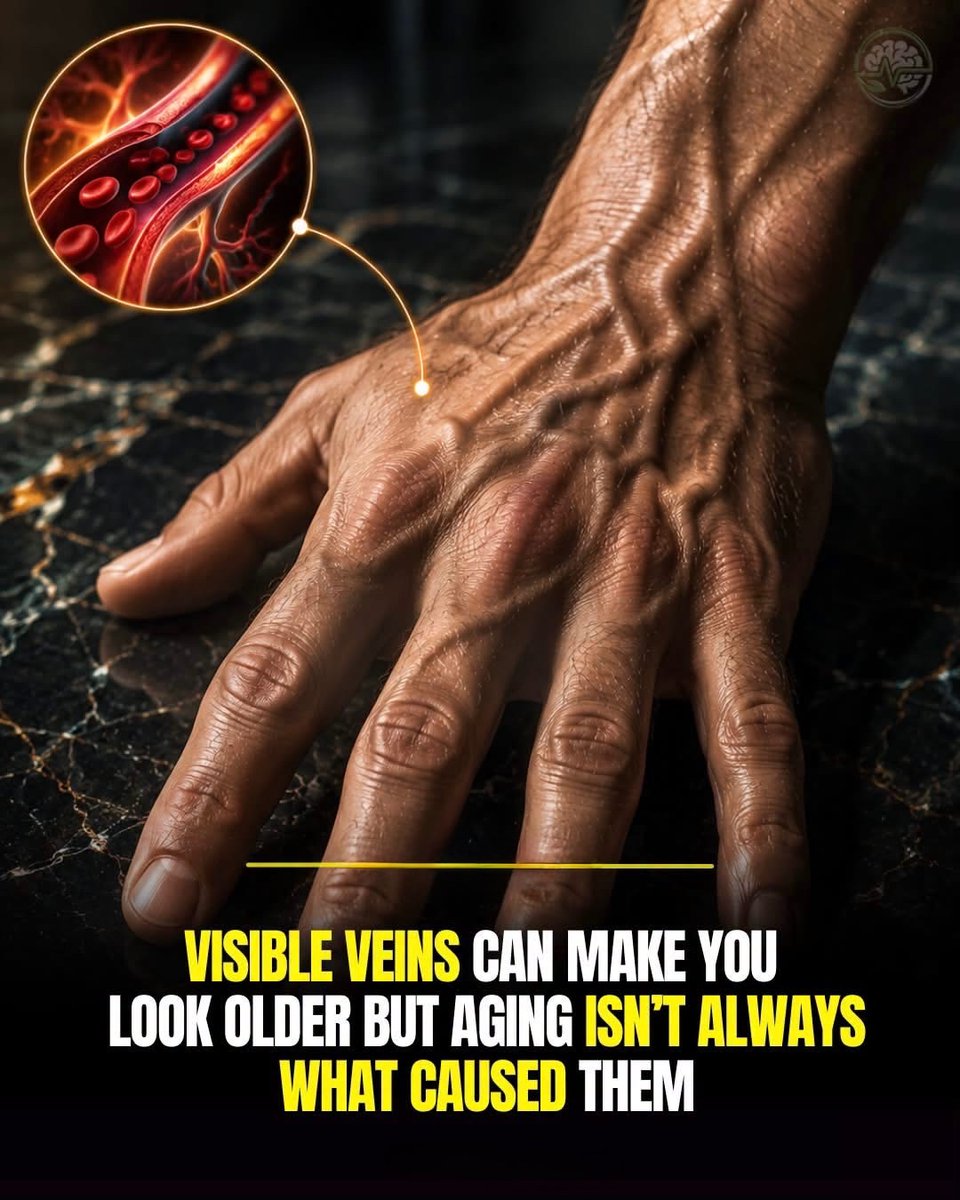
🚨 Visible Veins Don’t Always Mean You’re Getting Older
See those veins on your hands or arms? You might think, “I’m aging.” But the truth is more surprising.
Visible veins can come from low body fat, exercise, muscle, genetics, and veins sitting close to the skin. That’s why even young, fit people can have very noticeable veins.
Aging can play a role, but visible veins alone are not a sign that you’re getting old. Your body may simply be showing what’s underneath.
Source: Cleveland Clinic. (2024). Bulging veins: Causes, symptoms & treatment
Using spider silk and plant fibers, the common tailorbird can stitch leaves together to create a deep, cup-shaped nest that is lined with soft materials.


![Rainmaker1973's tweet photo. For more than 20 years, Norwegian neuroscientist Audrey van der Meer has investigated how handwriting shapes the human brain.
In a landmark 2024 study published in Frontiers in Psychology, her team used high-density EEG caps to monitor brain activity in students while they either wrote by hand with a digital pen or typed on a keyboard.
The difference was dramatic. Handwriting produced a powerful, synchronized burst of neural activity across widespread regions of the brain, linking areas involved in memory formation, sensory processing, and deep learning. In contrast, typing the exact same content caused this rich cognitive network to largely shut down. Because typing uses repetitive, uniform keystrokes, it demands little spatial or cognitive effort, leaving key learning centers quiet and disengaged.
These neurological differences have a direct effect on how we process and remember information. Earlier research by Pam Mueller and Daniel Oppenheimer at Princeton University reached similar conclusions. Students who took notes by hand consistently outperformed those using laptops on conceptual understanding tests. Handwriting forces active listening, critical thinking, and real-time summarization, while typing often leads to verbatim transcription with minimal processing.
Our brains function as part of an embodied biological system. Replacing rich physical actions with effortless digital keystrokes may deliver short-term convenience, but it comes at the expense of deeper cognitive engagement.
The solution is simple and timeless: pick up a pen.
[Van der Meer, A. L. H., et al. (2024). Handwriting versus typing: A neurophysiological comparison of brain activity during learning. Frontiers in Psychology, 15. DOI: 10.3389/fpsyg.2024.1234567]](https://pbs.twimg.com/media/HP6OF9aWkAA0E7P.jpg)