you're telling me anthropic & google are paying spacex ~$26b a year for compute?!!
this is more than half the run rate of openai & anthropic just from compute deals & that doesn't even factor in the rocket launches at all.
elon accidentally ended up owning a significant portion of three of the scarcest assets in ai.. power, chips, & physical deployment capability. the best lesson here is that if you’re selling picks & shovels during a gold rush, you don’t necessarily need to find the gold. you just need everyone else to keep digging. & also non software elon is pretty much unstoppable, like prime michael jordan type thing.
Oracle spent $2.1 billion firing 30,000 people and $29.7 million hiring one person to manage the money they freed up. The math on this trade is the most honest thing any company has said about AI in 2026.
TD Cowen estimates those 30,000 cuts free up $8-10 billion in annual cash flow. Oracle needs every dollar. They committed to $50 billion in capex this fiscal year, more than double last year, while carrying $150 billion in debt. Quarterly revenue hit $17.2 billion, up 22%. Net income jumped 95% to $6.13 billion. This company is printing money and still can't fund the buildout from operations alone.
The CFO they hired, Hilary Maxson, ran finance at Schneider Electric. Not a software company. An energy management company with $45 billion in revenue. Oracle could have hired any SaaS CFO on earth. They hired someone who spent a decade managing the economics of power infrastructure.
That tells you everything about what Oracle actually is now. They have 2% cloud market share but $553 billion in remaining performance obligations, up 325% year over year. Almost all of it AI contracts. The bottleneck was never software. The bottleneck is building and powering data centers fast enough to collect on a half-trillion-dollar backlog.
$29.7 million for a CFO who knows how to finance $50 billion in energy-intensive construction while the stock is down 25% this year. The 30,000 people weren't fired because they were bad at their jobs. They were converted into kilowatt-hours.
Everyone thinks Apple stopped innovating when Tim Cook became the CEO.
But 90% of Apple's value was created after Jobs died & if you understand Larry Greiner's Organizational Growth Model, you'll understand why Jobs asked Cook to replace him...
Are you an Enterprise AI Leader looking to validate and govern your AI models at scale?
https://t.co/c2ORx128ZA provides the model validation and monitoring, governance frameworks for compliance, and transparency tools you need.
Learn more:
Is Nigeria Quietly Selling Off Its Future Budget?
While you’re focused on exchange rate & subsidy, something bigger is happening behind closed doors.
The FG is quietly borrowing BILLIONS & tying repayment to FUTURE BUDGETS.
This is not your usual debt. It’s much worse. 👇
DSTV just got the memo.
Sachetise the service. Allow people to pay in piecemeal.
That's the survival pricing model in Nigeria.
People can then do weekly sub...as the spirit leads and as the pocket permits 🤣
Overall, FMN's investment in OmniRetail isn’t random. It was an intentional move to strengthen distribution, expand market presence, and use capital more efficiently.
Selah✌🏻✌🏻✌🏻
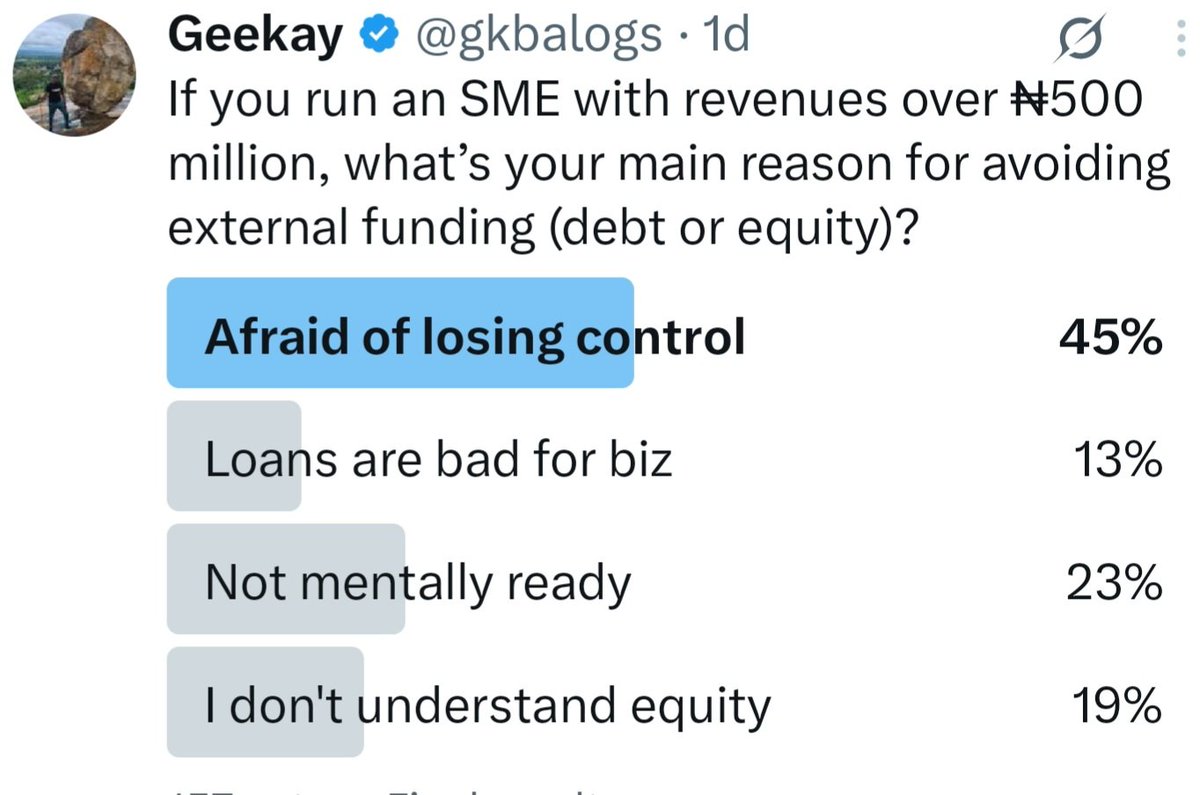
This poll was inspired by recent conversations I had with a few business owners, running solid, profitable businesses with good cash flow and real potential to scale. But the moment the conversation shifts to raising external funding, whether loans or equity, the mood changes. There’s hesitation, sometimes, outright fear. As the poll shows, the biggest concern is losing control. And I understand it.
If you’ve built a business from scratch and poured your time, money, sweat, and sanity into making it work, the idea of giving up even a small slice or letting someone else peek into your books can feel like a threat.
I’ve introduced some business owners to investors at their own request ooo. But after a few conversations, and what I’d consider fair terms, they often pull back without offering a clear reason. Not because the deal is bad, but likely because they just can’t shake the fear of losing control and something going wrong.
Accessing funds demands structure, clarity, accountability, and a roadmap for growth, or at least a plan to repay the loan. But for someone who’s never dealt with boards, cap tables, or term sheets, it all feels too foreign. Too risky. Sometimes overwhelming.
Another thing that stood out in the poll: quite a few people said they don’t understand how equity works. That’s a big deal, and it’s real. Many traditional business owners have built strong businesses without external capital: bootstrapping, reinvesting profits, and figuring things out along the way. And I respect that. But now, at a point where funding could fuel real growth, they don’t know where to begin. And the finance world doesn’t make it easier. It speaks a language that feels like code: convertible notes, dilution, SAFE agreements. Most founders are just thinking, Abeg, is this thing good for my business or not?
Let’s be honest, scaling isn’t for the faint-hearted. As your business grows, so does the pressure: compliance, investor updates, hiring and firing, audits… Some people just aren’t mentally ready for that. And that’s okay. Not everyone wants to build a billion-naira empire. Some just want a stable, profitable business that pays them well and gives them peace of mind. Nothing wrong with that.
But even if you’re not trying to go global, there are smart ways to fund growth without sacrificing your values or peace of mind. Because beyond just revenue, a business that scales well not only enriches the founder, but it creates jobs, pays taxes, and supports communities. That’s real economic power.
Imagine a business that could open five new outlets, expand into new markets, or even go global, and employ 100 more Nigerians. Funding may not be for everyone, but the decision shouldn’t be driven by fear.
Not every investor wants to take over your business. Not every loan will wreck your cash flow. Giving up 10–20% equity doesn’t mean you’re selling out. It could mean you’re finally giving your business the room it needs to grow.
At the end of the day, growth is a choice,and so is fear. Just make sure your decision is based on facts, not fear. The right funding, at the right time, with the right terms, could be the catalyst your business has been waiting for.
Financial Risk Management, Discipline, Overconfidence, Poor Internal Controls, Situational Influences - all combined in one story
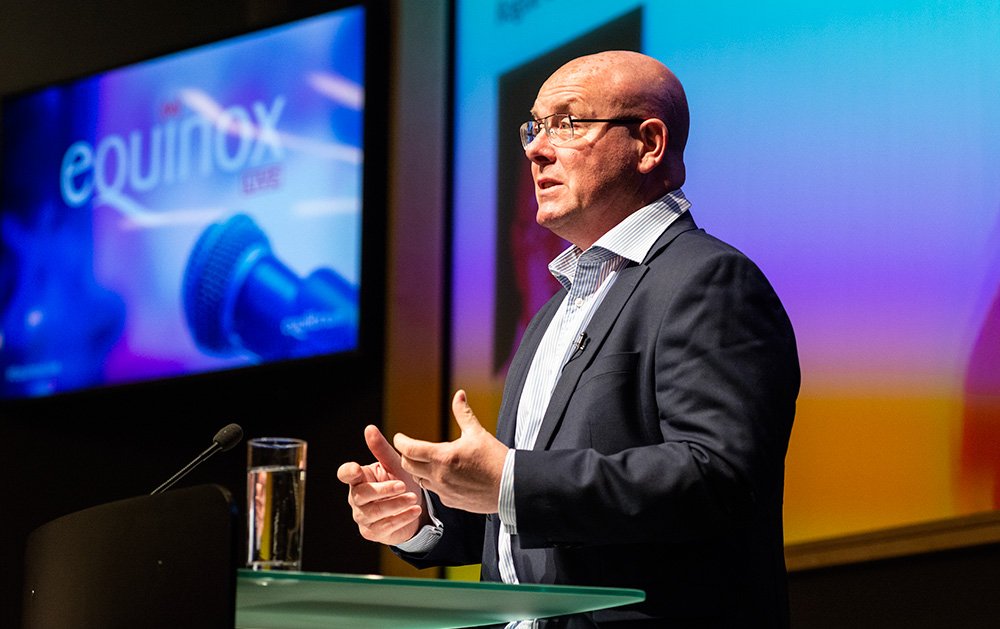
Nick Leeson began his career at Barings Bank at age 28. Barings Bank was one of the oldest British merchant banks, founded in 1762. Nick Leeson is famed as the person who brought down a 200-year-old bank. Initially, he was very successful in making speculative trades, which resulted in huge profits for Barings. He became their star derivatives trader and moved to Singapore. His job primarily involved arbitrage trading on the Nikkei 250, the main Tokyo index, on behalf of Barings clients.
After moving to Singapore to execute and clear transactions on the Singaporean Exchange, Leeson began to make unauthorised trades. These trades were very risky positions, but they were successful, and they made large profits for the bank – as much as £10mn, accounting for 10% of Barings’ annual profit in 1992. Hence, the management unlooked. Also, there was a skills gap by the management. The management team was formed by people with a merchant banking background who were not so familiar with the risk involved in (derivatives) trading activities. They underestimate the possibility for Nick Leeson to fail in trading activities and failed to supervise effectively.
In 2020, the world crashed.
Markets down 34%.
Billions were lost.
One hedge fund made 4,144% returns while the world burned.
But the real win?
They used the chaos to craft a perfect brand story—and investors lined up to buy it.
This is their strategy:🧵