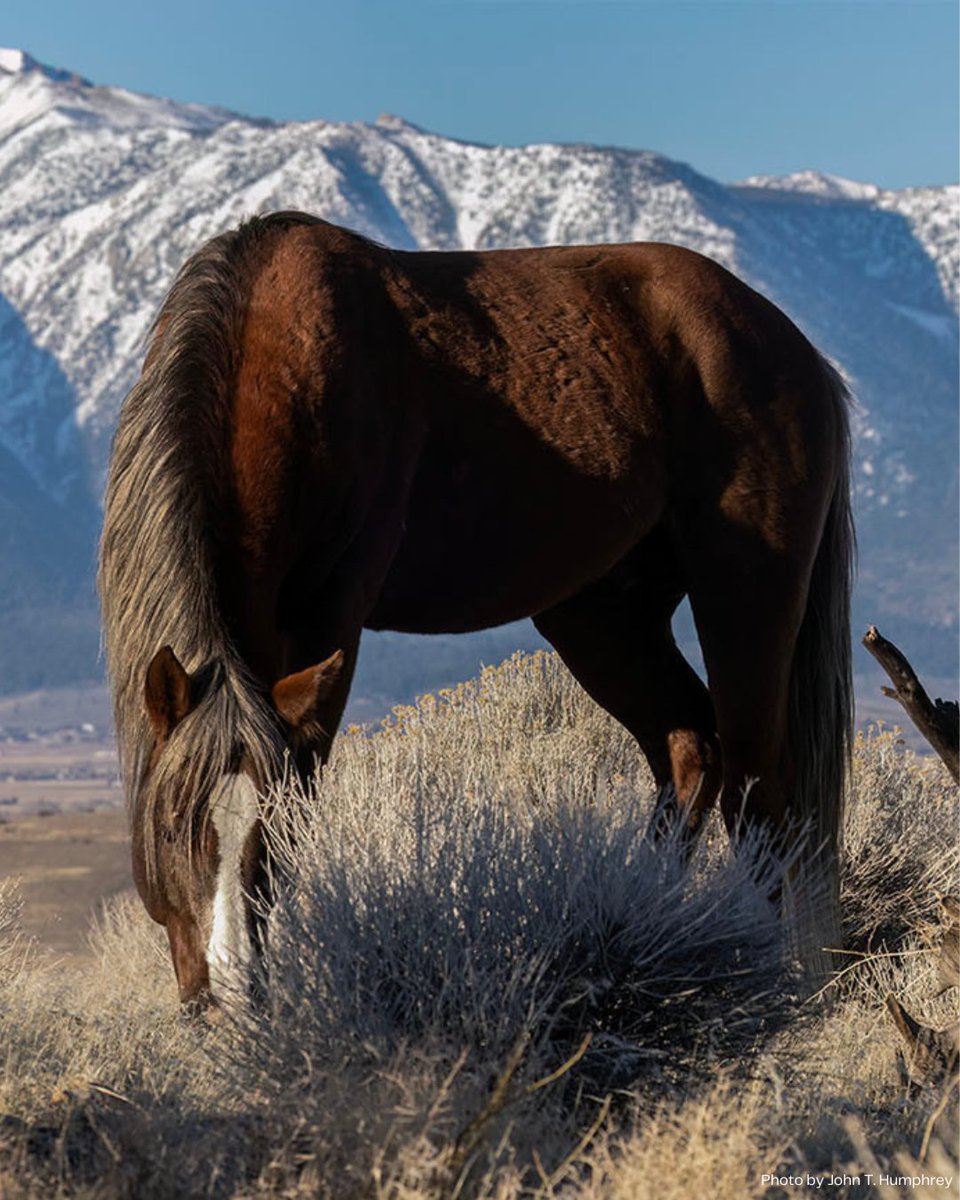
Meet Pearl! 💖
This beautiful 24-year-old Connemara pony is looking for her forever home. Gentle, sweet and straight out of a storybook, she'd make a wonderful companion or lead-line pony.
Help us find Pearl her happily ever after! 🐴
Adoption details: info at hanaeleh dot org
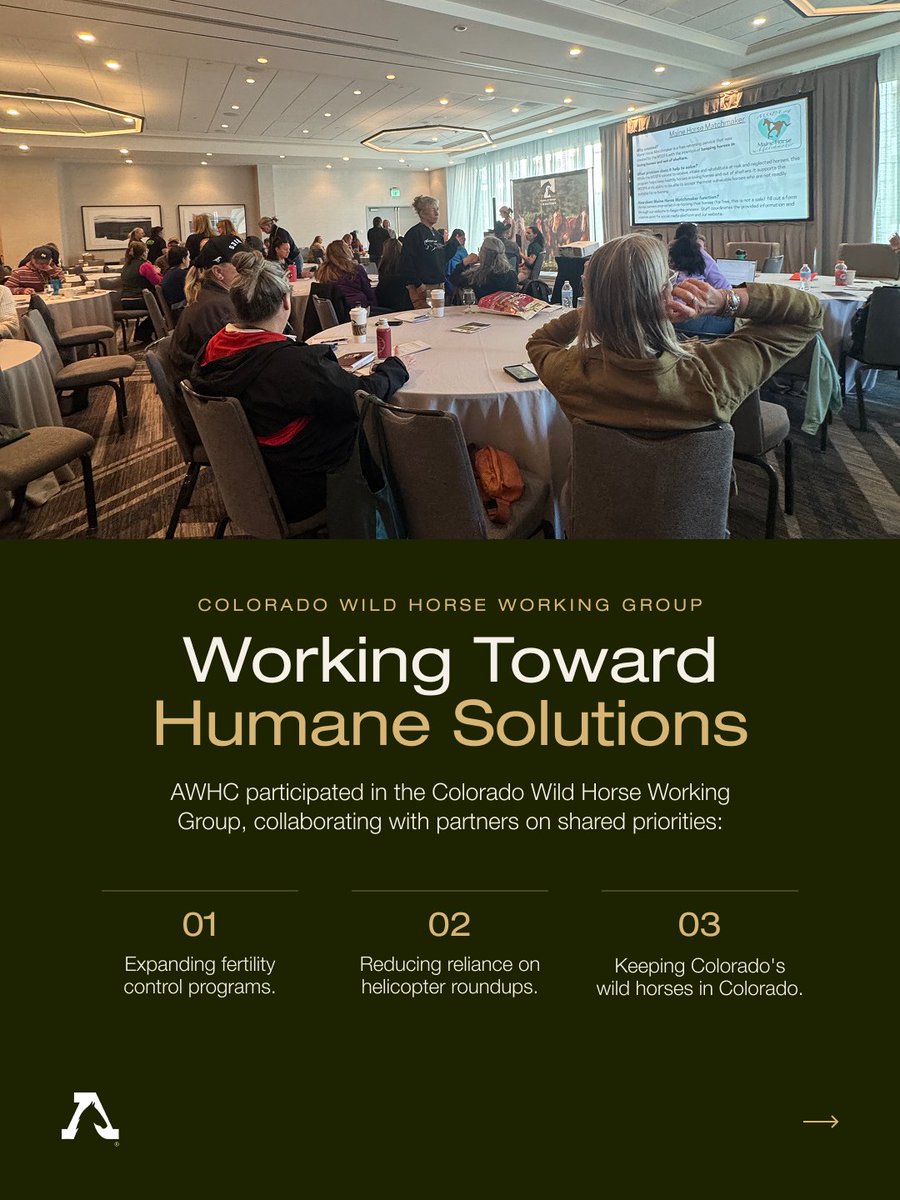
A more humane future for wild horses starts with collaboration. 🐴
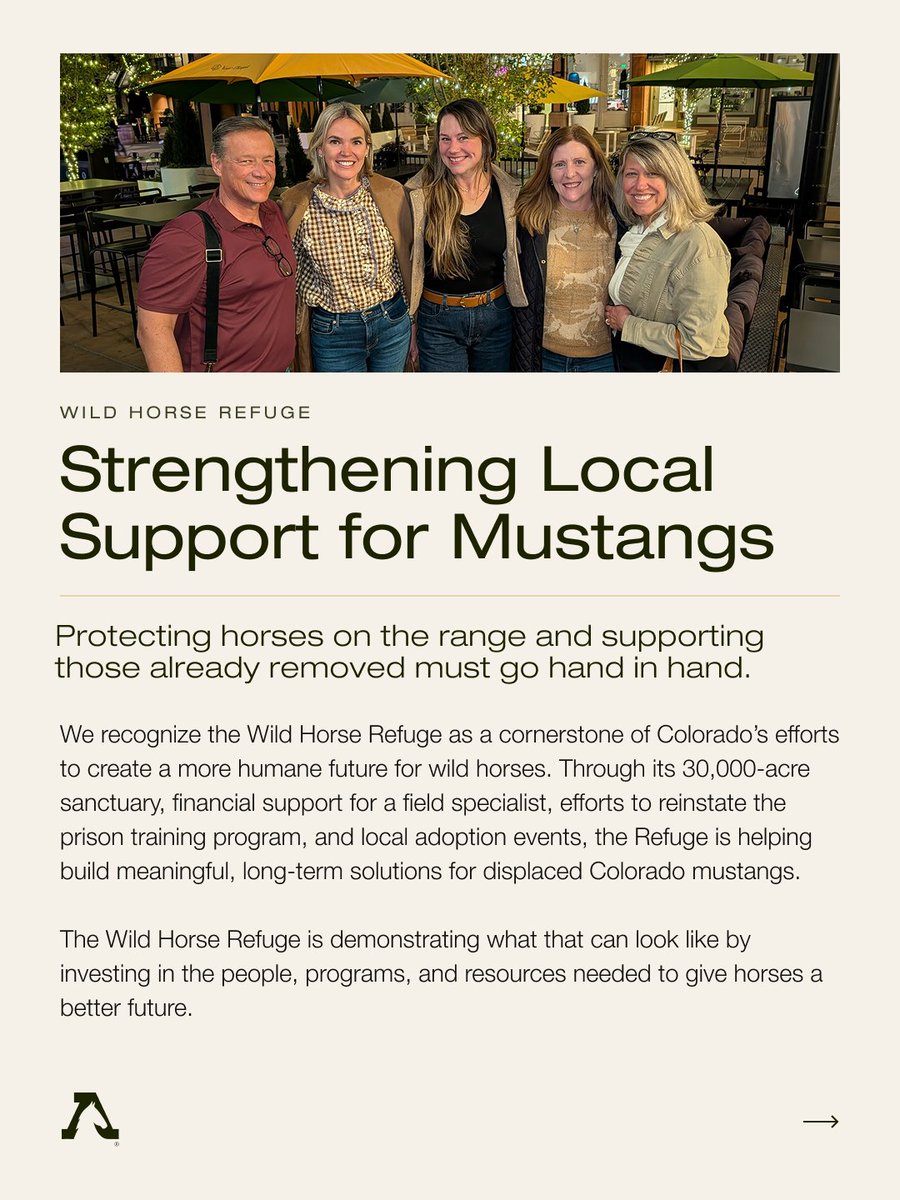
From the Homes for Horses Coalition Conference to Horse Power’s Denver premiere and honoring Ginger Kathrens, AWHC is so grateful to the partners, supporters, and advocates who make this work possible. 🤎
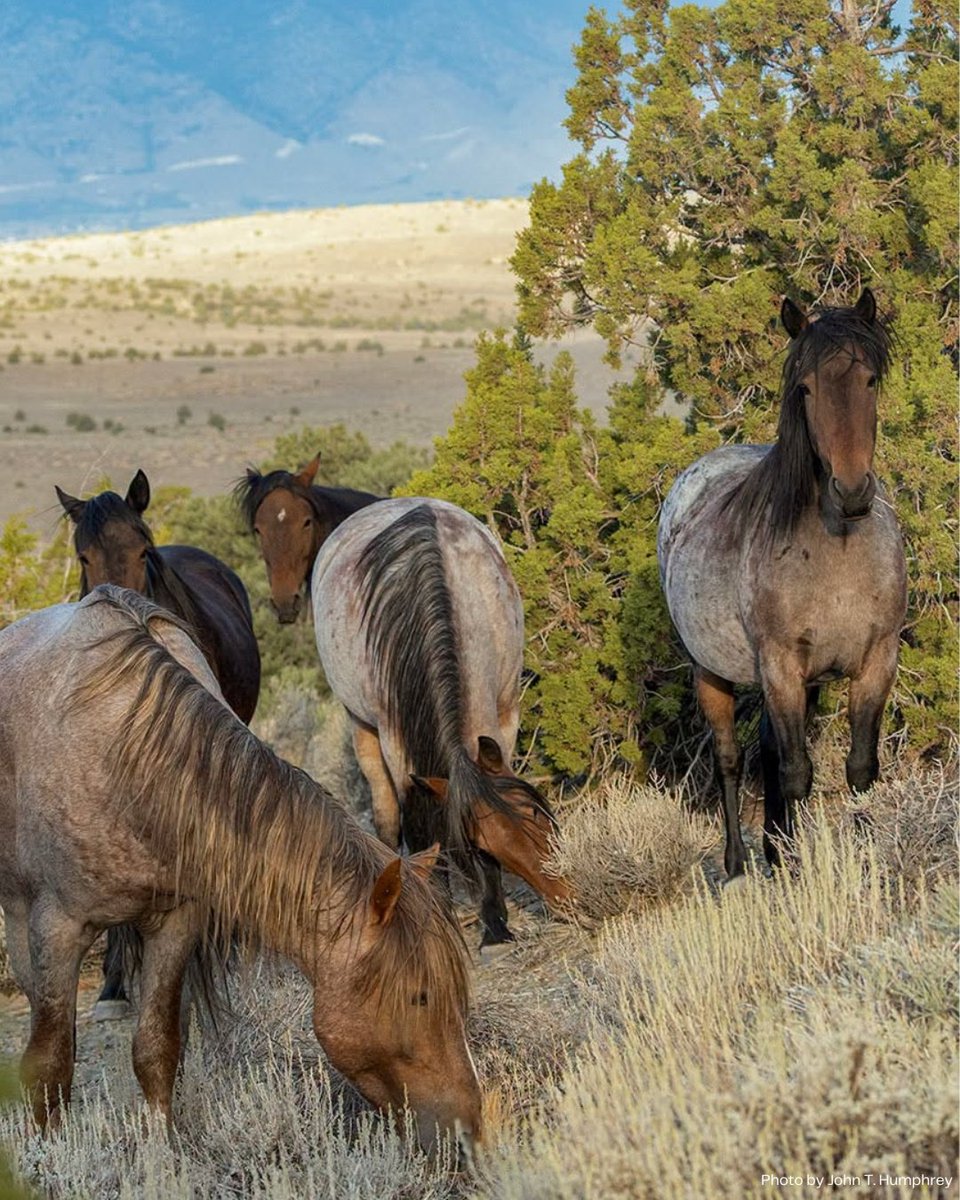
A herd of wild horses grazing near a fragile water source reminds me of the delicate balance between survival and habitat loss. Their presence is a testament to resilience and the urgent need for conservation efforts in these vital ecosystems.
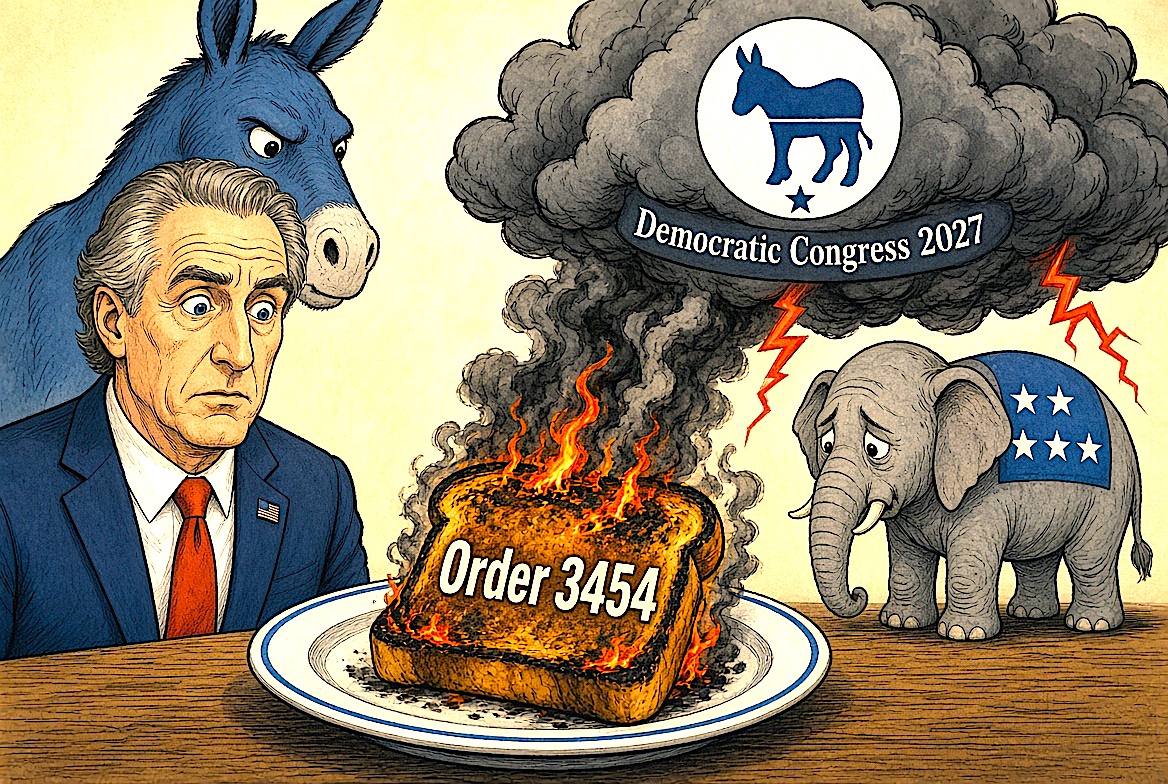
𝗕𝘂𝗿𝗴𝘂𝗺’𝘀 𝗕𝗹𝘂𝗻𝗱𝗲𝗿
There is a coherent, if speculative, argument that DOI Sec. Burgum’s Order 3454 could have cost Republicans votes in a subset of close races—particularly in Western or public-lands-adjacent districts—through the mechanism of motivated, single-issue or multi-issue voters who already viewed federal public-lands policy as tilted too far toward commercial extraction.
Opinion By: Capt. William E. Simpson II - USMM Ret. - Rancher-Wild Horse Researcher
The case rests on existing opinion data, the size and intensity of certain constituencies, the narrow margins in several contests, and the order’s explicit prioritization of livestock over other uses. It does not rest on any direct polling that tested the order itself due to a short window between Burgum’s announcement of the Order (Oct. 28th) and Nov. 3rd, 2026.
𝗧𝗵𝗲 𝘂𝗻𝗱𝗲𝗿𝗹𝘆𝗶𝗻𝗴 𝗼𝗽𝗶𝗻𝗶𝗼𝗻 𝗲𝗻𝘃𝗶𝗿𝗼𝗻𝗺𝗲𝗻𝘁
Polling on public lands consistently shows broad, often bipartisan concern about management that prioritizes commercial or extractive uses over wildlife, recreation, and long-term ecological condition. Center for Western Priorities and Colorado College State of the Rockies surveys in recent cycles have found majorities (frequently 70–85%+) in Mountain West states viewing rollbacks of wildlife and land protections as a serious problem, and large majorities preferring to keep public lands in public hands rather than expand commercial access at the expense of other values. Opposition to treating public lands primarily as a revenue stream for a narrow set of interests is not fringe; it appears across party lines when the question is framed around wildlife, open space, or local recreation access.Wild-horse constituencies amplify this. Advocacy organizations, online communities, and adoption/rescue networks have built a durable, emotionally engaged audience that treats roundups, fertility control, and forage allocation as core issues. While the absolute number of pure single-issue wild-horse voters is smaller than the broader public-lands or wildlife electorate, these voters are high-intensity: they track BLM and Interior actions closely, share information rapidly, and have demonstrated willingness to contact officials and mobilize around specific policy moves.
Order 3454’s language directing accelerated reductions of wild horses and burros “to the maximum extent practicable,” tracking of fertility-control treatments ($30-million to be spent on using an EPA registered pesticide, PZP, to sterilize wild horses) and progress toward AML to free forage for livestock maps directly onto the priorities this group has long opposed.
𝗛𝗼𝘄 𝘁𝗵𝗲 𝗼𝗿𝗱𝗲𝗿 𝗰𝗼𝘂𝗹𝗱 𝗵𝗮𝘃𝗲 𝗺𝗼𝘃𝗲𝗱 𝗺𝗮𝗿𝗴𝗶𝗻𝗮𝗹 𝘃𝗼𝘁𝗲𝘀
The theoretical pathway is straightforward:• Order 3454 was framed by its supporters as helping ranchers, cutting red tape, and using managed grazing for wildfire reduction. Critics (including wild-horse and some wildlife groups) described it as a systematic elevation of livestock AUMs above wildlife, native predators, and free-roaming equines, with concrete directives to expand grazing, reinstate suspended AUMs, and accelerate horse reductions.
For voters already inclined to see public-lands policy as captured by commercial interests, the order supplied a fresh, high-profile confirmation issued by a Cabinet secretary one week before Election Day.
• In close races, the relevant voters need not be large in absolute numbers. Margins measured in dozens to a few thousand votes (as reported in several Senate and House contests) mean that even a modest number of motivated defectors, lower-intensity Republicans who stayed home, or independent/crossover voters who shifted can decide the outcome. A subset of these voters may treat public-lands and wildlife issues as secondary but still salient enough to tip a decision when other factors are close.
• The one-week window limited mass-media penetration, but it is long enough for targeted dissemination. Advocacy networks, Substack writers, social-media accounts focused on public lands or wild horses, and local conservation groups can move information to their existing audiences faster than general news cycles. Voters who already follow these channels would have seen the order framed as an attack on wildlife and wild horses rather than as a rancher-support measure.
𝗦𝗰𝗼𝗽𝗲 𝗮𝗻𝗱 𝗹𝗶𝗺𝗶𝘁𝗮𝘁𝗶𝗼𝗻𝘀 𝗼𝗳 𝘁𝗵𝗲 𝗮𝗿𝗴𝘂𝗺𝗲𝗻𝘁
This mechanism is most plausible in districts or states with meaningful public-lands acreage, outdoor-recreation economies, or visible wild-horse populations (parts of the Mountain West, certain rural or exurban districts elsewhere). It is less plausible as a decisive factor in urban or Eastern races where public lands are abstract. It also competes with larger, longer-running drivers—cost of living, the Middle East conflict and energy prices, overall presidential approval—that dominated most post-election analysis.
The order’s own framing around wildfire mitigation and domestic meat production could have neutralized or even attracted some ranching-community or rural voters who prioritize those https://t.co/WycajsAD5v short, the argument is that Order 3454 supplied a concrete, late-cycle signal of commercial prioritization on public lands to constituencies that already held strong views on the issue and that, in races decided by very small absolute numbers of votes, even a limited mobilization or defection effect among those constituencies could have been enough to flip the result.
Whether that actually occurred in any specific race remains unmeasured; the absence of direct polling does not disprove the possibility, but it also means the claim stays in the realm of plausible mechanism rather than demonstrated causation.
𝗧𝗵𝗲 𝗼𝗽𝗽𝗼𝘀𝗶𝘁𝗲 𝗰𝗼𝘂𝗻𝘁𝗲𝗿𝗳𝗮𝗰𝘁𝘂𝗮𝗹: 𝗮 𝗽𝗼𝘀𝗶𝘁𝗶𝘃𝗲 𝗪𝗛𝗙𝗕 𝗮𝗻𝗻𝗼𝘂𝗻𝗰𝗲𝗺𝗲𝗻𝘁 𝗯𝗲𝗳𝗼𝗿𝗲 𝘁𝗵𝗲 𝗺𝗶𝗱𝘁𝗲𝗿𝗺𝘀
The same opinion environment and the same narrow margins create a symmetrical argument for the opposite outcome. Had Brenda Younkin (Deputy Assistant Secretary for Lands and Minerals Management), after receiving and reviewing the materials forwarded through Will Boothby in the May 13, 2026 email chain, briefed Secretary Burgum on the Wild Horse Fire Brigade (WHFB) plan and secured a public, affirmative administration statement or pilot commitment before Election Day, the same high-intensity public-lands, wildlife, and wild-horse constituencies could have been moved in the Republican direction.
The plan, as outlined in the March 11, 2026 correspondence and subsequent materials, proposes relocating excess horses (via existing authorities such as the Humane Transfer of Excess Animals Act and BLM IM-2022-035) into remote wilderness areas unsuited for commercial livestock, where natural predation maintains population stability; reducing fine fuels that drive catastrophic wildfire and toxic smoke; freeing forage on conflict allotments for ranchers; and addressing the public-health burden of wildfire smoke.
It is framed as legal under current statute, beneficial to livestock producers under FLPMA multiple-use principles, protective of wild-horse genetics and cultural heritage, and aligned with both wildfire mitigation and taxpayer savings.Independent reporting and data support core elements of that framing.
AM Best’s March 2026 podcast interviewed William Simpson specifically on novel toxins from super-hot wildfires, the public-health and insurance risks, and the cost of holding horses versus deploying them for fuel reduction, citing the roughly $150 million annual off-range holding figure.
NPR covered the same proposal to use BLM-held horses for wildfire mitigation rather than long-term captivity.
Epoch Times, Reasons to be Cheerful, Arizona Highways, OPB, and other outlets have reported on Simpson’s multi-year immersion observations (including the 2018 Klamathon Fire) and the plan’s logic.
On the underlying numbers: Congressional Research Service, E&E News/POLITICO, and BLM’s own data confirm that off-range holding routinely consumes $100–109 million per year—roughly two-thirds of the program’s $142–153 million budget—for tens of thousands of animals. UCLA’s 2024 Science Advances study (Connolly et al.) estimated 52,480–55,710 premature deaths in California alone from wildfire-smoke PM2.5 between 2008 and 2018, with an associated economic impact of $432–456 billion; broader U.S. analyses have placed annual attributable deaths in the low-to-mid tens of thousands.
The Klamathon Fire (July 5–21, 2018) burned 38,008 acres in Siskiyou County, California, according to contemporaneous incident reports and Wikipedia. Simpson served nine days as an unpaid local-knowledge technical advisor to CAL FIRE commanders. Multiple independent outlets (NPR, OPB, Arizona Highways) reported his first-hand observations that areas previously grazed by the local herd (estimated at roughly 5,000 acres of moderated fuels in some accounts) limited fire intensity, provided safer staging zones for personnel and equipment, and helped prevent advance into the Cascade-Siskiyou National Monument. These accounts describe horses remaining calm and continuing to graze near the fire front rather than panicking.
USFS budget trends further contextualize the cost argument.
Multiple analyses (including Forest Service reports cited by Wildfire Today and Taxpayer Network fact sheets) document that fire suppression and preparedness have grown to dominate the agency’s discretionary appropriations—rising from roughly 16% in 1995 to more than 50% in recent years when wildfire adjustment funds are included—while hazardous-fuels reduction, forest management, and prevention remain substantially smaller line items.
Salaries and expenses constitute a large share across accounts.
This allocation structure leaves limited resources for proactive landscape-scale fuel treatments in remote wilderness, precisely the conditions the WHFB plan targets through year-round herbivory at low public cost.
A visible positive signal from Interior—such as an announcement that the Department was evaluating or piloting elements of the plan, directing a review of holding-cost reductions through wilderness deployment, or highlighting the dual benefit to ranchers and wildfire risk—would have supplied the mirror-image late-cycle message to the constituencies alienated by Order 3454.
For wild-horse advocates who track BLM actions closely, it would have offered a non-lethal pathway that keeps horses on the landscape in a working role rather than accelerating removals.
For broader wildlife and public-lands voters concerned about commercial prioritization, it would have demonstrated that the administration could deliver forage relief for ranchers and taxpayer savings without treating wild horses solely as a forage competitor.
For rural and Western voters sensitive to both ranching economics and catastrophic fire, it would have linked documented wildfire-smoke mortality, insurance costs, and range improvements in a single package.
Because the margins in several contests were measured in dozens to a few thousand votes, the same arithmetic that makes a modest defection among these groups potentially decisive also makes a modest retention or crossover among them potentially decisive.
Targeted dissemination through the same advocacy networks that would have amplified criticism of Order 3454 could have amplified a constructive alternative. The political upside would have been especially relevant in public-lands districts where outdoor recreation, wildlife values, and residual ranching interests coexist, allowing the administration to claim a win that simultaneously addressed rancher forage needs, taxpayer waste, and the public-health dimensions of wildfire smoke documented in peer-reviewed work and insurance-industry coverage.
The counterfactual is structurally consistent with the earlier argument: in races decided by very small absolute numbers, a concrete, visible signal on a high-intensity public-lands and wildlife issue can move marginal votes. A positive WHFB-oriented note before the midterms would have been the signal most likely to retain or attract the very constituencies that Order 3454 risked repelling.
#WildHorses #BurgumBlunder #DOIorder3454 #WildHorseManagement #WildlifeMnagement #Midterms2026 #ElectionResults2026 #WildHorseGenetics #WelfareRanching #WildHorseConservation #StoptheRoundups #WilliameSimpsonII, #WildHorseFireBrigade #WHFB #Congress @IUCN@IUCN_forests@IUCN_Water@IUCN_PA@IUCNsos@IUCNssc@Nature@PBS@NewsHour@PBSNature@ScienceNews@ScienceMagazine@ScienceChannel@theNASciences@SecKennedy@realDonaldTrump@POTUS@TruthTrumpPost@EpochTimes@NEWSMAX@SecretaryBurgum@SecRollins@GOP@JaneGoodallInst@nytimes@seattletimes@latimes@TheAtlantic@guardian@BBCBreaking@BBCWorld@BBCArabic@BBC@NWF@SierraClub@EnviroWelfare
Protecting wild horses means protecting the landscapes they call home. 🤎
Through AWHC’s Fish Springs Land Conservancy Project, we’re safeguarding critical habitat, natural springs, and water access in Nevada’s Pine Nut Mountains to help wild horses and wildlife thrive.
It's frustrating to see so many wild horses being rounded up without considering the impact on their social structures and overall well-being. We need to prioritize humane methods that respect their natural instincts and behaviors
There are currently two routes Congress can take to ban the slaughter of American horses, wild and domestic:
Pass the Save America’s Forgotten Equines (SAFE) Act;
Preserve language in the surface transportation reauthorization bill that would ban shipping equines for slaughter.
More young horses loaded on @KoreanAir_KE at Winnipeg airport & flown to Japan to be slaughtered!
Complete the form provided by @AnimalJustice urging the Canadian government to ban live horse exports for slaughter once and for all! → https://t.co/2HQItJxJG2