To further explore the proliferation of Sovereign AI projects, @vivekchil, @rubyscanlon, and @pablochavez developed the CNAS Sovereign AI Index, which tracks hundreds of projects around the world.
Find the full, interactive index here: https://t.co/PJOiIOqYeA
🚨NEW: "Sovereign AI" is ubiquitous in today's policy debate, but what does it actually look like in practice? To answer that, we've just launched the CNAS Sovereign AI Index, which tracks 130+ sovereign AI projects across 50 countries.
A really impressive first-of-its-kind effort from @rubyscanlon, @pablochavez, and @vivekchil on tracking the rise of "Sovereign AI." Had a bunch of fun playing around with it, who knew Uzbekistan had an NVIDIA deal and an office in Silicon Valley.
The U.S. and China control 90 percent of the computing power needed to develop and deploy frontier AI.
They own all 50 of the top-ranked AI foundation models.
Concerned about this concentration, governments worldwide have responded with “sovereign AI.”
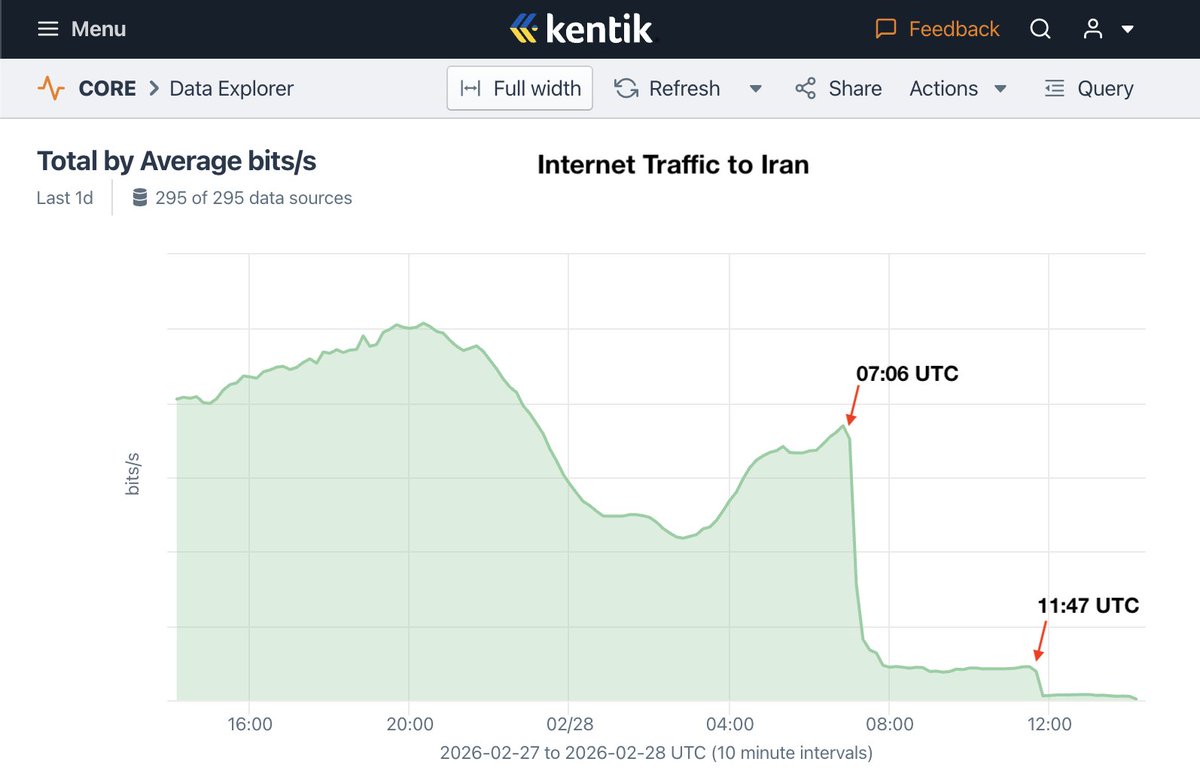
Internet connectivity down in Iran as airstrikes hit the country.
Traffic volume dropped at 07:06 UTC and then again at 11:47 UTC with minimal connectivity remaining.
The country had a partial restoration since Jan-27 following a complete shutdown in Jan-8.
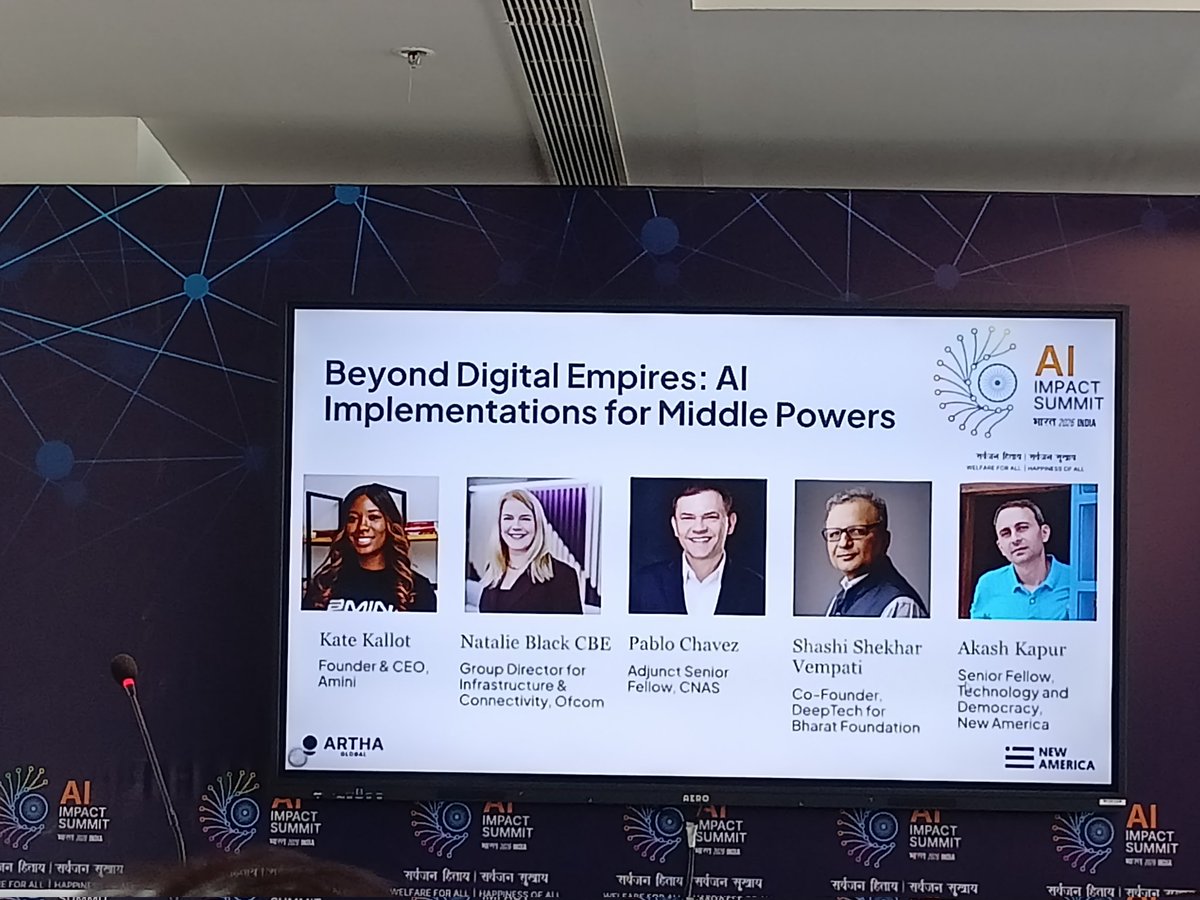
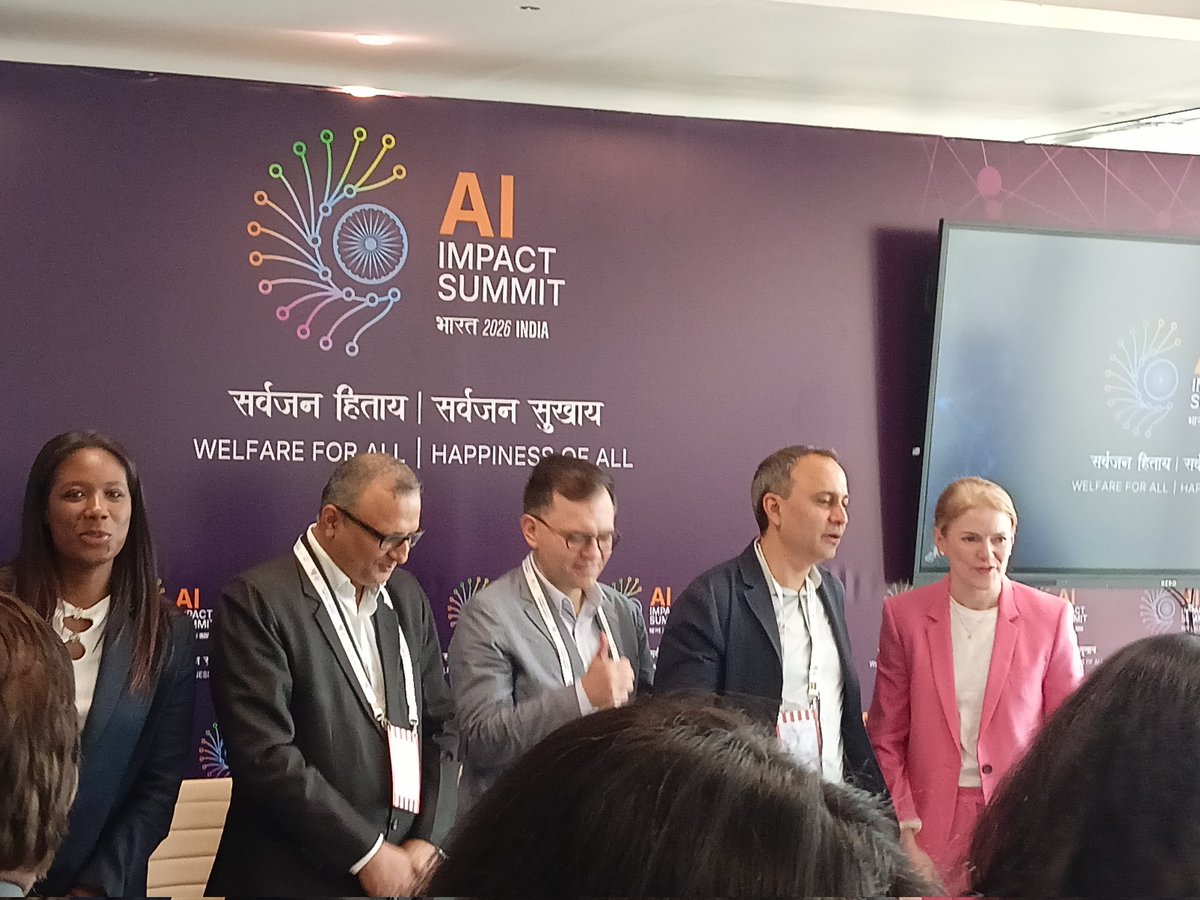
Caught a brilliant session on how middle powers are navigating the AI era. We're moving past the "Digital Empire" era toward a more multipolar tech landscape. 🌐
Great insights from @KateKallot , @natalieblackuk , @pablochavez , @shashidigital and @akashkapur on implementation strategies that prioritize local talent and data ethics.
"[U]nless it is paired with credible continuity and jurisdictional assurances, along with a complementary resilience strategy, many will treat an American-stack package as a useful floor while continuing to build options that reduce U.S. dependence," writes @pablochavez.
eventually, every major nation and enterprise realizes they all need sovereign AI - open and custom models hosted on their own infrastructure. @MistralAI has quickly become their first call
As China rapidly advances its own AI chip capabilities and expands its global cloud infrastructure, the window for establishing strategically aligned partnerships in the Gulf and beyond may be narrowing fast for the U.S.
Read more by @pablochavez ⬇️
https://t.co/tScm324j8a
The U.S.–Gulf AI partnerships mark a new phase of compute-enabled diplomacy. Geopolitically, these deals help displace Chinese digital infrastructure from critical systems.
Read more by CSET Non-Resident Senior Fellow @pablochavez 👀 👇
https://t.co/tScm324j8a
⭐️New Report⭐️
The United States’ recent AI partnerships with the United Arab Emirates and Saudi Arabia represent a significant new chapter in U.S. geopolitical and economic statecraft.
Our new report by Non-Resident Senior Fellow @pablochavez ⬇️
https://t.co/tScm324j8a
Check out this great analysis from CSET’s newest non resident fellow, @pablochavez! His report shines a light on options for AI governance and US statecraft.
France Pursues an AI Third Way | "Sovereignty emerged as a core theme of the Paris AI Action Summit. Is it a viable strategy?" @pablochavez#TechPol https://t.co/1E2ICQMZzC
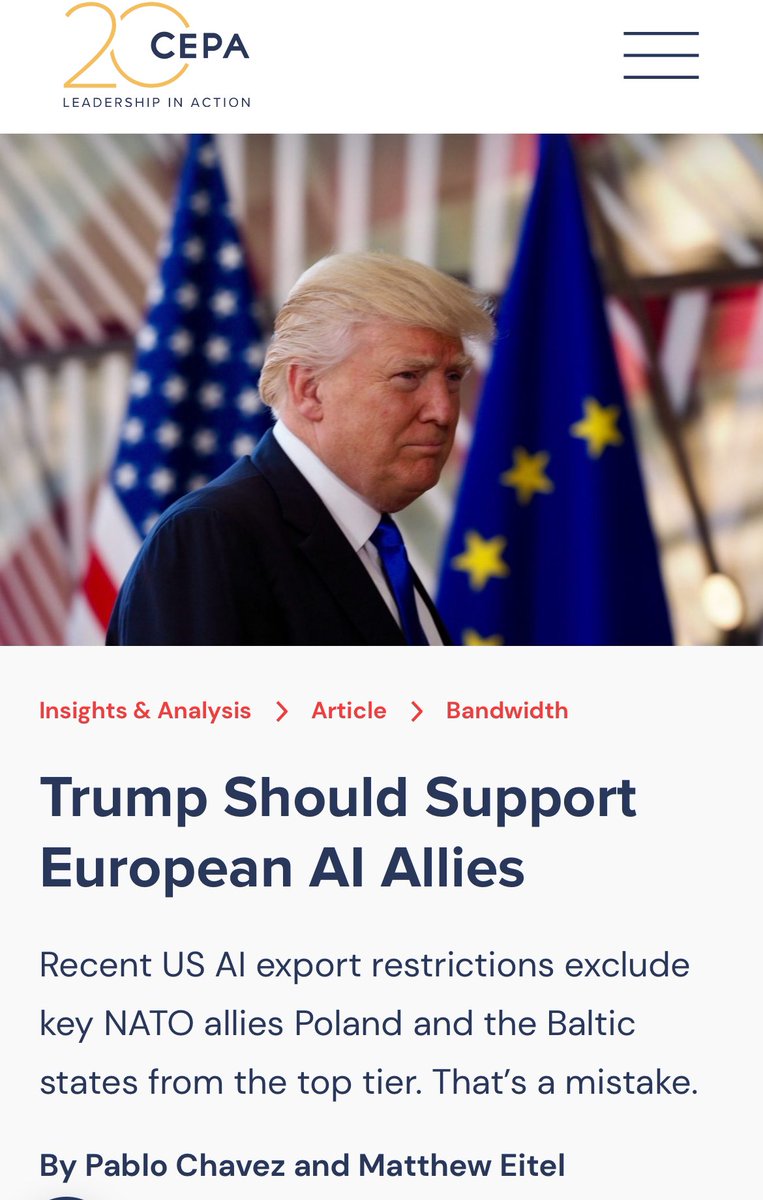
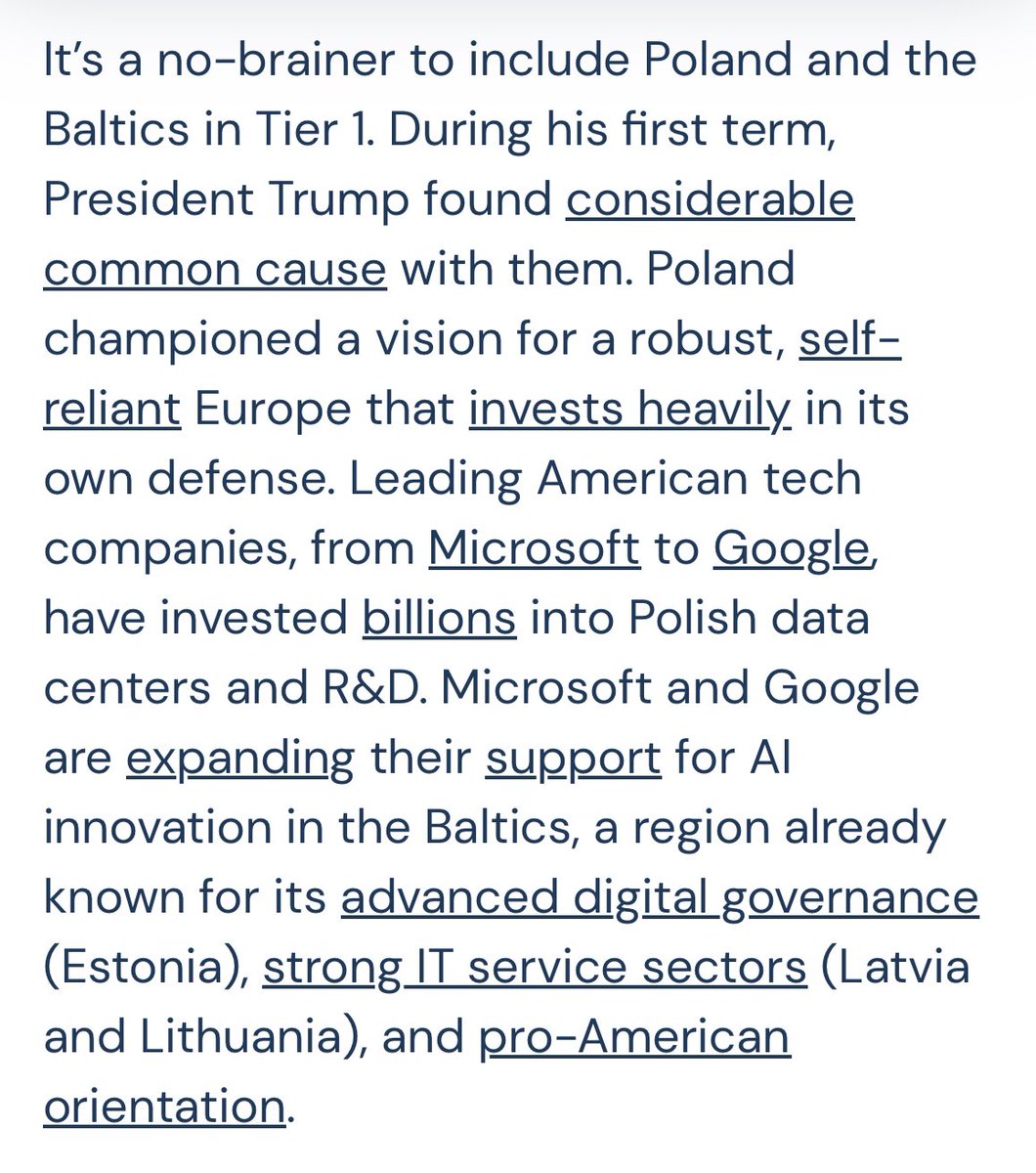
Polskę 🇵🇱 w zniesieniu restrykcji na chipy wspiera amerykańska instytucja z siedzibą w Waszyngtonie – Centrum Analiz Polityki Europejskiej.
„Nie ma wątpliwości, że Polska powinna znaleźć się w pierwszej kategorii (TIER 1).”
Thank you👏 @cepa@pablochavez@mattheweitel











![lawfare's tweet photo. "[U]nless it is paired with credible continuity and jurisdictional assurances, along with a complementary resilience strategy, many will treat an American-stack package as a useful floor while continuing to build options that reduce U.S. dependence," writes @pablochavez. https://t.co/huaU2SB6K0](https://pbs.twimg.com/media/HBSTqxxWgAAlgua.jpg)