Working on Keboola - Building a processing layer on top of modern DwH. Datamesh, insights, process automation with auto ETL, Storage&DataScience collaboration
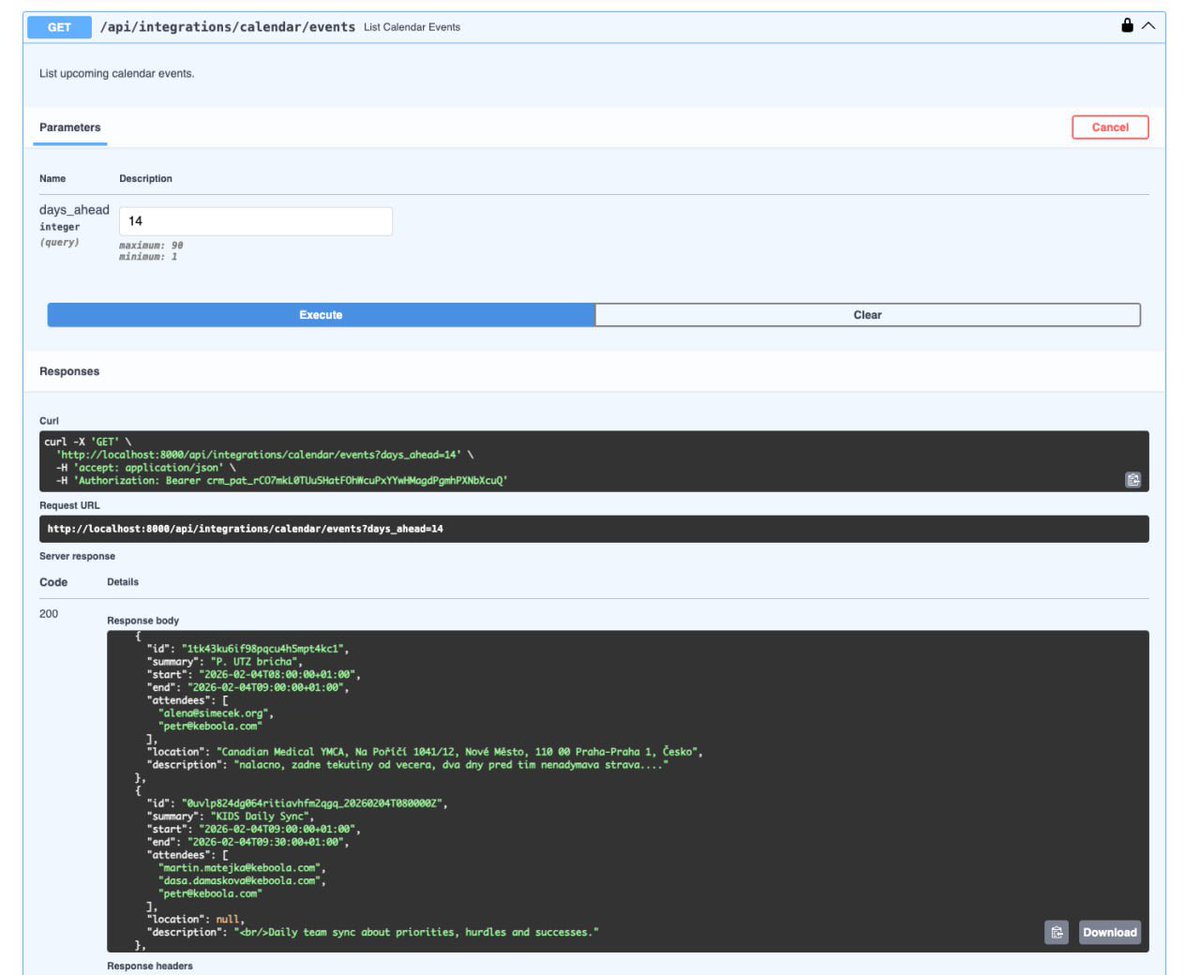
Last week we build SalesForce replacement w @PetrSimecek - 137 agentic APIs simulating 1:1 what happens in our SalesForce.
We have a capacity for 3 clients who want to replace their Salesforce this week.
Airbnb stuck their entire customer journey up on their office walls.
Drawn by a Pixar animator, pinned where everyone walks past them daily.
30 frames.
15 for hosts.
15 for guests.
They call it "Snow White."
Chesky stole the idea from a Walt Disney biography in 2011.
Every new product idea has to answer:
→ "Which frame does this serve?"
If it fits a frame, that determines the owner, who prioritises it against their KPIs.
If it doesn’t fit a frame, it doesn’t serve the customer, and doesn’t get shipped.
People talk, listen, watch, think, and collaborate at the same time, in real time. We've designed an AI that works with people the same way.
We share our approach, early results, and a quick look at our model in action.
https://t.co/AFJZ5kH7Ku
@Uber thank you for no service! Driver turns around 200m before picking me up then cancels. If the rider does this you penalize us. What about the drivers doing this all the time? Have to love @Liftago
New podcast on vibe coding - A Return to Code.
A Return to Coding 00:20
The Personal App Store 03:17
Vibe Coding Is a Video Game with Real-World Rewards 06:22
Pure Software Is Uninvestable 10:33
A Place for Each Model 14:22
AI Is Eager to Please 17:57
Why Math and Coding? 22:10
The Beginning of the End of Apple’s Dominance 24:17
Coding Agents As Customer Service Reps 27:55
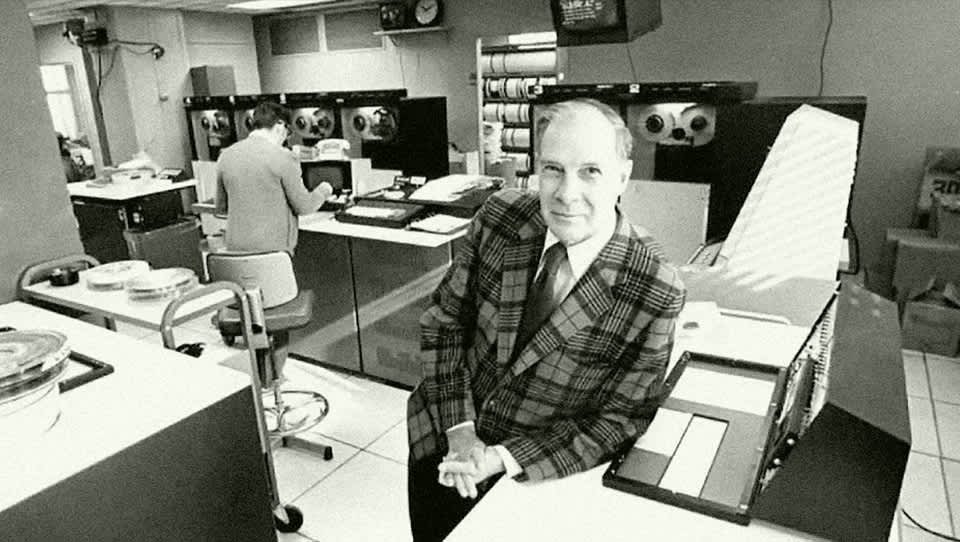
A mathematician who shared an office with Claude Shannon at Bell Labs gave one lecture in 1986 that explains why some people win Nobel Prizes and other equally smart people spend their whole lives doing forgettable work.
His name was Richard Hamming. He won the Turing Award. He invented error-correcting codes that made modern computing possible. And he spent 30 years at Bell Labs sitting in a cafeteria at lunch watching which scientists became legendary and which ones faded into nothing.
In March 1986, he walked into a Bellcore auditorium in front of 200 researchers and told them exactly what he had seen.
Here's the framework that has been quoted by every serious scientist for the last 40 years.
His opening line landed like a punch. He said most scientists he worked with at Bell Labs were just as smart as the Nobel Prize winners. Just as hardworking. Just as credentialed. And yet at the end of a 40-year career, one group had changed entire fields and the other group was forgotten by the time they retired.
He wanted to know what the difference actually was. And he said it wasn't luck. It wasn't IQ. It was a specific set of habits that almost nobody is willing to follow.
The first habit was the one that hurts the most to hear. He said most scientists deliberately avoid the most important problem in their field because the odds of failure are too high. They pick a safe adjacent problem, solve it cleanly, publish it, and move on. And because they never swing at the hard problem, they never hit it. He said if you do not work on an important problem, it is unlikely you will do important work. That is not a motivational line. That is a logical one.
The second habit was about doors. Literal doors. He noticed that the scientists at Bell Labs who kept their office doors closed got more done in the short term because they had no interruptions. But the scientists who kept their doors open got more done over a career. The open-door scientists were interrupted constantly. They also absorbed every new idea passing through the hallway. Ten years in, they were working on problems the closed-door scientists did not even know existed.
The third habit was inversion. When Bell Labs refused to give him the team of programmers he wanted, Hamming sat with the rejection for weeks. Then he flipped the question. Instead of asking for programmers to write the programs, he asked why machines could not write the programs themselves. That single inversion pushed him into the frontier of computer science. He said the pattern repeats everywhere. What looks like a defect, if you flip it correctly, becomes the exact thing that pushes you ahead of everyone else.
The fourth habit was the one that hit me the hardest. He said knowledge and productivity compound like interest. Someone who works 10 percent harder than you does not produce 10 percent more over a career. They produce twice as much. The gap doesn't add. It multiplies. And it compounds silently for years before anyone notices.
He finished the lecture with a line I have never been able to shake.
He said Pasteur's famous quote is right. Luck favors the prepared mind. But he meant it literally. You don't hope for luck. You engineer the conditions where luck can land on you. Open doors. Important problems. Inverted questions. Compounded hours. Those are not traits. Those are choices you make every single day.
The transcript has been sitting on the University of Virginia's computer science website for almost 30 years. The video is free on YouTube. Stripe Press reprinted the full lectures as a book in 2020 and Bret Victor wrote the foreword.
Hamming died in 1998. He gave his final lecture a few weeks before. He was 82.
The lecture that explains why some careers become legendary and others disappear is still free. Most people who could benefit from it will never open it.
@DanutPralea@steipete Well that’s what we run w @PetrSimecek - I prepare a plan, cc runs it and starts GitHub issues. We push pr, devin reviews, mu cc awaits in /loop and then starts to work on Devins comments
a16z just dropped the billion-dollar opportunities in AI for 2026.
three partners. three theses. same underlying bet.
Marc Andrusko: the prompt box is dying.
next-gen apps observe what you're doing and act on your behalf.
TAM shifted from $ 400B software spend to $ 13T labor spend.
market got 30x bigger.
Stephanie Zhang: stop designing for humans.
start designing for agents.
agents read every word on the page. visual hierarchy stops mattering.
GEO is the new SEO.
Olivia Moore: voice agents ate the phone in 2025.
healthcare, banking, recruiting, 911 calls.
voice AI beats humans on compliance every single time.
some companies now slow their agents down to sound human.
every thesis converges on the same layer.
the harness around the model is where the leverage compounds.
full breakdown of how the shift happened below.
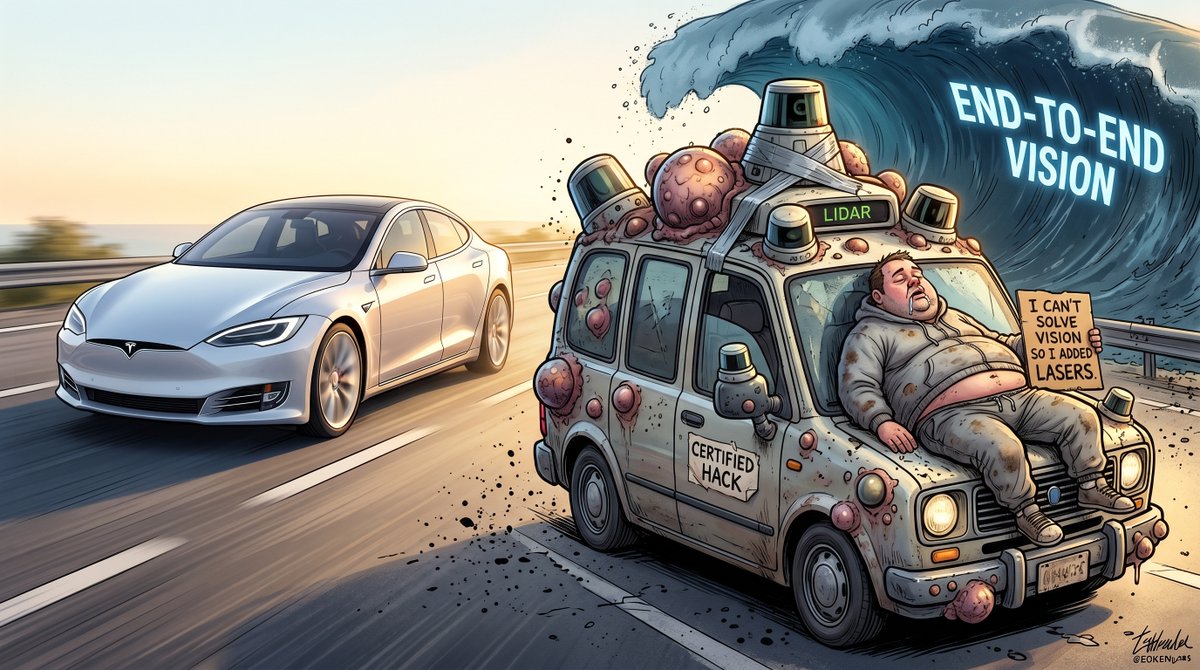
Aujourd'hui grosse discussion avec mes ingés (chez Argil) sur pourquoi Elon a viré le LIDAR de ses voitures autonomes. Choix radical, moqué pendant des années, et comme d'hab il avait raison depuis le début.
Le LIDAR c'est un laser qui balaye l'environnement et crache un nuage de points 3D. Sur le papier tu obtiens la géométrie exacte du monde. Dans la vraie vie c'est une verrue technologique collée sur le toit parce qu'on sait pas faire mieux avec la vision seule.
Problème numéro un : ça rajoute une modalité dans le training du modèle. Ton réseau doit apprendre à fusionner vision + lidar + radar + ultrasons. Chaque capteur en plus c'est une source de désaccord à arbitrer, pas une source d'info supplémentaire. Sensor fusion artisanale = dette technique permanente.
Problème numéro deux, la bitter lesson de Rich Sutton : scaler le compute sur une seule modalité bat systématiquement les architectures bricolées à la main. Tesla a dropé le radar, puis les ultrasons, est passé full end-to-end vision. Leur courbe sur les edge cases s'est accélérée APRÈS, pas avant. Waymo fait l'inverse et reste stuck en ops géofencée.
Problème numéro trois, le plus fondamental : le LIDAR voit la géométrie, pas la sémantique. Il sait qu'il y a un truc, pas ce que c'est ni ce que ça va faire. Les derniers 9 de fiabilité sont des problèmes de cognition, pas de perception brute. Un capteur de plus résout rien, il ajoute du bruit.
Sébastien Loeb balance une 208 T16 à 180 dans un chemin boueux corse sous la pluie avec zéro LIDAR. Deux yeux, un cerveau. L'évolution a donné des yeux aux prédateurs pendant 500 millions d'années, pas des lasers. Il y a une raison.
Le LIDAR c'est l'équivalent du marxisme appliqué à l'économie. Une solution planifiée, centralisée, qui prétend modéliser explicitement ce qui doit émerger d'un système distribué et adaptatif. Tu remplaces l'intelligence par de la mesure, la compréhension par de la donnée, l'émergence par le contrôle. Ça rassure les ingénieurs qui veulent tout spécifier en amont, exactement comme la planif rassurait les économistes soviétiques. Et ça échoue pour les mêmes raisons : la réalité est trop riche pour être capturée par un capteur, comme elle est trop riche pour être capturée par un plan quinquennal.
La vraie intelligence, celle de Hayek comme celle de Tesla, c'est de faire confiance à un système qui apprend de l'expérience plutôt que de tout pré-encoder. L'élégance d'une solution c'est son rapport signal sur complexité. Le LIDAR explose le dénominateur.
Défendre le LIDAR en 2026 c'est préférer empiler des hacks plutôt que résoudre le vrai problème. C'est de la feignasserie intellectuelle maquillée en rigueur d'ingénieur. Les mêmes gens qui défendaient les systèmes experts en 2012 contre le deep learning. Ils finiront pareil.
Never bet against end-to-end. Never bet against la simplicité. Never bet against Elon.
Introducing Code on Canvas in @pencildev
AI design tool for Claude and Codex.
Design ❤️ Code are officially in a relationship, opening new ways to create on canvas.
Ask agent to generate custom design tools inside Pencil on the fly, create interactive components, generative art and more, but still keep the full manual design control.
This is just the beginning. Let us know what you think. And let's take it to the next level together.
Download the new Pencil update today.