one reason that application layer saas is struggling is that agents increasingly resemble infrastructure. and app layer people are almost never infrastructure people— so they haven’t yet recognized the business they’ve been forced into
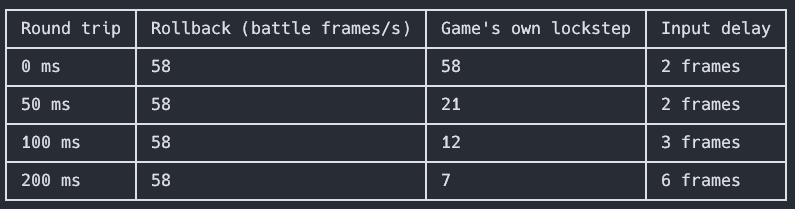
New hobby: create recompilations of old fighting games that are playable on the browser and replace their netcode with modern lobbys and predictive rollback.
This is Jump Ultimate Stars.
20 years ago we joked that the Neopets generation will usher a world of freemium games with micropayments, because they never lived the happy interlude of pay and play games that happened after the quarter-munching arcades and its hard 8-bit ports.
This is the next wave to come.
AI game development is exploding on Roblox:
- An growing share of top games were launched in the last 90 days
- Roblox MCP daily users are exploding
- An increasing fraction of game development time is spent using AI
- Asset uploads are shooting up
In other words, people are using AI to make games, and other people are actually playing them.
More charts: https://t.co/Z2QvvaZENZ
I used to be a language lawyer. In the late 80s I _studied_ the ARM (Annotated Reference Manual for C++). I knew the language cold, inside and out. I could make it do backflips. I shipped a lot of code using it. A LOT.
I’ve attacked other languages with a similar intensity and depth. Until recently, that was simply the only way to become adept at building software systems.
I now consider the deep understanding of a language to be a supreme waste of time and effort. I don’t want to learn Rust, or Golang, or Typescript, or any of the thousands of other languages out there. I’ll leave that to my agents.
What I need now is to understand the high level gestalt of the system. I want to see the systems and subsystems. I don’t need to inspect the cogs. If I truly need to understand a detail at the cog level, I’ll interrogate my agents. I’m not going to pretend to be a language expert anymore.
libghostty 1.0 is here! I started Ghostty ~5yrs ago to work towards this. Today, libghostty is in hundreds of projects used by tens of millions of people. 1.0 marks ABI stability, quality, and an invite for distros to begin packaging. https://t.co/i0FoSZHJT3
Since starting the Ghostty project in 2022, the most common question I've been asked is "why?". Today, I'll answer this by showing the broad industry impact libghostty has already had.
On top of JetBrains and Neovim already mentioned (that alone being over 10 million users):
-KDE developers are experimenting with a Konsole replacement built on it.
- Vercel's Turborepo uses it to render task output in its TUI.
- devenv uses it to drive shells.
- Antithesis used it to fuzz TUI programs and found real bugs in btop and others.
-Ghostel brings it to Emacs.
- ghostty-web is the WASM build with an Xterm.js-compatible API.
- Commercial products like OrbStack embed it.
- And a whole wave of new terminals and "agentic" coding tools, such as herdr and cmux, have been built on it rather than writing yet another emulator.
There are community bindings for Rust, Go, JavaScript, Swift, Python, .NET, Elixir, Dart, Java, and more, and the awesome-libghostty list tracks well over a hundred projects.
More people today use a terminal powered by libghostty than use Ghostty the application, by a very large multiple. And libghostty is having a much larger impact than being "just" a terminal emulator.
I'm excited to see where people take it from here.
I did this for about 6 months, also had a high paying job. It got boring pretty quickly, not to mention the overtrading
Months 1-3 :You’re chilling, taking care of things you never had time for and feeling great.
mth 4 : The novelty starts wearing off. Plus, you realize nobody is available between 8- 5PM
Mth 5 : Your sleep schedule is completely messed up and you’ve lost any sense of urgency.
Mth 6: You’re ready to get a job again just to have something to do and go back to making 6 figures.
The upside? You no longer fantasize about retirement lol
@GergelyOrosz is right. From my pov there are two reasons to write your own stuff, even if it's a struggle. First, it's fitness training for your brain. If you struggle to write, your brain is flabby. Having a fit brain will be a key differentiator in the new era. And second, we would all rather read your "bad" writing than polished AI writing. Trust me on this one. We can spot even one sentence of AI writing and it stinks. Your bad writing is fine. Just do more of it, every day, to get in shape and stay in shape.
I keep forgetting that Wolff is at the head of CC. He was a legend at Meta, his org fostered some of the best web+mobile infra talent that has since then expanded across the industry. But it all started with how he incentivized his teams.
ultrathink is back in the CC CLI.
We turned this off for a while because it's weird and maybe confusing.
But I like weird, and I don't think it's that confusing.
I mostly run Opus 5.5 on medium. Some turns, though, I want to put a little extra mustard on it. ultrathink!
WTF, $3000 Samsung TV has an always-on mic, automatic content recognition, geo tracking, network mapping, and ships your data to Samsung + 400 partners.
Bro Rooted a brand-new 2025 Samsung TV after noticing absurdly targeted ads.
Firmware was locked down, so zero-days it was.
Got a root shell.
then found: always-on voice service, ACR, geo, full telemetry pipeline, and four separate DRM systems.
This isn’t a bug, It’s the product bro.
The biggest risk for a successful company is believing that what made it successful will keep working forever.
It took Freepik 12 years to grow from scratch into a large, successful business.
It was a remarkable journey. We had millions of users and were competing with the biggest players in the stock content industry.
Around 4 years ago, when Dall-e 2 was released, I was with @cuenca at a founders event in Malaga and he told me he couldn’t sleep for days thinking about how this was going to change our industry. It was going to redefine how creative content is produced, distributed, and consumed.
Many in our user community hated AI-generated content. Our competitors were suing AI model providers. And our business was doing incredibly well.
Still, we went all in on AI. We decided to transform Freepik into an AI-native company.
Freepik became @magnific. And in less than three years, we grew the business 10x.
Shutterstock, once one of the giants of stock content, has seen its market capitalization collapse from over $4 billion in 2021 to approximately $170 million today. Getty Images, another iconic name in our industry, filed for Chapter 11 bankruptcy protection last week.
For decades, the creative industry was built around distributing existing content. Now, increasingly, it’s about generating entirely new content. That represents a fundamental shift in where value is created.
And when that happens, being an established market leader can become a disadvantage if you’re too attached to the business model that got you there.
We didn’t reinvent Freepik because it was failing. We reinvented it precisely because it was successful, and we wanted to make sure it stayed that way. Today, Magnific is a very different company from the one we were three years ago. And I suspect we’ll be a very different company three years from now.
Your past success is an asset. Until you start treating it as something you need to protect.