This is a really important aspect to have in a classroom because we want our students to feel comfortable being themselves! The more we turn our classroom into a “third space”, the more comfortable students will be! #BookSnaps#ElemSSmethods19
This is so important when creating a culturally responsive classroom environment! The more students feel they are heard, the more they will open up and share their ideas and feelings! #BookSnaps#ElemSSmethods19
In Chapter 9 of Culturally Responsive Teaching and the Brain, Zaretta Hammond discusses student voice. Let students be heard, have a voice, and be a voice. Listen to what they have to say. #ElemSSmethods19#Booksnaps
Not only should your classroom be well decorated, but it should also feel culturally welcoming. Students need a place where they can feel comfortable sharing their different views and opinions! #BookSnaps#ElemSSmethods19
I hope they were able to rebuild their relationship quickly! Understanding your students thoughts and points of view is crucial for developing strong relationships with them and being the best teacher you can be! #BookSnaps#ElemSSmethods19
This is so true! Until we know why our own biases were formed, we will never be able to move past them and that is something we MUST do as educators! #BookSnaps#ElemSSMethods19
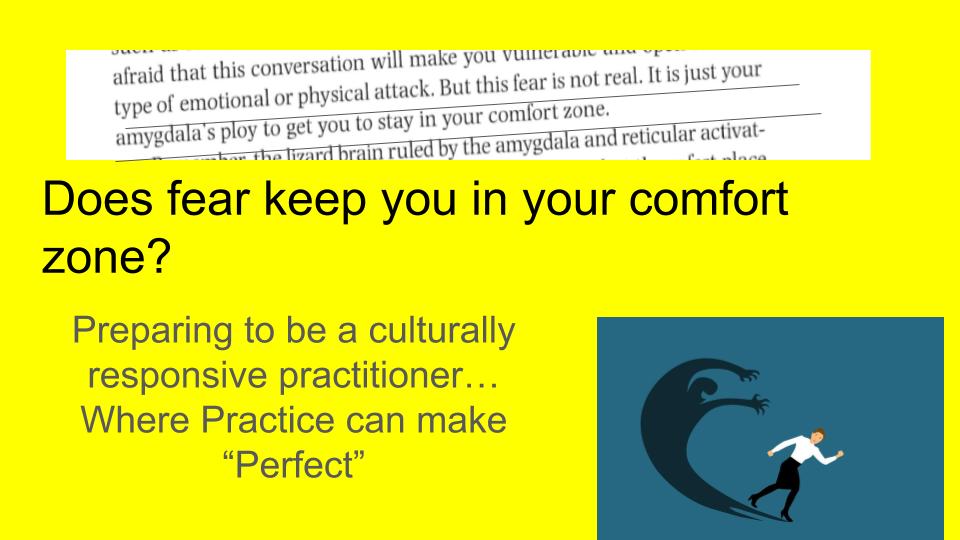
Building culturally responsible relationships only work if you have been responsible with connecting with your own culture. Do you have the courage to do what it takes? #mirror#Booksnaps#ElemSSMethods19
Chapter 4 has taught us that just like we use metacognition to understand how we learn, we also need to use it to understand why we think what we think! Our backgrounds and up bringing shape our beliefs more than we may know! #BookSnaps#ElemSSmethods19
In Zaretta Hammond’s book, Culturally Responsive Teaching & The Brain, you will see how our brains influence our social and emotional states and the principles of culturally responsive teaching! #ElemSSmethods19