How OAuth 2.0 works
(clearly explained in under 2 mins):
OAuth can be thought of as a digital handshake between the app, service, and user, with everyone agreeing on what is shared.
It's an authorization framework that enables applications to access a user’s data on another service (like Facebook or GitHub) 𝘄𝗶𝘁𝗵𝗼𝘂𝘁 𝘀𝗵𝗮𝗿𝗶𝗻𝗴 𝘁𝗵𝗲 𝘂𝘀𝗲𝗿’𝘀 𝗽𝗮𝘀𝘀𝘄𝗼𝗿𝗱.
How it works:
𝗧𝗵𝗲 𝗽𝗿𝗼𝗰𝗲𝘀𝘀 𝗴𝗲𝗻𝗲𝗿𝗮𝗹𝗹𝘆 𝗳𝗼𝗹𝗹𝗼𝘄𝘀 𝟲 𝘀𝘁𝗲𝗽𝘀 𝘄𝗶𝘁𝗵 𝟰 𝗰𝗼𝗺𝗽𝗼𝗻𝗲𝗻𝘁𝘀 𝘁𝘆𝗽𝗶𝗰𝗮𝗹𝗹𝘆 𝗶𝗻𝘃𝗼𝗹𝘃𝗲𝗱:
• Client (app wanting access)
• Resource owner (user)
• Authorization server
• Resource server
𝗧𝗼 𝘂𝗻𝗱𝗲𝗿𝘀𝘁𝗮𝗻𝗱 𝘁𝗵𝗲 𝗽𝗿𝗼𝗰𝗲𝘀𝘀, 𝗹𝗲𝘁’𝘀 𝘁𝗮𝗸𝗲 𝗮 𝗹𝗼𝗼𝗸 𝗮𝘁 𝗵𝗼𝘄 𝗮 𝗴𝗮𝗺𝗲 𝘄𝗼𝘂𝗹𝗱 𝗰𝗼𝗻𝗻𝗲𝗰𝘁 𝘁𝗼 𝗮 𝗽𝗹𝗮𝘆𝗲𝗿’𝘀 𝗙𝗮𝗰𝗲𝗯𝗼𝗼𝗸 𝗮𝗰𝗰𝗼𝘂𝗻𝘁.
𝟭) 𝗥𝗲𝗾𝘂𝗲𝘀𝘁 𝗮𝗰𝗰𝗲𝘀𝘀
Within the game (client), the player (user) clicks on a “connect with Facebook” button to link their profile and find friends.
𝟮) 𝗥𝗲𝗱𝗶𝗿𝗲𝗰𝘁 𝘁𝗼 𝘀𝗲𝗿𝘃𝗶𝗰𝗲
The game redirects the player to Facebook’s (service’s) login page.
𝟯) 𝗣𝗲𝗿𝗺𝗶𝘀𝘀𝗶𝗼𝗻 𝗿𝗲𝗾𝘂𝗲𝘀𝘁
After logging in, the data that the game is requesting access to will be shown to the player which they can either allow or deny.
𝟰) 𝗔𝘂𝘁𝗵𝗼𝗿𝗶𝘇𝗮𝘁𝗶𝗼𝗻 𝗰𝗼𝗱𝗲
If the player gives their approval, Facebook redirects the player back to the game with an authorization code (from authorization server). The code is a temporary credential that proves the player’s consent.
𝟱) 𝗘𝘅𝗰𝗵𝗮𝗻𝗴𝗲 𝗰𝗼𝗱𝗲 𝗳𝗼𝗿 𝘁𝗼𝗸𝗲𝗻
The game now sends the authorization code along with its own identification to Facebook’s server in the background. Facebook identifies the authorization code and the game’s identity and returns an access token.
𝟲) 𝗨𝘀𝗲 𝘁𝗵𝗲 𝘁𝗼𝗸𝗲𝗻
The game can now use the access token to request the agreed-upon data from Facebook (from the resource server), like the player's friends list.
In this process, the player’s Facebook credentials were never shared, but the game was able to access the agreed-upon player data from Facebook. This is what OAuth 2.0 facilitates; allowing third-party applications to access data from services in a secure manner without sharing credentials.
What else would you add?
♻️ Repost to help others learn system design.
➕ Follow me ( Nikki Siapno ) + turn on notifications.
I've been a backend Engineer for 12+ years. Today, I'm a Principal Engineer at Atlassian.
I've designed systems that handle millions of requests. Sat on both sides of system design interviews.
Reviewed more architecture docs than I can count.
Starting today, I'm breaking down the fundamentals of scaling for the next 25 days.
If you're learning system design bookmark this thread, you're going to get a lot of learning from this.
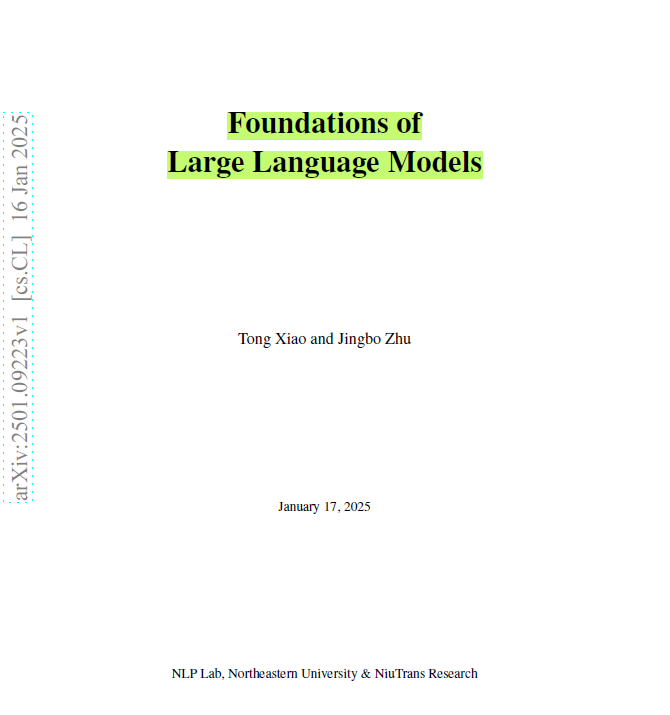
This 230-page book unlocks the secrets of LLMs.
https://t.co/wr2arLKqaf
Master LLMs step by step.
> with clear explanations of core concepts
> pre-training, fine-tuning and human alignment
Foundations of Pre-training
> Core concepts behind pre-training, the backbone of LLMs.
> Covers common objectives, techniques, and model architectures.
Building Generative Models
> How generative models are developed.
> Covers the training pipeline, scaling strategies, and handling long texts.
Prompting Techniques
> Prompting methods for LLMs.
> Includes basic strategies, plus advanced ones like chain-of-thought reasoning and automatic prompt design.
Aligning Models with Human Intent
> Alignment methods for LLMs.
> Focuses on instruction fine-tuning and human feedback alignment.
🚨 RIP Prompt Engineering
Enter Context Engineering 2.0
It completely reframes how we think about human-AI interactions.
This is what you need to know (28 page PDF):
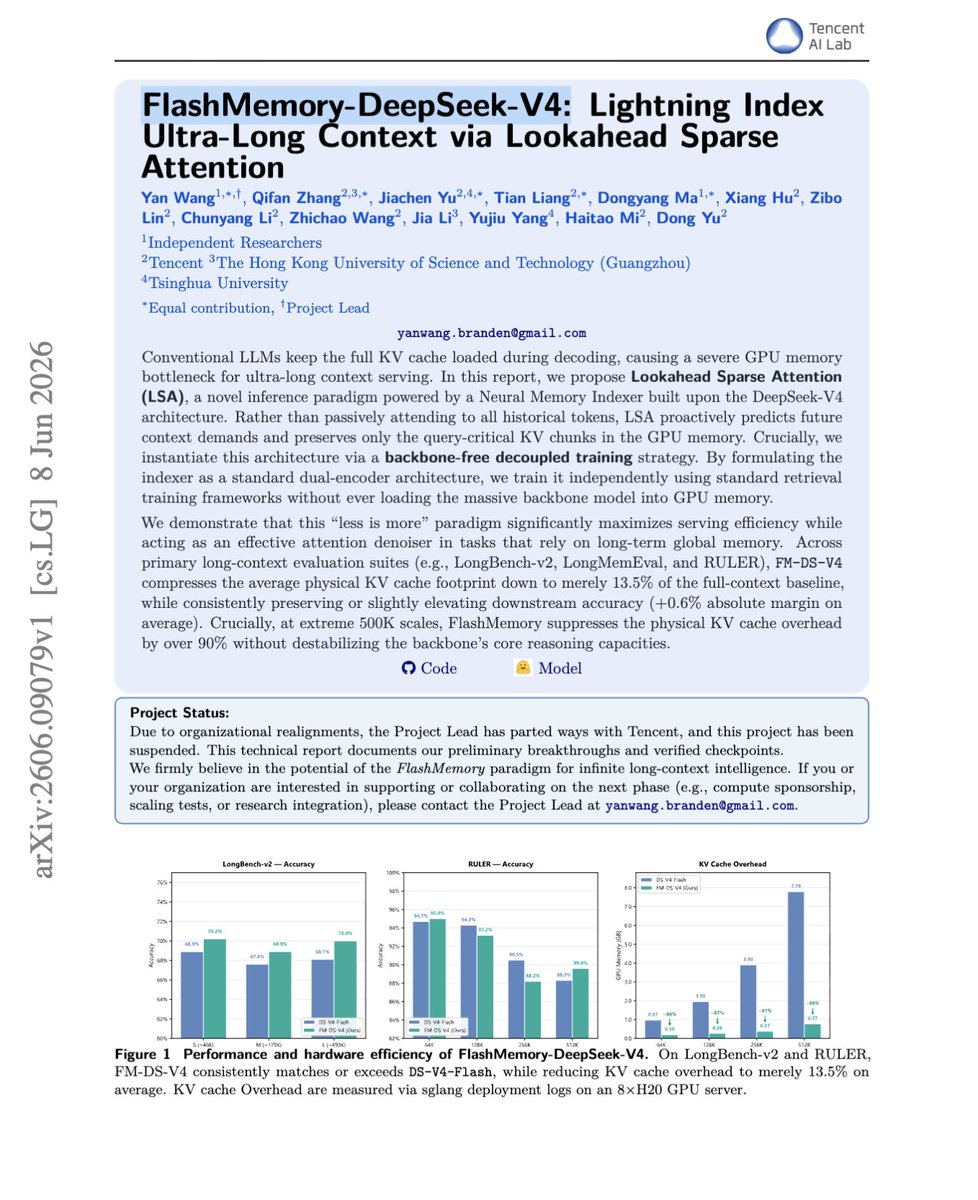
“FlashMemory-DeepSeek-V4: Lightning Index Ultra-Long Context via Lookahead Sparse Attention”
With how Long context LLMs are being bottlenecked by KV cache, because every old token keeps consuming GPU memory even when most of it is irrelevant, this paper turns long context into retrieval.
They used a small Memory Indexer to predict which old KV chunks the model will need soon, keeps only those on GPU, and leaves the rest offloaded.
This provides 13.5% average KV cache footprint, up to 90% memory reduction at 500K context, with slightly better accuracy than DS V4 Flash.
Explore these jobs, internships, fellowships, and career opportunities currently open for applications!
1. Multiple roles at Tech4Dev:
Project Manager, Data Analyst, Communications Lead, Communications Associate, Brand & Graphics Associate .
Apply: https://t.co/WropUSMEAH
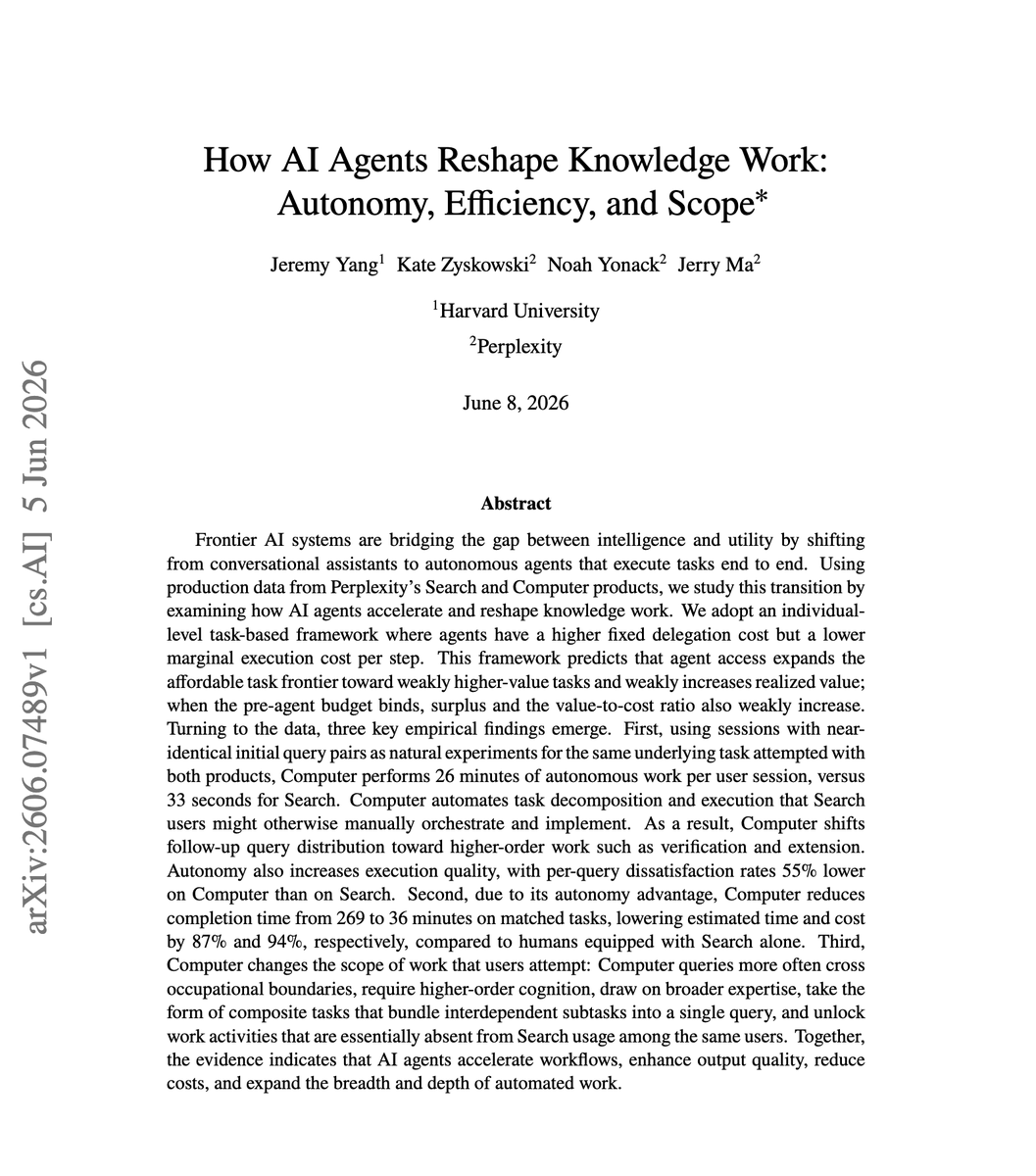
New paper on how AI agents are reshaping knowledge work.
This is a nice economic read on where agents actually change knowledge work to meet that gap directly.
(bookmark it)
It studies agent adoption across three dimensions: autonomy, efficiency, and the scope of tasks workers hand off.
The friction people keep hitting with agents is rarely model quality. It is that almost nobody has been taught how to work this way.
Paper: https://t.co/R4iYoRz3kS
Learn to build effective AI agents in our academy: https://t.co/1e8RZKs4uX
/supergoal is a self healing, self governing and self verifying upgrade for /goal
check it out on gh (below) and take it for a spin - I think you’ll find it a worthy addition for your agents.
A Google Senior Engineer dropped a 421-page document called "Agentic Design Patterns"
Antonio Gulli, distinguished engineer at google's cto office, the kind of resource that usually stays locked inside an engineering team's internal wiki
what's inside:
▫️ 21 production-ready agentic patterns
▫️ prompt chaining, routing, memory architectures
▫️ multi-agent orchestration + inter-agent communication
▫️ full mcp chapter
▫️ self-correction + guardrail frameworks
▫️ code in langchain, langgraph, crewai + google adk
most ai content stops at "here's how to call an api."
this covers what happens after when your agent silently fails in production and you don't know why.
free google doc: https://t.co/eRWIniMWJ3
MICROSOFT OPEN-SOURCED THE COMPLETE MCP PLAYBOOK
Every ai engineer needs to understand model context protocol in 2026
Microsoft built a full open-source course so you don't have to figure it out the hard way
here's what's inside:
▫️ 11 modules from zero to production
▫️ hands-on labs in python, typescript, java, rust, c# and javascript
▫️ covers mcp servers, clients, security, oauth2, azure integration
▫️ a 13-lab capstone with real postgresql + vector search
▫️ works with claude desktop, cursor, vs code and more
▫️ 16k stars. 5.3k forks. built by microsoft.
the curriculum even teaches adversarial multi-agent reasoning two agents debate using shared mcp tools, judged by a third agent.
if you're building with ai agents in 2026, mcp is the layer that connects everything. this is the fastest way in
https://t.co/jZlCZE8VkX
One playlist I would use as a structured pass through Machine Learning Engineering for Production (MLOps): this YouTube course.
Not flashy, just useful: a course-shaped path from #1 Machine Learning Engineering for Production (MLOps) Specialization toward #12 Machine Learning Engineering for Production (MLOps) Specialization.
𝗣𝗿𝗼𝗷𝗲𝗰𝘁𝘀 & 𝗣𝗿𝗮𝗰𝘁𝗶𝗰𝗲:
↳ #1 Machine Learning Engineering for Production (MLOps) Specialization [Course 1, Week 1, Lesson 1]
↳ #2 Machine Learning Engineering for Production (MLOps) Specialization [Course 1, Week 1, Lesson 2]
↳ #3 Machine Learning Engineering for Production (MLOps) Specialization [Course 1, Week 1, Lesson 3]
↳ #4 Machine Learning Engineering for Production (MLOps) Specialization [Course 1, Week 1, Lesson 4]
↳ #5 Machine Learning Engineering for Production (MLOps) Specialization [Course 1, Week 1, Lesson 5]
Best use: treat it as a map of the field. Watch once for the arc, then revisit the parts where you need implementation depth.
Link is in the first comment 👇
♻️ Share this with your network if you found it useful or insightful.











![DanKornas's tweet photo. One playlist I would use as a structured pass through Machine Learning Engineering for Production (MLOps): this YouTube course.
Not flashy, just useful: a course-shaped path from #1 Machine Learning Engineering for Production (MLOps) Specialization toward #12 Machine Learning Engineering for Production (MLOps) Specialization.
𝗣𝗿𝗼𝗷𝗲𝗰𝘁𝘀 & 𝗣𝗿𝗮𝗰𝘁𝗶𝗰𝗲:
↳ #1 Machine Learning Engineering for Production (MLOps) Specialization [Course 1, Week 1, Lesson 1]
↳ #2 Machine Learning Engineering for Production (MLOps) Specialization [Course 1, Week 1, Lesson 2]
↳ #3 Machine Learning Engineering for Production (MLOps) Specialization [Course 1, Week 1, Lesson 3]
↳ #4 Machine Learning Engineering for Production (MLOps) Specialization [Course 1, Week 1, Lesson 4]
↳ #5 Machine Learning Engineering for Production (MLOps) Specialization [Course 1, Week 1, Lesson 5]
Best use: treat it as a map of the field. Watch once for the arc, then revisit the parts where you need implementation depth.
Link is in the first comment 👇
♻️ Share this with your network if you found it useful or insightful.](https://pbs.twimg.com/media/HKRe9GuXoAE5Zpw.jpg)


