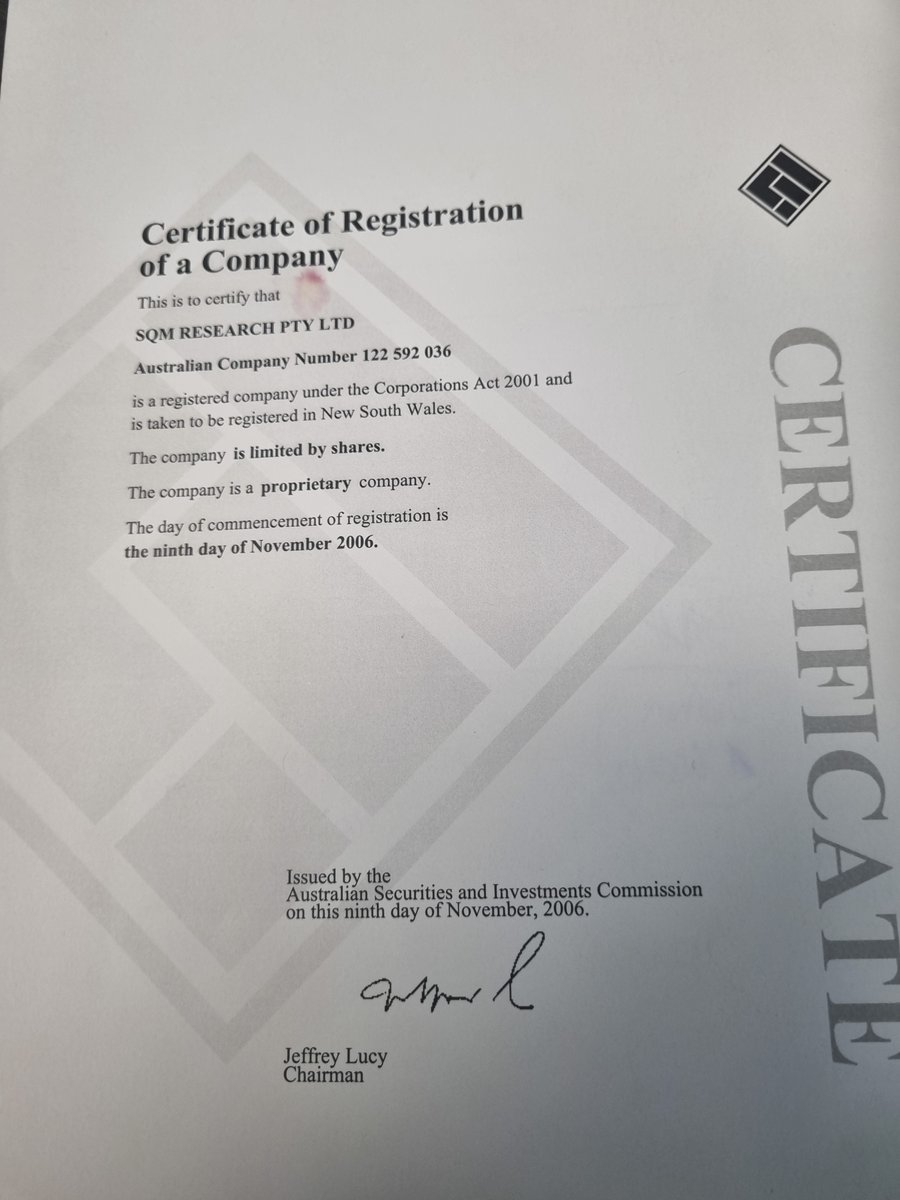
SQM Research turns 20 today. Started as a side gig with an idea and a crazy name. We’ve survived the GFC, COVID and a tough last three years. Huge thanks to our staff past and present, our clients and my family. Independent then, independent now. Plenty more to come. @SQMResearch
BREAKING: Canada's Carney’s government has released its 2027–29 immigration plan:
- 380,000 new permanent residents a year
- 370,000 new temporary residents a year (workers and students)
- Up to 348,000 more people already in Canada moved to permanent status through one-time programs
Combined, that could push permanent resident admissions well past the record of about 485,000 set in 2024, per CBC
To All the Real Estate Bears: Your Day Is Approaching.
As housing downturns spread around the world, remember something important: the real estate bears never wanted to be right.
They understood the devastating economic consequences of a debt-fuelled housing collapse. They understood that when the credit cycle reverses, the damage extends far beyond falling home prices. Families, businesses, banks and entire economies suffer.
Unlike the prosperity of 1946–1981, which was supported by rising real wages, productivity and incomes, the great real estate boom of Economic Autumn was increasingly driven by expanding credit and debt.
It was a debt orgy, not an income boom.
You warned about it. You studied the history. You understood the consequences. And for years, you were ridiculed by those who believed real estate prices could only rise.
Now the cycle is turning.
Don't expect apologies. Don't expect recognition. And don't expect many of the loudest real estate bulls to acknowledge your warnings.
Such is the nature of economic amnesia. Every generation believes its bubble is different, until history reminds it otherwise.
The tragedy is not that the bears were right.
The tragedy is that so few were willing to listen. ❄️
Forget Islamophobia. We already have defacto blasphemy laws in this country.
I believe that we should be free to criticise religion and to reject teachings or cultural norms that act in opposition to Western liberty and Enlightened thinking.
I am genuinely puzzled regarding what I would do, were I a 17 year old today
Many of the ladders I've tried climbing simply do not exist anymore
Looks like the youth that is starting from the relatively below, without much resources on their hands, is fucked
Mathias Cormann endorses high migration.
The same man who said that low wage growth was a feature of its the Coalition's economic management strategy.
I really hope some folks can eventually put 2 and 2 together.
https://t.co/6jGXFIPWGo
@solo_dio_ damn, our own aluminium should be so dirty cheap that we should not have tariff on any other country from the world, i.e. it should be like ice in Antarctica
"Make them pay the price."
Blunt statements from fmr US Ukraine envoy @generalkellogg at #WSF2026 regarding Trump's demand that Zelenskyy not bomb 🇷🇺 refineries.
"I'd burn down every one of the goddamn refineries that Russia has today," he advised Ukraine. "Take them all out."
Thoughts?
There should NOT be 'community leaders' for foreign communities in Australia.
When you come to Australia, you become an Australian. You become part of the Australian community.
This establishment of 'community leaders' continues the isolation of migrants who come here and identify as a sub-culture within Australia.
That is not integration.
Community leaders start saying things like, 'I speak on behalf of these people...' - no, you don't. They are supposed to be independent Australians.
I don't have a 'community leader' - I have an elected politician. That is how equality is meant to work.
@SpectatorOz@OtherSideAus
CAN PROPERTY PRICES FALL BELOW THE COST OF CONSTRUCTION? LET'S LOOK AT HISTORY.
One argument I keep hearing about Australian property is that prices can't fall significantly because construction costs keep rising.
It's a reasonable argument, but history suggests there's another side worth understanding.
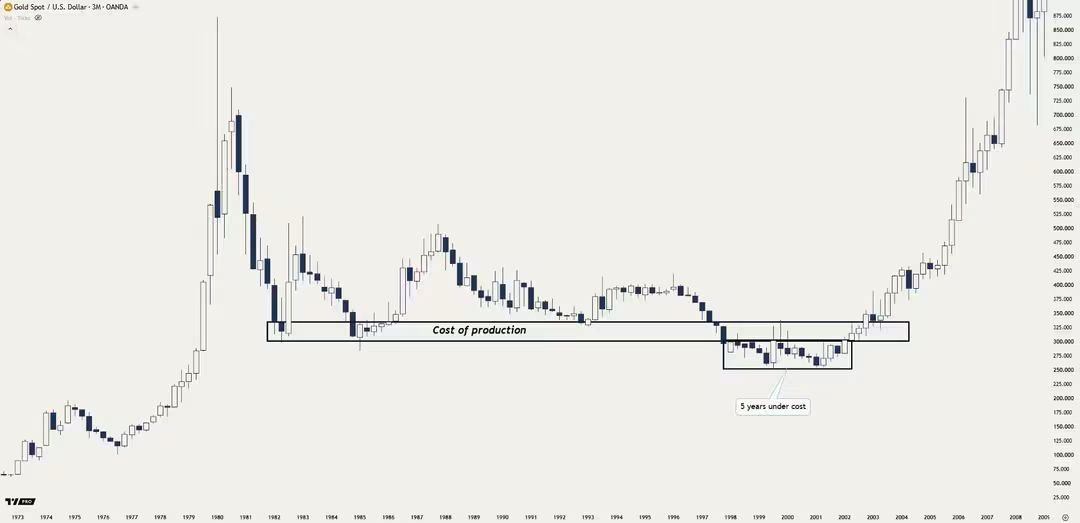
GOLD: WHAT HAPPENS WHEN PRICES FALL BELOW PRODUCTION COSTS?
Gold peaked in 1980 before experiencing a major bear market. Within two years, prices had fallen dramatically, approaching the production costs of some miners.
By the late 1990s, gold was trading at levels where some producers struggled to cover their full costs. Prices remained depressed for years.
This is what major bear markets often do. They remove the excesses created during the previous boom.
High gold prices had attracted speculative companies, inexperienced operators and plenty of leverage. When the cycle turned, weaker businesses struggled, while those with lower costs and stronger balance sheets were better positioned to survive.
We've seen this pattern across asset classes throughout history.
NOW, LET'S LOOK AT HOUSING.
During the US housing crash, the national median existing-home price fell to US$176,600 in 2012.
According to the National Association of Home Builders, constructing a new home in 2011 cost approximately US$184,125, excluding land.
Add the average land cost of US$67,551, and you're looking at US$251,676.
That's almost 30% more than the median existing-home price!
Of course, these aren't identical properties, so it's not a direct comparison. But it illustrates how existing property prices can disconnect from new construction economics.
Ireland, Spain and Japan also experienced major property downturns, with distressed properties in some markets selling below replacement costs.
Different countries, same lesson. Construction costs don't guarantee property values.
NOW, BACK TO AUSTRALIA.
During property booms, rising prices attract developers, agents, investors and leverage.
Anyone else notice how everyone wanted to become a real estate agent over the past few years? Of course, the houses practically sold themselves!
But when the cycle turns, financing becomes harder, margins shrink, and those relying on continually rising prices can find themselves under pressure.
HERE'S WHAT I FIND MOST INTERESTING.
Australia's aggregate land-to-building value ratio has increased from approximately 1.3:1 in the 1980s to around 3:1 in recent years.
That means land represents roughly 75% of the combined value of Australia's housing stock.
Think about that.
Construction costs could remain at record highs, yet property prices could still fall significantly through a correction in land values alone.
For example, a 30% fall in land values would mathematically translate into approximately a 22.5% decline in total property values, assuming buildings retain their value and using that national 75% land share.
I'm not suggesting that's necessarily what will happen, and the ratio varies between properties. But it shows why rising construction costs don't guarantee rising property prices.
Higher construction costs may discourage new supply, but they don't prevent existing property values from falling.
Ultimately, prices are determined by what buyers are willing and able to pay. Interest rates, household incomes, credit availability and market cycles all matter.
I'm not suggesting Australia must follow the US, Ireland, Spain or Japan. Every market is different.
But studying historical cycles teaches us what's possible, rather than assuming something can't happen simply because we haven't experienced it recently.
Perhaps the better question isn't whether construction costs are rising.
It's whether the land component of Australian property has become overvalued relative to household incomes and borrowing.
Property values can fall through land repricing, even while construction costs remain high.