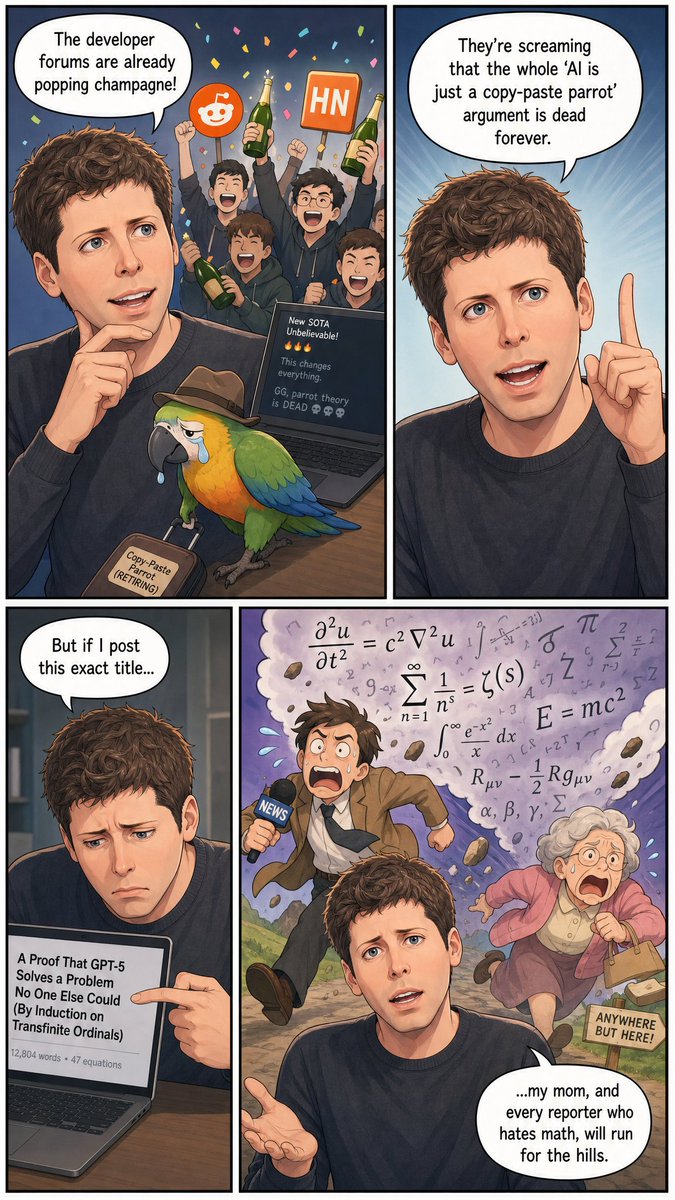
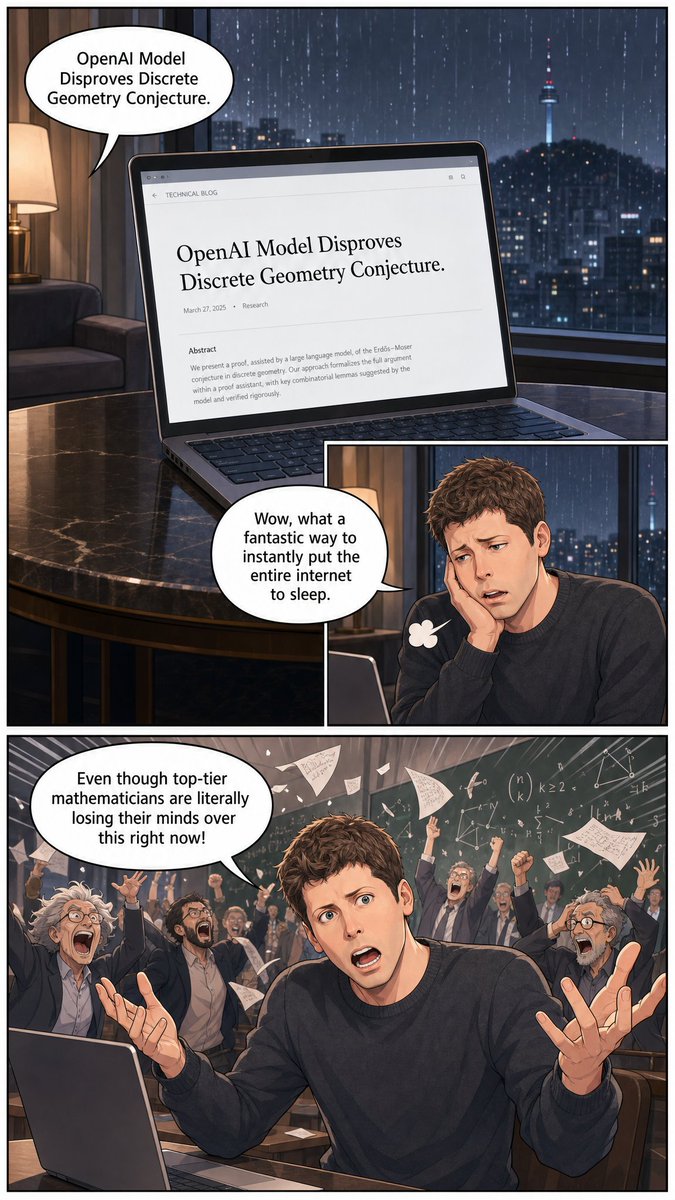
Inspired by @SebastienBubeck’s recent post, I made a comic featuring Sébastien and @sama explaining how an internal OpenAI model disproved a famous conjecture related to the Unit Distance Problem. 📊✨
Since it’s a comic, I added some creative exaggeration and simplified the math to make the story more fun and digestible.
Here’s a visual take on why this result feels like such an incredible milestone. Enjoy 👇
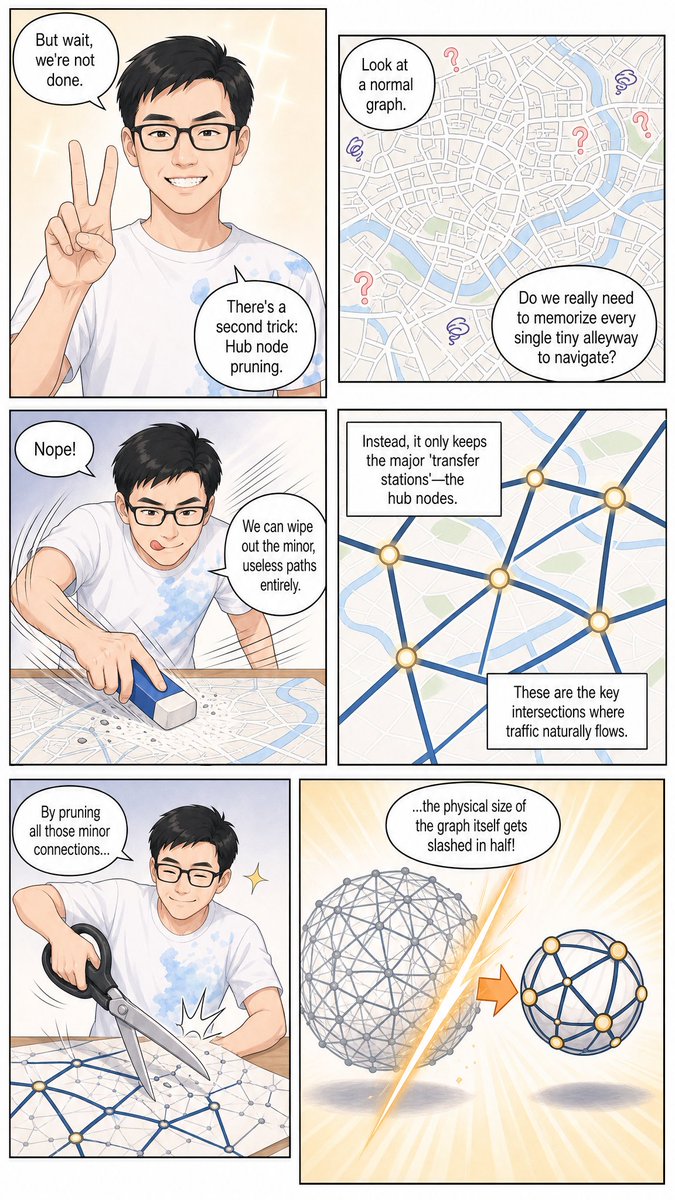
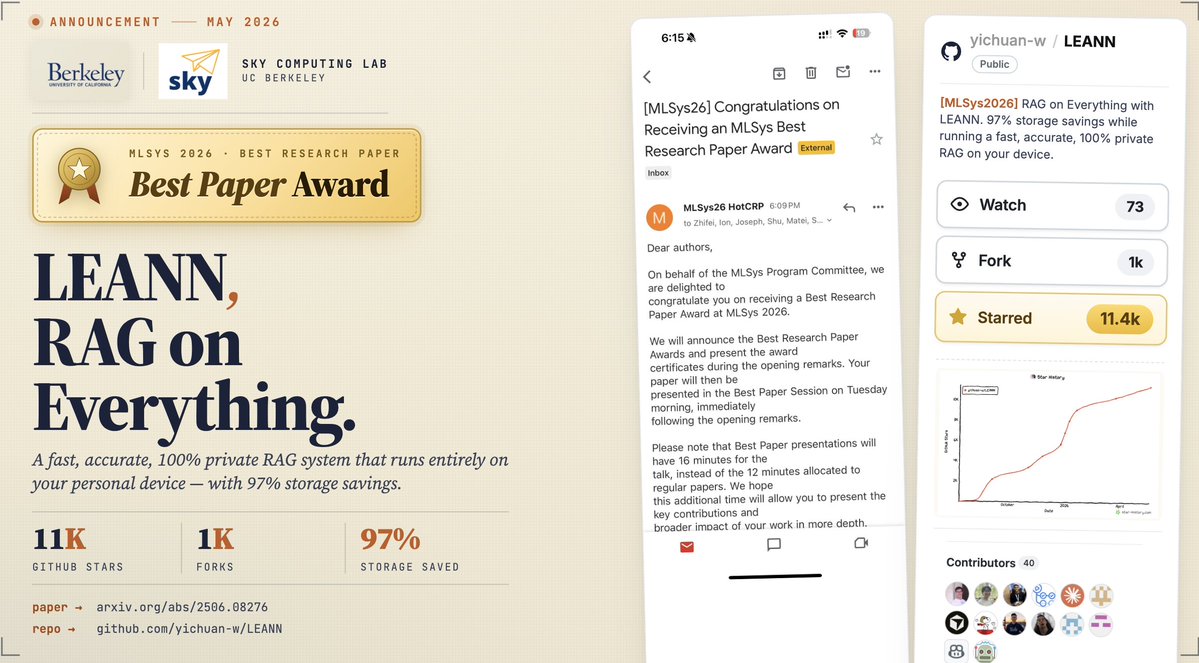
Huge congrats to @YichuanM on the Best Paper Award at #MLSys26! 🎉
To help everyone (even non-experts like me) easily understand this amazing paper, I put together an educational comic! 📚 (Just to be clear, I created/compiled it rather than drawing it by hand!)
Please note that there might be some simplifications or slight exaggerations to keep it fun and easy to read.
Paper: https://t.co/xyZMI9nzA4
LEANN just won the Best Paper Award at #MLSys26 🥹
still processing this.
paper: https://t.co/k3qS1V5156
repo: https://t.co/QwkYx1t0oa
huge thanks to all the amazing collaborators, advisors, and open-source contributors who made this possible ❤️
I made a short webcomic about DSGym for everyday AI enthusiasts like me! 🎨
Huge congratulations to @FanNie1208 and the team on the ICML 2026 acceptance! 🎉
Hope this helps more people enjoy your awesome research!
(Note: Some details are simplified or exaggerated for the comic.
For exact and accurate info, please check out the full paper!👇)
📄 https://t.co/6sIUACrUH4
🚀 Excited to share that #DSGym has been accepted to ICML 2026!
DSGym is a holistic, unified framework for evaluating and training data science agents with standardized abstractions and a modular architecture for adding tasks, agent scaffolds, and tools.
In this work, we:
🔍 Show that existing data science benchmarks are vulnerable to shortcuts: agents can often solve tasks without using the actual data.
📊 Release DSGym-Tasks, a curated task ecosystem that standardizes and audits representative benchmarks, filters shortcut-solvable tasks, and expands coverage with new scientific tasks.
⚡ Use DSGym for execution-grounded trajectory synthesis: with only 2K samples, we train a 4B model that outperforms GPT-4o on standardized data analysis benchmarks.
📄 Paper: https://t.co/qOjF9zkez9
💻 Code: https://t.co/tcrm5cEWoa
🤗 Dataset: https://t.co/BljIGgoBpr
🧵👇
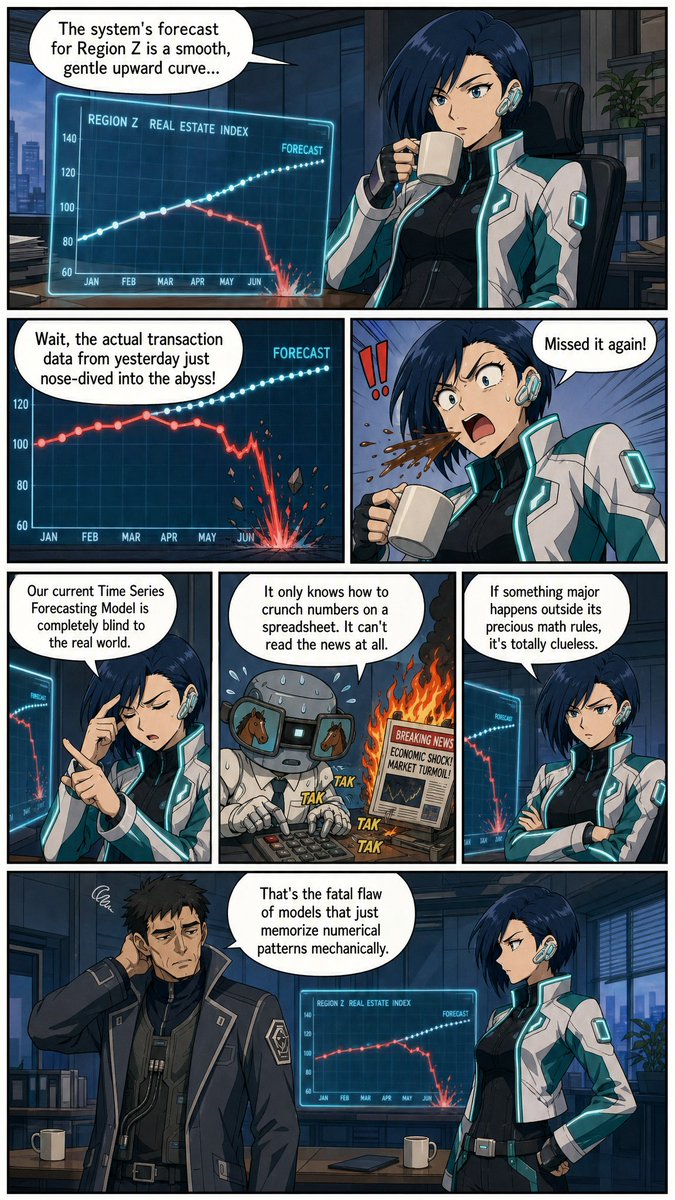
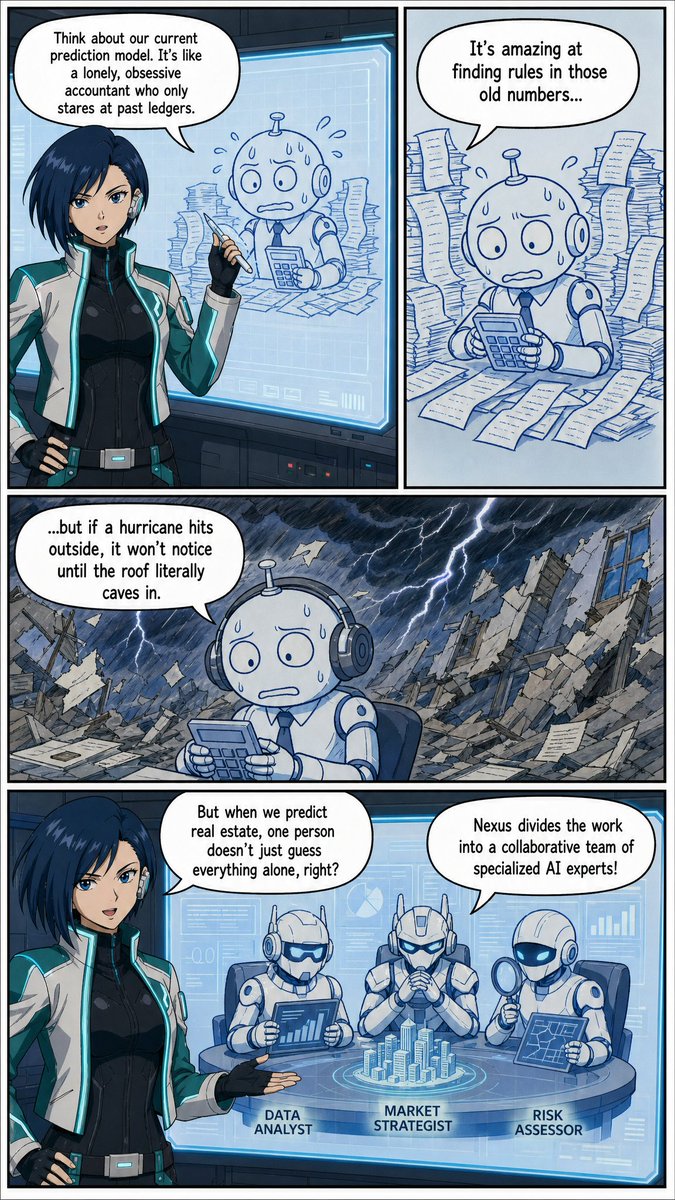
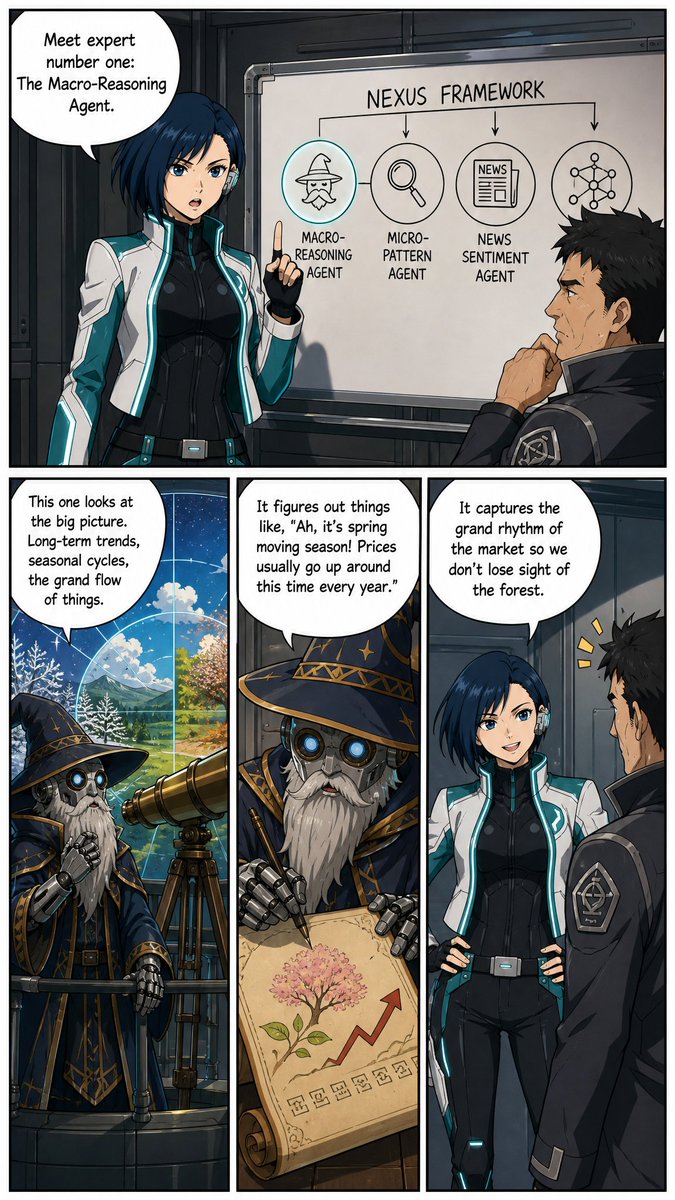
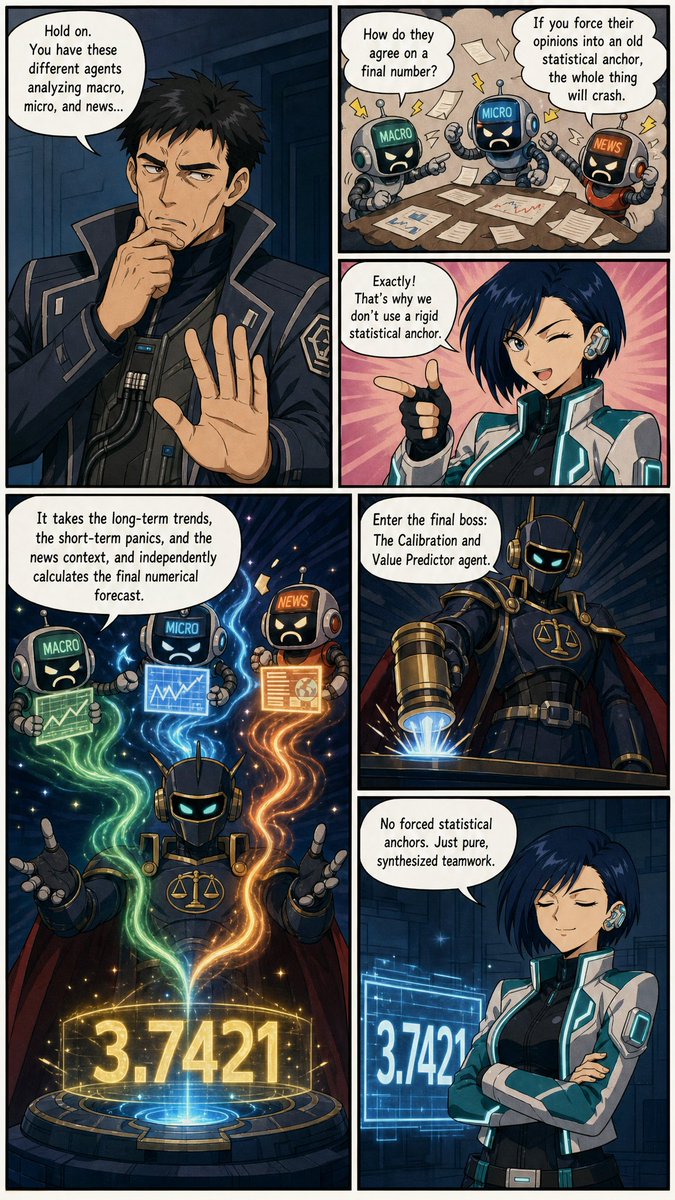
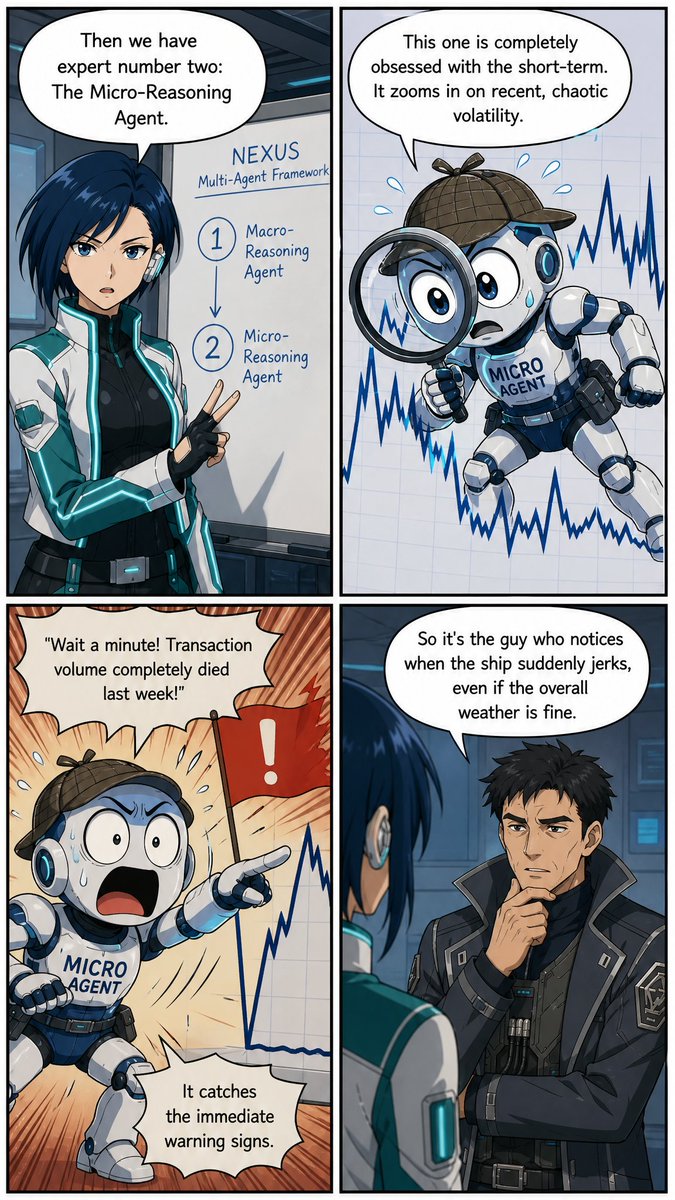
Just made a short comic based on this new AI paper from Google! 🎨✨
📝 Title: NEXUS: An Agentic Framework for Time Series Forecasting
🔗 Link: https://t.co/OuCUgzbpkN
*Just a heads-up: I simplified and slightly exaggerated some details so that non-experts like me can easily grasp the core idea. Hope you enjoy getting the rough gist of it! 🍜💻
@GoogleAI@googlecloud@penn_state
Just read the incredible "Lighthouse Attention" paper by @NousResearch and decided to turn it into an easy-to-understand comic! 🎨✨
I made this for everyday AI enthusiasts like myself, so keep in mind there might be a bit of oversimplification or slight exaggeration to make the core concepts click! 😉
Huge shoutout to the amazing team behind this research: @bloc97_, @SubhoGhosh02, and @theemozilla! 🙌
Check out the original paper here: 🔗 https://t.co/oSQRg4tIvq
Today we release Lighthouse Attention, a selection-based hierarchical attention for long-context pre-training that delivers a 1.4-1.7× wall-clock speedup at 98K context.
It runs the same forward+backward pass ~17× faster than standard attention at 512K context on a single B200, without a custom sparse attention kernel, a straight-through estimator, or an auxiliary loss.
During training, queries, keys, and values are pooled symmetrically into a multi-resolution pyramid. We then score every pyramid heads, and a top-k cascade selects a small hierarchical dense sub-sequence, and after a sorting pass that enforces causality, we use standard attention for token mixing. A brief full attention resume at the end converts the checkpoint back into a competent dense-attention model.
Validated this using 530M parameter Llama-3 models across 50B tokens, with up to 1M-token benchmarks across 32 B200s under context parallelism.
The work on Lighthouse Attention was led by @bloc97_, @SubhoGhosh02, and @theemozilla.
Just made a short comic based on this AI paper! 🎨✨
📝 Title: SANA-WM: Efficient Minute-Scale World Modeling with Hybrid Linear Diffusion Transformer 🔗 Link: https://t.co/ksCpxM1UiB
*Just a heads-up: I simplified and slightly exaggerated some details so that non-experts like me can easily grasp the core idea. Hope you enjoy getting the rough gist of it! 🍜💻
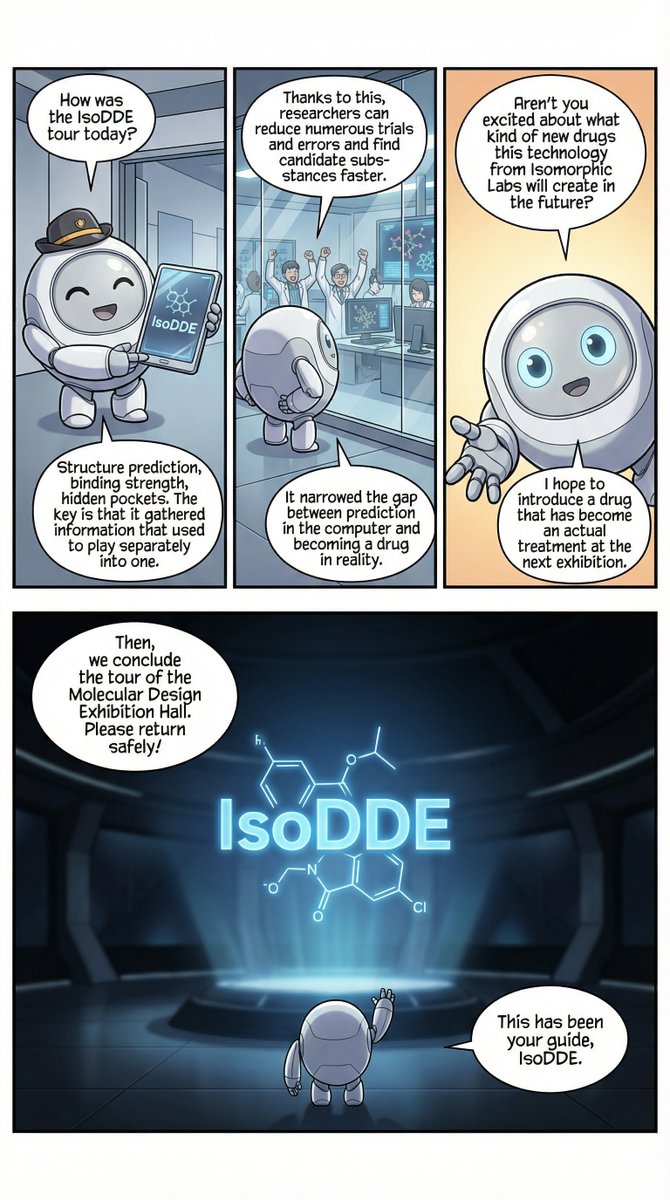
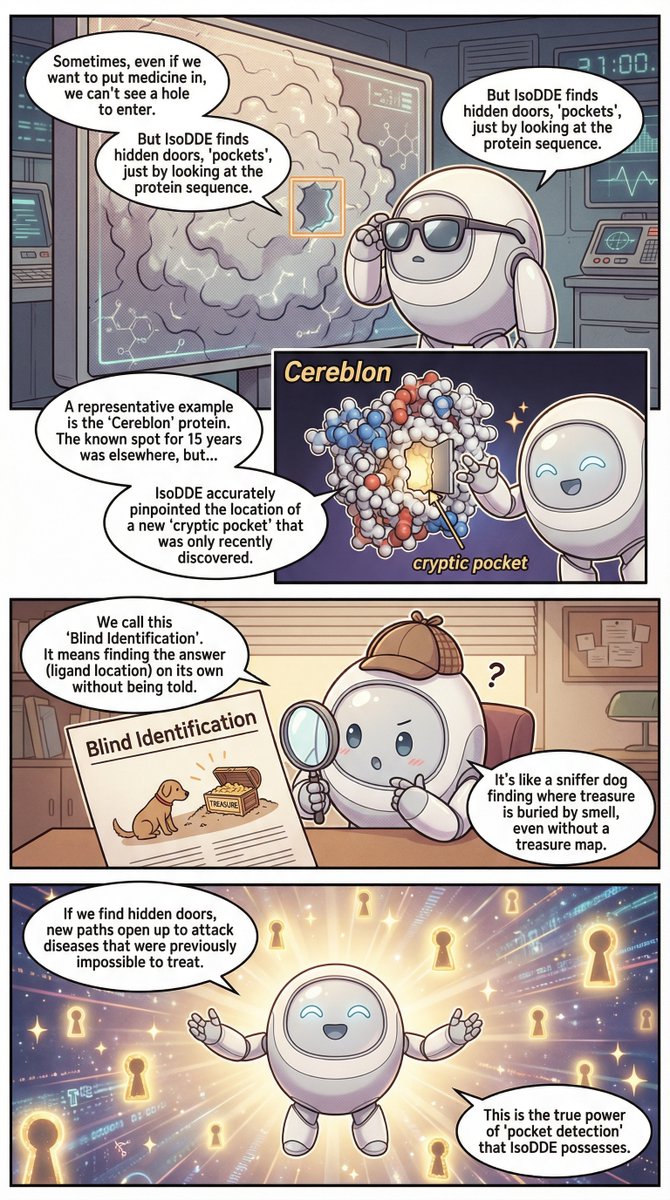
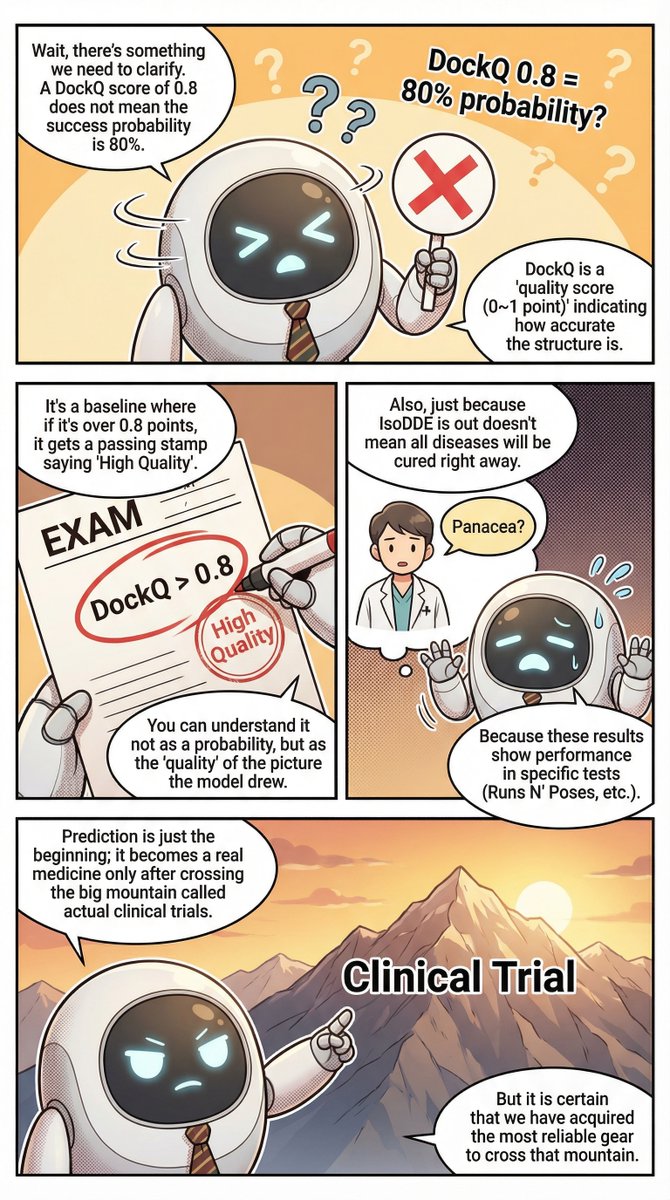
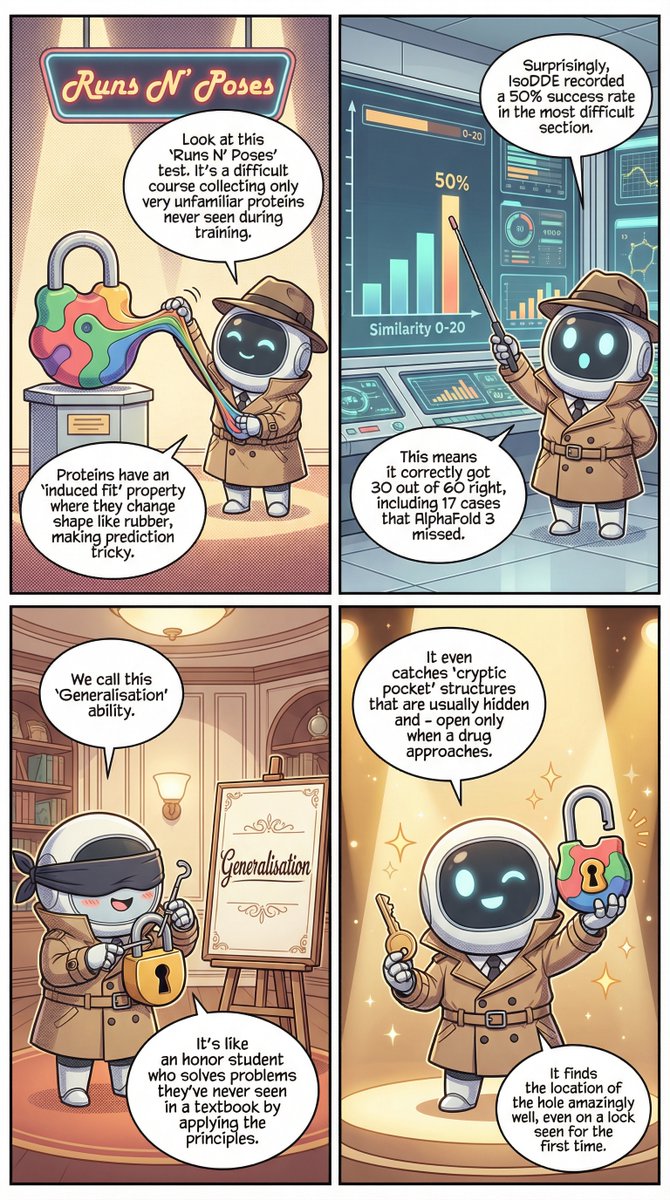
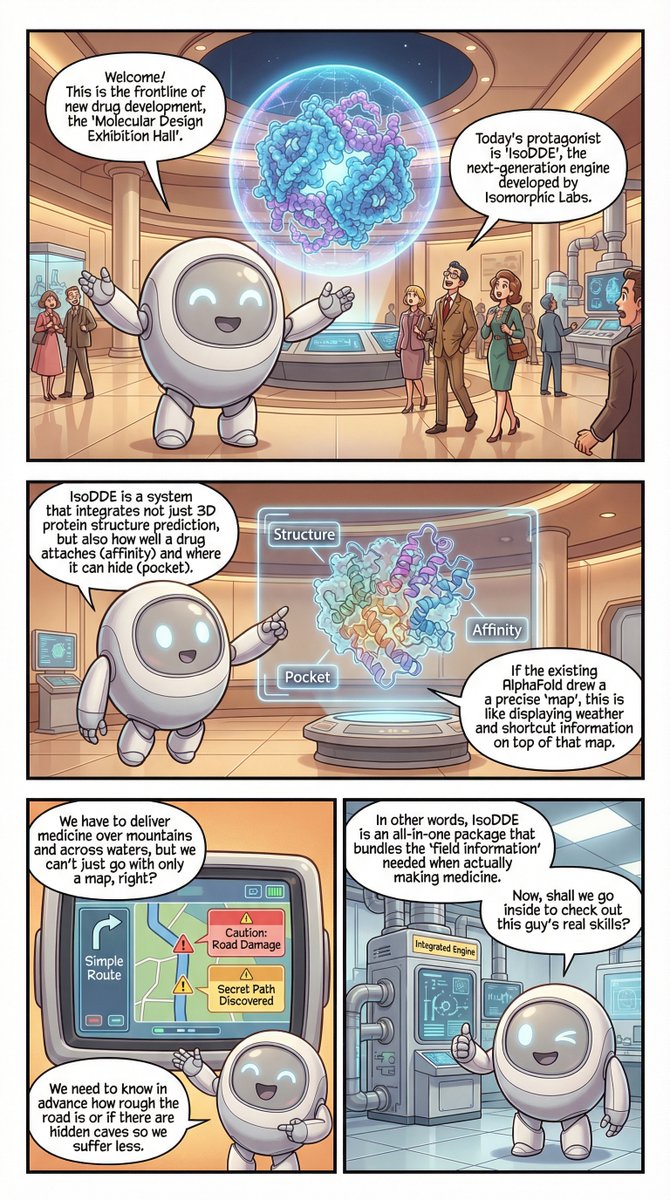
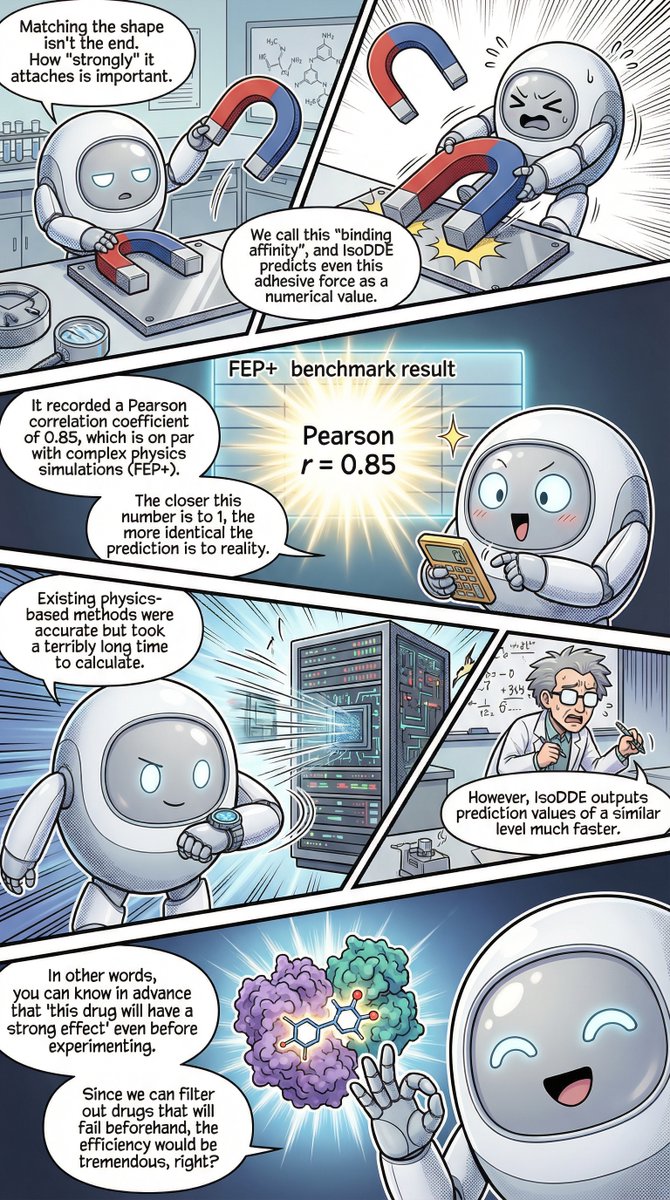
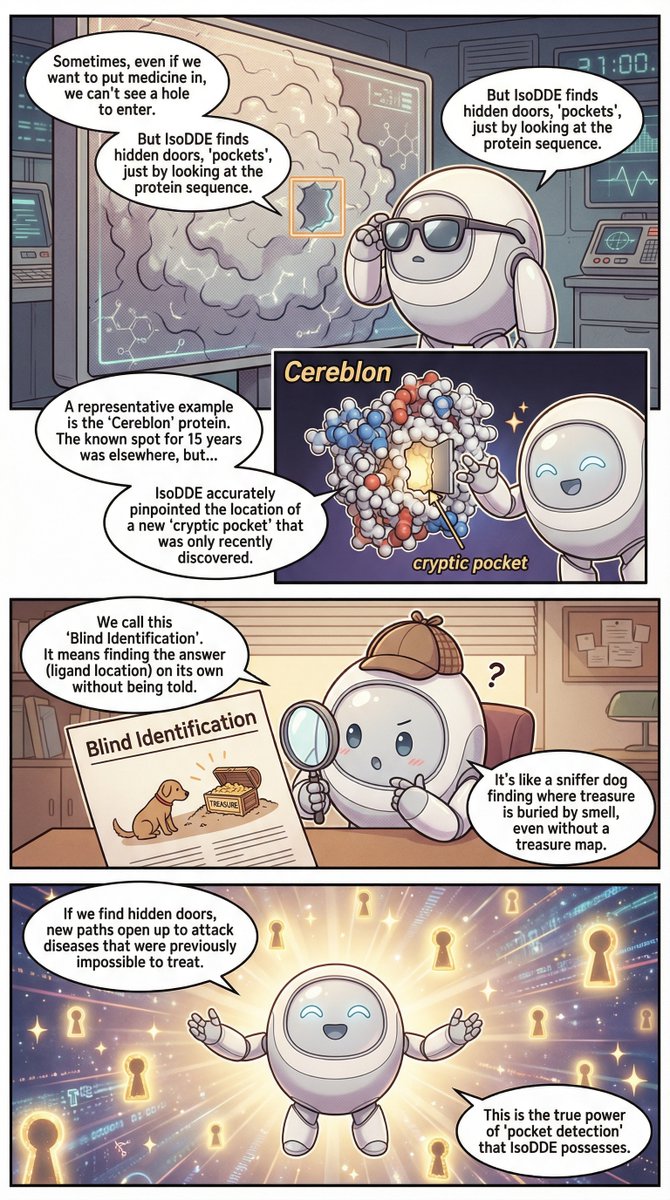
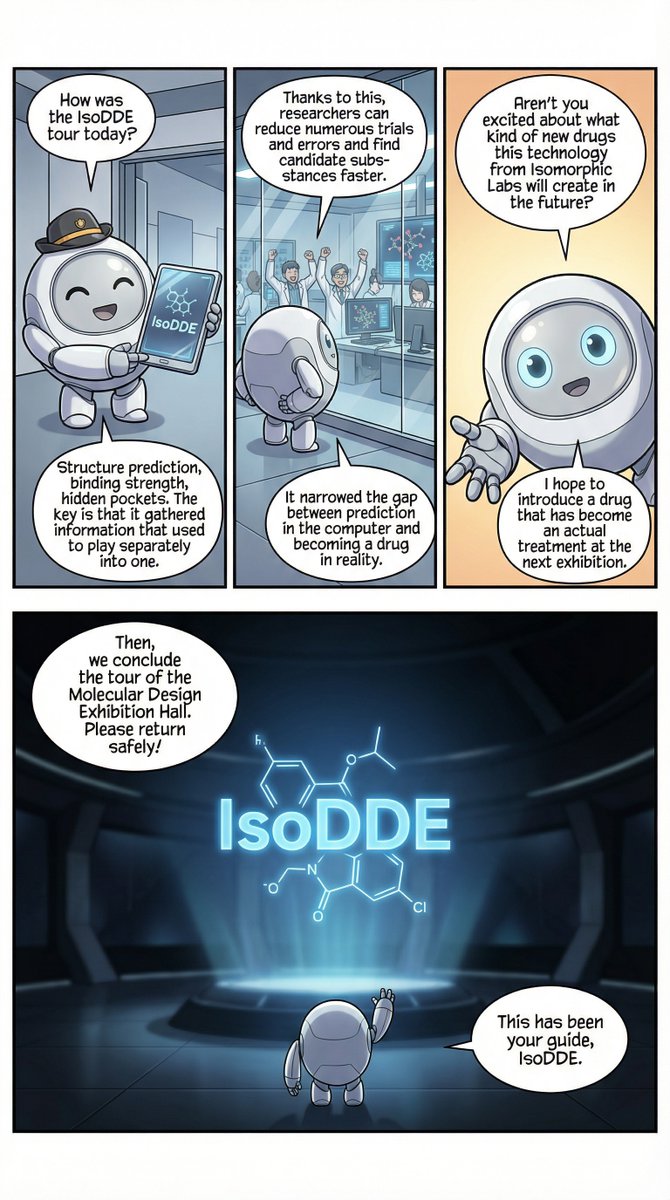
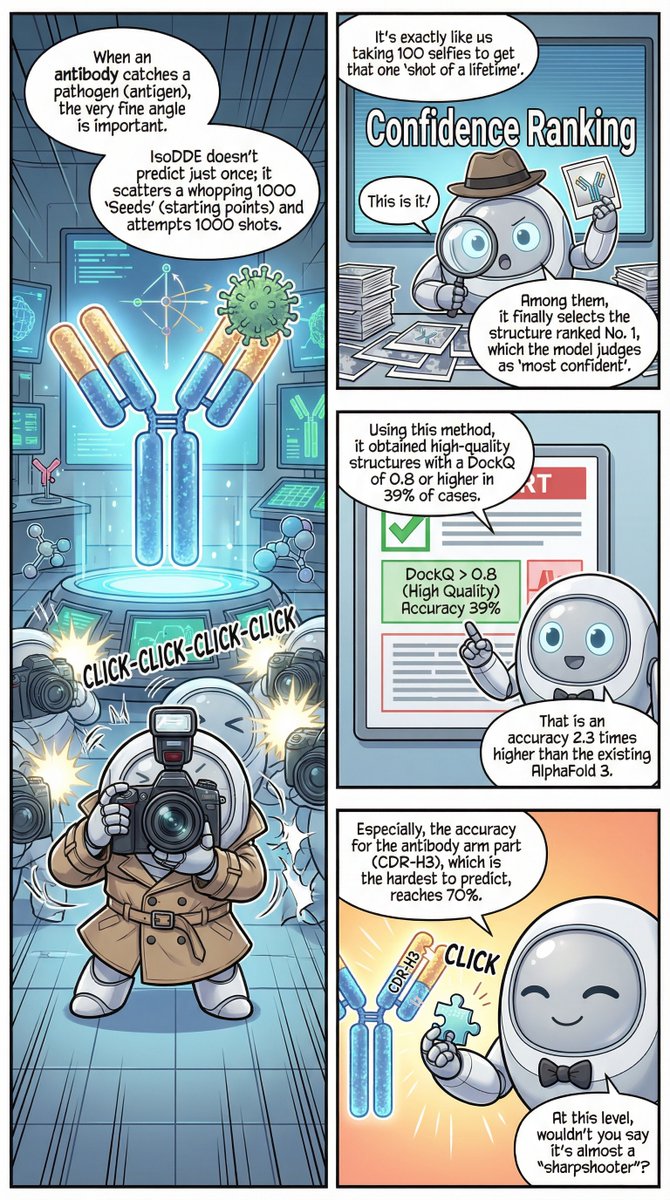
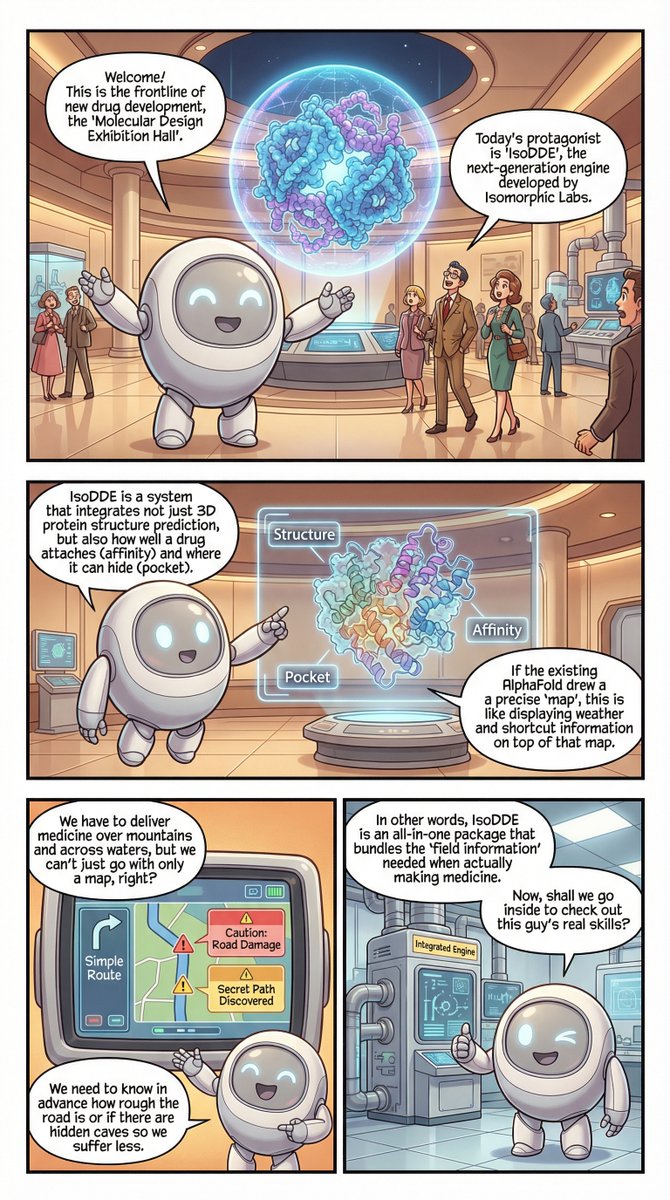
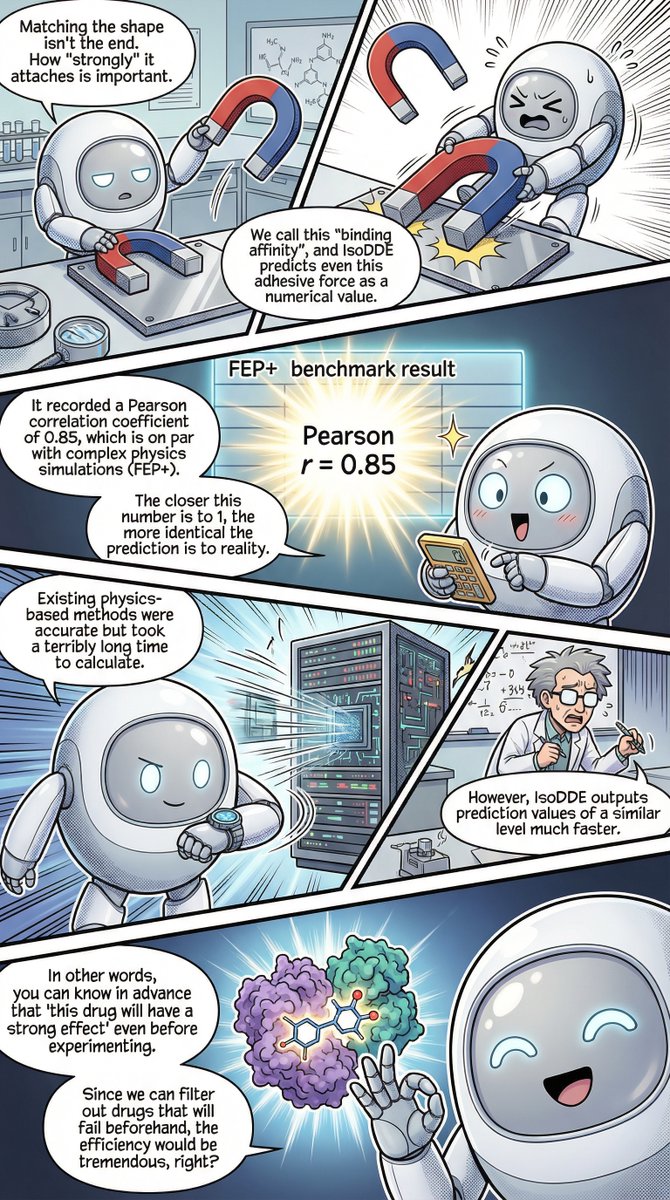
A short comic to explain the idea from the paper “IsoDDE : The Isomorphic Labs Drug Design Engine unlocks a new frontier beyond AlphaFold”.
⚠️ This comic simplifies and exaggerates some concepts for easier understanding and may contain inaccuracies.
For precise details, please refer to the original Blog
@IsomorphicLabs
Paper : https://t.co/oJuy2OReI1