Crowdstrike Analysis:
It was a NULL pointer from the memory unsafe C++ language.
Since I am a professional C++ programmer, let me decode this stack trace dump for you.
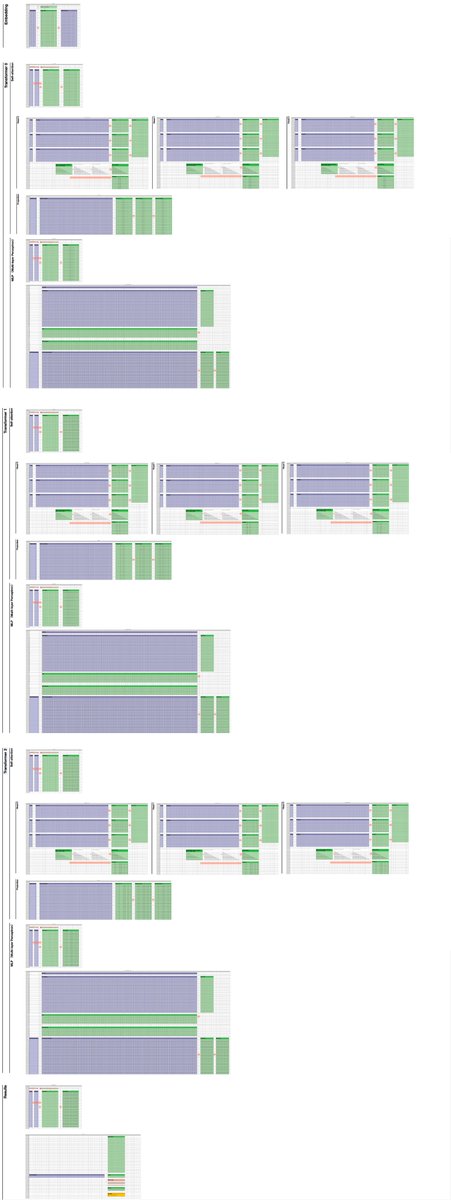
I recreated an entire GPT architecture in a spreadsheet.
It is a nanoGPT designed by @karpathy with about 85000 parameters, small enough to be packed into a spreadsheet file.
It is great for learning about how transformer works as it shows all the data and parameters going through a transformer pipeline, and all the calculations are actually working inside those cells.
Here is a link to the project where you can download the file and play with it yourself. No coding needed, it is just a spreadsheet. 😉
Spreadsheet is all you need:
https://t.co/dreZlBDq4d
Also thanks to @BrendanBycroft with his LLM visualisation project which inspired this.
Update: S3 engineers are working to make unauthorized requests that customers did not initiate free of charge.
This change will cover a range of HTTP 3xx/4xx status codes, including all of those cited in the article. We're moving quickly and we plan to share more details this week.
Thank you to everyone who brought this article to our attention. We agree that customers should not have to pay for unauthorized requests that they did not initiate. We’ll have more to share on exactly how we’ll help prevent these charges shortly.
#AWS#S3
How an empty S3 bucket can make your AWS bill explode - https://t.co/KRgL9C1u9p
I wrote this Format dialog back on a rainy Thursday morning at Microsoft in late 1994, I think it was.
We were porting the bajillion lines of code from the Windows95 user interface over to NT, and Format was just one of those areas where WindowsNT was different enough from Windows95 that we had to come up with some custom UI.
I got out a piece of paper and wrote down all the options and choices you could make with respect to formatting a disk, like filesystem, label, cluster size, compression, encryption, and so on.
Then I busted out VC++2.0 and used the Resource Editor to lay out a simple vertical stack of all the choices you had to make, in the approximate order you had to make. It wasn't elegant, but it would do until the elegant UI arrived.
That was some 30 years ago, and the dialog is still my temporary one from that Thursday morning, so be careful about checking in "temporary" solutions!
I also had to decide how much "cluster slack" would be too much, and that wound up constraining the format size of a FAT volume to 32GB. That limit was also an arbitrary choice that morning, and one that has stuck with us as a permanent side effect.
So remember... there are no "temporary" checkins :)
Follow me for more random code musings!
Btw, you don't need a Flipper Zero to "hack" dumb radio protocols. The piece of wire is enough.
Check out how to receive and decode 433MHz radio signal just with a PC sound card.
Problem: In TypeScript, developers often declare needless conditionals.
Why needless conditionals are a problem:
🚩 Adds noise
🚩 Hurts readability
🚩 Creates confusion
🚩 Often a sign of a misunderstanding or a logic error
Solution: typescript-eslint/no-unnecessary-condition
I just used this rule to find and automatically fix 100’s of bad conditionals in a large codebase.
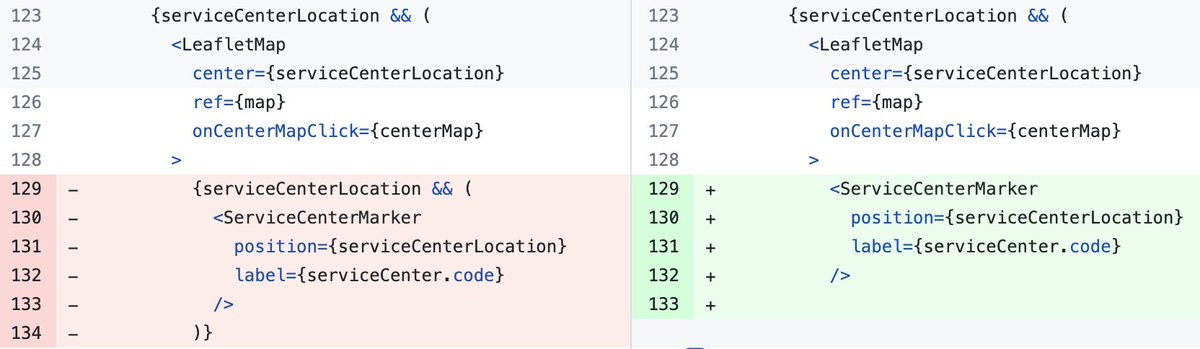
Here are 4 examples of bad conditionals it found:
1. The author didn't know that map always returns an array. So the fallback to an array was needless.
2. The condition is already checked on 123, so the check on 129 was redundant.
3. Here it caught a logic error! The "??" was reported as needless. The developer meant to check the array's length.
4. The variable is always defined because it's narrowed on line 90. So, the "?." on 92-95 were all needless.
I'm so impressed with this rule! I plan to run it on all TypeScript projects in the future.
@StevenDSanders Yes, I agree with you, it would be a bigger and more complex project. What you say would be nice too. If you move the mouse, it can show you the notification and also the possibility of seeing shortcuts for the app being used 👌🏻
@StevenDSanders [1/2] Interesting. It could be useful for people that doesn't know shortcuts and want to start using less the mouse.
I find it could be something really cool if you could detect what the user did with the mouse and how he can prevent, e.g. The user selects a piece of code with
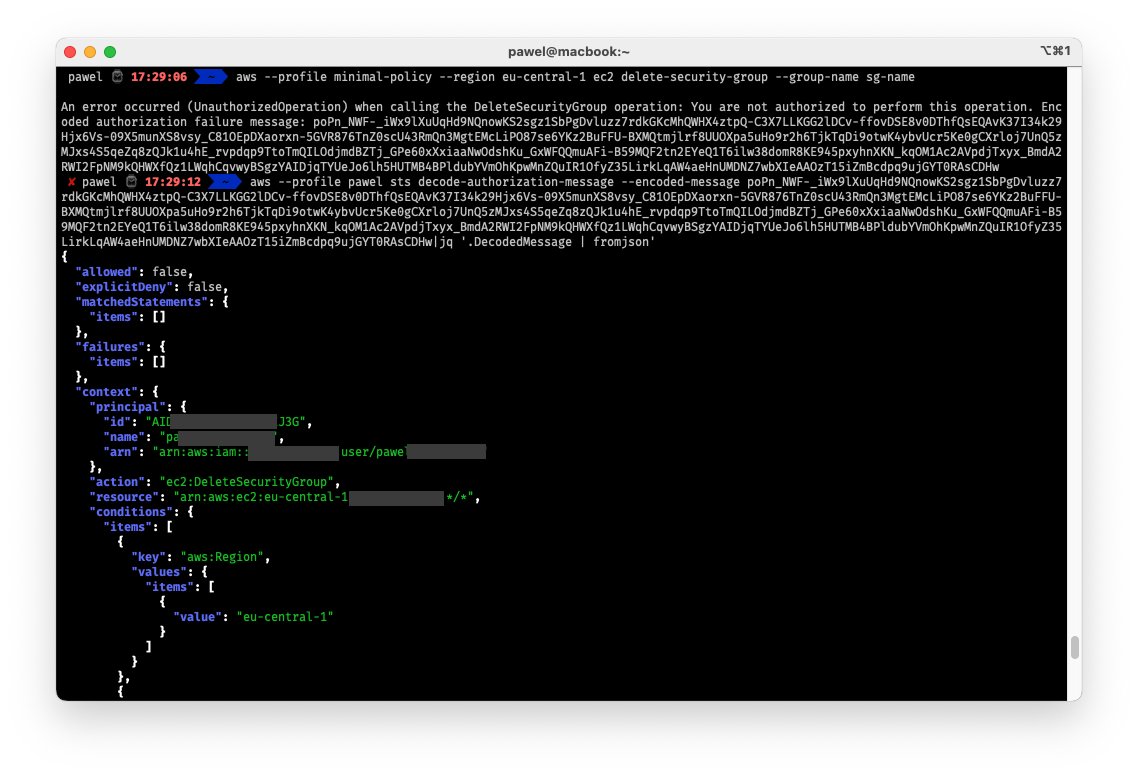
The message is encoded because it may contain sensitive information.
It is possible to decode it and get an explanation. ✅
I never knew it. 😥
I don't know how it went under my radar for so many years.
Did you know you can do that? Please tell me