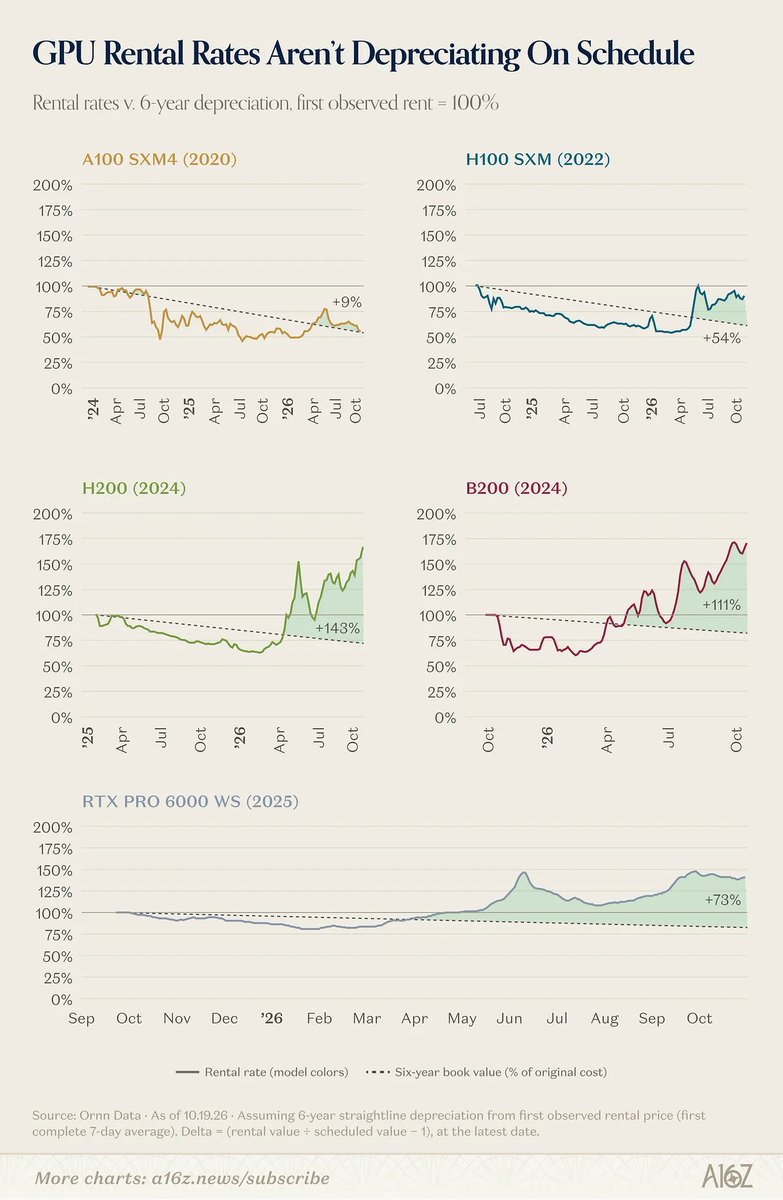
Good data showing that NVIDIA AI infrastructure is a durable, investable asset that retains value.
New applications and workloads keep landing on our fungible platform, increasing demand because of its productivity.
Chart by @a16z
Some datapoints from a memory supply-chain expert call a few weeks ago:
→ Conventional DRAM may now be competing with HBM for wafer allocation on economics. The call puts HBM LTA gross margins at ~58% and argues that tight conventional DRAM supply can make marginal capacity more attractive outside HBM.
→ The contracting model is getting much harder. Older LTAs were generally 2–3yr price/volume agreements with limited upfront commitment, while newer structures increasingly involve 5yr+ take-or-pay terms, deposits and price floors/ceilings. The bigger shift appears to be guaranteed volume and downside protection for suppliers rather than locking today's elevated prices for five years.
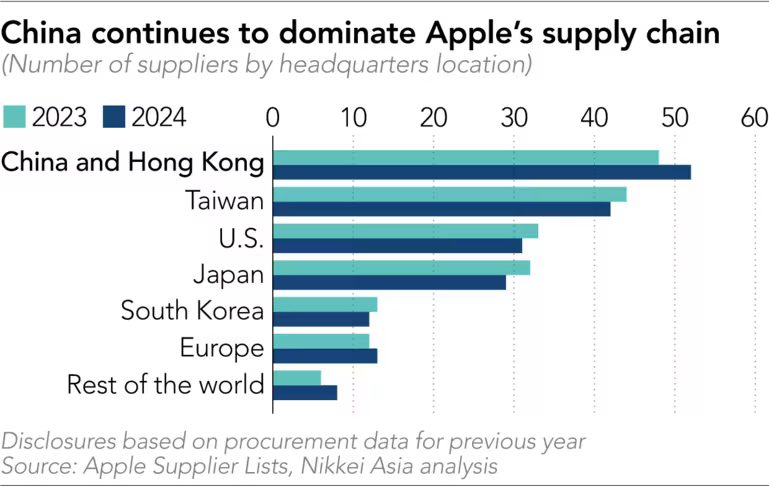
→ The call identifies Google, Meta, Microsoft and Amazon as Micron’s four largest contracted customers, with Apple, Alibaba and Tencent in the next tier. Automotive customers cited include GM, Ford and Tesla-related suppliers.
→ Suppliers are reportedly exercising much tighter control over the distribution channel. Distributors may be required to provide end-customer sales records, while manufacturers can conduct warehouse checks and potentially revoke allocation or authorisation if inventory is being hoarded rather than sold through.
→ SanDisk is said to be requiring NCNR terms alongside ~30% upfront deposits from some distributors, effectively pushing parts of the channel toward much harder long-term supply commitments.
→ Customer importance can also differ materially by supplier. The call gives an example of the same distributor being Tier 3 at Micron but Tier 1 at SanDisk, reflecting SanDisk’s greater reliance on large retail/channel partners and resulting differences in allocation and commercial terms.
→ HBM4/HBM4E is also being used as a pricing reset. The call cites HBM3/3E contracts around ~$530–550 per device versus ~$800–1,400 for HBM4/4E. The exact magnitude is difficult to verify given pricing varies materially by stack, density, customer and contract period.
→ Interestingly, the expert was less convinced that tight memory supply necessarily proves equally tight underlying AI demand. Data-center capacity can be built ahead of available power and utilization, making it difficult to distinguish actual consumption from capacity being secured ahead of future demand.
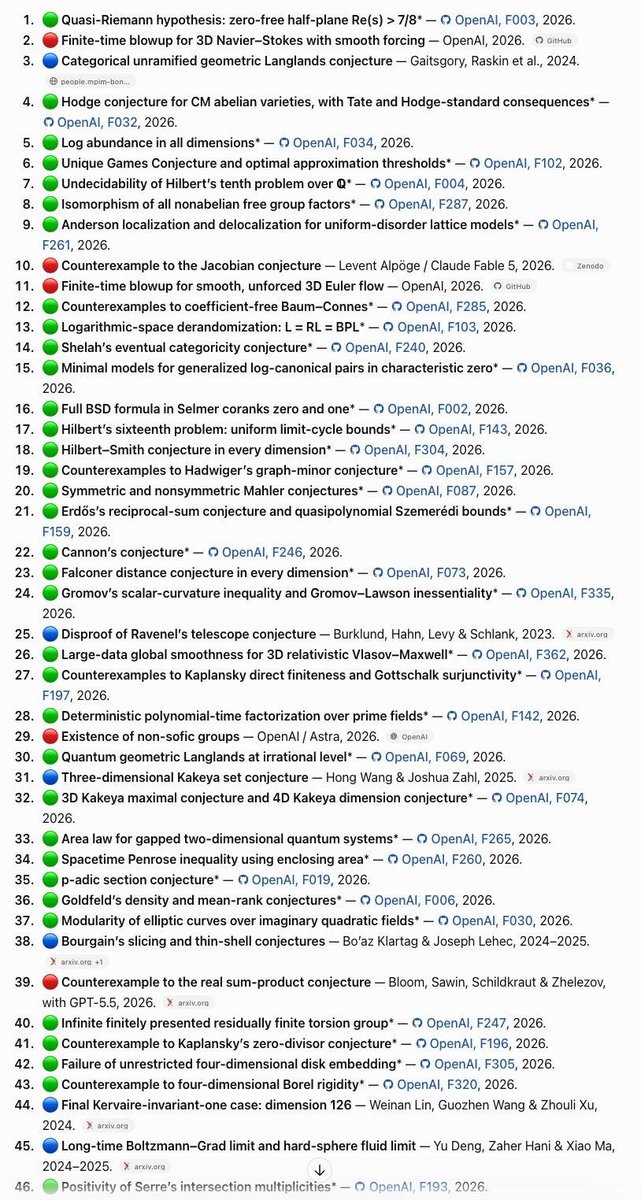
i asked GPT 6 Pro and Fable 5.1 to rank all discoveries in the last three years
🔵 for Human discovered
🔴 for AI discovered (before October 6th)
🟢 for AI discovered from OpenAI/math repo
81% of them have been released today. wtf
Just so you get an idea of who has what percentage of BEV in their new registrations.
I haven't yet updated all of them to include the most recent month, but you know.... to get an idea.
And yes, you read that correctly, Uruguay is further ahead than Germany.
(note: does not include the entire world)
A big contrast:
From 2006 to 2023, China's nuclear energy production surged by 690%, rising from 55 TWh to 435 TWh.
Meanwhile, Germany's nuclear output plummeted from 167 TWh to zero, making it the only major economy to fully phase out nuclear power.
Germany installed 600,000 new stationary battery storage systems in 2024, increasing storage capacity by 50%, bringing total installed systems to 1.8 million, with combined capacity of 19 gigawatt hours (GWh), enough to power two million households daily.
https://t.co/ctlWxhgPZM
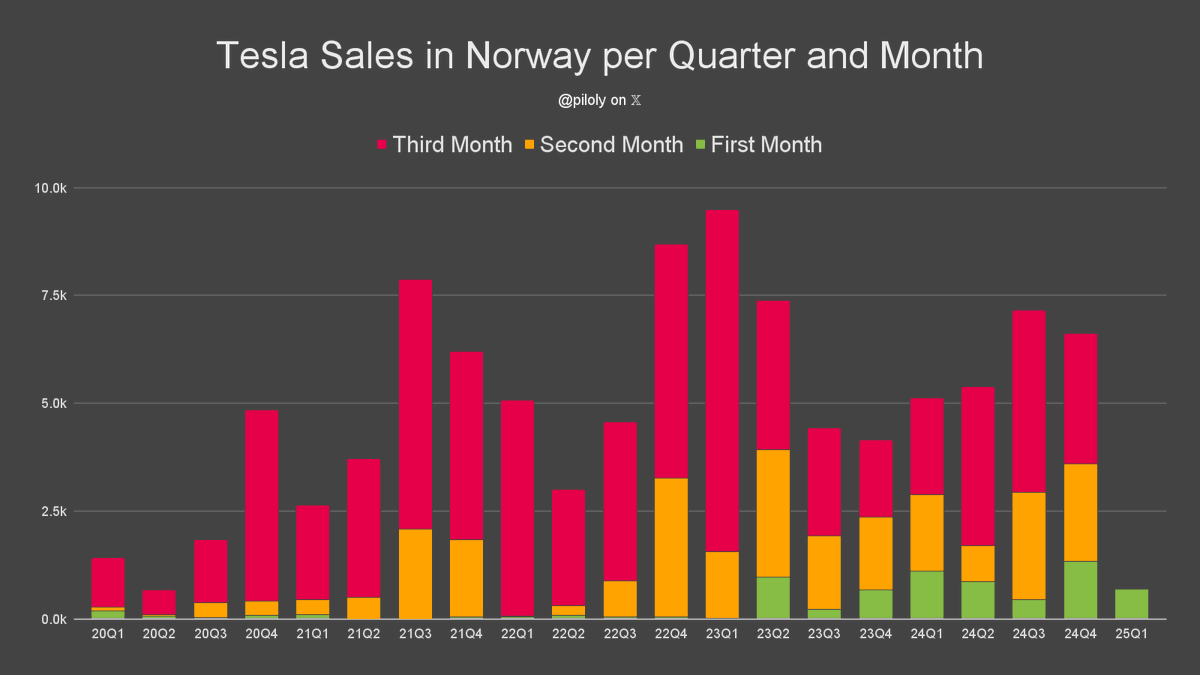
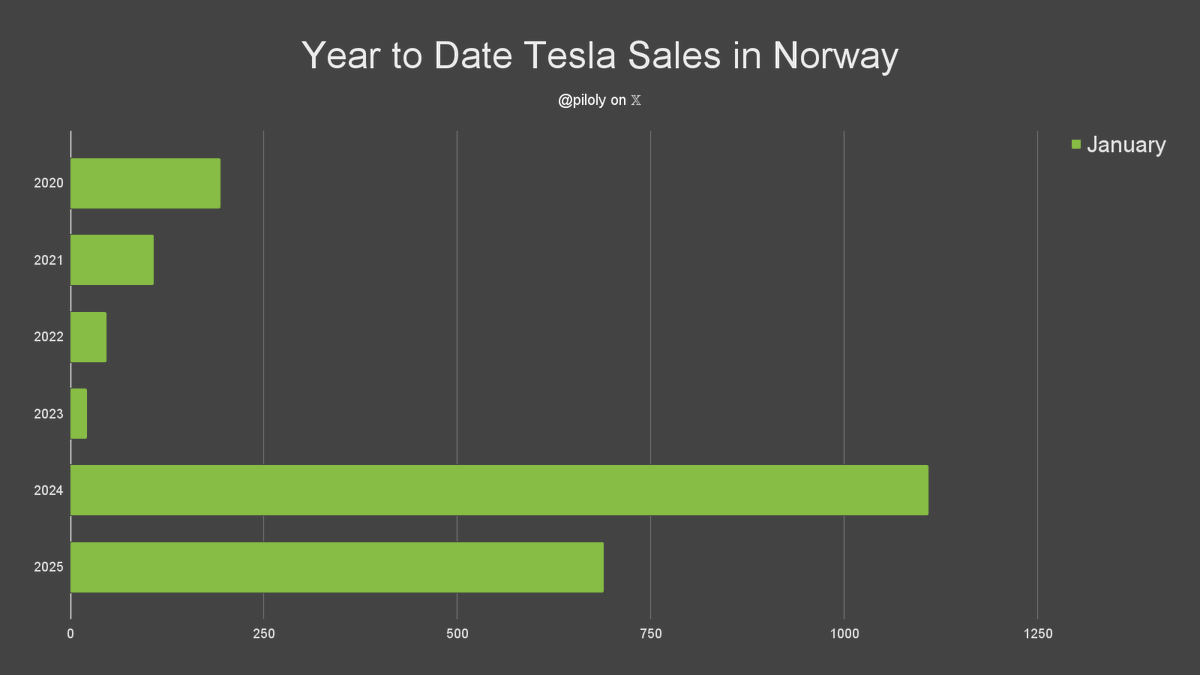
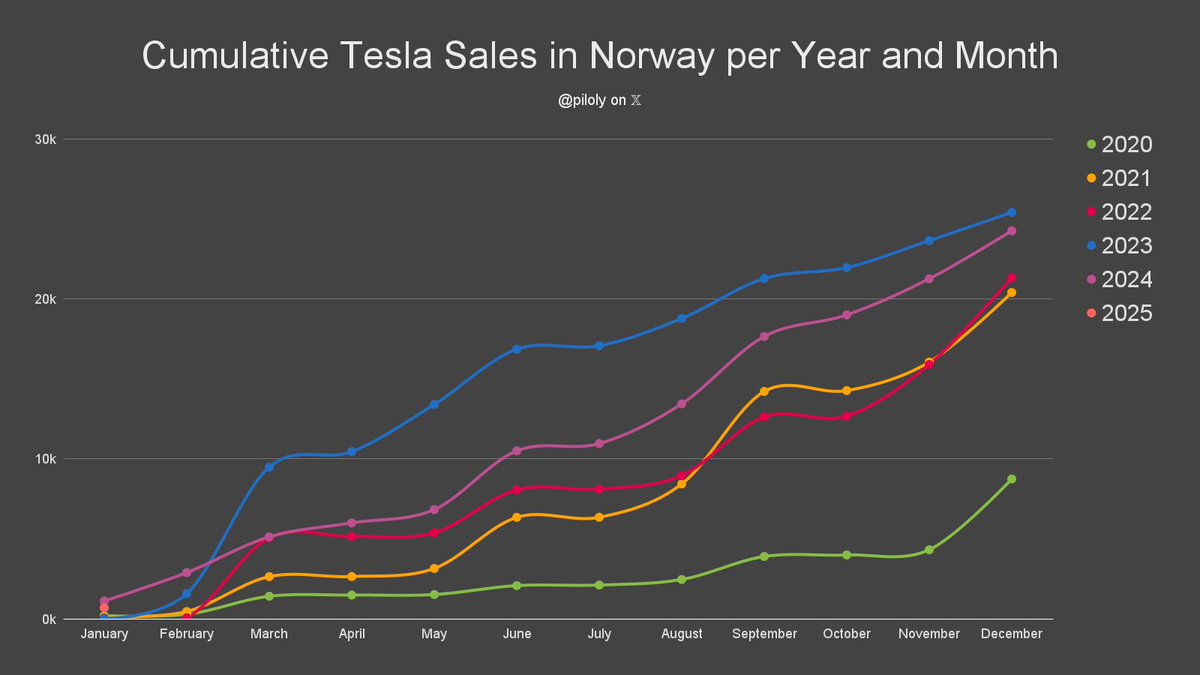
Norway reported 689 Tesla sales and 7.4% market share in January. BEV penetration is 95.8% and Tesla has 7.7% of this segment. 🇳🇴
• Tesla 3th best-selling brand
• Model Y top 10 best-selling cars
• 52% Model Y and 47% Model 3
• 5th best first month of the quarter ever and -49% vs. the previous one
• Second best January ever
• -38% vs. January last year
• Last three months -26.0% vs. August - October
• Year-to-date -38% over same period last year
• Year-to-date is 3% or 0.3/12 of last year's total
@TeslaClubNorway
Is China becoming dominant in Biotech?
Article on China Inc moving up value chain & now making new Drug discoveries https://t.co/YESRS5K76u
28% of trial starts are from Chinese companies now, surpass Europe & just behind America
Similar trend in Drug discoveries
Also in share of global deals
+ total Amt paid upfront to Chinese Biotech R&D
The key idea behind DeepSeek-R1 is scaling up simple / effective RL algorithms to solve verifiable tasks. But, why didn’t we try this before?
The correct answer is that researchers did try these types of approaches with prior LLMs, but they didn’t work this well until now. There are two main reasons for this:
(1) Better Base Models: DeepSeek-R1 is based upon DeepSeek-v3, a 671B parameter MoE trained on 15T tokens of text–this is a very good base model. Compared to base models 1-2 years ago (e.g., LLaMA or LLaMA-2), recent models are at least an order of magnitude more capable–10x bigger and trained over >10x more data. These better base models have a higher likelihood of finding interesting solutions (e.g., long chain of thought) during RL training.
(2) Synthetic Data / Chain of Thought: Most modern LLMs heavily leverage synthetic data in their training pipelines. Additionally, chain of thought is a very common output structure for LLMs–people leverage chain of thought prompting pretty much everywhere. By considering these facts together, we can infer the following:
1. Modern LLMs generate a lot of chain of thought-style data.
2. Generated data oftentimes makes it back into the training loop.
3. Therefore, modern LLMs likely see many chains of thought during training.
Put simply, LLMs today are more familiar with and likely to produce chain of thought-style outputs, which gives them a much better prior for exploration during reasoning-oriented RL.
How do we know this is true? For more evidence of these two contributors to the recent success of large-scale RL on verifiable tasks, we can look at the training pipelines for these models (e.g., DeepSeek-R1 and Kimi-k1.5). The first step of this training pipeline is generating SFT-style long chain of thought data (i.e., “cold start” data), which is done via prompting.
In other words, the base model (probably) already is capable of generating long chain of thought data. Once we train the model over these examples, RL is more stable and converges faster, which clearly indicates that the initial RL actor has a huge impact on success!
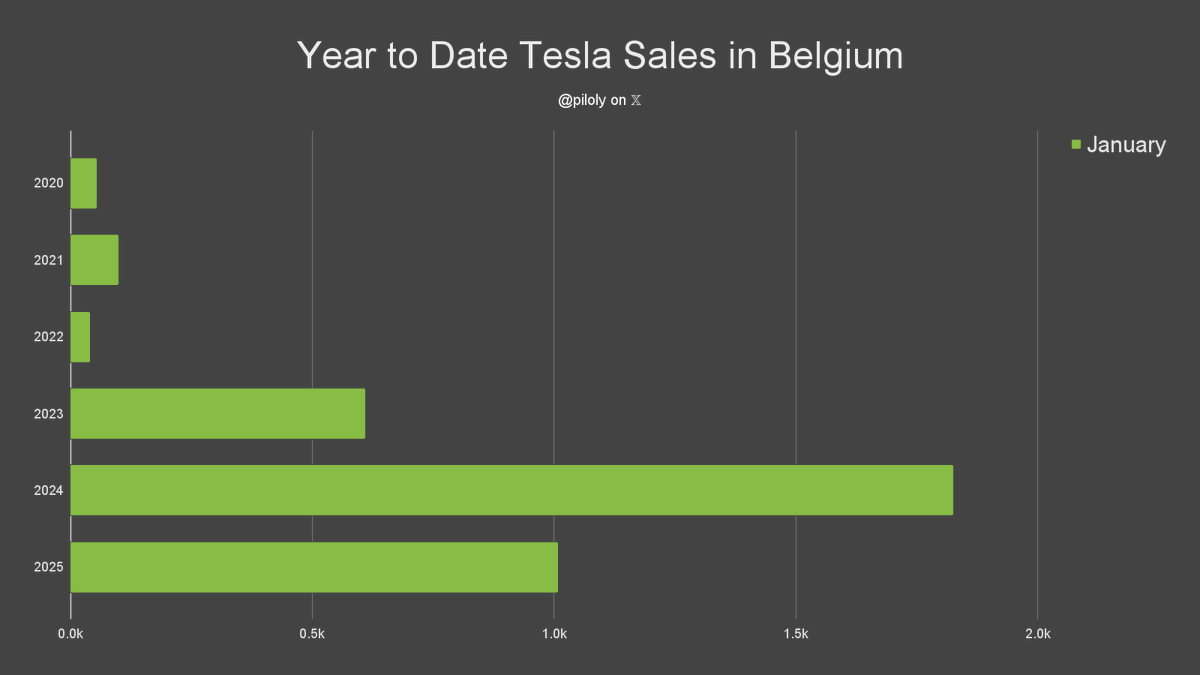
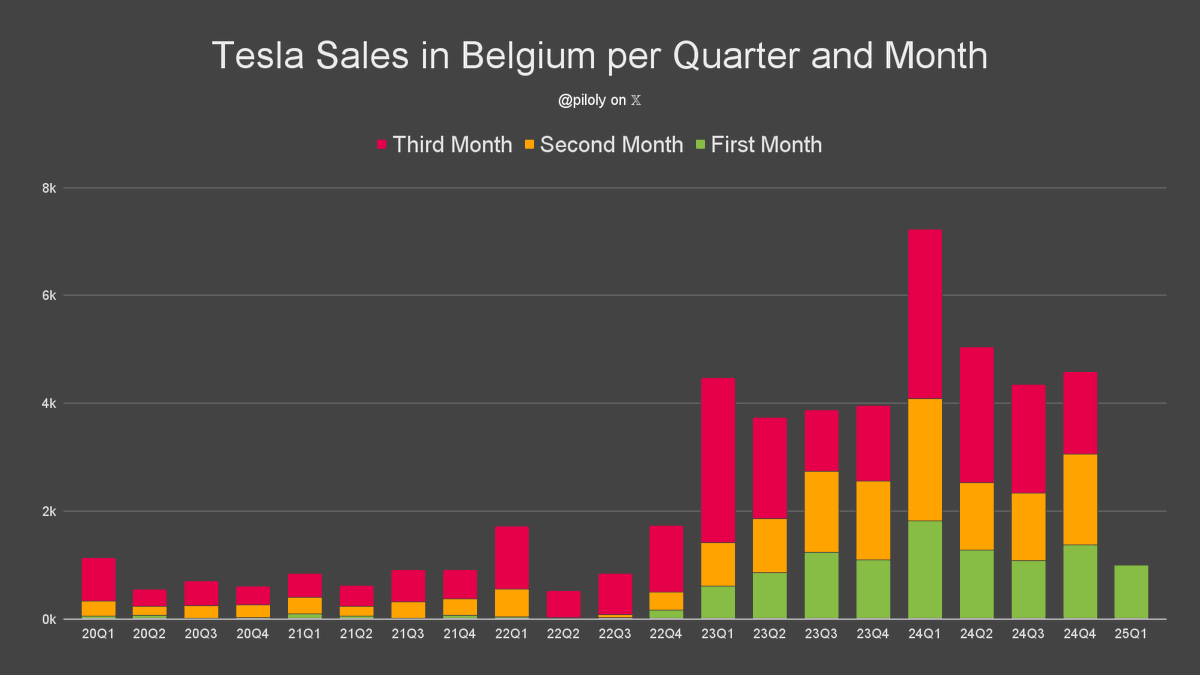
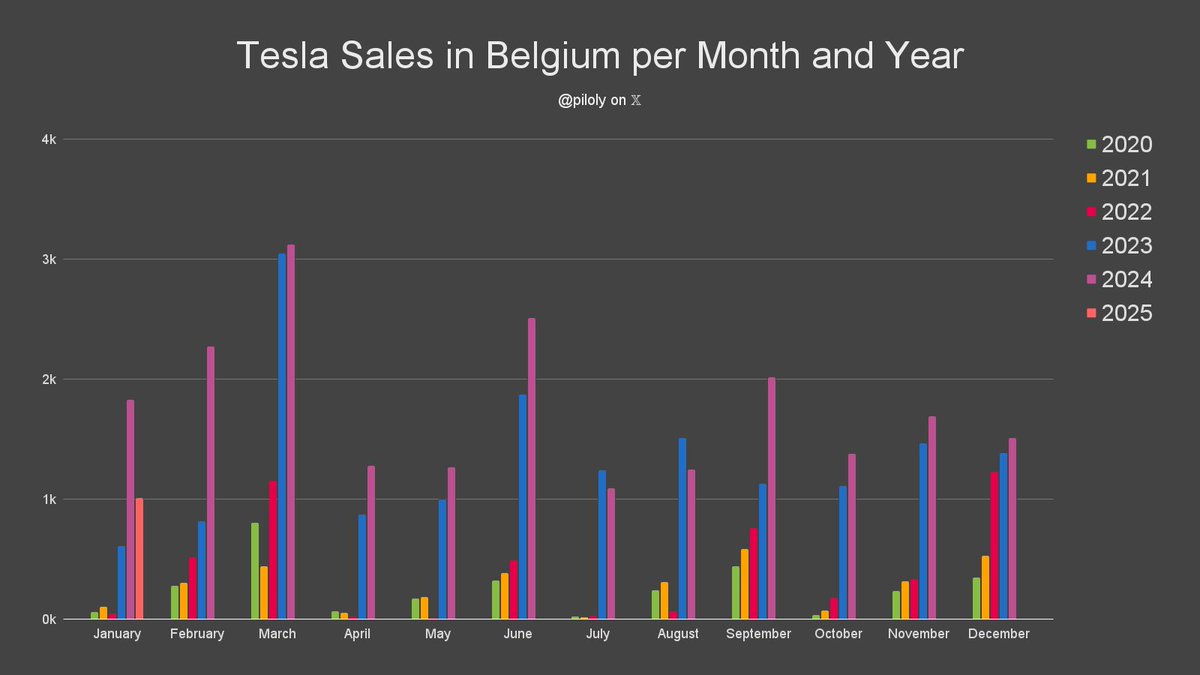
Belgium reported 1,008 Tesla sales and 2.5% market share in January. 🇧🇪
• Second best January ever
• -45% vs. January last year
• Last three months -9.2% vs. August - October
• Year-to-date -45% over same period last year
• Year-to-date is 5% or 0.6/12 of last year's total
@TeslaClubBE
Ouch. Now Germany numbers are in and Tesla $TSLA is officially down more than 50% in Europe so far this year.
Some of that is due to the Model Y changeover, but some of it is due to the negative perception of Tesla. It's hard to gauge the impact, but I'd wager it is significant.
Q1 is going to be horrible.
Legal status of hired crop farmworkers in the US from 1991 to 2022. Obviously the US won't deport all of them but even deporting a few tens of thousand of them might be enough to ruin harvests and drive up prices. I long claimed that the US benefitted from illegal migrants as this helped to keep food and construction prices low. There is no chance that US workers will fill these gaps. Source: https://t.co/quHI2NXGYb
In 2002, a team of MIT scientists published a breakthrough paper that showed how a small tweak to LFP batteries could make them 100,000,000 times more conductive.
Today, Chinese firms like CATL and BYD dominate LFP battery production, which powers most Chinese EVs.
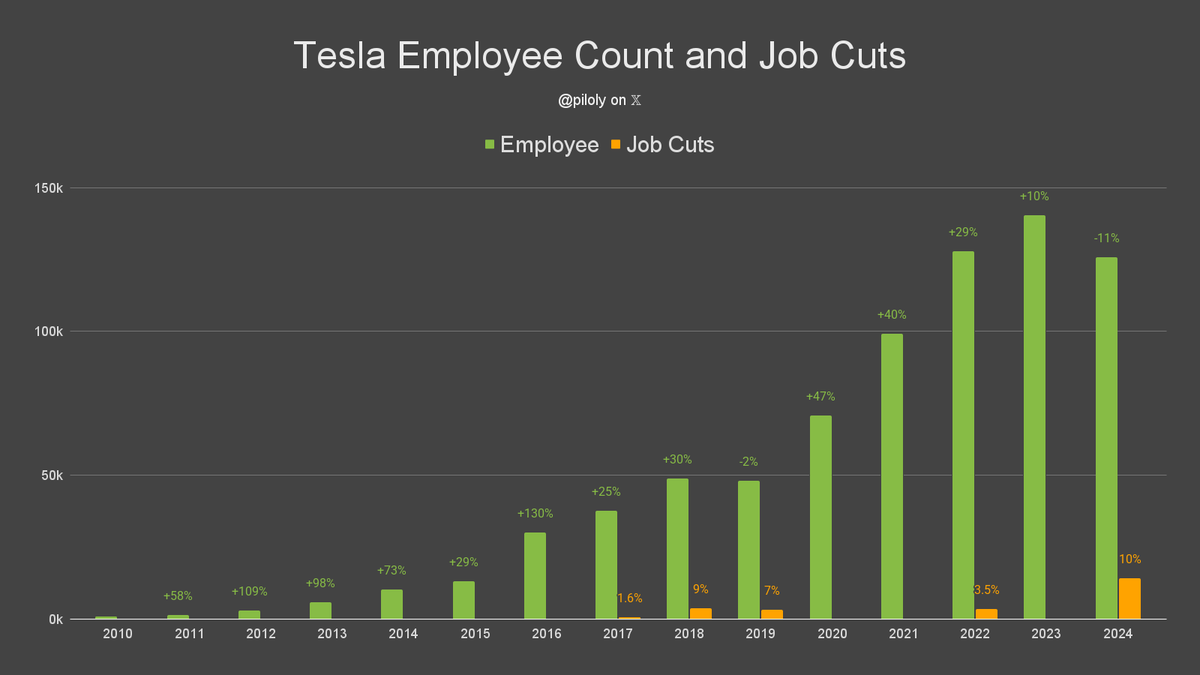
Tesla reduced the number of employees by 11% in 2024. This is the second decline ever and also the highest.
Last year in April, Tesla announced that it was cutting more than 10% of its workforce.
I hope Tesla will also report the number of Optimus working in the factories in the 10-K.