🤖 @PathOn_Robotics has been open source since day one. Today we're releasing something we never shipped.
From January to May, PathOn Robotics built an end-to-end "bring your own robot" pipeline — text → CAD → URDF/MJCF → gripper attach → ROS 2, every stage driven by coding agents. Describe an arm in a sentence, get a simulation-ready model and a working MoveIt stack.
Then we pivoted.
Rather than let five months of work sit in a private repo, we're releasing it to the DIY maker community. Out today: the architecture, the validated cases — what worked and what broke — and the design decisions we'd still defend. The load-bearing one: gripper attachment happens at the URDF/MJCF layer, not CAD, so you can bolt a custom hand onto an off-the-shelf arm without ever opening CAD.
One stage is already runnable today: end-effector attachment, as a Claude Code skill.
Coming soon: the rest of the agent skills, plus walkthroughs of each stage.
Generative robotics needs more shared plumbing. Hope this is useful to someone building.
https://t.co/xGxVUb6PHX
@PathOn_Robotics has been open source since day one. Newest drop: an isomorphic 3D-printed leader arm for teleoperating the @AgilexRobotics PiPER arm .
The usual way to teleoperate a PiPER is to buy a second PiPER and drive it in teach mode. $3,000 for something to hold.
Ours prints for about $100.
Isomorphic means the leader shares the follower's joint structure — angles map straight across. No IK, no retargeting. You move the leader, the PiPER goes exactly there.
- 6 DOF on Feetech SCS215 serial bus servos
- Squeeze trigger at the wrist for the gripper
- Largest part is 220 mm — fits a 256 mm bed. No printer upgrade
- Full STEP assembly + 7 printable STLs
This is what open source since day one buys: when we need a tool, the catalog is already ours. We print it Friday and run it Monday.
👉 https://t.co/QeLpBByX6J
#robotics #opensource #teleoperation #embodiedAI
When I started @PathOn_Robotics, I wondered if my years of research in AI and systems engineering would matter outside the lab.
Today my work crossed 1,000 citations — and the mission is clearer than ever: take embodied AI from papers to real workplaces, from factory floors to restaurants. We get there two ways — by building real automation, and by training the next generation of robotics engineers and technicians.
Building dexterous manipulation, one thing kept frustrating me: no good eval benchmark in sim.
Most papers report numbers on a floating hand — pose the fingers, close, check if the object stays. That tells you the model can wrap an object. It doesn't tell you whether the grasp survives a real arm reaching in, gravity turning on, or the object resting on a surface instead of welded to an anchor.
So at PathOn Robotics, we built one. A MuJoCo benchmark that sweeps:
🔹 hands — Allegro + Barrett today; ShadowHand, DH-3, Inspire next; plus our own in-house design (prototyping)
🔹 objects — YCB, ContactDB
🔹 physics — floating → arm-in-the-loop → object on a pedestal under real gravity
Swap any axis with a single config entry.
The video: Allegro + YCB orange and Barrett + ContactDB apple, same Agilex Piper arm, same stack.
More coming soon 👇
#Robotics #DexterousManipulation #Grasping #MuJoCo #PathOnRobotics
Looked back at my old posts today.
In 2012, bored with school, I threw myself into business development/consulting internships (BCG, EY-Parthenon), having no idea what was coming. By summer 2013, I realized a hard truth: I needed to build deep technical skills early in my career, and handle the business side later. I connected the dots and found Geospatial Analytics & Spatial Intelligence.
So, I made a hard pivot to teach myself AI/ML from absolute zero.
I didn't even have access to Google—I spent days just figuring out how to set up a VPN. No ChatGPT, no shortcuts. Somehow, I stumbled onto Kaggle and deep learning papers when I barely knew how to write a script. Just raw curiosity and grinding until 3 AM every single night trying to understand Python, ML, and algorithms.
Today, I'm a deeply technical builder—an AI Researcher (20+ papers at top conferences, 1k+ citations) and a Full-Stack Engineer spanning ML, Infra, and Robotics.
The pivot was brutal, but it's the best decision I ever made. It's not about where you start; it's what you're willing to learn in the dark.
Whenever I start something new, I remind myself: if I could figure it out back then with absolutely nothing, I can figure out anything now. 🛠️🤖
Time to bring @PathOn_Robotics to humanoids. 🚶♂️🤖
(The video below is from my scouting at the IROS 2025 booth in Hangzhou—so many platforms, so much potential.)
Sticking to our hyper capital-efficient roots: I’m looking to purchase a high-ROI humanoid dev platform for under $8k to test our full-stack OS.
Currently evaluating:
1️⃣ Unitree R1 @UnitreeRobotics
2️⃣ Booster Robotics K1 @boosterobotics
3️⃣ Fully open-source builds (e.g., RoboParty) @RoboParty_DEV
Robotics Twitter: What is the best sub-$8k humanoid platform right now? Are there any hidden gems or major red flags I'm missing with these three?
Drop your suggestions below 👇
Testing our custom navigation stack right out of the basement. 🤖🐕🗺️
Turns out you don't need a multi-million dollar corporate robotics lab to test edge cases. A basement and a retaining wall work just fine.
Hyper capital-efficient engineering. We keep shipping. 🛠️🤖
Generative robotics needs an integration layer — this is my robot-assets-skills. 🤖🛠️
AI makes 3D design much faster now. Industrial-grade arms run real algorithms. The combo is the unlock — but mounting the two is the slow, boring part everyone hates.
It's a Claude Code bundle for robot URDF/MJCF integration. The flagship skill — attach-end-effector — mounts any hand/gripper on any arm in MuJoCo with zero errors. Extensively tested on Piper, SO-101 6DoF (ours), Elephant Robotics arms — paired with Allegro, Barrett, and our Symmetric Gripper.
Bought a Unitree Go2. It doesn't ship with 3D LiDAR.
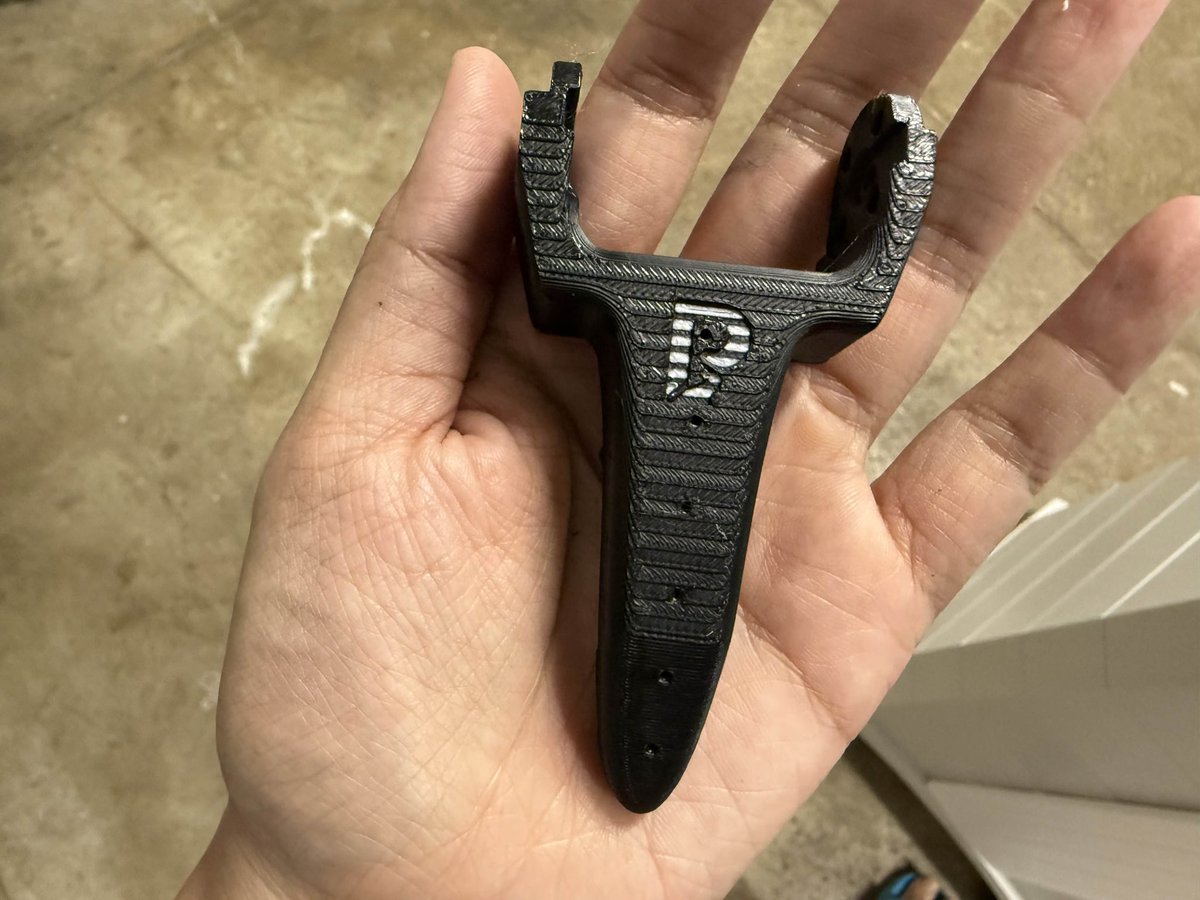
Designed a bracket. Printed it in the basement. Mounted a Livox MID-360 on top. Same bracket we use in our internal stack.
What sensor should I add next? 🤖🛠️
For anyone wanting to repro — open-sourced the mount: STL, hardware list, install notes 👇
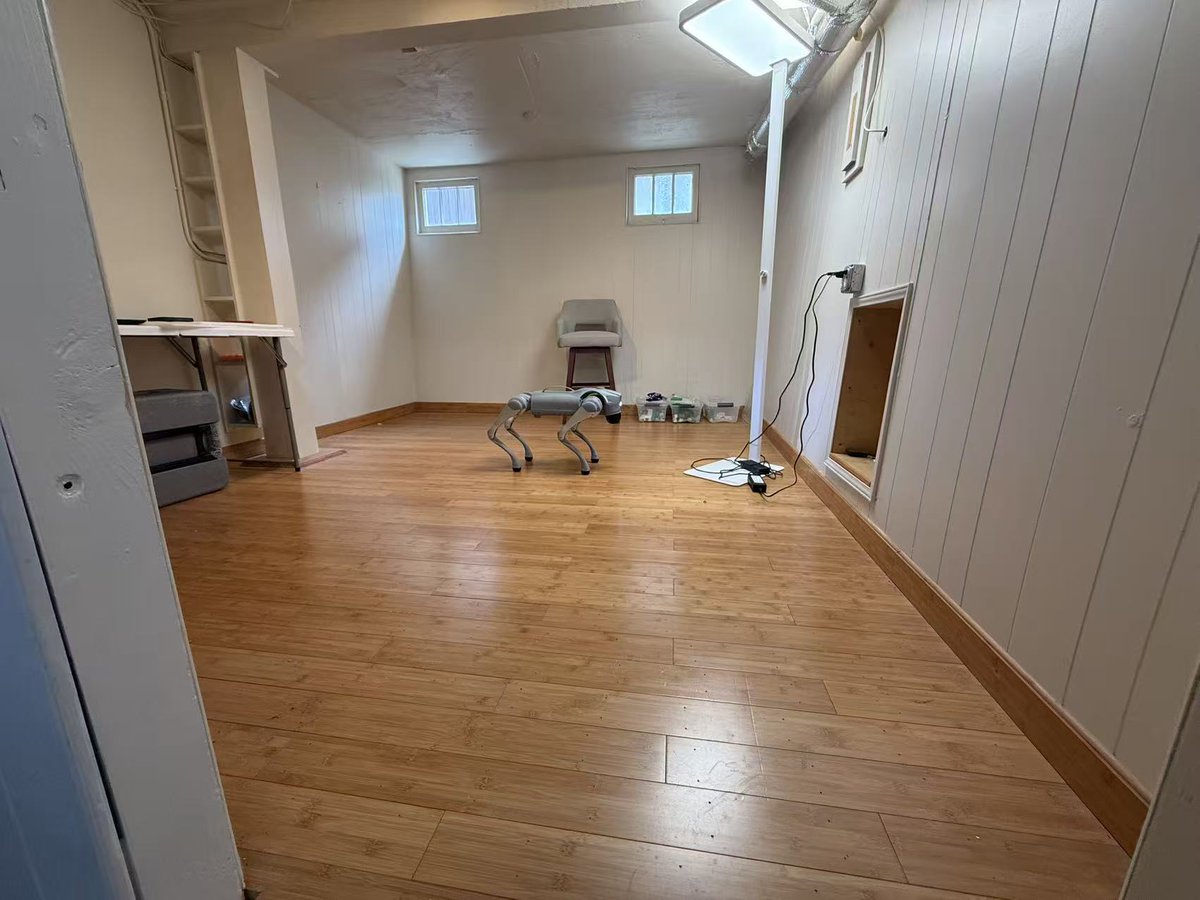
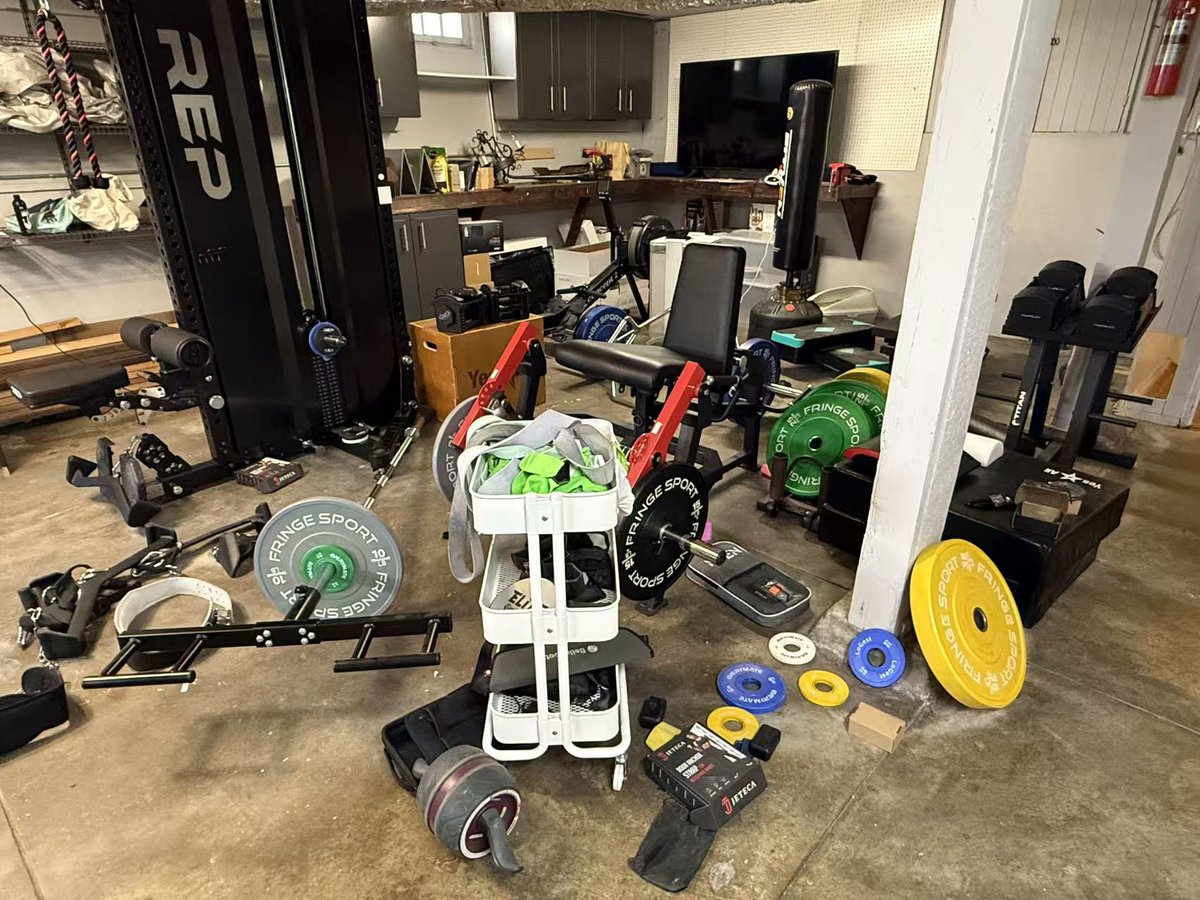
Welcome to the official PathOn Robotics 'Testing Facility' (aka the robot gym). Also known as the corner of my basement right next to my gym.
We've been running our custom sensor/software on the Go2 for our initial GTM. Bypassing the factory brain and injecting an enterprise-grade OS requires zero fancy office space—just a clear floor, a bright light, and absolute focus.
Hyper capital-efficient build mode. Let's keep shipping.🤖🛠️
Excited to share the first version of our in-house dexterous hand design at @pathon_robotics ! 🦾
We're building a unified dexterous manipulation pipeline that works across multiple hand platforms — both off-the-shelf hands and our own design, which
we're now prototyping.
Next week, we'll integrate eFlesh, a low-cost tactile sensor, to give the system rich contact feedback for fine manipulation. @Raunaqmb
The goal: a hardware-agnostic pipeline where you can plug in your preferred hand + sensor stack and get dexterous manipulation out of the box.
More updates coming soon 👇
Stock SO-101: 5 DoF + non-symmetric gripper.
SOTA grasp models: 6D poses + symmetric grippers.
So we upgraded the SO-101 to 6DoF and designed a symmetric parallel-jaw gripper — so any SOTA grasp model drops in. 🦾
Here's the full arc 🧵👇
Selling my $11k Chanel jumbo bag on @TheRealReal to buy robots instead! 🤖 Planning to get PiPER and others (~$2-3k total) because honestly, I'll use robots way more than a luxury handbag 😂
#priorities#robots#tech
🎉 LiteWebAgent just hit 100 stars on GitHub! ⭐
Thank you to everyone who has supported this project. Excited to keep building! 🚀
Check it out: https://t.co/4c1TJ0Yzx1
#OpenSource#WebAutomation