I'll be visiting @UCBerkeley's @BESI_Berkeley for the next months, continuing my work on causal inference, green industrial policy, and climate policy evaluation. Thanks to @jonasmeckling for hosting me at BESI! Anyone in for a coffee in the Bay?
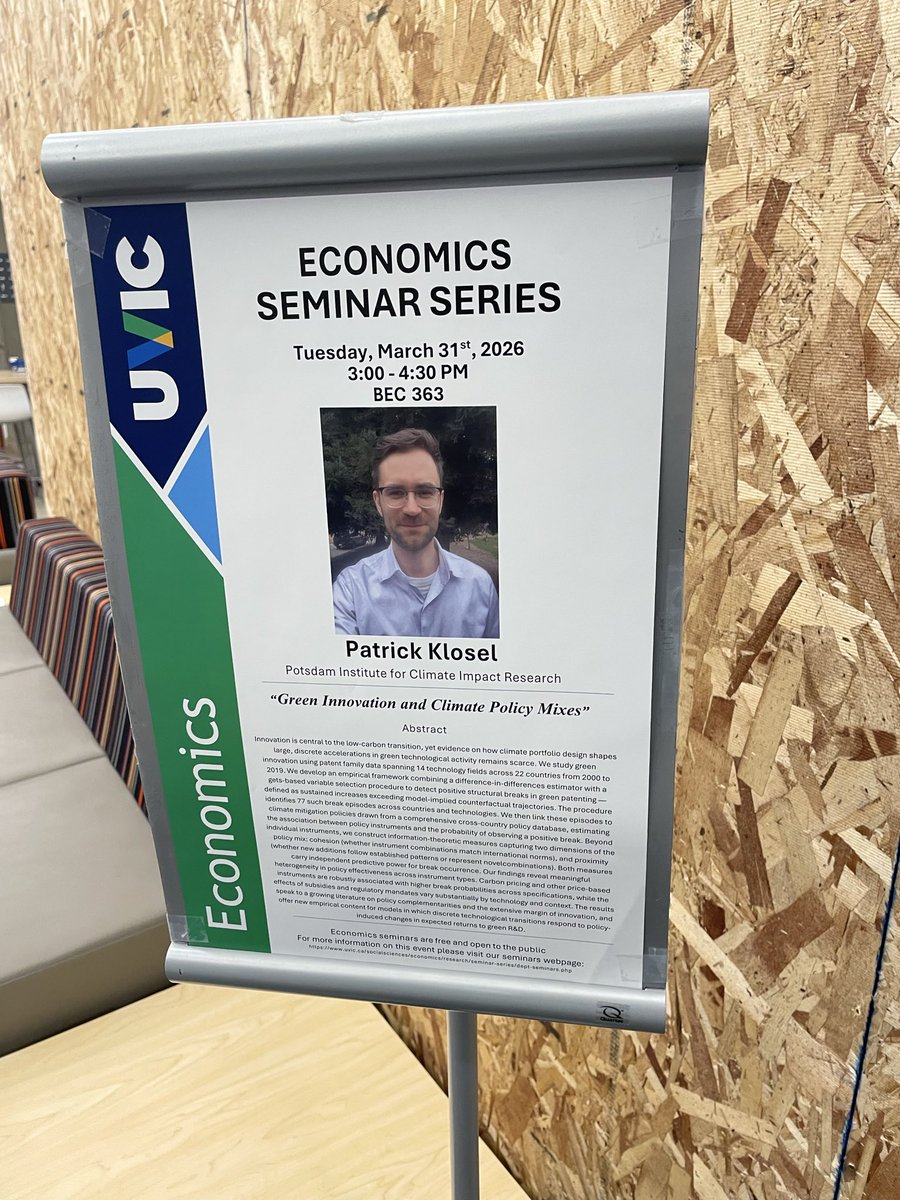
Glad to have had the chance to present our work on climate policy mixes and green innovation at
@UVicEconomics
& talk about econometrics with
@FelixPretis this week. Vancouver Island is such a beautiful place. On a good day, you can see as far as the Olympic National Park!
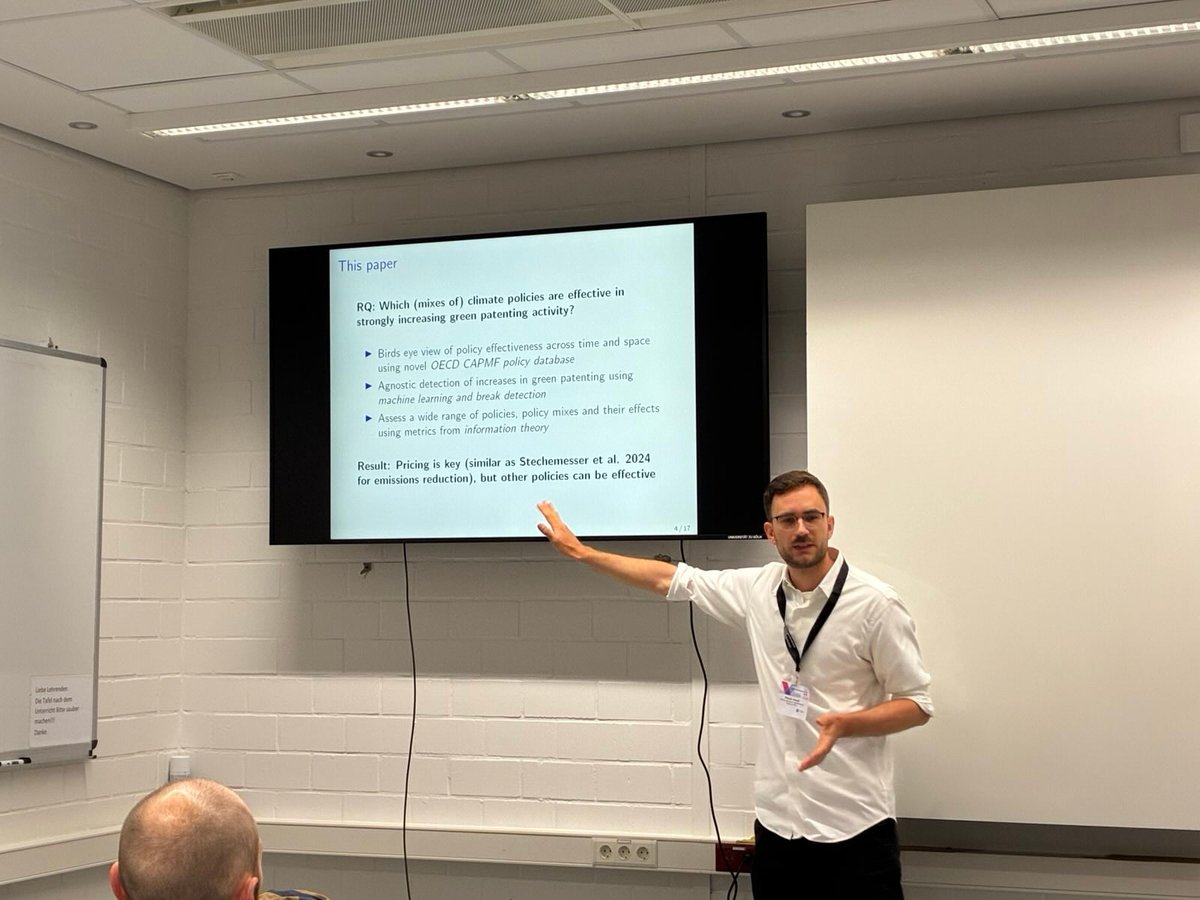
I presented our paper on clean innovation and policy mixes (with @Technolowicz and others) at the Verein für Socialpolitik Annual Conference last week in Cologne. The conference was truly great! #VfS_Conf2025@VfS_econ
I really enjoyed participating in the Association of Environmental and Resource Economists' #AERE2025 Summer Conference last week, presenting my paper on double machine learning (#DML) & electricity market decarbonization (joint work w/ Nicolas Koch & Philipp Bach)
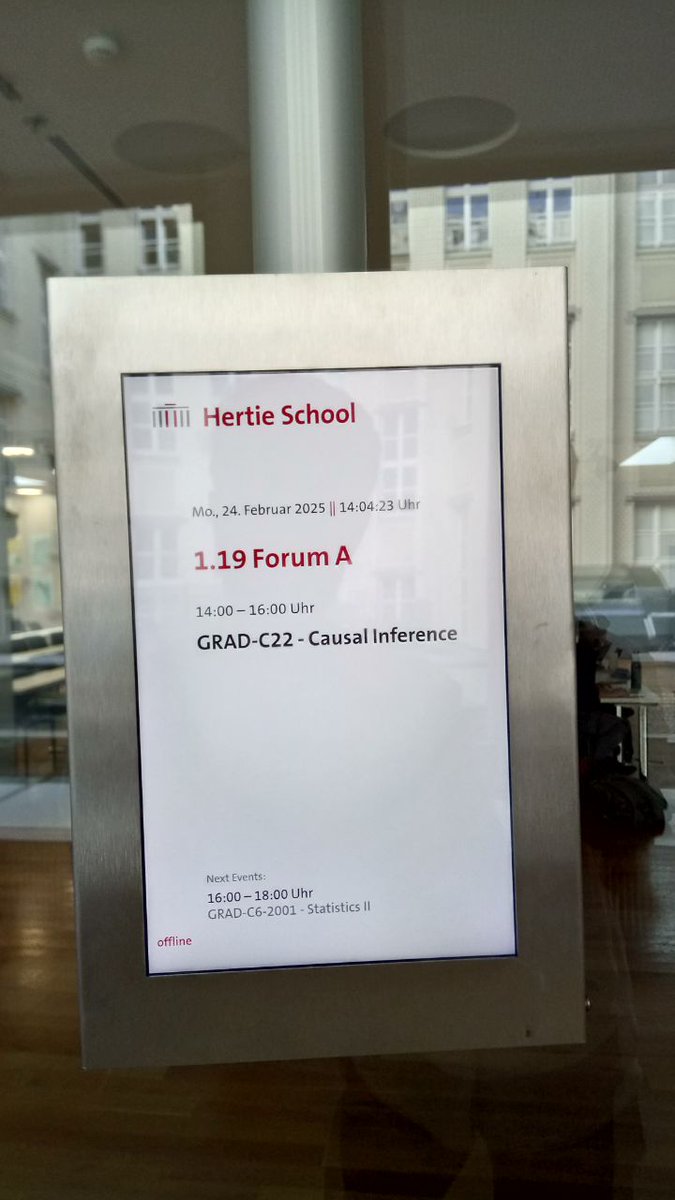
I am very much looking forward to teaching @thehertieschool this spring term, as the TA for Causal Inference (starring Will Lowe @conjugateprior and many causal graphs) in Hertie's Master in Data Science for Public Policy.
Had lovely presentation feedback from the panel and participants at the Causal #DataScience Meeting. Also, VERY excited about some new methods and tools from the other panelists, particularly the work of @patrickkloesel.
#CDSM24
After the Annual Meeting is before the Annual Meeting! We are very much looking forward to #VfS_conference2025! Where? @UniCologne Topic: "Revival of Industrial Industry" @AchimWambach
💭https://t.co/SvKhQgciWA
Had the pleasure of giving a workshop on causal mediation analysis (exploring causal mechanisms of treatment variables) at @MCC_Berlin in #Berlin. A huge thank you to @patrickkloesel from @PIK_Climate and colleagues for hosting me and for the engaging, insightful discussions!
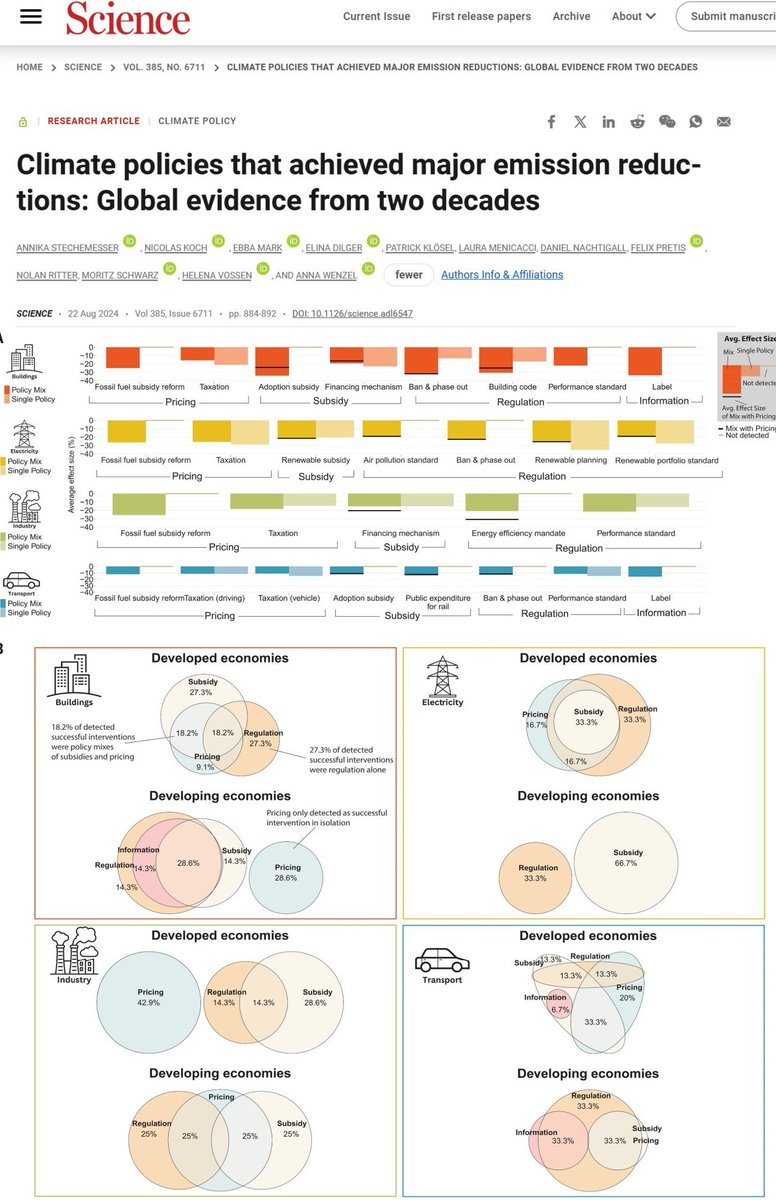
A few days ago, we published an article in @ScienceMagazine. Time for a short post about it.
We tried to contribute to an important debate: How well are we actually reducing our carbon emissions?
https://t.co/e4vLo5Wh6S
@AStechemesser@FelixPretis@i_ebba@patrickkloesel
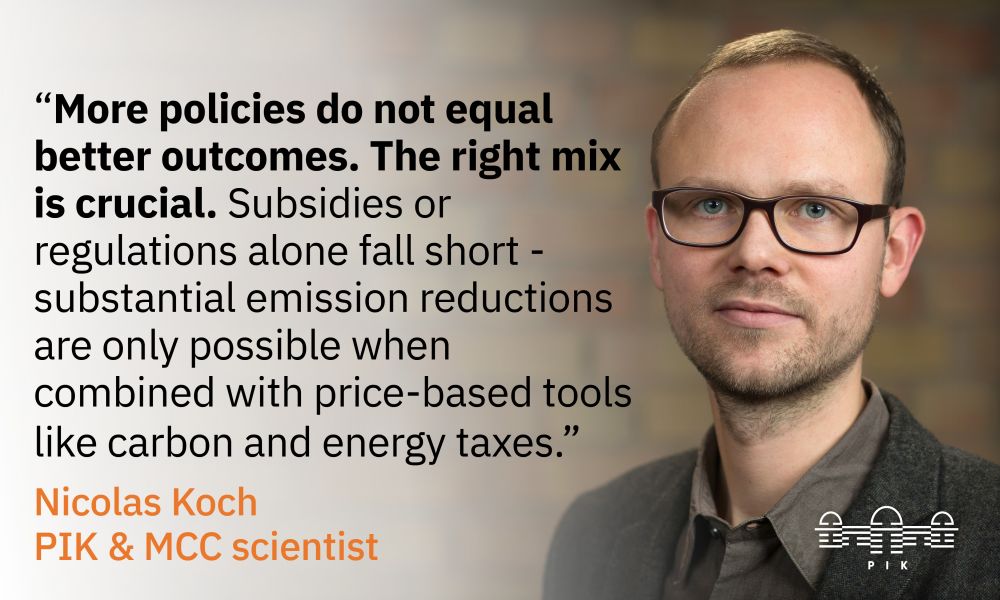
Which climate policies work? Glad to see our paper, led by @PIK_Climate and others and published in Science, can provide crucial insights. Key messages
1. Mixes>stand-alone
2. There is no one-size fits all approach
Study was possible thanks to our climate policy database CAPMF.
Carbon pricing plays a major role on reducing carbon emissions - even as a stand alone policy - watch @MoritzPSchwarz research summary of the new paper featured in @ScienceMagazine today. 1/3
SZ: Wie Politik dem Klima wirklich helfen kann – und wie nicht. Forscher haben weltweit rund 1500 Klimaschutz-Maßnahmen untersucht, und nur bei 63 davon eindeutigen Erfolg gefunden. Für die Bundesregierung haben sie einen Rat. Von @AleanaKe
https://t.co/RO5j9yCA4U
@PIK_Klima
🆕Evaluation of #climatepolicy over 2 decades: A global PIK study of 1,500 #climatepolicies, published in @ScienceMagazine, shows most failed to cut emissions. Only 63 cases saw a 19% average reduction. The key? Tax & price incentives in smart policies.
👉https://t.co/0rnuDhAQ2r
Now published in @ScienceMagazine: groundbreaking evaluation of #ClimatePolicy measures over two decades. Led by @MCC_Berlin & @PIK_Climate. The key characteristic of successful cases = inclusion of tax and price incentives in well-designed policy mixes.
https://t.co/p8AZGlzxnm
'Many #ClimatePolicies Struggle to Cut Emissions' reports the @nytimes on new PIK & @MCC_Berlin study. The most effective policies tend to combine several emissions-cutting strategies (paywall!).
https://t.co/6LKQ9XhOsW
The world can take a major step to meeting the goals of the Paris Climate Accord by focusing on 63 cases where climate policies that have had the most impact, new research has revealed.
Watch Ebba Mark's summary of this new study, published today on @ScienceMagazine.
1/2
A machine learning analysis has today revealed the most effective climate policies out of 1,500 implemented worldwide.
There are not many, reports Science Director, @RogerHighfield in a new blog: https://t.co/9N2yfnNMbI
Which policies cause meaningful #CO2 reductions? @PIK_Climate colleagues show: Sector-specific interventions matter. Most emission breaks occur with policy combinations. Yet, carbon pricing glues the mix together and enables effective emission declines
https://t.co/0S06E7jS3W