@RubenLaukkonen “and yet generates a coherent, stable, adaptive, and conscious inner universe” - this is an assumption stated as a fact. Sir Francis Bacon is turning in his grave.
Hate Blair for Iraq. That part is earned.
But the Blair you are looking at right now in 2026 is not the Blair of 2003.
He has been reclassified.
The Tony Blair Institute is funded substantially by Gulf capital. Saudi money. Emirati money. He depends on the same Gulf states that are demanding a two-state framework as the price of Israeli normalization, the same states pre-positioning hundreds of billions in Gaza reconstruction capital, the same states whose entire post-war regional plan voids if Palestinians are erased.
He is not a free agent doing his own ideological project. He is an instrument, and the hand on the instrument is now the hand that needs Palestinians to survive.
What Blair is actually doing is that he is positioning himself as the face of a transitional Gaza administration. Western liberals see a familiar Blairite technocrat. Israeli right-wingers see someone they think they can manage. American politicians see a former PM they recognize.
What he actually is, structurally, is the wrapper that makes a Gulf-financed, Palestine-preserving, far-right-Israeli-blocking architecture politically survivable in Western capitals. Without that wrapper, the architecture cannot be installed.
The Greater Israel project has been advancing for decades precisely because no one with Western credibility was willing to stand in front of it.
Smotrich. Ben-Gvir. The settler movement. The full territorial-consolidation agenda.
That project requires Palestinian removal.
Blair's role, whatever he ends up calling it, structurally blocks it.
Believe it or not, right now, he is the front man for an arrangement that preserves Palestinian presence on the land, channels reconstruction capital into Palestinian hands, and downgrades Israel from regional hegemon to dependent actor inside a Gulf-led order.
He is not a friend of the region.
He is not redeemed.
But he is doing this because his paymasters need it done and he is the most efficient available wrapper.
That distinction matters, and it should not be collapsed into either forgiveness or hatred.
The right reading is colder than that. He is the man who was an instrument of the Iraq war and is now an instrument of Palestinian preservation, and the same coldness that made him useful for the first thing is what makes him useful for the second.
Hating him for what he did in 2003 while the most important pro-Palestinian institutional move of this decade is moving through his hands is hating the past while the present passes you.
By all means do not forgive him.
But notice what is in front of you.
The man you are spending your energy hating is, in this specific moment, one of the most consequential pro-Palestinian operators in Western institutional life.
The line that Americans live in the freest country in the world is one I will not argue with. They do. They have for 70 years. I just think people misread who the freedom was actually for.
Every country is a platform for something. The British state was a platform for the East India Company for two centuries, and when that wound down it became a platform for the City of London, which is the same operating system with different shareholders.
The French state has historically been a platform for its industrial champions, which is why TotalEnergies and Airbus get treated as French nouns rather than companies.
The Chinese state is a platform for the Party, which uses its corporates as instruments rather than the other way around.
The American state is a platform for the four sectors of capital. Finance, military, consumer, tech. They share an operating environment that rewards the same behaviour, and the country has been organised around their convenience since the late 1970s.
This is where the freedom narrative is.
Because the freedom is real. Capital is freer in America than in any comparable country. It is free to enter, exit, restructure, lay off, relocate, lobby, deplatform, sue, settle, write its own regulations and then write the press releases announcing the new regulations.
It is also free to outlive any single administration that tries to constrain it, and it does. The military sector outlived three wars. The financial sector outlived two collapses it caused. The consumer sector outlived an opioid crisis it engineered. The tech sector is currently outliving the antitrust posture aimed at it. This is what freedom looks like at the level it was actually granted.
The citizen receives a different version of the same word. The citizen is free in the sense that nothing is illegal about being poor, sick, indebted, uninsured, undertrained, surveilled or replaced.
Nothing is illegal about being abandoned by a town that lost its industry. Nothing is illegal about being aged out of an office job by an algorithm.
The freedom is the absence of obligation running both ways.
And it's beautiful how the system does not discipline itself. A country with this much inequality should produce a class-aware politics.
America does not. Why?
Because the freedom narrative does the work. The American is told, from kindergarten, that he is in an open free for all game where the prize is unlimited and the only thing between him and the prize is the next guy.
So he watches the next guy. He resents the next guy. He votes against the next guy. He never looks upward.
And as long as a small number of winners can be paraded as evidence that the game is open, the rest of the field stays heads-down. The lottery ticket is the political tranquiliser.
In effect, the freedom Americans celebrate is the freedom to compete with each other for resources their economy is no longer generating in the volumes it advertises.
Real wages flat since the late 1970s. Housing tripled in 20 years. Healthcare effectively privatised at the point of bankruptcy. The bottom 50% of households holding around 2% of the wealth. Inter-generational mobility, which used to be the country's identity, now lower than most of Western Europe.
These are the readings of a closed game packaged as an open one.
You will hear the counter, which is that America still produces the world's largest GDP, the dominant currency, the deepest capital markets and most of the world's frontier technology.
But a country can be the wealthiest in the world while the median citizen sees almost none of it, and you cannot read America properly without sitting with that line until it stops sounding like a slogan and starts sounding like an accounting question.
The American state stopped being a state in the conventional sense decades ago and started being a hosting environment.
Most of the things a state is supposed to do for its citizens, healthcare, retirement, housing, education, child welfare, are run as private products with the state acting as the billing layer.
Most of the things a state is supposed to do externally, war, sanctions, trade, energy, are run on behalf of one or another of the four sectors, which is why the foreign policy across Obama, Trump and Biden has been operationally indistinguishable to anyone outside the country.
The slogans rotate. The contracts continue.
And the slogan has to stay. The moment the freedom narrative cracks the disciplinary fiction goes with it, and you cannot run an arena economy without the participants believing they are competing on level ground.
The freedom story is the moat around the whole arrangement. It is the most load-bearing piece of fiction in the country, and it is defended accordingly, by both parties, by Hollywood, by the academy, by the press, by anyone whose own position depends on the arena continuing to function.
I think Americans will figure this out. Not soon. But the arena has been showing strain for a decade in opioid death rates, in deaths of despair, in the political extremity that arrives when people who were promised mobility realise they were sold an advert.
The system's response so far has been to push the freedom slogan harder, which is what every empire does in the late phase, when the substance has thinned and only the wrapper is left. The wrapper is louder right now than at any point I can remember.
Americans really do live in the freest country in the world.
They are correct.
The question they have not yet asked, in numbers that would matter, is what the freedom is for, and whose.
When that question is asked seriously, the four sectors will quietly move their operating environment elsewhere, the way capital always does when the host runs out of substrate.
The British did not collapse. The City of London simply moved upstairs. The American version of that move, when it arrives, will look the same on the flag and feel the same in the press releases.
The citizens will be told they won.
Egypt is a great test case that demonstrates how leaders fight the system rather than surrender to it.
Nasser, Mubarak, Morsi, Sisi.
Each have produced their own lessons.
Nasser built something the international financial system could not touch. State industries, state banks, state media, state agriculture. The Egyptian state was the dominant economic actor inside Egypt. The IMF could not extract from Egypt because there was nothing positioned to be extracted. Currency was managed. The capital account was closed. Foreign investment ran through state channels or it did not run at all.
That was real sovereignty. Built into the economy, not bolted on as rhetoric.
It came with costs.
Inefficiency, underemployment, shortages. But Nasser understood the trade. He chose a poorer Egypt over a managed Egypt, because a managed Egypt eventually becomes someone else's Egypt.
Sadat started the unwinding in the 1970s. He called it infitah, the "open door". After Nasser's closed economy where the state owned everything, Sadat let foreign money and foreign companies back into Egypt.
Mubarak completed the surrender in 1991 by signing Egypt onto the IMF's Economic Reform and Structural Adjustment Program. The deal in plain terms: cut the bread and fuel subsidies working Egyptians depended on, stop defending the pound so its value floats on global markets, sell state factories and banks to private buyers, open the borders to foreign money flowing in and out at will. In exchange, Western creditors wrote off a big chunk of Egypt's debt and Washington promised aid and protection.
That was the moment Egypt handed over the keys.
Mubarak ran that arrangement for thirty years. The Egyptian middle class hollowed out as the system extracted. By 2010 Egypt imported half its wheat, food inflation was structural, debt service was eating the budget.
2011 was not really about democracy. It was the moment the compliance bill finally exceeded what the regime could pay. Mubarak fell because the extraction system had run out of population to extract from.
Morsi gets remembered as the Brotherhood president who could not govern. When in reality, he could not even play the compliance game.
He spent his year on an IMF deal he could not close. Negotiated, walked it back when subsidy cuts triggered protests, re-negotiated, missed deadlines, ran out of reserves. The military did not trust him. The Gulf did not trust him. The middle class did not trust him. No coalition to absorb the social cost, no deal.
His removal in 2013 was a counter-revolution. It was also the system clearing the field for a leader who could execute.
Sisi understood what neither Mubarak nor Morsi understood. Compliance executed straight ends in another 2011. The IMF prescription is medicine that kills the patient on a long enough timeline. The only way to take the medicine and survive is to alter what the medicine touches.
So he built firewalls.
The military economy, 20% to 40% of GDP, walled off from privatization. When the IMF demands asset sales, the civilian state apparatus gets sold. The army economy is untouchable.
Gulf strategic patronage replacing Western patronage. The 2016 IMF deal came paired with Saudi and Emirati deposits. The 2024 Ras El-Hekma transaction brought in $35 billion from the UAE in a single deal, ended the reserve crisis, and gave Sisi negotiating leverage at the IMF for the first time in a decade.
BRICS membership from January 2024. Optionality on the alternative system as it matures.
Sisi has not escaped the cage.
But he has done something nobody since Nasser has attempted. He has played compliance with one hand while building optionality into the alternative system with the other.
Nasser refused to enter the cage. Mubarak walked in voluntarily and was eaten by it. Morsi could not even negotiate his way in. Sisi entered, surveyed the bars, and started building the door.
BlackRock, Vanguard, sovereign wealth funds, Chinese state companies are all buying up strategic national assets across Europe.
Banks, industrial champions, ports, energy companies, tech infrastructure.
Once they own enough, the host country loses control over its own economy.
Decisions that used to be made in Paris, or Madrid get made in New York, or Beijing.
Most European governments are along with this. They call it “integration,” “consolidation,” or “efficiency.” The reality is that the country loses leverage over its own future every time it happens.
Surprisingly, Meloni’s government, has been quietly refusing.
The Italian government has a law that lets it block or impose conditions on foreign takeovers of strategic companies.
It has been using it seriously for three years. When a Chinese state company tried to control Pirelli, the Italian tire maker, Rome stepped in, capped the Chinese shareholder’s board seats, and effectively took back control of the company.
In late 2024, large Italian bank (UniCredit) tried to take over a smaller one (Banco BPM). This looked like a normal business deal, but it was really part of a broader push encouraged by Brussels, the European Central Bank, and large American asset managers.
The idea was to merge European banks into bigger units. Bigger banks mean ownership gets concentrated in fewer hands, and those hands are mostly the same global investors who already own everything else. National governments lose their ability to direct credit to their own economies.
Rome said no. The government attached so many conditions to the deal, including protection of other Italian financial assets, that the buyer walked away in July 2025.
The European Commission launched a formal legal procedure against Italy. Brussels argued Rome had broken EU law by blocking the deal. The Commission’s own paperwork even mentioned that BlackRock only owned 7.4 percent of the buyer, as if that made the Italian government’s concerns unreasonable.
Read this again. Brussels was openly defending the world’s largest asset manager against a national government trying to protect its own banking system.
Spain faced similar pressure a few months earlier over a different bank deal. Madrid caved. Rome has not. Italy’s economy minister said the government will update the law, but only to make it stronger, not to weaken it.
This is what actual sovereignty looks like.
A government using its legal power to block transnational capital from taking things it does not want it to take, and accepting the punishment; legal threats, bond market pressure, bad press,
that comes with doing so.
Italy is the only EU country currently paying a real price to stay in control of itself.
The most important sentence in this entire 'war' was not spoken by Trump or Netanyahu or Iran.
It was spoken by Lebanon's prime minister.
"No one negotiates on behalf of Lebanon except the Lebanese state."
That sentence ended Israel's justification for being in Lebanon. Because if Lebanon's own government is asserting sovereignty, asking for direct talks, and positioning itself independently from Hezbollah,
then what exactly is Israel bombing?
Not a proxy.
A country.
And the entire region just watched Israel respond to a peace offer with a massacre.
Over 1800 dead.
Hours after signing onto a ceasefire it claimed to support.
See this "war", was conducted because every major player decided to avoid a real war.
It was a managed reset of the entire Middle Eastern order.
Khamenei was removed to unlock Iran's pragmatist faction. Gulf infrastructure was damaged just enough to justify new reconstruction contracts and energy repricing. Pakistan was elevated as the new mediation hub. China embedded yuan settlement into Hormuz transit. Every major actor got something out of this.
Every actor except Israel.
Iran's pragmatists accepted the ceasefire, honored it, and showed up ready to negotiate. They traded the resistance axis for a seat at the table.
The Gulf states absorbed their hits and immediately started calculating reconstruction terms. Old contracts get renegotiated. New security frameworks get funded. Saudi Arabia collected record oil premiums throughout the entire war.
The damage was not a catastrophe. It was a business opportunity.
Pakistan went from a country defined by debt and instability to the broker of the most consequential ceasefire in a generation. China backed it. Turkey, Egypt, and Saudi Arabia participated.
And while all of this was happening, while every other player in the region was quietly positioning for the post-war order,
Netanyahu launched "Operation Eternal Darkness" on Lebanese civilians because his coalition needed it.
That is how you know this is a foregone conclusion.
Israel is being governed by a finite-game logic. Every decision is optimized for the survival of a coalition that needs war, needs territorial expansion, needs the Litani River, needs the rejection of every ceasefire and every framework and every deal.
The coalition survives.
The state erodes.
Because everyone else is playing the infinite game.
Iran's pragmatists are trading proxies for sanctions relief and economic reintegration.
The Gulf states are trading reconstruction contracts for a new security architecture.
Pakistan is trading mediation for structural relevance.
China is trading diplomatic backing for energy settlement in yuan.
Lebanon's prime minister is trading Hezbollah's monopoly on resistance for actual state sovereignty.
Every single one of these trades points in the same direction.
Away from Israel.
The best part is, no one sat in a room and planned the isolation of Israel.
What happened is worse.
Every rational actor in the system, pursuing its own survival logic, independently arrived at the same conclusion:
the future gets built without Israel's participation.
The strangulation of Israel has arrived.
The time for Iran to seize undisputed dominance in the Middle East,
was before it decapitated its own proxy network.
Before it let Nasrallah get killed and watched Hezbollah get hollowed out.
Before it surrendered the Shia axis it spent forty years and hundreds of billions of dollars building across Syria, Iraq, and Lebanon.
That moment has passed.
The instruments of regional dominance are gone.
For a trade-off.
This is not a war of independence. Wars of independence are fought by actors expanding their power,
not contracting it.
What you're watching is the final act of a managed trade-off that Iran's pragmatist faction has been executing since well before the first strike landed on February 28.
The resistance axis was never the goal.
It was always the cover, the negotiating pressure, the thing you give up in exchange for what you actually need: state survival, sanctions relief, and regime change on your own terms rather than someone else's.
The GCC strikes were not Iran demonstrating dominance.
They were Iran playing its last remaining leverage card before sitting down to negotiate.
You don't strike all six Gulf states simultaneously unless you are trying to establish a bargaining floor, not win a war.
If Iran wanted to fight for regional dominance, it would have targeted the assets that matter, not staged the most theatrical single-day operation in the conflict's history.
And look at what Iran is actually negotiating for.
Not regional leadership.
Not a rebuilt Shia axis.
Not reconstruction of Hezbollah or the Quds Force's external networks.
Iran is negotiating for a permanent end to the war, full sanctions relief, and reconstruction compensation.
It is demanding that the world recognize its sovereignty over Hormuz, not as a weapon of regional dominance but as a legal framework that gives it a face-saving exit from having closed it in the first place.
These are the demands of a state that wants to survive and recover, not a state positioning itself as the undisputed force in anything.
What Iran is purchasing with this war is not dominance. It is a trade-off for a seat at the table it was locked out of for four decades. And the US has accepted it.
All the major players have.
The day will come when Iran and Israel normalize.
I said this late 2024.
The resistance narrative will be quietly retired, replaced by the language of pragmatic sovereignty and regional integration.
The same Islamic Republic that spent forty-five years chanting death to Israel will sign a framework with it.
@drmichaellevin and his team continue to make impressive progress. The philosophical and ethical implications of pervasive intelligence at all levels of life are profound. Thanks to Michael for leading the way!
New preprint, memory in Xenobots!
First round of our efforts to understand behavioral properties of novel beings (Xenobots, Anthrobots, and more).
@pai_vaibhav , James A. Traer, Megan M. Sperry, Yuxin Zheng
https://t.co/6mUV1O0mjQ
"Behavioral, Physiological, and Transcriptional Mechanisms of Memory in a Synthetic Living Construct"
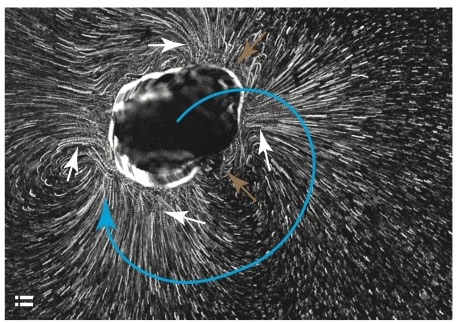
"Synthetic living constructs, which lack the long histories of selection in ecological contexts that shape behaviors of conventional organisms, offer an important complement to traditional studies of learning. Could novel biobots exhibit sensing and memory of experiences? Here, we investigated the effects of chemical stimuli on basal Xenobots – autonomously motile entities derived from Xenopus embryonic ectodermal explants (with no additional sculpting or bioengineering). We quantified and characterized the coordinated ciliary activity that generates fluid flow fields guiding the trajectory of Xenobot motion. We also show distinct and specific changes in Xenobot behavior after brief exposure to Xenopus embryonic cell extract and to ATP. These two experiences produced distinct, long-term, stimulus-specific memories, detectable through both transcriptional and physiological signatures. Exposure to specific environmental stimuli induced alterations in the spatiotemporal patterns of calcium signaling across Xenobots. Together, these data lay a foundation for characterizing the capabilities of synthetic cellular collectives to sense and discriminate among stimuli, as well as store functional information in a non-neural context. Understanding behavioral competencies in novel, non-neural systems have broad implications across evolutionary biology, behavioral science, bioengineering, and bio/hybrid robotics."
There's a big-brained geopolitical analyst i respect called @EvanWritesOnX whose takes seem to have a way of coming true. He's been posting regularly about the war situation with Iran / Israel / USA, but there's only so much time in the day, so i used AI to scrape his posts from Feb 23 to Mar 20 (including some key past ones about the TPS, for context), used AI to format that document cleanly so that AI can read it, then used AI again to synthesize all the information into bite sized bits so that i can learn what Evan's thesis is.
Then i used AI again to generate explainer videos out of it.
Did i mention using AI?
AI. Anyway, these vids are a great way to get an understanding of what Evan's been telling us. It's just an overview, Evan's posts have way more detail, but this is useful.
Thank god Evan's a great writer, he articulates things so well, AI knows exactly how to connect the dots.
See the comments section for more vid alternates
So much info here you won’t find in media. This level of analysis takes time and work and experience from inside the TPS apparatus. Thanks again for sharing. Looking forward to the Patreon.
CIPS is real and it is growing.
The critical point about CIPS is not its current volume, which is still a fraction of SWIFT's throughput.
The critical point is its independence.
You probably know this better than me, but CIPS was designed from the ground up by the Chinese state, operated by Chinese institutions, governed by Chinese law, and hosted on Chinese infrastructure.
It does not depend on Western technology platforms, Western clearing banks, or Western regulatory approval to function.
If the US sanctioned every Chinese bank tomorrow and cut them off from SWIFT entirely, CIPS would continue operating. That is why it was built.
Ok, so CIPS is specifically designed to exclude Western intermediation from the transaction chain.
A Russian energy company selling oil to a Chinese refiner, settling in yuan through CIPS, with the transaction cleared by Chinese banks and recorded on Chinese systems, generates zero fee income for
JPMorgan, zero data flow through Aladdin, and zero intermediation revenue for any Western institution.
The FIC is not just uninvited from that transaction. It is by design, excluded from it.
This is the one scenario they cannot simply absorb.
And China is not building this in isolation. It is extending CIPS connectivity through the Belt and Road Initiative, through bilateral swap lines with dozens of central banks, and through institutional frameworks.
Each new bilateral connection reduces the number of transactions that need to touch Western infrastructure.
So CIPS represents a genuine bifurcation of the global financial plumbing.
The question is how far that bifurcation extends.
Because, again, as you know, the yuan is not freely convertible. China maintains capital controls that limit how freely yuan can flow in and out of the country.
This is a deliberate policy choice that serves China's domestic monetary management, but it creates friction for international users of CIPS.
So the sword is cutting both ways here.
A Saudi oil exporter who receives yuan payment through CIPS cannot freely convert that yuan into euros or invest it in global markets without navigating China's capital account restrictions.
The dollar's global utility was built on full convertibility and deep, liquid capital markets that allowed holders to do whatever they wanted with their dollars. The yuan does not offer this, and Beijing shows no indication of opening the capital account to the degree required to match it.
This means CIPS works well for bilateral trade settlement between China and its partners, where the yuan stays within the Chinese economic orbit and gets recycled into Chinese goods, infrastructure, or financial assets.
It works less well for multilateral trade settlement between third parties who have no particular reason to hold yuan and need to convert it into something else.
A Kenyan coffee exporter settling a sale to a Turkish buyer does not want to be paid in yuan through CIPS unless there is a liquid, low-friction way to convert that yuan into shillings or lira.
That conversion layer is where the system gets complicated, and it is precisely the layer where Western financial institutions currently maintain their deepest advantage.
The realistic trajectory is a two-track global system rather than a full replacement.
That's what I see.
CIPS will not replace SWIFT and the dollar system, but CIPS will operate as a parallel rail that handles an increasing share of China-centric bilateral trade while the Western system continues to handle multilateral trade and capital market transactions where deep liquidity and full convertibility are required.
Over time, the CIPS track grows. China's trade footprint is expanding. Belt and Road countries are being onboarded onto yuan settlement infrastructure.
The share of global trade flowing through non-Western infrastructure increases gradually, from a few percent today to potentially 15 to 25 percent over the next decade if current trends continue.
The TPS-FIC adapts to this by doing what it always does: it builds bridges between the two tracks. Western institutions will position themselves as the connective tissue at the points where the CIPS track and the SWIFT track intersect, handling the currency conversion, the hedging, and the risk management for entities that operate across both systems.
This is a less dominant position than intermediating all global transactions, but it is still a highly profitable one because the complexity of operating across two parallel systems is greater than operating within a single one.
The part that neither side wants to hear.
The Western financial establishment does not want to acknowledge that CIPS represents a genuine structural shift that they cannot fully co-opt.
It is more comfortable to frame de-dollarization as something the FIC will simply absorb and monetize. In most cases that framing is correct, but CIPS is the exception because it was built specifically to be absorption-proof.
The TPS is remarkably adaptive, but it is not omnipotent.
This is all nonsense by the way.
All narrative driven.
Other than his implicit admission that the US is retreating from the region.
You know what the rest is about.
I've only said it a 100 times now.
Scroll back. Read my tweets. I precisely said this. An announcement will emerge that will declare an optics win over Iran's "threats".
Managed theatre for a soft landing.
You should know what comes next.
Because I predicted that too.
@EvanWritesOnX As an Irishman I feel a connection with Kurds, especially through you. Thank you for sharing to everyone, regardless of nationality, race or creed.
@mustafa_3mma@EvanWritesOnX Current AI not only makes silly mistakes but also big design and architecture mistakes. These are more difficult to spot and may only be found later. More likely is they get compounded over time until even the AI can’t fix it anymore. It’s a ticking timebomb.
@EvanWritesOnX I have the fortune of a background in Math and Engineering and very good understanding of AI. The mere hint of possibility of superintelligence is massively distorting the reality. Fear of missing out is the main driver. They’re buying snake oil though! I’m sure of that.
@EvanWritesOnX Are you basing this on current AI or the expected near future. I see AI as a modern day Golem. It provides access to knowledge but there is no understanding really. It gives really good fake answers which can as easily lead one astray as not.
Thx for sharing your wisdom, btw.
@SimonDixonTwitt It’s cool to fire people and say it’s because of AI. Everyone just believes you. AI is accelerating the existing trend of reducing software quality. Code is a liability not an asset.
@williamwallace You call it emergence because you don’t understand it, right? So how can it be an example in any meaningful sense? It’s tautology. Just say you don’t understand it.
@EvanWritesOnX @lonetravguy Neither do they. They had an unexpected success with LLMs. But that approach won’t go much further. So they need breakthroughs which may or may not come. Breakthroughs can’t be scheduled or predicted. That doesn’t sit well with financial types!