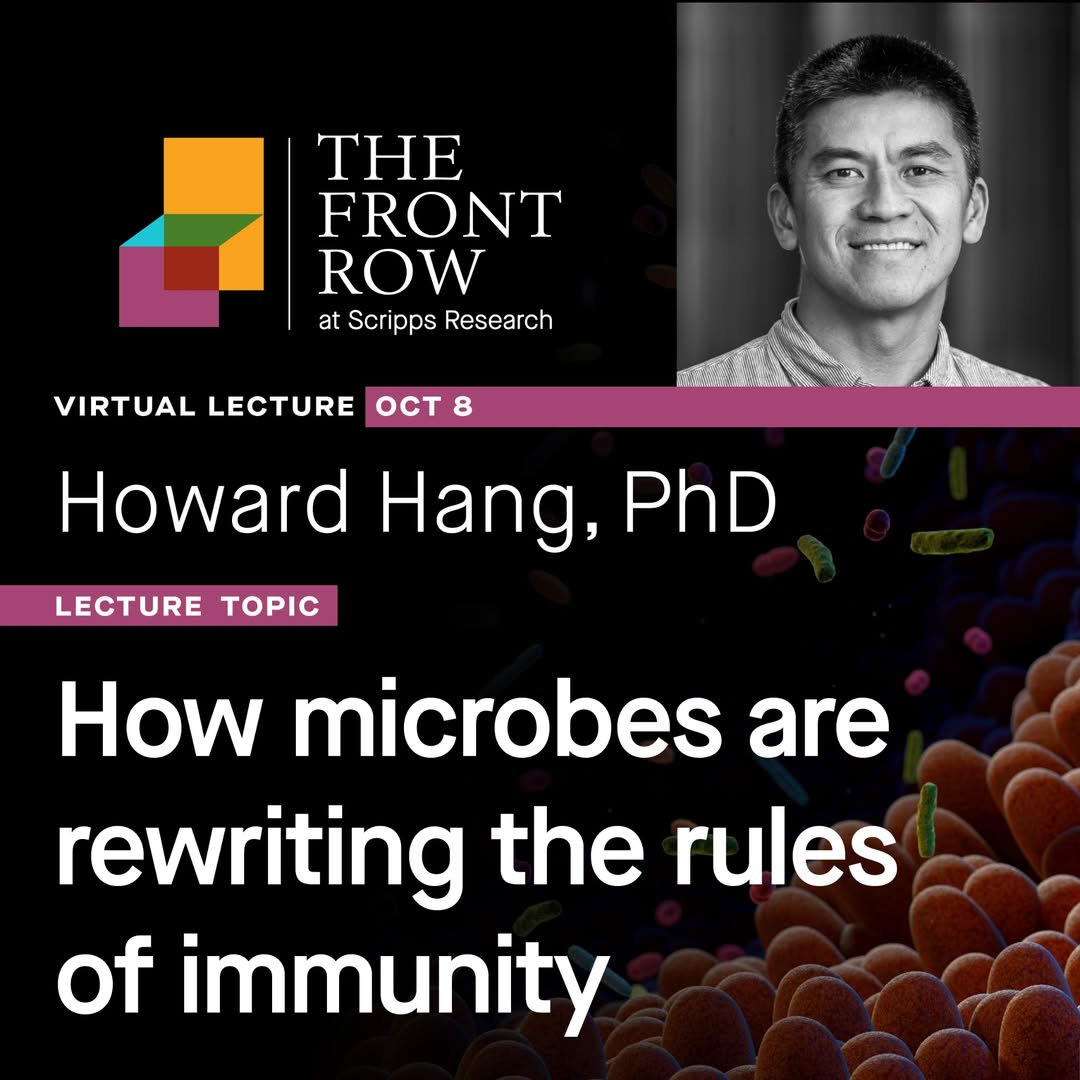
How do microbes influence our immune system, and can we leverage this relationship to combat disease? 🧫
In this free Front Row lecture, Scripps Research Professor Howard Hang will delve into his lab’s innovative work at the intersection of chemistry, microbiology and immunology.
By dissecting the molecular dialogues between gut bacteria and human cells, Hang’s research uncovers how microbial enzymes generate small molecules—called microbial metabolites—that can influence immune responses.
These insights are paving the way for new treatments against infections, cancer and inflammatory illnesses, highlighting the powerful role that microbes play in shaping human health.
🎟️ Registration is free! Reserve your seat now using the links below!
📍In-person registration: https://t.co/mmnfZAMv8v
💻 Virtual Zoom registration: https://t.co/YVddA29zB6
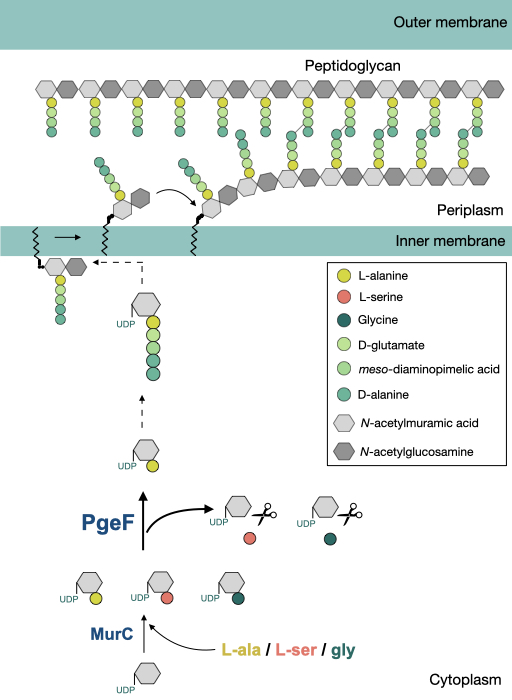
#Newpaper Bacterial cell walls are polymers made of sugar backbones cross-linked with amino acid peptides. Recent work from Manjula Reddy's lab led by @shambhavi_garde highlights how the identity of the amino acid most proximal to the sugar backbone is crucial for bacteria. 1/2
Peptidoglycans from the #LymeDisease pathogen #Bburgdorefi may act as antigens that trigger long-term complications such as Lyme arthritis by accumulating and persisting in the liver, according to a new @ScienceTM study involving mice. https://t.co/v69Qyg5Jm8
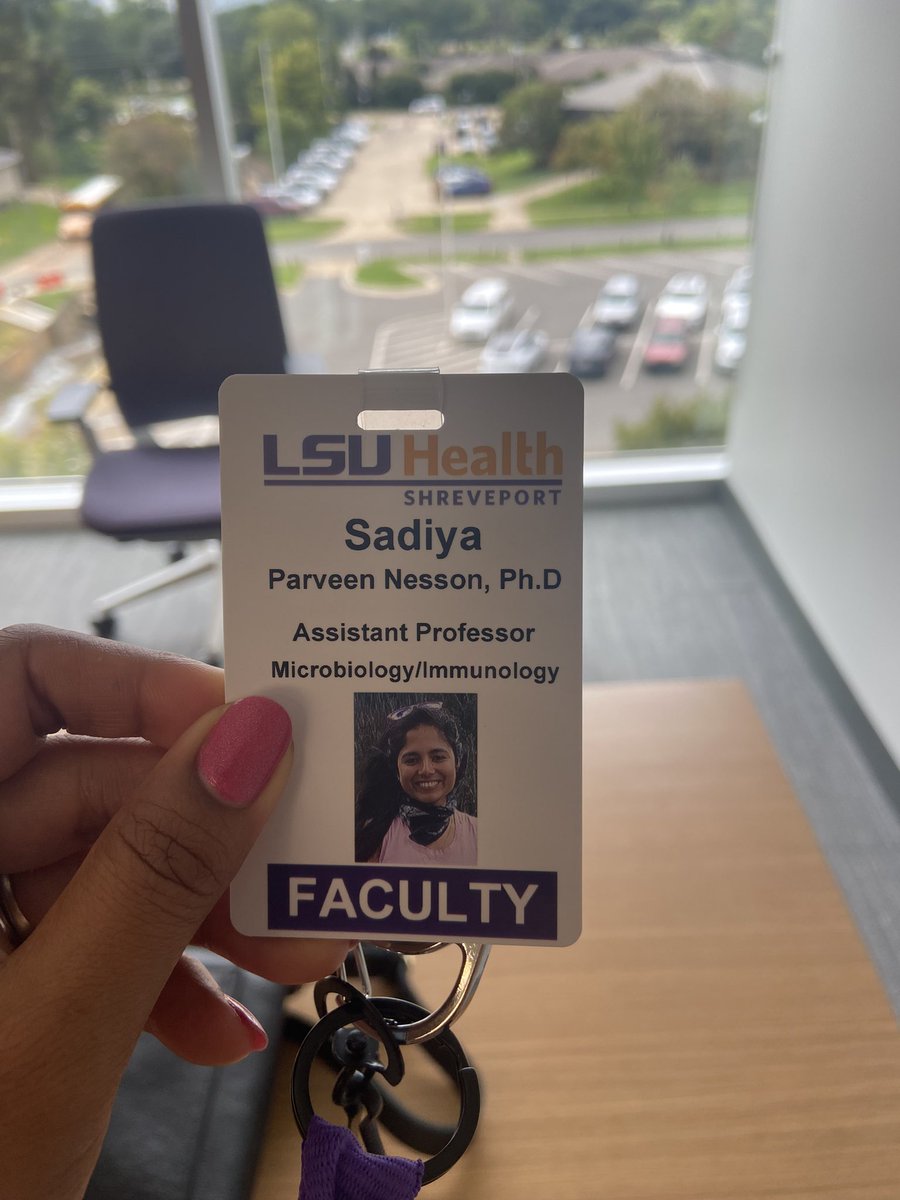
The nerve-wracking yet exciting next step of my career: starting as a tenure-track assistant professor at Louisiana State University Health.
Can’t express how grateful I am to my mentors and my community 🥰!! @BishaiLab@Jack02646576 @BarbaraSSlusher
Biggest medical discoveries of the week (🧵)
1. Why do some people get bitten by mosquitoes but others don't?
It turns out that mosquitoes use three signals to pick their hosts: CO2 from breath, human odour, and the infrared radiation emitted by skin
(https://t.co/zfTBp0Sube)
Excited to share a new work from Hang lab in @biorxivpreprint! Together with my co-workers, we showed the critical role of #SagA peptidoglycan hydrolase in bacterial physiology and modulation of host immunity. 1/n #glycotime@scrippsresearch
Today, few neighbors of my patient, a 33 year old man, came into my outpatient department to convey the message that he had died by suicide.
On the way to Kasargod town by train, he jumped on to the tracks from the moving train and was smashed to death.
He was sufferring from alcohol use disorder and barely survived a severe episode of severe alcohol-related hepatitis 4 months back. It took me and my department a whole lot of shouldering burdens to get him out of the ICU and discharge him home.
He went through a de-addiction protocol and was off alcohol for two months. But on that train, he was partly inebriated.
He left behind his wife, aged 29 and a cherub of a daughter, aged 3. People love to believe that there is an afterlife and the spirits of the deceased linger on out of love. These are consolation borne out of grief and loss. The young child's father died. The young wife's husband is no more. There is no afterlife. When some one dies, it is same as it was before birth. Nothingness. They become memories for the living to grow around and move on. And nothing more.
Value lies in living a life. Not in living to death.
Covid had destroyed his travel and photography business. He could never recover losses. It was as if, he decided he wanted to die, as he could hardly provide for his family and became dependent on his elderly parents. To die and to quit - alcohol use reinforces that decision very easily. Even if the best doctors work on it, the simplest of answers for the patient always lie at the bottom of a bottle - because temporarily, it takes you elsewhere, away from all worries and paints an inaccurate picture that eveything was going to be ok.
When people think about alcohol use, they always think about the liver. But there is more than meets the eye with alcohol use and the one I dread, because consequences are unpredicable, is alcohol's influence on the brain. It is terrifyingly close.
Alcohol use (sometimes even one drink a day)
➡️Can reduce brain volume and accelerate brain shrinkage
➡️Can reduce "gray matter," leading to brain degeneration
➡️Can make it difficult for consumers to make new memories
➡️Slows down how your brain processes information, making it harder to work out what you are really feeling and possible consequences of your actions
➡️Alcohol targets and feeds negative feelings inside your head - regardless of your mood
➡️Increases anxiety, depression, and other psychiatric disorders higher compared to non-drinkers
➡️Can increase risk of social anxiety disorder and panic disorder
➡️Alters sleep physiology, reduces rapid-eye movement stage of sleep, induces periodic limb movements during sleep and worsens sleep quality
You can never know what alcohol can really do to you - small or large. You can never be too sure either. Because if alcohol is your friend, trust me, you dont need any enemies.
I lost my patient. A family lost their son, husband and father. What can you do about it? Directly, nothing. But there is something we all can do. None of us can stop people from drinking or enjoying their drinks. We are all adults and the most intelligent ones take the right decision on alcohol use. To abstain from it.
But the other lesser intelligent ones, can still help. At least, STOP normalizing alcohol on social media - on Instagram, on Twitter (X), on Facebook, and on your Reels and Shorts. There is no style in it. There is no love in it. When you feel putting up photos of your alcohol escapades, try to deviate and put up another picture - of your dog, your flowers, your garden or a nice book collection or something that is useful for others. Do not give undeserving credit to this socially accepted poison.Take honor in not doing so, because this way, you can contribute towards your fellow humans well being.
After a fun and productive 2 day lab retreat, finally got some time to gather thoughts and reflect. Here’s what we did in case you’re considering it / curious. A long thread 🧵
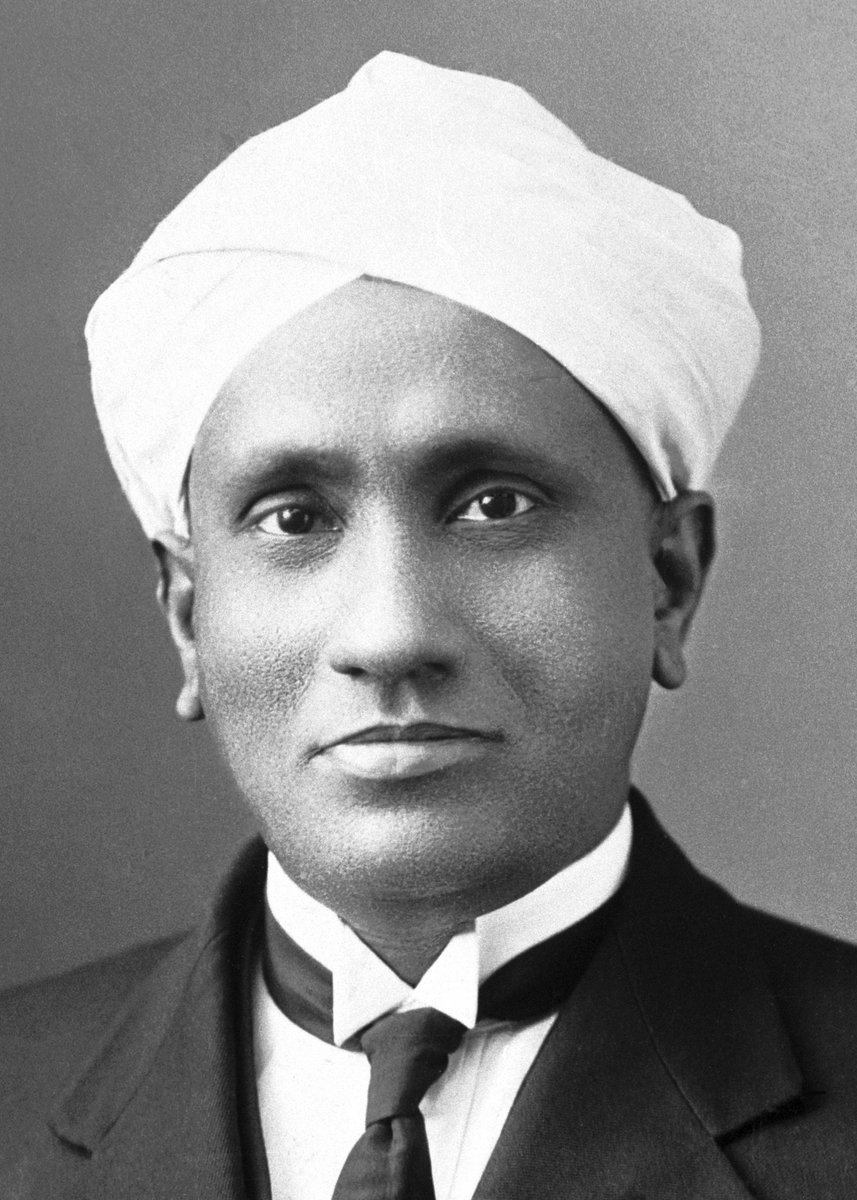
On 28 February 1928, Sir Chandrasekhara Venkata Raman discovered the Raman effect. The Raman effect is the change in the wavelength of light that occurs when a light beam is deflected by molecules.
This Founder's Day, we remembered PMB and the vision with which CCMB was setup. 46 years since, and we had our first formal alumni meet with ppl across the world, doing/hv done many cool things. And the meet opens up opportunities for our young students.
https://t.co/0gqRIjkw4p
"Chemists are dreamers. We think up new molecules and bring them to life."
Listen to chemistry laureate Carolyn Bertozzi's speech from this evening's #NobelPrize banquet, where she described how this year's chemistry achievements have made the previously impossible reality.
This #WAAW2022@vaidehir9 reminds us the intricate relations humans and microbes have, much beyond diseases. So, take a step back, look at how our choice of microbes in food shapes our lives.
There's much to be learned about the tiny omnipresent partners.
https://t.co/9bkdqh0ozC
OMG, my personally all time favorite chemistry I've been using in flask, in vitro and in vivo is finally recognized! Congratulations to @CarolynBertozzi, Morten Meldal @koebenhavns_uni and Barry Sharpless @scrippsresearch for #NobelPrize2022 in Chemistry! #chembiotime
A call to all procaryotic cell biologists! Looking for your next project? Why not the #Archaea and #Paris? We have a postdoc position at @institutpasteur to study how archaea grow and divide. Plus, our little ones have their own cell wall, check it out!
https://t.co/LKefaw8oYM