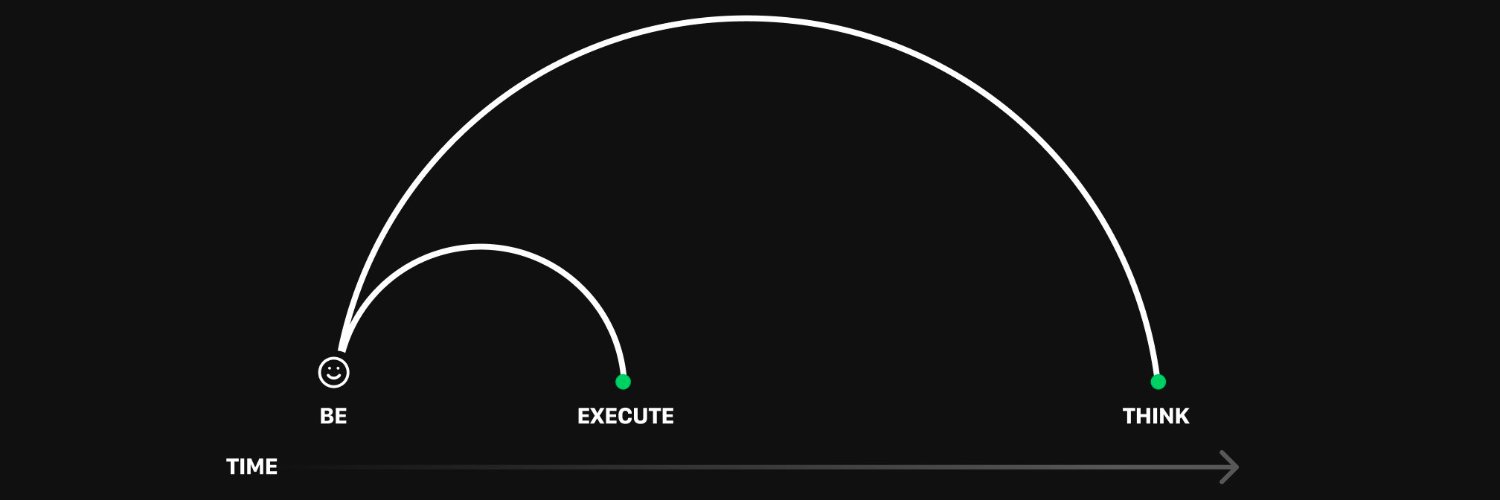
Avoid the temptation of revealing how hard you work, it only raises questions. The world values results, not the effort behind them. Struggle in silence. Let your composure suggest ease, and your ease suggest mastery. Effort unseen carries more weight than effort explained.
Most people think the Placebo effect means 'it's all in your head, nothing real happened.'
In some studies, patients told explicitly in writing 'this pill has no active ingredient, it's a sugar pill' still got real, measurable symptom relief. Open-label placebo
Your brain doesn't need to be tricked to release real chemistry. It needs ritual, attention and expectation and it will produce real neurochemical change even when you're told, honestly, that nothing REAL is happening.
All knowledge already exists. Your mind is just a conduit. If you apply your mind and concentrate on a problem hard enough, the solution will appear. Or you can just meditate hard enough to access all knowledge, in Turiya. You can be Ramanjujan or the Buddha. The choice is yours.
A psychologist spent 10 years studying 400 people who called themselves lucky or unlucky. Then he handed each one a newspaper and asked them to count the photographs inside.
Unlucky people took about two minutes. Lucky people took seconds.
Page 2 held a half-page ad in giant type reading "Stop counting. There are 43 photographs in this newspaper." A few pages later, another one offered a cash prize to anyone who told the experimenter they'd seen it.
The lucky group spotted both messages. The unlucky group counted straight past them, so locked onto the task that half a page of bold print became invisible. When Richard Wiseman asked afterward if they'd noticed anything unusual, they said no.
His personality data explains why. Unlucky participants scored roughly twice as high on anxiety, and tension narrows attention until the unexpected gets filtered out entirely. Lucky participants also varied their routes to work, talked to more strangers, and broke their routines on purpose, which multiplies how much unexpected material crosses their path to begin with.
Wiseman ran one more test that proves the mechanism. He surveyed 700 lottery players. Self-described lucky people were twice as confident they'd win. Their winnings matched everyone else's exactly. Feeling lucky does nothing in a game of pure chance, because there's nothing to notice.
So he built a "Luck School" that trained unlucky people to behave like lucky ones. Participants reported lasting gains in fortune, confidence, and even health.
The luck was sitting in plain sight on page 2, in type half a page tall. The only variable was who looked up.
papers i keep telling people to read if they want to actually understand modern AI:
1. Attention Is All You Need by @NoamShazeer et al (the transformer)
2. FlashAttention by @tri_dao (why training actually got fast)
3. Denoising Diffusion Probabilistic Models by @hojonathanho (diffusion, before it was cool)
4. Chain-of-Thought Prompting Elicits Reasoning by @_jasonwei (reasoning just appears at scale)
5. LoRA by @edwardjhu (fine-tune anything on one GPU)
6. Mamba by @_albertgu & @tri_dao (attention isn't the only way)
7. Direct Preference Optimization by @chelseabfinn et al (RLHF, minus the RL)
save this list
Laws and mental models for real world:
Parkinson's Law:
Work expands to fill the amount of time assigned to it. Shortening the deadline reduces the scope and time taken to complete the task.