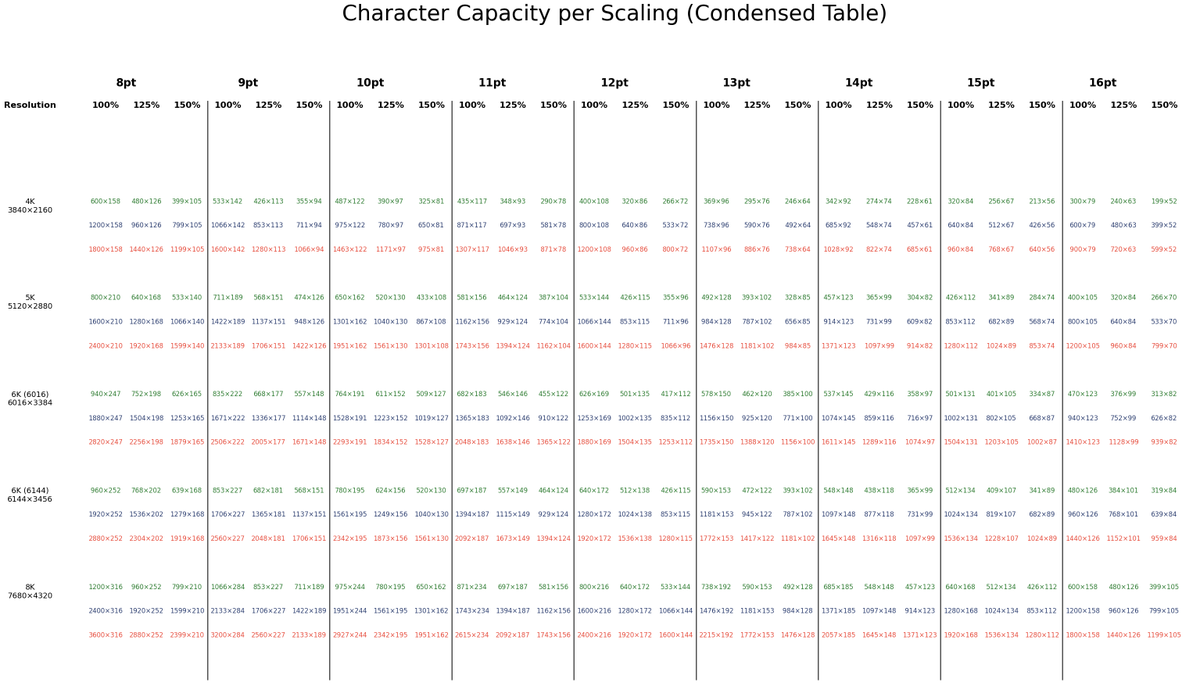
planning your next monitor setup for coding? this table might come handy. the UHD/100%/125% data was actually measured with Source Code Pro (Regular weight), the rest is extrapolated and YMMV of course.
@andersonc0d3@0xAX slab is just one user of the buddy allocator, and while the first few buddy pages go to the kmem_cache{,_node} caches, it soon becomes the usual fight over resources with many other buddy users.
We are looking for a PhD student intern this summer to research optimal heuristics for a new feature of ours that provides finer-grained, context-aware control over fragmentation in the Linux buddy allocator. Fully remote, please email hiring@ if interested.
Slides for @wipawel's H2HC presentation this month on the TLB are now available on https://t.co/XxQrdIDwDC
If you've never heard of "paging-structure caches" before, check it out!
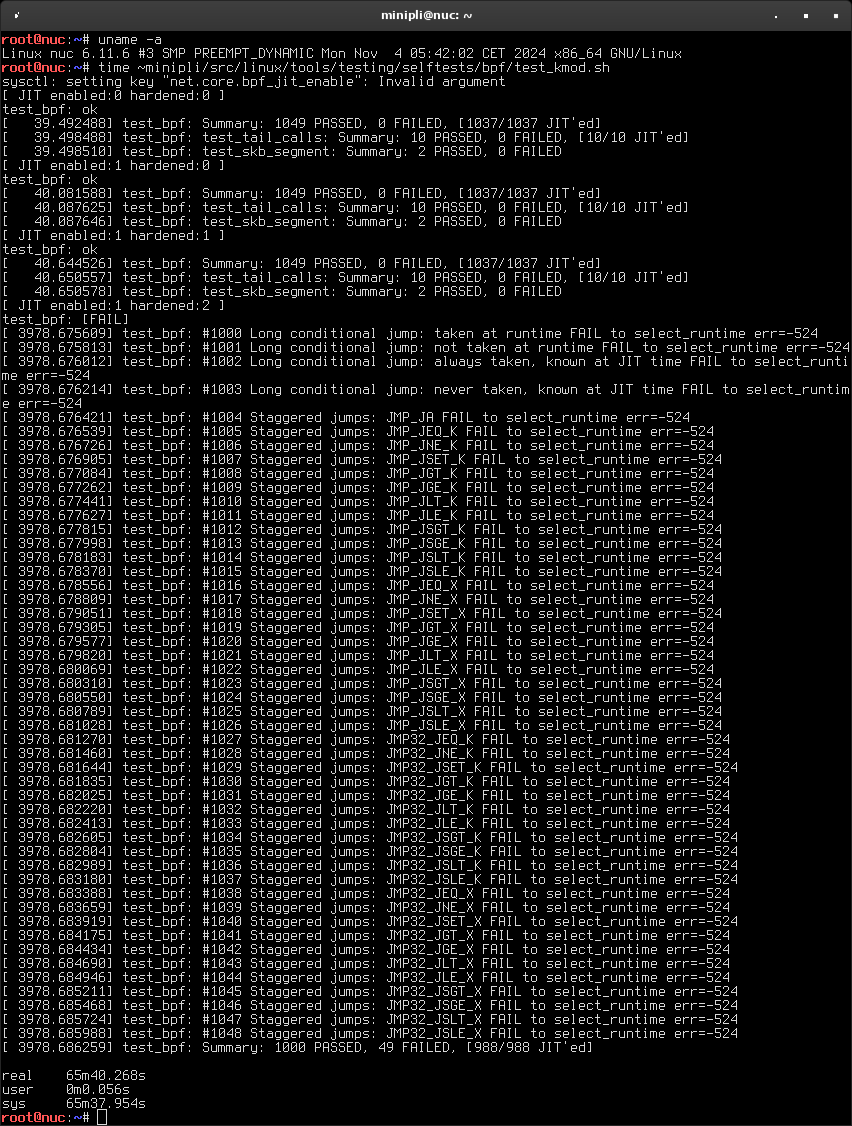
We need to post a correction to yesterday's eBPF performance numbers:
@_minipli wasn't happy with just a 30x speedup and took a look at one final bottleneck that was bothering him.
The speedup over vanilla is now 747x 🤯 (5.27s vs 1h5m40s)
Performance isn't the enemy of security: we care about both. Today's patches finish off a set of security/performance improvements to eBPF. Below we show a ~30x speedup vs vanilla in running the eBPF selftests with every single #grsecurity option enabled!
The first ever end-to-end cross-process Spectre exploit? I worked on this during an internship with @grsecurity! An in-depth write-up here:
https://t.co/mze3LQkpJR
Actually, don't even need that, as found by @paxteam, just need to use the proper no_sanitize() attribute. Replace the first line in the test at: https://t.co/6VK5TUSyXL with: #define __nsa __attribute__((no_sanitize("hwaddress", "kernel-hwaddress")))
No takers, so here's a full timeline of CVE-2024-26972 and how the Linux CNA's automation produces garbage that people act on (posting in 20 Xcretes would be a pain): https://t.co/c8EClHNUBR
In today's blog post, @_minipli shows how we were able to use a newer C feature and a GCC plugin addition to ease our maintenance burden, reducing grsecurity's patch size by over a megabyte with no change in functionality. Enjoy! https://t.co/0LAuNxtIYz
In this blog, we dive deep into how the automation employed by the recently-formed Linux CNA managed to take a detailed, unrestricted vulnerability report for their 5.10 LTS kernel, and produce an error-filled CVE unhelpful for downstream consumers: https://t.co/PSLcvFDFgd
Thank you, Peter, for this concise description of the PAX_SIZE_OVERFLOW GCC plugin! Created in 2012, it was one of the first GCC plugins added to grsecurity. It was very advanced for its time, and in 2024, still is: https://t.co/OMwlhIHCVv