When you get into a leadership position it’s really easy to set up a system and watch work go by.
Products get shipped.
People get hired.
Process gets implemented.
Many look at this and think: “wow, I hired a bunch of talented people; look at them go!”
But this is dangerous, and most systems aren’t effectively self regulating.
Design details start to get sloppy.
Products get made my consensus.
Just OK hires get approved.
Death by a thousand processes.
This isn’t because people aren’t talented or able to make the right decisions. But organizations are diffuse systems, and especially in a remote world, a little friction goes a long way in improving the outcomes.
If you’re not dedicating a chunk of your time at looking at the work flowing through the system, you’re missing opportunities to shape and sharpen the output of your team.
This isn’t micromanagement. People can’t wait on you. You can’t look at everything.
But inspection creates performance. Your team culture should welcome it, and you should expect it of every leader on your team (and leaders aren’t just people managers!)
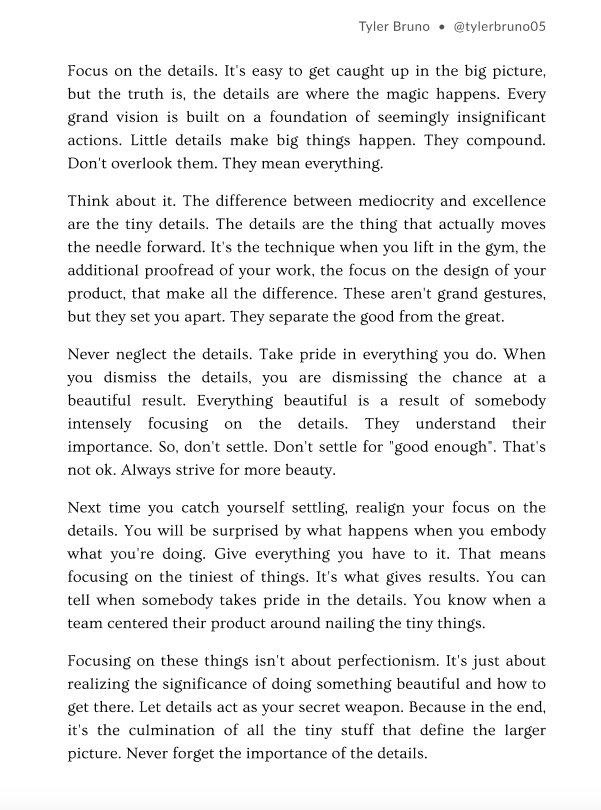
So clear time for the content, not just the operations. Care about the details. Read what crosses your desks. Less meaningless 👍 reactions, and more “let’s walk through this together.”
More inspection.
Better outcomes.
Honestly: more fun.
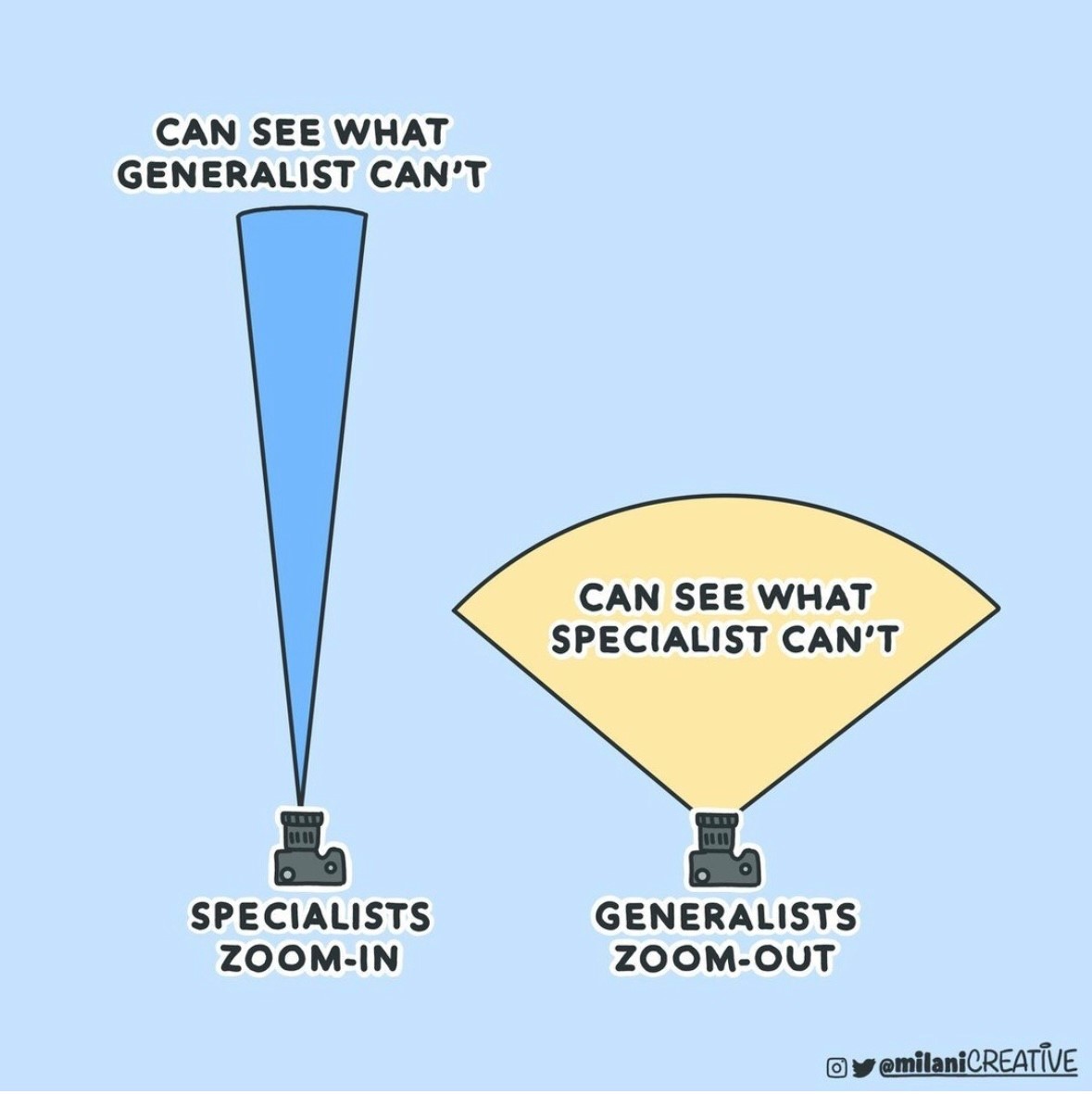
We don't need to debate whether it's better to be a generalist or a specialist. The world needs both.
Specialists excel at zooming in. They see the details to deepen our knowledge.
Generalists excel at zooming out. They see around corners to broaden our view.
It is an admirable quality to be able to just jump to tasks without procrastination & to enjoy checking them off your list asap e.g., to just send that email to the team, build that slide deck, write that policy doc, update your website copy, post that launch announcement, etc.
But at some point in your career you need to begin creating some more space between the initial stimulus & the completion of action and fill that space with an appropriate amount of imagination of how that email, deck, policy doc, website copy, launch announcement, etc. will be received, perceived, processed by the intended audience of your message.
That imagination must occur at both the micro level (how might this sentence be misconstrued?) and the macro level (might this message be received poorly by a certain segment of my audience?)
While this idea of creating more space to view any message from the recipient’s perspective might seem obvious to you, you’d be surprised to learn that it is not nearly as common as you’d imagine.
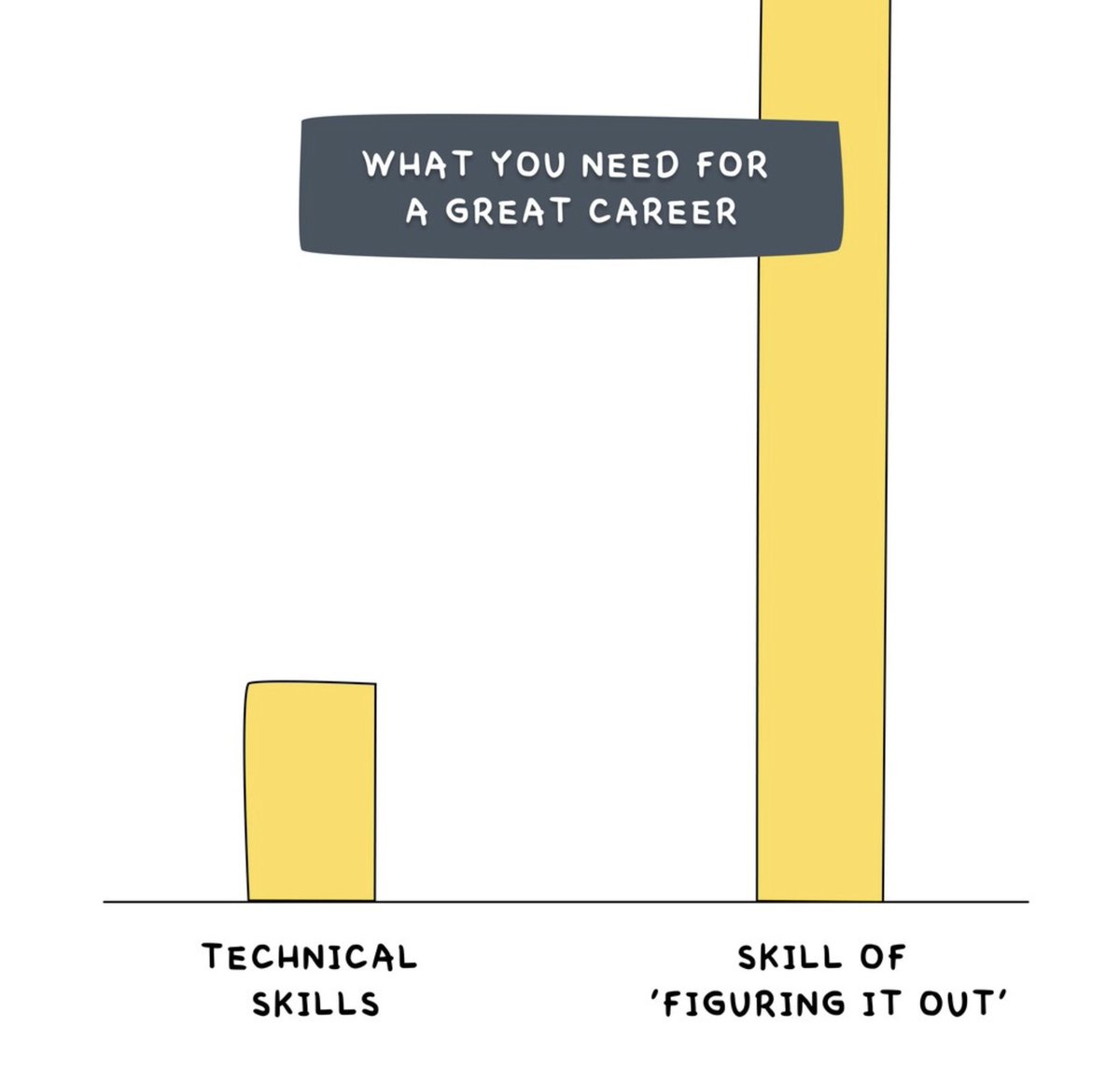
This is the most important (and underrated) career advice:
Build a reputation for figuring it out.
At every step of your career, you'll be given a lot of tasks you have no idea how to complete.
Imposter syndrome will inevitably set in—you'll wonder how you can possibly be expected to do this thing that you've never done before (let alone do it well!).
There's nothing more valuable than someone who can just figure it out:
• Do some work
• Ask the key questions
• Get it done
If you do that, high quality people will fight over you and your career will accelerate.
Product-market fit is not enough anymore. You need position-market fit:
There was a time, not too long ago, where in startupland one could build a thing that solved a real problem, put a price tag on it, and see if the market wanted it:
• If they did, then we would have said he had found product-market fit
• If they didn’t, we would say he didn’t and it was “back to the lab”
That time, for better or worse, is long gone.
Here’s how @0zne and I break it down:
In 2024, a utility provided through software can’t make a dent effectively anymore. People’s heads are overstuffed with competing products, messaging, and narratives. It’s hard for a product alone to get a market edge.
The main exceptions are new tech or hyper-niche markets. ChatGPT, for example. But that is a rare instances of breakthrough technology where the “product” itself carries the bulk of the impact.
Most companies don't have that luxury and are not in such a position. So, if a product alone isn’t enough, then what is enough?
Enter position-market-fit.
• If “product-market-fit” means that you’ve found the right kind of product that the market wants…
• “Position-market-fit” means that you’ve found the right combination of product/brand/marketing/pricing/go-to-market/sales/etc in a given domain.
The Importance of Brain Estate
The fundamental reason why “position-market-fit” is so important is that it operates more at a personal and subconscious level. Our brains can only conceptualize a finite set of “characters'' per domain.
Similar to the "Dunbar number" rule, which suggests we can maintain stable social relationships with up to 150 people, our brains are wired to understand only a finite number of company-market associations.
Gaining a strong positional edge, or nailing “position-market-fit�� is the exercise through which a company, with the right combination of product, brand, pricing, marketing and go-market is able to conquer a certain portion of consumer “brain-estate.”
The Story of Startup Success
If you step back and analyze some of the best startups from the last decade, you'll see they excelled at this.
→ Are you building in an established market dominated by large incumbents with feature-bloated, slow, and clunky software? In that case, you might want to position your product as a speed-first, high-craft, premium option, similar to a luxury car company. Does Linear ring a bell?
→ Alternatively, if you're entering a highly commoditized market dominated by a few corporate-looking brands, consider positioning yourself as the quirky, fun company that doesn’t take itself too seriously. Embrace the David vs. Goliath narrative with bold, edgy marketing and design. Does Arc Browser come to mind?
Their pricing strategies are almost a second-order effect of their employed market positioning.
And that’s the power of position-market fit.
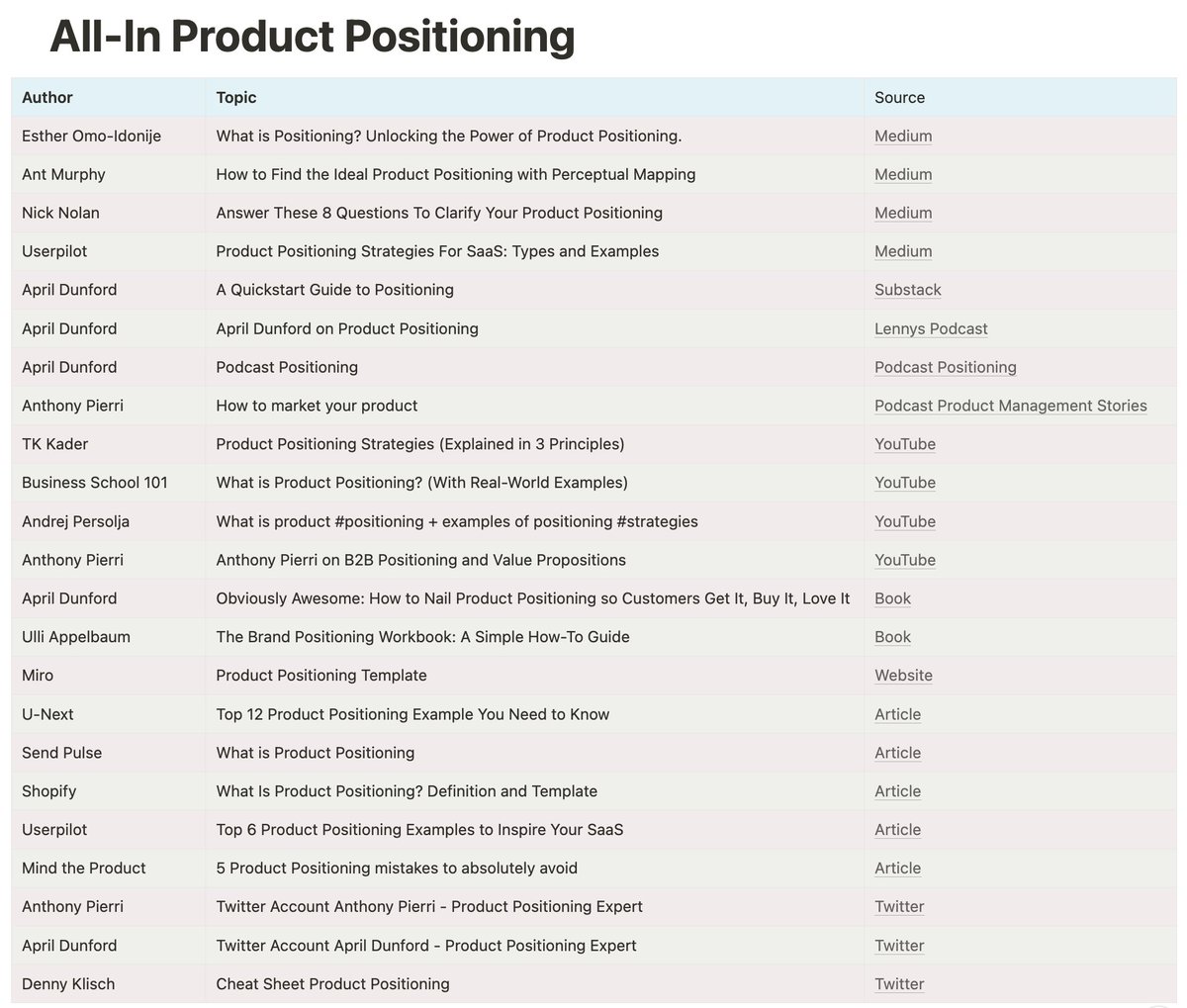
The Best of the Best about Product Positioning just for you!
Articles, podcasts, videos, tweets and books.
Get free access to this crazy overview with linked sources!
Like + Retweet + Reply "positioning"
(Follow so you can receive a DM with the link)
@clairevo's hot take at Config: "Manager roles will be more rare, we're entering the era of the Super IC Product Manager."
What does a Super IC PM look like?
1. Scrappiness and hustle
2. Commercial mindset
3. Be indispensable
These are the PM attributes top leaders are hiring.
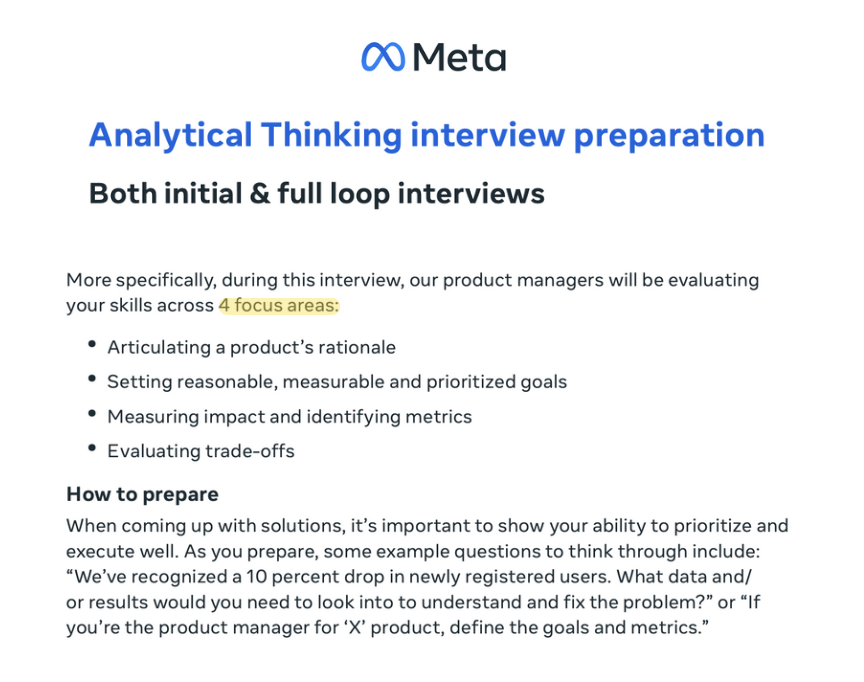
I got my hands on how Meta evaluates PMs in its new "Analytical Thinking" interview.
It is a rebrand of the old 'Product Execution' interview.
The giveaway is the question examples:
"We've recognized a 10% drop in newly registered users, what data and/or results would you need to look at to understand fix the problem?"
"If you're the product manager for X product, define the goals and metrics."
There are 4 key rubric areas you will be evaluated on:
1. Articulating a Product's Rationale
A mistake a lot of people make in this phase is over-emphasizing this section.
It's really important to understand the goal of a product, and how it fits in within Meta, but it shouldn't be 25% of your interview.
2. Setting Reasonable, Measurable and Prioritized Goals
As the description says, "it's important to show your ability to prioritize." The key in this section is to reason through the user and business needs with clarity.
A mistake many people make is to go into detail on every potential goal. It's better to list the most important one's in detail, and just briefly mention less important ones.
3. Measuring Impact and Identifying Metrics
This is probably the place to spend the most time on. It's the name of the interview, after all.
A great PM at Meta understands north-stars, counter metrics, and secondary metrics like the back of their hand. They want to make sure you can win trust from your analyst partners, which most Meta product teams have.
4. Evaluating Trade-Offs
This is an area that comes at the end of the interview, so people often lose time for it. It's important not to. You don't want to get out a 0/5 on this rubric area due to time.
In Meta, every product decision has a trade-off somehow. The more thoughtful you can be of these situations, the more prepared you will be for the actual job.
Other Tips To Know
It's a classic case, and my sources tell me that you are extremely likely to encounter:
• A twist in the case, or
• A second case in the same interview
It's about simulating the real world analytical skills you need as a PM.
But knowing the rubric helps make success much more likely.
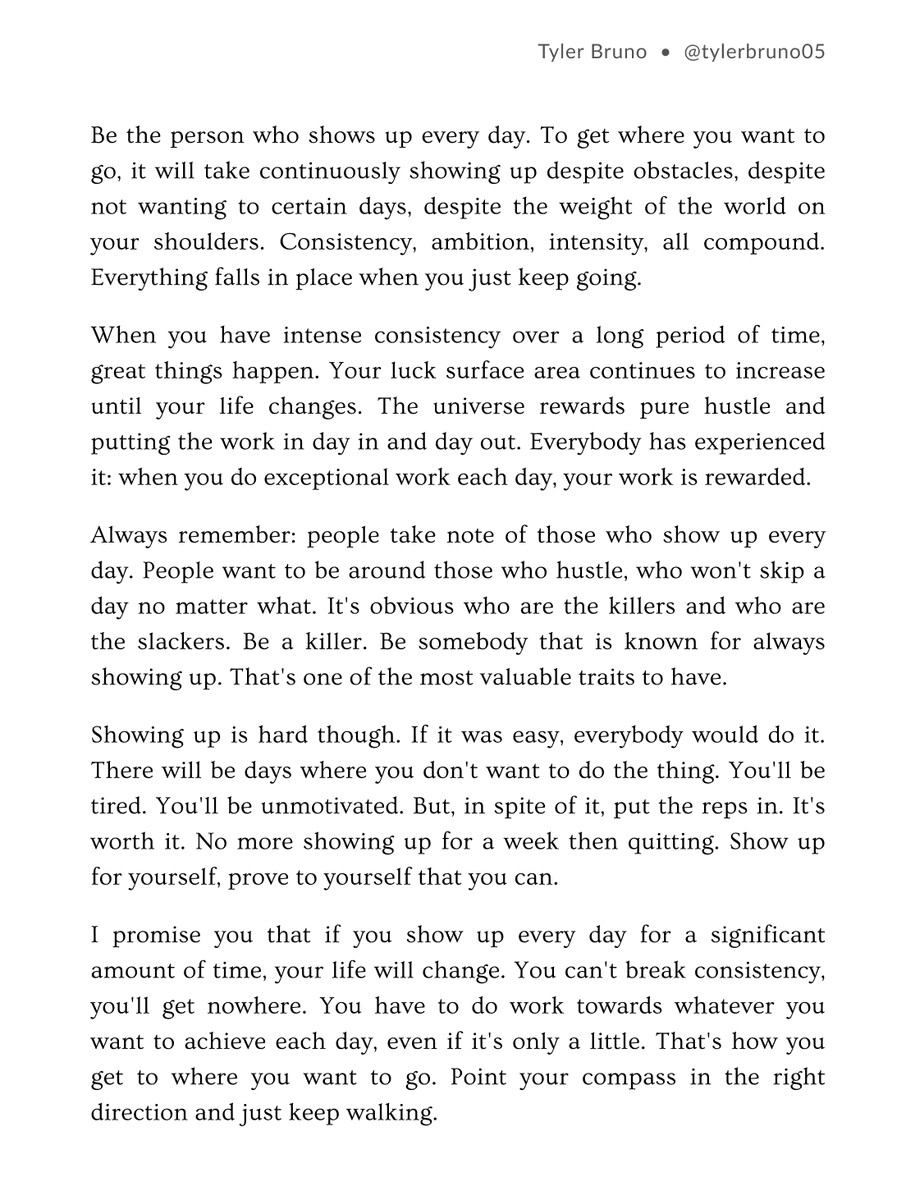
Life gets a lot easier when you realize the key to success is consistent, persistent, unrelenting, day-after-day, week-after-week work on the things that matter.
Engineers estimated it to take 4 weeks, but delivered it in 12 weeks
Product managers, if you're in this situation, do this:
1. Break larger tasks into smaller chunks
2. Have multiple smaller milestones
3. Review timeline after every milestone
4. Don't wait until its too late. When you sense a delay, raise alarm, reassess before continuing
What am I missing?