Check out my latest article: NECP – should we abandon it or implement it?
Pantelis Capros, Emeritus Professor of Energy Economics at the National Technical University of Athens https://t.co/6c50CTutcf via @LinkedIn
These analyses challenge the negative GDP and high-cost dogmas held by sceptics opposed to climate policies, which unfortunately are gaining influence today. In this light, the recent Nobel in Economics sends a message of great political importance. (3/3)
Our models, such as GEM-E3 with endogenous growth driven by green technology progress, along with similar models by others, provide evidence of the favourable GDP implications of climate-neutral technologies based on innovation-driven productivity gains. (2/3)
The well-deserved Nobel laureates in Economics, Philippe Aghion and Peter Howitt, have inspired large-scale modelling of the potentially positive impacts of the green energy transition on economic growth. (1/3)
@LionHirth If you have a system where more and more the cost of electricity production is based on investment but price is based on marginal operating cost - you run into problems.
I wonder when we get a debate about a new electricity market design, because this one delivers artificially low prices.
... this market system does not work anymore...
This is a masterclass in putting #CCS in its place:
"A review of 12 large-scale projects reveals a litany of cost-overruns and missed targets, with a net increase in emissions."
https://t.co/hICFglOzsi
Wow. For anyone who thought a low carbon elec system would be just like a traditional on but with decarbonised generation, wake up. Same for those who thought we couldnt handle a lot of variability. This just a glimpse of future "integrated & intelligent" power systems...
@NataliaFabra Generally good points. But please see again the point that auctions for CfD are proposed as of last resort. I have understood the opposite
Without naming it as market splitting, the European Commission proposes two-way contracts of differences for the remuneration of RES and nuclear with clawback obligation instead of spot market revenues. However, the CfDs are mandatory only for state-supported investments. (3/3)
In reality, no one suggested abolishing the marginal cost principle for the spot market price and the optimal merit order of power generation units. Units with no variable costs, such as renewables and nuclear, are first anyway. (1/3)
The issue was to avoid such units from getting revenues at the spot price, determined mainly by natural gas, but at the actual long-term cost to avoid excess revenues and stabilize consumer prices. (2/3)
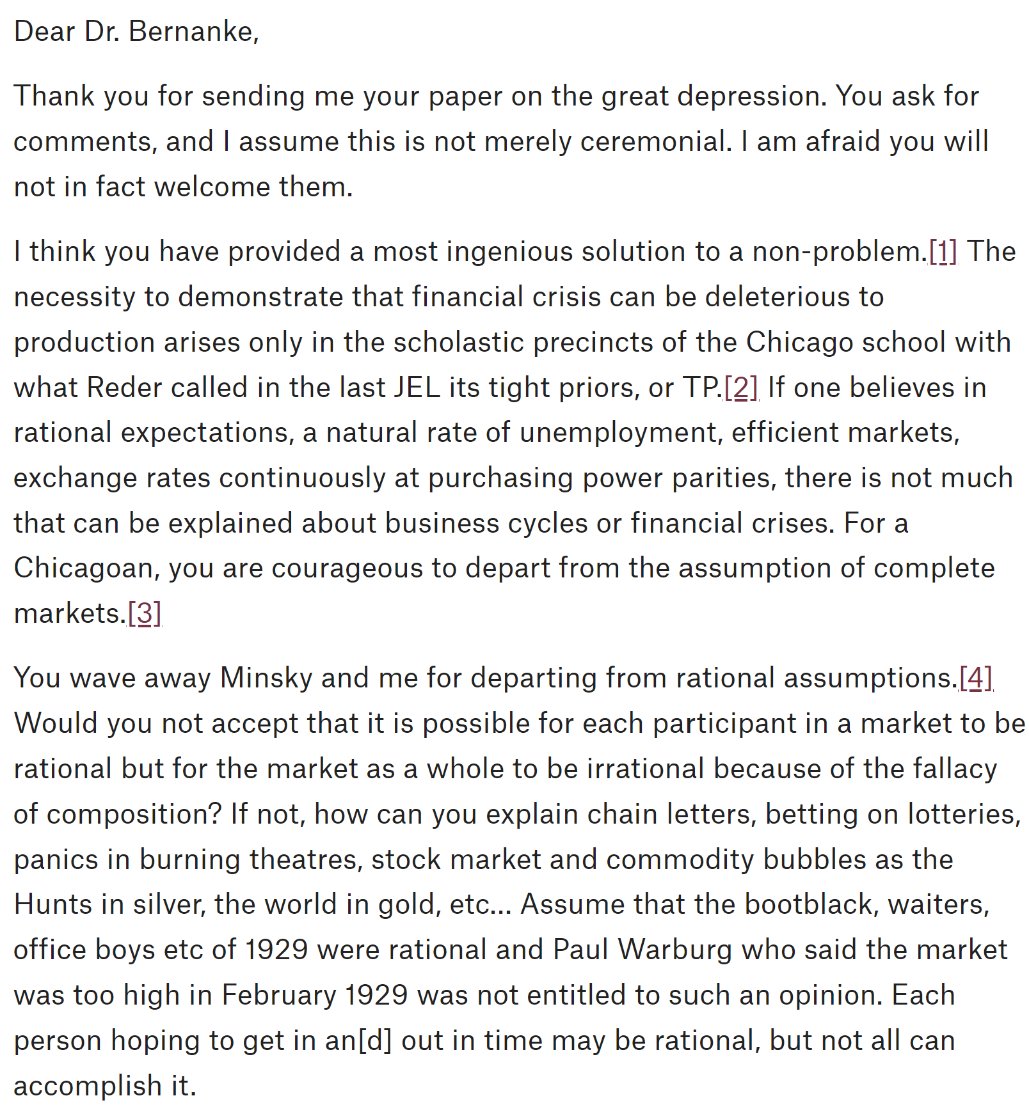
Detective work by Perry @PMehrling uncovered these wonderfully scathing comments by Kindleberger on Bernanke's "Nobel-Prize-winning" essay: https://t.co/hLammm9Hu1
Record: #Biomethane at 30% September'22🇩🇰
New daily record on 30.9.22 at 21,6 GWh/d!🇩🇰
Biomethane production up 17% over 12 month, and
fall in domestic demand on 20%.
I believe biomethane will play a crucial role in diversifying our gas supplies & we can’t allow this potential to go to waste.
The new Biomethane Industrial Partnership is open to all stakeholders to overcome barriers for growth, share best practices and foster collaboration!
Good news from #Brussels
The leaked @EU_Commission non-paper on Emergency Electricity Mkt Interventions addresses the root sources of the 10-fold electricity price increase:
➡️Excessive profits of inframarginal technologies (nuclear, hydro, renewables)
➡️Gas scarcity
🧵 Thread