SimCity 2000 (Maxis, 1993) remains, to this day, the finest city-building game I’ve ever played.
It has that perfect balance: simply gorgeous to look at, deeply satisfying/addictive to play, challenging but never brutally punishing, and surprisingly complex for its era. And the music... wonderful! But most of all, it possesses that truly rare quality: endless replayability.
You always find yourself saying “just one more thing”: one more industrial zone, one more power plant, one more police station to keep the crime rate at a semi-reasonable rate… and then, with a bit of spare cash, you decide your city needs a beautiful park! Before you know it, another hour has vanished.
Some games feel truly timeless, and SimCity 2000 is one of them. Designed by Will Wright (who later created The Sims and the ambitious Spore), it stands as a high point of 90s game design. Ranking as the 9th best-selling game of the entire decade is mindblowing when you consider the sheer quality of titles released between 1990 and 2000.
While it may not have delivered the same groundbreaking “wow” moment as the original SimCity, as a sequel it was a gigantic leap forward in every way. For a game that's now well over 3 decades old, it could easily be published today and still be a huge success.
In the era of #ArtificialIntelligence, when human dignity is threatened by new forms of dehumanization, ours is the pressing duty to remain profoundly human. We must lovingly safeguard the grandeur of humanity bestowed upon us and revealed in its fullness in Christ, the splendor of which no machine can ever replace. #MagnificaHumanitas
https://t.co/6i9MWs6LJl
Only one chance in this lifetime…
Like watching sunset at the beach from the most foreign seat in the cosmos, I couldn’t resist a cell phone video of Earthset. You can hear the shutter on the Nikon as @Astro_Christina is hammering away on 3-shot brackets and capturing those exceptional Earthset photos through the 400mm lens. @AstroVicGlover was in window 3 watching with @Astro_Jeremy next to him.
I could barely see the Moon through the docking hatch window but the iPhone was the perfect size to catch the view…this is uncropped, uncut with 8x zoom which is quite comparable to the view of the human eye. Enjoy.
Sky full of stars.
Following a successful lunar flyby, the Artemis II astronauts captured this breathtaking photo of our galaxy, the Milky Way, on April 7, 2026.
We see our home planet as a whole, lit up in spectacular blues and browns. A green aurora even lights up the atmosphere. That's us, together, watching as our astronauts make their journey to the Moon.
It actually worked!
For the past couple of days I’ve been throwing 5.3-codex at the C codebase for SimCity (1989) to port it to TypeScript.
Not reading any code, very little steering.
Today I have SimCity running in the browser.
I can’t believe this new world we live in.
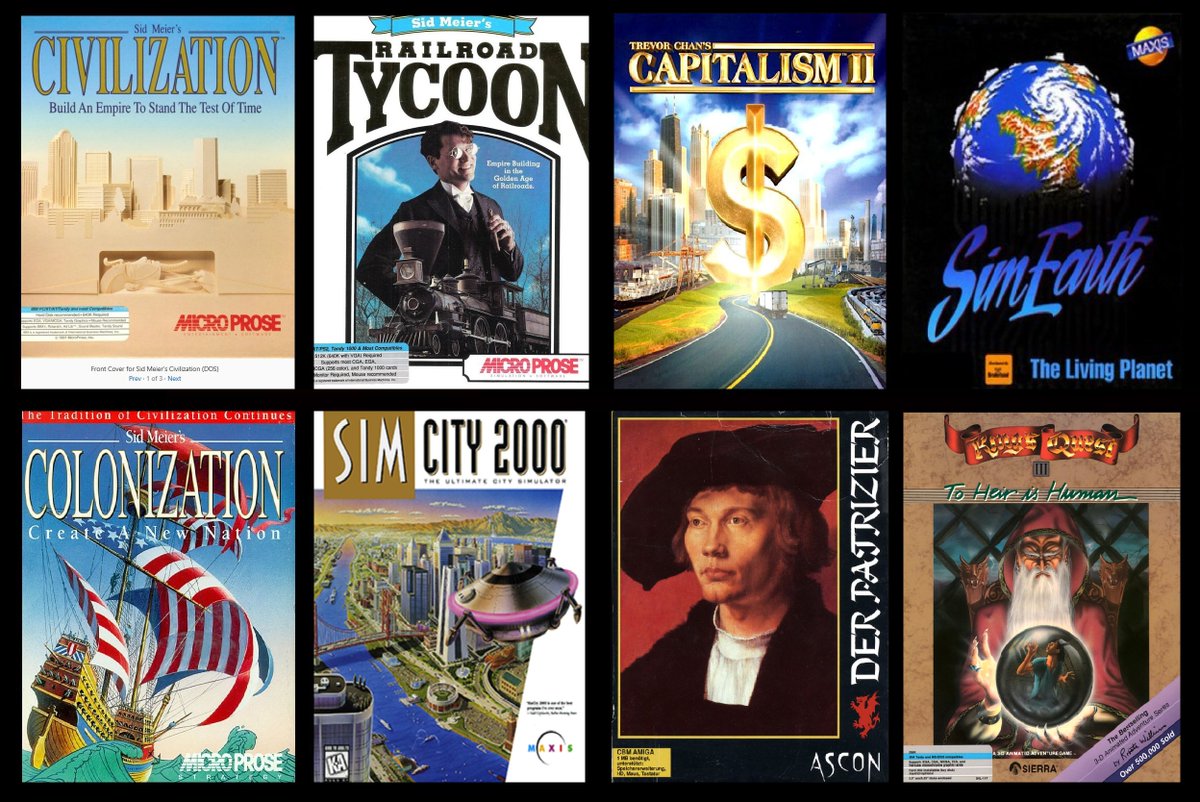
Learning by playing? Granted, most games are "just for fun". But some games were more than that. They were - foremost - great games, but they also had educational value.
Civilization - gave me a glimpse into society's history, and the basic evolution of technology and science.
Railroad Tycoon - was great for train nerds like me, learning about the history of the steam engine and its evolution to modern day trains.
Capitalism 2 - taught me a lot about economic principles, supply and demand, etc.
Sim Earth - not an easy game but an incredible simulation of a time before humans populated this rock, how nature impacts on species and life in general.
Colonization - a glimpse into how our world was shaped, not too long ago, what trades and skills were needed, how settlements grew.
Sim City 2000 - maybe being a mayor of a huge city isn't so easy after all? Maybe that's why heavy industry isn't bordering on luxury housing estates?
Der Patrizier - a view into German trade and politics before the steam engine revolutionized everything.
King's Quest - as a placeholder for all adventure games that I played, including the early Infocom text adventures, helping me a lot to learn the English language.
What are your memories of games that were both great and added some educational value?
We are primates, with a third of our brain dedicated to vision. Graphics are the most effective way to communicate quantitative, spatial, and causal information, but they are as hard to master as clear and stylish prose. Here's an excellent guide to data visualization by Saloni Dattani @salonium https://t.co/tnXYMKKRYA
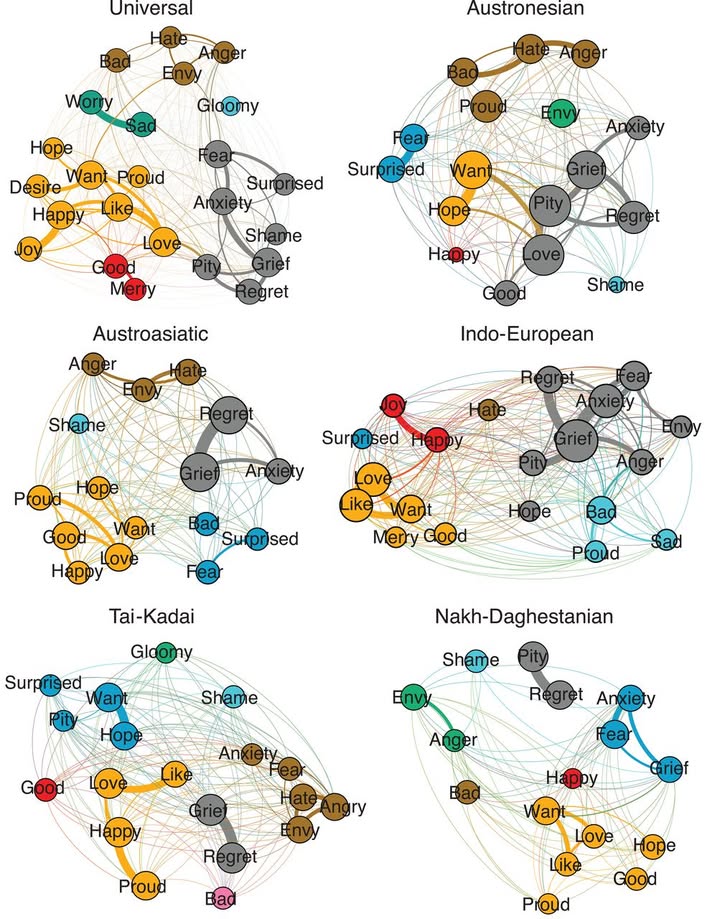
By mapping the meanings of the words used to communicate emotions across more than one-third of the planet’s spoken languages, a study in Science found that there is significant variation in how emotions are expressed across cultures. #ScienceMagArchives https://t.co/82xQ1RADHW
One of the coolest AI project ever?
Training an LLM from scratch using ONLY texts from 1800-1875 London.
Goal: create a language model with zero modern bias contamination. a true time capsule 🧙♂️
https://t.co/teepdYTfqh
Extreme views are heavily over-represented on social media
Social platforms’ tendency to reward hostile content creates incentives that systematically reward simplistic messages and extreme positions https://t.co/IUy6sTcmI1 via @jburnmurdoch
Much like humans, CPUs heal in their sleep.
CPUs are *technically* replaceable / wear items. They don’t last forever.
Yet, the moment stress is removed, transistor degradation (partially) reverses.
It's called Bias Temperature Instability (BTI) recovery: