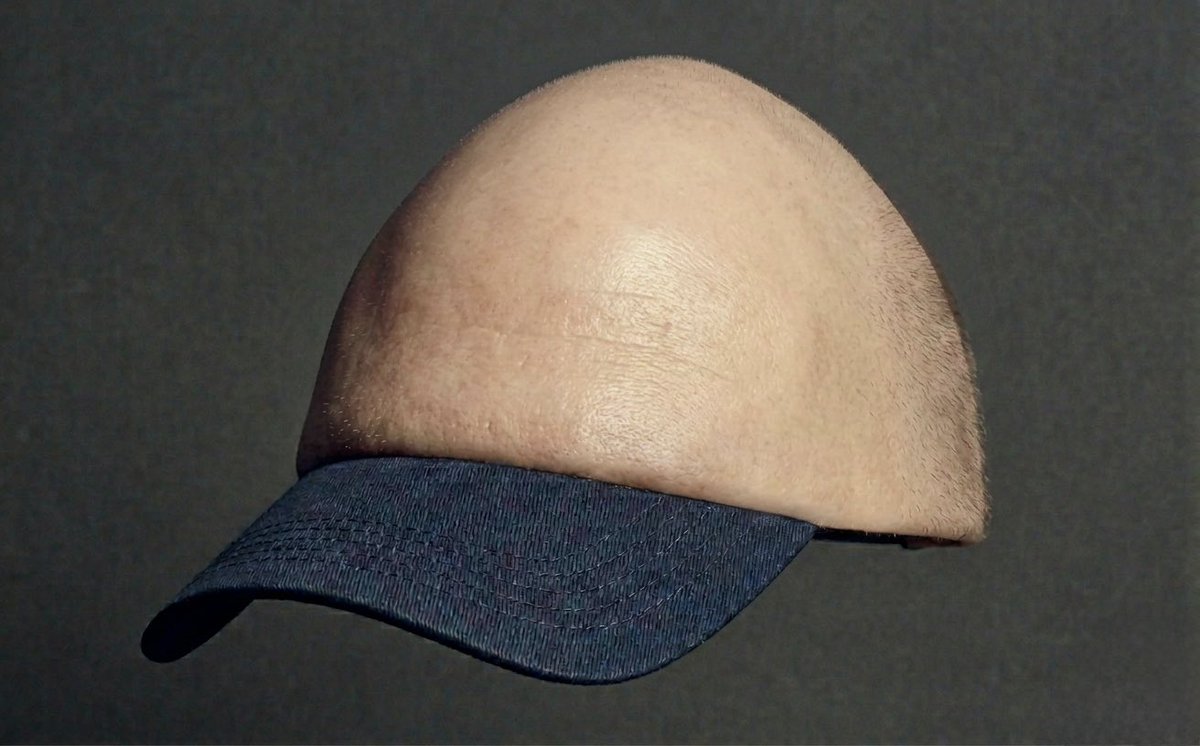
The philosophy entrance exam to ENS, France's most selective school and the one with the most Nobel Prizes per student worldwide.
This year's subject: "The authority of science." 6 hours. Handwritten.
The single greatest piece of investing misdirection in modern financial history is the canonization of late-stage Warren Buffett, the Buffett of Coca-Cola and American Express and Apple, the Buffett of the cardigan and the folksy quote and the moats-and-brands sermon, because that Buffett, the one the entire investing world has been taught to imitate for the last 25 years, was not the Buffett who actually built the fortune. The Buffett who built the fortune, who compounded at 50% a year in the partnership era of the 1950s and 1960s, who turned $9,800 into the foundation of what became one of the largest individual fortunes in American history, did not own a single company that the modern Buffett-imitator would consider investable. He owned tiny, illiquid, ignored, ugly, unloved microcap businesses that nobody on Wall Street had heard of and nobody at a modern Berkshire annual meeting would dream of buying.
He bought a windmill company. He bought a streetcar company. He bought a coal company in Philadelphia called Philadelphia and Reading. He bought a map company. He bought a New England textile mill called Berkshire Hathaway that was, by his own later admission, the worst investment decision of his career, and that he kept buying precisely because it was cheap, because the math worked, because the cigar butt had one more puff in it, and because the discipline that defined his early career was not "buy great businesses at fair prices" but "buy fair businesses, and bad businesses, and dying businesses, and businesses nobody understands, at prices so absurdly low that the math forgives almost any operational failure." He bought net-nets. He bought companies trading below the cash on the balance sheet. He bought 30 to 40 names at a time, in small position sizes, in a partnership structure that almost nobody outside Nebraska knew existed, and he held them until the math asserted itself, and then he sold and redeployed into the next batch, and he did this, mechanically, for 15 years, and the compounding from that 15-year period is the single largest contributor to his net worth as it exists today, larger than Coca-Cola, larger than Geico, larger than every single subsequent decision he made after he became too big to run the original strategy.
He himself has said this. Repeatedly. In interviews. In old shareholder letters that almost nobody bothers to read. He has said, more than once, that if he were running small money today, the kind of money a normal investor actually has, he would run the original strategy again, in whatever market still offered the kind of opportunity the American market offered him in 1957. The market that offers it today is Japan. The market that is beginning to offer it is Korea. The market that occasionally still offers it, in small pockets, is American pink sheets and OTC small caps. And the people who are running the original Buffett playbook in those markets, in 2026, with a fraction of his capital and the same patience he had at 26, are doing the closest thing in modern finance to actually being him in his prime, and almost nobody else is paying attention, because the late Buffett of the cardigan has been so thoroughly canonized that the early Buffett of the manuals has been almost entirely forgotten.
You can run the original strategy. You can ignore the modern Buffett-imitator framework that has produced an entire generation of investors who pay 80x revenue for stocks because they "have moats" while ignoring 4x earnings stocks because they "lack durable competitive advantages." You can buy the small, the cheap, the ignored, the unfashionable, the structurally mispriced, in baskets large enough to absorb the failures, held patiently enough for the math to work, and you can, in 2026, replicate the strategy that built the fortune of the most successful investor in modern history, in markets he himself has told you would be his hunting ground if he were starting over. The strategy is sitting there. The framework is freely available. The original Buffett did not need a moat. The original Buffett needed a price. Price was the entire edge, and price has always been the entire edge, and the people who continue to pay attention to price while everyone else chases the late-stage Buffett narrative are, quietly, in the background, building the kind of returns that the modern compounder-and-moat investing establishment refuses to take seriously, because taking it seriously would require admitting that 25 years of investment education has been built on the wrong half of the man's career.
When Copernicus proposed heliocentrism in 1543, it was actually less accurate than Ptolemy's geocentric model - a system refined over 1,400 years with epicycles precisely tuned to match observed planetary positions.
It took another 70 years before Kepler, working from Tycho Brahe's unprecedentedly precise observations, replaced Copernicus’s circles with ellipses - finally making heliocentrism empirically superior.
Terence Tao's point is that science needs a high temperature setting. If we only fund and follow what's most state of the art today, we kill the ideas that might need decades of work to surpass some overall plateau.
We spent $15,000 on billboards targeting one person: the guy controlling all the chemical spend at a saltwater disposal company in Texas. We mapped his commute and bought every billboard between his house and the oil field. When we finally called, he said "I see your billboards everywhere." That landed us our first oil field contract. At the time our entire operation was a $10,000 reactor built from PVC pipes from Home Depot, turning corn sugar into industrial chemicals. People keep trying to throw it away. It still works. That leaking reactor started a multibillion-dollar company. @ycombinator visited our plant in Houston. The original PVC reactor is still on the floor next to the Bioforge.
Excel is difficult to learn, but not anymore!
Introducing "The Ultimate Excel ebook "PDF.
You will get:
• 74+ pages cheatsheet
• Save 100+ hours on research
And for 48 hrs, it's 100% FREE!
To get it, just:
1. Like & Retweet
2. Reply "SEND"
[MUST]
Bookmarks also and [ you will recieve directly in your DM within 72 Hours ]
Khamenei is dead. Good.
But I have family in Iran. My dad is there right now. And I'm not celebrating yet. Here's why.
Iran built the most layered contingency plan on Earth for this exact moment. Four levels of succession for every key position. Pre-authorized military strikes. Regional commanders who don't need orders from Tehran to act.
As you read this, there is already a new Supreme Leader. We just don't know who.
This isn't Maduro. The government didn't get overthrown. The system absorbed the hit. That's what it was designed to do.
Every credible intel assessment says the same thing: a post-Khamenei Iran is more likely to get harder, not softer. More IRGC. More dangerous. Potentially worse for the Iranian people than Khamenei himself.
Don't breathe yet. There's a long way to go.
Want Canva Pro for FREE Lifetime Access?
No tricks. Just follow these 3 simple steps:
1. Like this post
2. Comment "Canva"
3. Repost
Follow me @JayBisen473370
I'll DM you the access (No follow no DM)
Let's make your designs stand out with Canva Pro







![selinatasnim1's tweet photo. Excel is difficult to learn, but not anymore!
Introducing "The Ultimate Excel ebook "PDF.
You will get:
• 74+ pages cheatsheet
• Save 100+ hours on research
And for 48 hrs, it's 100% FREE!
To get it, just:
1. Like & Retweet
2. Reply "SEND"
[MUST]
Bookmarks also and [ you will recieve directly in your DM within 72 Hours ]](https://pbs.twimg.com/media/HCvJ8jlaUAU0OBJ.jpg)