1. The Iran deal announced over the 14 June weekend in the US, to be signed on 19 June, if adhered to (which remains a risk) gradually opens the Strait of Hormuz for commercial oil and other shipping. Brent/WTI has fallen to 80s. This is an unambiguous positive for India’s balance of payments given that every $10 increase per barrel leads to $18b more of imports.
2. The measures announced by India on 5 June, in terms of RBI hedging support for FCNR/ECB as well as tax exemption for FPI investments in GOI bonds, could lead to around $70b in terms of extra flows over the coming year. Given that CAD was 0.6% of GDP ($25b) for both FY25 and FY26, this could stabilise the rupee via the capital account especially in terms of FPI debt flows (aggregate index inclusions) and the unwinding of over-hedging by importers, exporters, others which cumulatively was almost $150b over the last two years.
3. Nifty50 and Nifty500 trade at less than 21x and 23x trailing earnings as of 15 June, which are very reasonable valuations given that top-line growth (along with nominal GDP and bank credit growth) is comfortably back in double digits, and barring a June slowdown, earnings growth are also likely to be in strong double digits if the ceasefire holds and energy prices remain moderate. Large caps have better valuations, but SMIDs have better dynamics. Banks have probably best risk-reward (post-FCNR); metals, autos, discretionary consumer good too.
4. The broader positives of Indian equities in terms of its growth, liquidity, diversification, capital efficiency remain and are amplified as we are at the beginning of another decadal dollar down cycle (US REER), the way we were from 2002 to 2011. From early 2002 to early 2025, the full cycle, Indian equities constituted by far the best major returns (in dollars) in any market, EM or DM. Unlike some economies where NGDP did not convert into EPS, in India they did.
5. While the short term is uncertain, the rupee is an undervalued and oversold currency in terms of its core PPP fundamentals with India’s GDP (PPP)/GDP (USD) ratio around 4.7 times, which is high even adjusting for global cyclical and Indian developmental dynamics. While RBI will buy reserves and run its forward short book down during periods of rupee strength, the bias should now be on the gradual appreciation of the rupee, again assuming the Iran deal holds. An India-US trade deal could further boost sentiments.
6. There is a systematic churn in FPI books in terms of their India exposure. Going forward, via different players of course, they may gradually and in part swap their equity exposure for Indian bond exposure. Given that DII flows (both SIP and the more volatile bulk flows) are likely to get stronger, unless IPO/QIP/promoter supply dramatically increase we must not expect sustained FPI buying, derivative shorts unwinding notwithstanding.
7. The risks remain around lower/more uncertain rainfall (El Nino) impacting food inflation and potentially constraining RBI’s room going forward. But given that headline CPI YoY even in May was below 4%, and the base effect of gold-silver is still there in Indian inflation, the central bank may partially look through energy/food prices if the current situation holds. That they did not resort to a hike during the June meeting, even as India FY26 growth number surprised on the upside, should imply that the MPC is inclined to support growth for now.
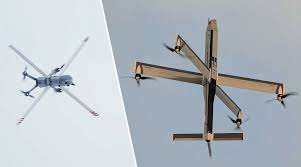
Surprise! The weapon that Russia did not expect from Germany Germany's HX-2 loitering ammunition weighs only 12 kilos but is pure hell for the Russian. It does not need GPS at all - navigates with AI and machine vision instead. Russia's most advanced jamming system? Almost completely useless. The drone looks ahead, finds the target and slams it anyway. Mini-Taurus with German engineering know-how and Ukrainian input. Suddenly it feels like Russia is not only being showered with oil - now they are also getting intelligent little bastards that cannot be jammed away. Germany 2026: "We are not sending tanks... but look what we have instead." Russia: panic jamming intensifies What do you think - will this be a game changer or just one of many new toys?
Something most people don't know:
India holds the largest written record of any civilisation.
1 crore manuscripts. 3 lakh inscriptions in stone.
We gave the world zero. Wrote down surgery and calculus centuries before the West did.
Today, less than 1% can be read or searched. The rest is quietly turning to dust.
In the age of AI, knowledge a machine can't read is knowledge the world will never use.
MIDF is working to change that.
Help us keep India's memory alive. Donate below
A Christian missionary was sent to Assam, named Father Cruz.
He got an opportunity to come home and teach English to a boy from an influential family of Assam. The pastor slowly began to inspect the house.
They found out that the child's grandmother is the most influential person in this house. Therefore, if they are trapped in the trap of Jesus' teachings, then through them the whole family and then the whole village can be made Christian…
The pastor began to tell Grandma how Jesus cured the leprosy,
How he used to give eyesight to the blinded,
And so on... Grandma said, "Son, all this is nothing compared to the miracles of our "#राम_कृष्ण"!
You have heard that our Rama touched a stone and she turned into a living woman.
Due to the influence of Lord Ram's name, even stones used to float in the water, they are still floating today,
The priest would have been silent. But continue their nefarious efforts.
One day the pastor brought #केक from the #चर्च and gave it to the grandmother to eat.
The pastor believed that Grandma would not eat, but contrary to her expectations, Grandma
I took the cake and ate it.
The pastor laughed with pride in his eyes, Mother! You ate the #प्रसाद of the church, now you are #ईसाई*.
Grandma pulled the priest's ears and said, "Wow, you ungodly one! One day I was fed a cake and I became a Christian. And I feed you from my house every day, so how come you are not a Hindu, you salt haram? Every day, you take the air and water of this primordial land of Sanatan Dharma and then every fiber of your being should become a Hindu.
Protecting our home religion and nation from going astray and going in the wrong direction
This grandmother was the famous revolutionary of Assam, Kamaladevi Hazarika, who knows her outside Assam? It is our duty that the whole country
Learn about them...
DRDO is working on another Next Gen Technology Rydberg atom-based Radio Frequency sensing system. Prototype is planned to role out in the near future for integration & testing.
Rydberg atom-based radio frequency sensing is a quantum measurement technology that uses
1/2
One of the most underrated marvels in semiconductor fabs is the vacuum pump.
A high end dry vacuum pump can spin at 90,000 RPM, operate 24/7 for years, maintain ultra clean vacuum environments, survive corrosive process gases, and hold tolerances measured in microns.
These Turbo Molecular Vacuum Pumps cost $10,000 to $25,000+ per unit.
Without them, there are no chips, no AI GPUs, no smartphones.
The semiconductor industry isn't just about EUV lithography. It's also about thousands of invisible engineering masterpieces quietly running in the background.
Video Source :- Leon Li-666
TridenTech Engineering Pvt. Ltd. formally handed over the first set of their indigenous 30 HP Wankel rotary engines.
Designed for drone research and military UAV propulsion, the handover marks a significant milestone
🚨 NASA’S X-59 JUST BROKE THE SOUND BARRIER AND IT DID IT QUIETLY.
For decades, supersonic flight over land has been banned in most countries because of the loud sonic boom it creates. NASA’s experimental X-59 is trying to change that.
The aircraft, developed with Lockheed Martin, is shaped in a very specific way to reshape the shockwaves that form during supersonic flight. Instead of a loud, window-rattling boom, it’s designed to produce a much softer “thump” that reaches the ground.
In its first supersonic flight, the X-59 reached Mach 1.1 while testing this quiet sonic boom technology.
Why this matters:
• If successful, it could reopen the possibility of supersonic passenger flights over populated areas
• Current supersonic jets (like the retired Concorde) were too loud for overland routes
• The X-59 doesn’t carry passengers — it’s a flying testbed for the technology
• Quieter supersonic flight could dramatically cut long-distance travel times in the future
The deeper implication:
This isn’t just about going faster. It’s about removing one of the biggest barriers that has kept supersonic travel from becoming practical for regular people. For over 50 years, the sonic boom has been the main reason we’ve been stuck flying at subsonic speeds on most routes.
If NASA and its partners can prove that a shaped aircraft can turn a loud boom into a gentle thump, it could fundamentally change how we think about long-distance air travel in the coming decades.
We may be watching the return of supersonic flight just much quieter this time.
Do you think quiet supersonic passenger planes will become a reality in your lifetime?
Follow for more frontier aerospace and aviation technology.
@OnlyNakedTruth@isenditbacc@CobraTattiTate Mass production rates would bring the cost down to 1/10 of equivalent GPUs… currently cost is twice that of NVidia GPUs as they are being produced in double digits…
Open challenge, Sir…
We can do it in $2 billion within three years…
Please don’t give us US figures….
Photonic chips today give us 10 times better processing at 1/100 the power a H-200 consumes. The foundational model needs talent which can be managed to be brought together…
In fact, I expected you to announce a “Pai LLM Prize” of $250 million to the first team which creates a foundational model….
Announce competitions which can assist India take the West denial head on…
Create the entropy that will yield benefits which a demographic dividend India could gain from !!!
I think you did not get it. Foundational models cost between 50/60 b $ to build along with hyper cloud. They are getting commoditized . There are multiple models. What we need are vertical LLM’s, hyper cloud, multiple large AI apps etc. we need LLMs for cyber security, defence. All this needs an AI mission. AI is not LLM alone.
Sachee Trivedi's bull case for India:
> China is becoming "uninvestable" due to geopolitical risks and uncertainty around capital exits.
> Taiwan is a TSMC story.
> South Korea is a Samsung and SK Hynix story.
> Brazil is a Vale and Petrobras story.
> India, by contrast, has growth drivers across consumption, manufacturing, financials, healthcare, technology, and infrastructure.
India may not be the cheapest market, but it is one of the few economies with the potential to double and then double again.
Harsh,
You are framing the wrong problem…
Traders think in terms of burn spend and why not build apps..
Autonomy needs foundation built on own products… the app economy is an appendage and not a source of power !
India of 2047 needs builders, developers, products !!! Not traders but makers and creators !!!
Wrong question to ask, as populist as it maybe.
Right question to ask: where is ChatGPT and Claude in China? Oh right, not there.
If you have a market to yourself, you will invest in it.
Why will you burn billions of dollars if someone has already burnt tens of billions and will double down to hundreds?
Easy to hate on India Inc, but this requires a policy architecture which automatically nudges towards what we want.
Rajeev ji,
You taught us in a course at ISB… know that you are a intellectual …hence respectfully wish to bring your attention to three issues :
1. @TVMohandasPai ji is not being targeted because he is from Bangalore or an IT titan. He made a plea to the PM asking for allocation of funds. People are pointing out that Infosys et al are sitting on billions of dollars in cash and not developing products.
2. Where does it say that a services company cannot and should not develop products ? Infosys made Finacle earning them billions , TCS made BaNCS, Fractal made https://t.co/1KS5uwqLCF , Palantir made Gotham and Maven… these are all services led companies which are thriving on products.
3. By remarking about @TVMohandasPai sir, the ecosystem is making a case against successful businesses in India (be if Reliance, Adani, Mahindra, Infosys etc) that they need to take a leap of faith and sink in their money… of course the Govt would join in.. what’s the ANRF ₹1 Lakh crore fund for… but Sir, rather than lament , why don’t they drive the change…
Sam Altman openly challenged India… we are yet to see substantial development of foundational models funded by the Indian industry…(other than Sarvam)
So, please don’t make it a case of regional targeting.. and sectoral targeting…
An awake and alert youth in India is a very good characteristic of our democracy !
It is very curious and strange how a loud and foul mouthed section of the online mob keeps attacking India’s IT industry.
Why would you expect a services focused business to “get into” product development? It is very, very difficult to do both these things in the same organization. It is like asking a land animal to fly or a bird to swim.
Anybody who has run a business of reasonable size will recognize the difficulties of doing this. The constant ranting against IT companies just goes to show, how stupid and disconnected from reality the loudmouths are. https://t.co/0s1FhogGgc
Why don’t these people ever train their guns on the mega conglomerates? Why don’t Jindal, Reliance and other groups ever get questioned? https://t.co/UAKfe1wxRG If anything those in a conglomerate model should be able to deploy capital with more agility in new industries. And these groups routinely do it in old economy sectors.
But they too should be left to their own devices (as long as they don’t abuse their influence to trample and crush new age industries and startups) and the answer to their disproportionate power and sway is ease of doing business, reduction in barriers to entry, stronger regulatory institutions in areas like competition monitoring - but again, why aren’t these mega conglomerates ever questioned by the online commentariat?
I think the answer is that unlike their Mumbai and Delhi based billionaire brethren, Bengaluru’s IT company founders have remained more egalitarian, more approachable, less flashy and more grounded. This makes them soft targets to the pathetic pillorying by the deranged online mob runners - despite their great wealth and influence (honestly earned, unlike some other business dynasties), they appear to be “one of us” and hence, easy to villainize and even abuse.
There is a reason Mafatlal did not enter steel industry. There is a reason Reliance did not enter the IT industry.
The same holds for IT industry. Why vilify them in this condemnable manner?
Different businesses and new industries will require new entrepreneurs to build and create the way. And I can tell you one thing - the way founders and executives of IT industry have taken to not just entrepreneurship beyond IT sector but even angel investing and backing Indian venture capital funds, it is a golden example for other industrialists and business owners in India.
🚨 MERCEDES JUST PUT A MOTOR ONLY 8 CM THICK INTO A CAR THAT CAN HIT 62 MPH IN 2.1 SECONDS.
Instead of conventional radial flux motors, Mercedes is betting big on axial flux technology. In these motors, the electromagnetic force flows parallel to the axle, allowing two magnetic rotors to sandwich a central stator in a flat, disc-like layout.
The result is dramatically smaller and more powerful. The front motor in the new all-electric Mercedes-AMG GT 4-door Coupe is just 9 cm wide. The rear motors are even thinner at roughly 8 cm each. Despite their tiny size, they help launch the heavy performance car from 0-62 mph in just 2.1 seconds, with a top speed of up to 186 mph.
Why this matters:
• Axial flux motors are significantly more power-dense and can be up to 50% lighter than traditional designs
• Their extreme thinness frees up packaging space in the vehicle for better weight distribution, aerodynamics, or interior room
• Mercedes acquired YASA in 2021 and has spent years developing the complex manufacturing processes needed to build them at scale
• The technology is debuting in a high-performance AMG model, showing Mercedes is serious about using it in its most demanding cars
The deeper implication:
While most of the EV conversation focuses on batteries and software, the electric motor itself is undergoing a quiet revolution. Axial flux designs have long been seen as theoretically superior but extremely difficult to manufacture at scale.
By solving the production challenges and putting these motors into a real high-performance car, Mercedes is pushing the entire industry forward. The next generation of electric performance cars may not just have bigger batteries they may have fundamentally better motors.
We’re watching the physical hardware of EVs evolve as dramatically as the software has.
How important do you think motor technology (rather than just battery size) will be for the future of electric performance cars?
Follow for more frontier automotive engineering and electric vehicle technology.
Google hid a fully working flight simulator inside Google Earth back in 2007 and never told anyone.
You unlocked it with a secret keystroke: Ctrl+Alt+A. No menu, no announcement. One user stumbled onto it, the combo spread, and it got popular enough that Google made it official the next year. Two planes, an F-16 and a Cirrus SR22, flying over real satellite imagery of the entire planet.
Then it stayed locked inside the downloadable desktop app for 18 years. The browser version was a stripped-down viewer that couldn't run it. Today that changed.
Here is the part that makes it impressive. A flight simulator is the single hardest thing you can ask a 3D map to do. Panning is easy, the software has all the time it wants to load the terrain ahead of you. Flying low and fast strips that away, forcing it to fetch, decompress, and render the world faster than you are crossing it. The hardest possible job for every part of the system at once.
So "just for fun" is carrying a lot of weight in that sentence. Getting this to run in a browser tab is the cleanest proof that the web version finally matches what used to need a desktop app.
The toy is the benchmark.
While Europe was under ice, someone in Ratnagiri carved a 14-metre map of India.
It's an elephant. Head west to the Konkan, tail east.
Inside it: a tiger in the east, a langur in the north, a boar in Madhya Pradesh, a pangolin in the south. Each animal where it actually lives.
Seven mountains. The Mahabharata also names seven. It was carved 10,000 years before the Mahabharata.
Now the part that should end the argument.
The map's width-to-height ratio is 1.167. Modern India is 1.04. Doesn't match.
Because they weren't mapping modern India.
Reverse-solve 1.167 against the coastline of 12,000 BCE — when the sea was 120m lower and the Sunda Shelf was dry land — and the eastern edge lands at ~100.9°E.
The eastern shore of the Malay Peninsula. The exact limit of the world you could walk to from India at the time.
A decorative outline doesn't do that. A map does.
The oldest known map is supposed to be Çatalhöyük, ~6,200 BCE. This predates it by 6,000 years.
It's on an open plateau. People play cricket near these carvings. The monsoon is erasing it.
Full paper, free, permanent:
DOI: 10.5281/zenodo.20516459
#Ratnagiri #Archaeology #History
Our flying car fleet has successfully completed test flights at XPENG Guangzhou base. This milestone follows batch trial production, demonstrating advanced manufacturing consistency and synchronized flight-control capability.
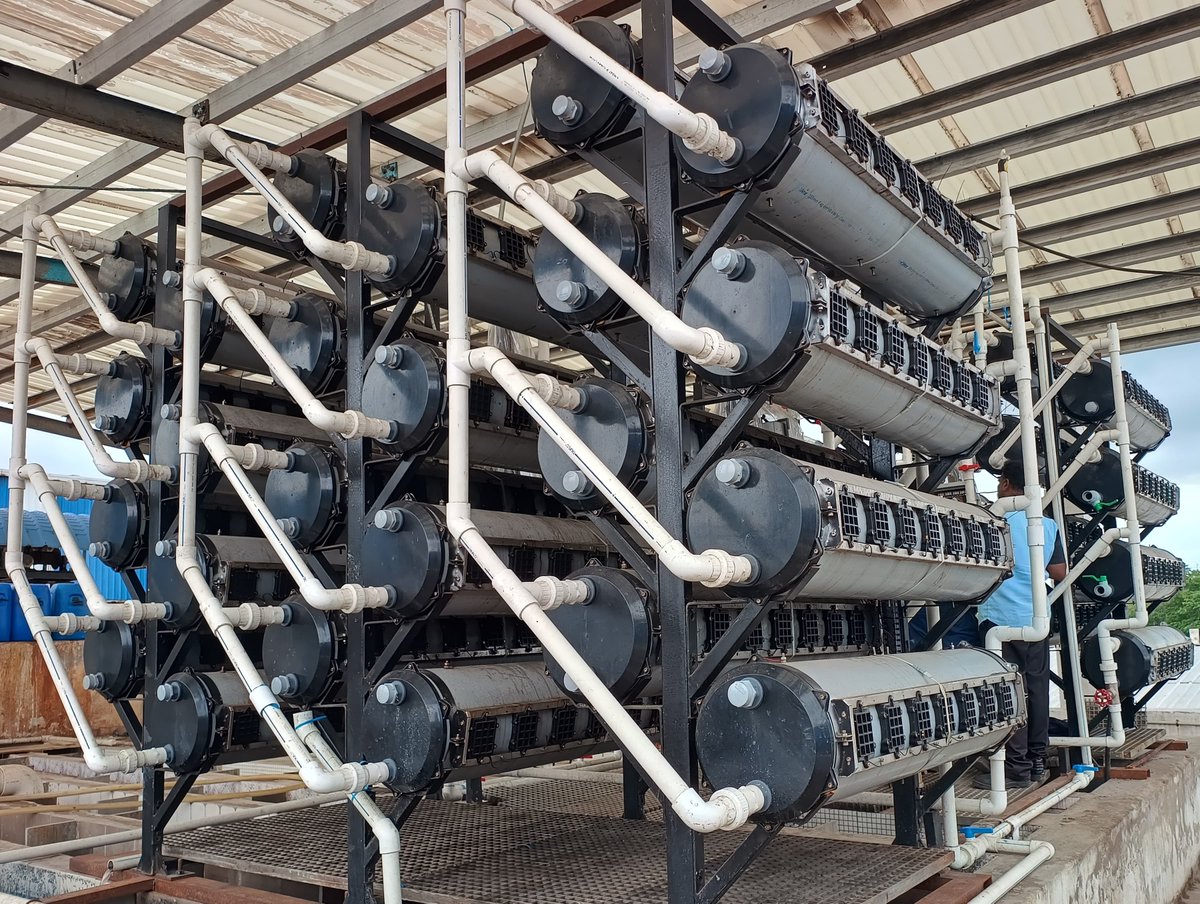
This Chennai-based startup cleans wastewater.
And also generates electricity.
This is JSP Enviro.
They've developed a technology called BEADS (Bio-Electrochemical Anaerobic Digester System).
And this is based on microbial fuel cells.
In simple terms, they use special bacteria which can eat the pollutants inside the wastewater.
When these bacteria breaks down the waste, they also release electrons.
And BEADS captures some of those electrons using electrodes placed inside the system.
And that flow of electrons is what creates electricity.
Now, the electricity generated is not a lot.
But the most impressive part is - it doesn't require any chemicals, the process is carbon neutral, results in negligible sludge and it even cuts down operational costs by up to 50%.
And that's huge.
Because right now, India generates about 72 billion liters of sewage per day.
That's enough to fill nearly 29,000 Olympic sized swimming pools - every single day.
So, if JSP Enviro can scale their solution - it could help solve India's wastewater problem.
His name is Ranjitsinh Disale.
He wanted to be an engineer. When that did not work out, his father suggested he train as a teacher instead.
In 2009, he was posted to a government primary school in Paritewadi, a small village in Solapur district, Maharashtra. The school was a crumbling building wedged between two storerooms, one of which had been used as a cattle shed.
What he found there troubled him.
Girls were being married off young instead of being sent to class. Attendance was poor. The textbooks were written in a language many of the children, who spoke Kannada at home, could not properly read.
He decided to fix all of it, starting with the books.
He learned the children’s mother tongue and rewrote their textbooks in a language they could actually understand.
Then he did something no one in India was doing at the time.
He printed unique QR codes inside the textbooks, allowing students with access to a phone to scan a page and instantly access audio poems, video lessons and practice questions.
A village school in Solapur had built a digital classroom out of paper and printed squares.
The results changed the village.
Girls’ attendance reached nearly one hundred percent. Teenage marriages in the area stopped. His QR code idea worked so well that the Maharashtra government adopted it across the state.
The following year, the national education body embedded QR codes in textbooks across the country.
In 2020, Ranjitsinh Disale won the Global Teacher Prize. He was chosen from more than twelve thousand nominations across roughly one hundred and forty countries and was the only Indian in the top ten.
The award carried one million dollars, around seven crore rupees.
Then he did something no winner had ever done before.
He announced that he would give away half the prize money, dividing it equally among the other nine finalists so that their work could continue as well.
He said teachers are the real change makers.
He meant all of them, not just himself.
A man who became a teacher only because engineering did not work out changed how an entire country learns, and then gave half his fortune to the people he had competed against.
Follow for stories India deserves to remember.