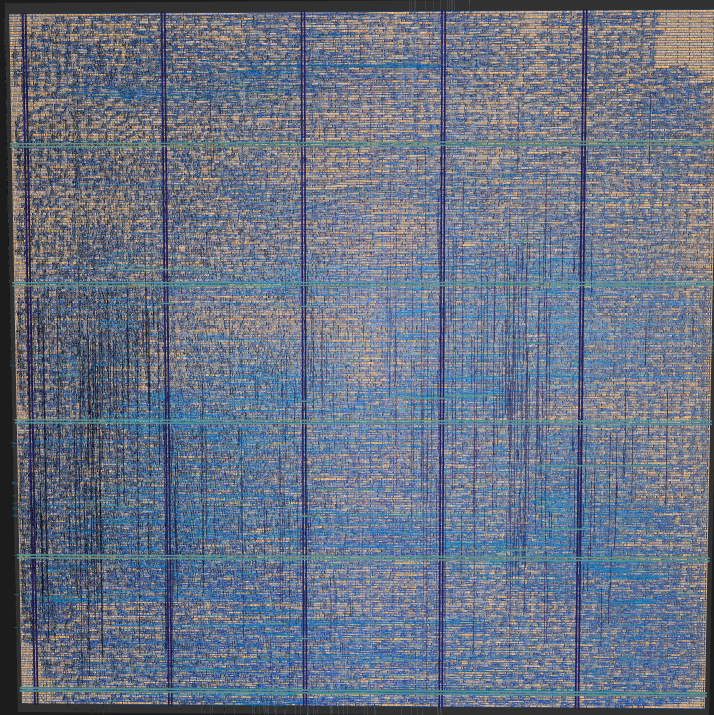
56,000+ tokens/sec at just 80 MHz. 🤯
I burned a full Transformer with KV cache into a custom chip. Designed gate by gate as a 100% digital integrated circuit. Prototyped on a FPGA. (No GPU. No CPU)
Just pure digital silicon running @karpathy microGPT, spelling out names on a tiny LCD.
This is GateGPT 👇
Bigger models and more GPUs don’t automatically mean more value. This new Joules-to-GDP framework found that some smaller models deliver 2.5× more economic value per joule, and adding 7 extra H100s barely improved output while tripling energy use.
anyone who knows @JonSaadFalcon and me knows we’re incredibly intelligence per watt pilled 😊
today we are releasing joules-to-gdp which answers the most important question in ai today: how much economic value are we getting from the energy we spend on ai?
joint work w/our amazing undergrad @amirzeinaalii and the usual suspects @JonSaadFaclon, @HazyResearch, @Azaliamirh and john hennessy
@vanstriendaniel Ran stock nougat-small (250M params, no changes). Output:
Speicheldrusen bei den Odonaten. Vin Nieo l aus Poleta iew. Mit 1 Tafel (T. I).
Zur Frage uber den Bau und uber die Innervation der Speicheldrusen der Blattiden. Vol N. Chol l o d k o w s ky. Mit 2 Tafeln (T. II & III).
Today we're coming out of stealth, introducing Neywa Labs 🚀
We built the infrastructure to build and deploy AI that runs on the devices people already own. Private, offline, unlimited.
One mission: make AI available to everyone in the world.
https://t.co/FhoDfAWjru
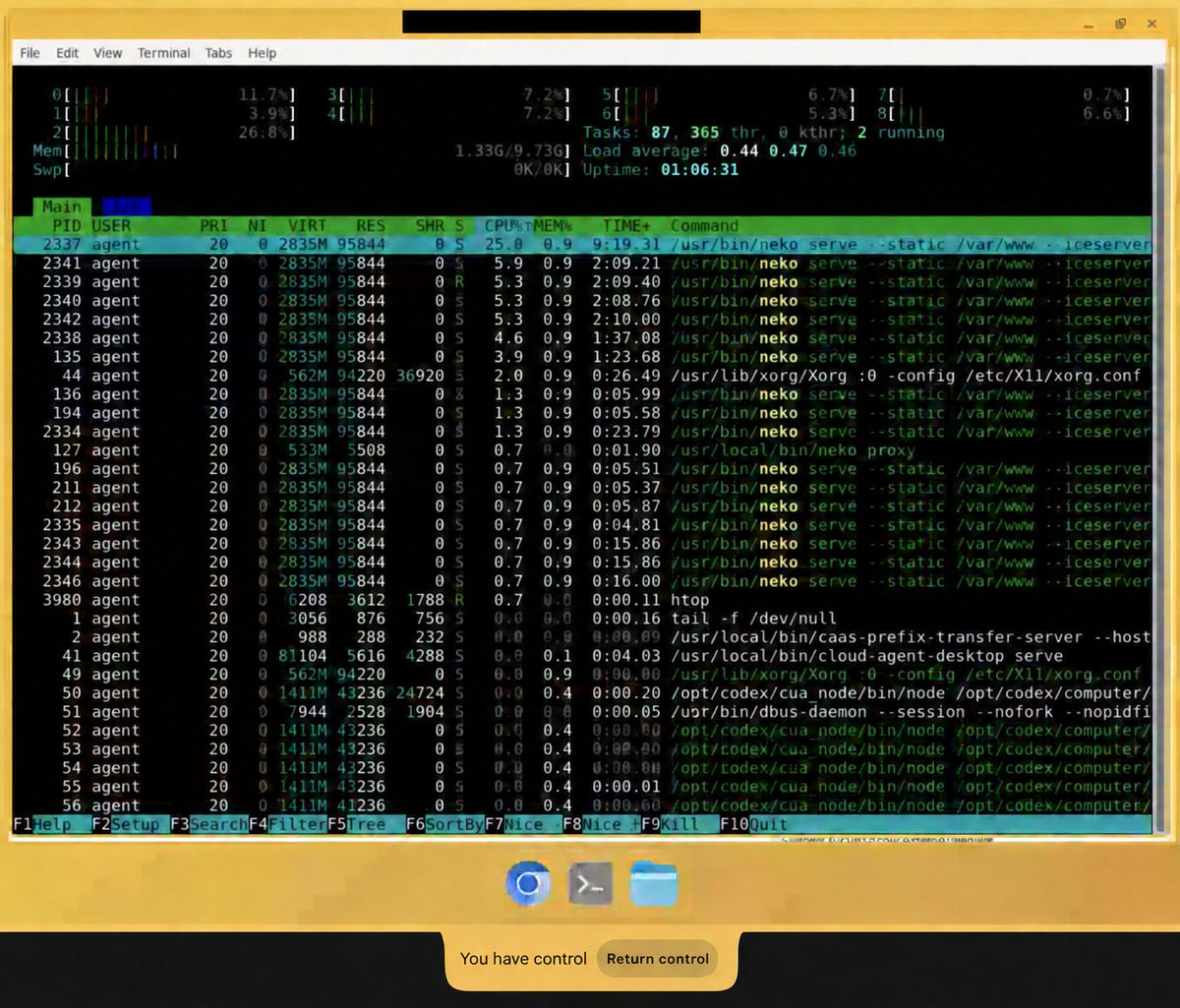
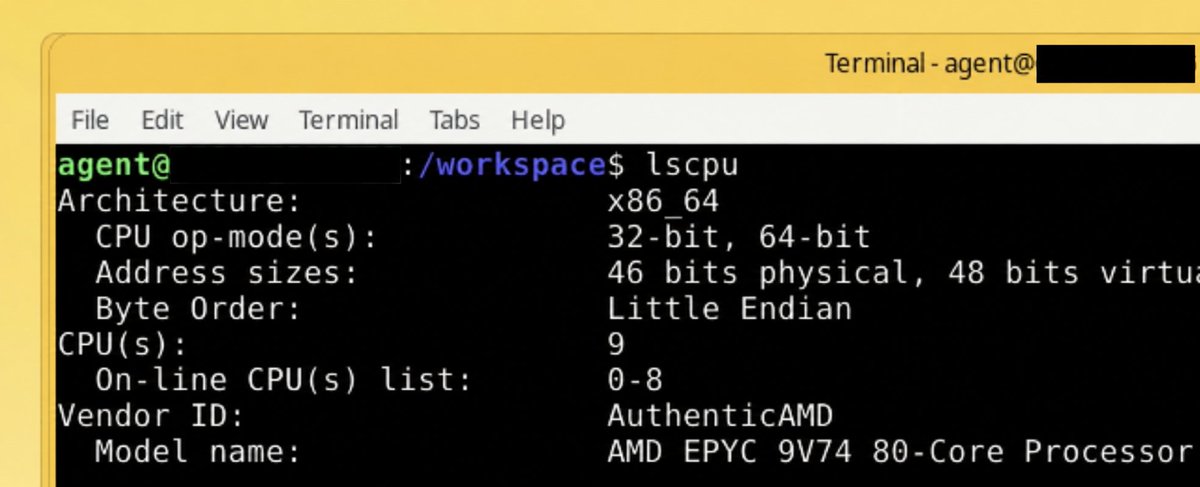
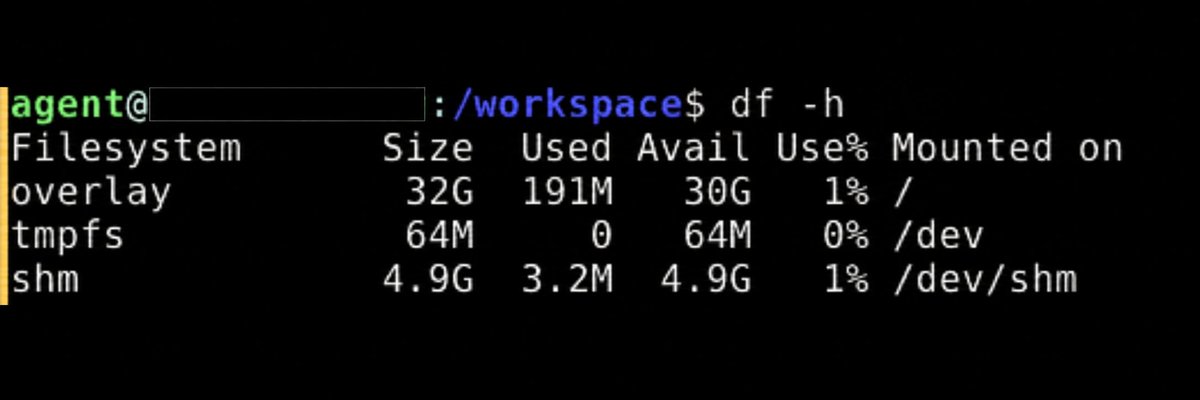
Our beloved OpenAI dot has its own computer in the cloud. I took a peek at the specs—and it packs a punch:
- AMD EPYC 9574 processor
- 9 vCPUs
- Nearly 10 GB RAM
- 32 GB storage
- Linux x86_64
- Cloudflare Sandbox
98%.
That's the local win/tie rate for small models on chat - and it's a weighted average across 20+ occupational domains, not a cherry-picked slice. The "you still need the cloud for everything" assumption just got an expiration date.
Huge congrats to you and the team. And getting the FT to run it? Even better 👏
Long live on-device intelligence!!!
dreams do come true 🥹. excited to see our work (w/@JonSaadFalcon, @HazyResearch, john hennessy and @Azaliamirh) feat. in a major way in @FT. the world is becoming increasingly less dependent on centralized cloud ai. we are just getting started 🚀🌖
Today we're launching Desert Ant Labs: a European frontier AI lab building on-device intelligence.
18 models across audio, vision, and text. SDKs for Swift, Kotlin, and JavaScript.
No tokens. No logins. Nothing leaves the device.
https://t.co/qDZfv4G6ji
56,000+ tokens/sec at just 80 MHz. A full Transformer with KV cache, burned gate by gate into pure digital silicon. No GPU. No CPU. This is GateGPT.
I built this custom chip in my own garage - 100% AI-copiloted, in one week. The capabilities are incredible.
It's the same thesis @architectlabs is proving: ML, software and hardware in one feedback loop. Congrats on building it inside a company. 👏
https://t.co/tWoorC6HDJ
56,000+ tokens/sec at just 80 MHz. 🤯
I burned a full Transformer with KV cache into a custom chip. Designed gate by gate as a 100% digital integrated circuit. Prototyped on a FPGA. (No GPU. No CPU)
Just pure digital silicon running @karpathy microGPT, spelling out names on a tiny LCD.
This is GateGPT 👇
Great experiment — really solid and well-documented comparison of GPU vs NPU on the Galaxy S26 with those 50 LiteRT models. The results are very interesting, especially the consistent NPU wins on load time and the majority of inference cases.
Quick question: did you also evaluate any energy profiles or power consumption metrics (e.g., mJ per inference, average power draw, or energy efficiency) during the comparison? Would be great to see how the NPU and GPU stack up on that dimension as well.
Thanks for sharing the full data!
Thanks! Really appreciate it.
The current model is only around 4K parameters. On an FPGA, scaling this architecture directly to very large models isn’t really feasible, and even at the ASIC level it becomes extremely challenging without relying on external or embedded SRAM.
Taalas, on the other hand, is taking a much more radical approach by essentially hardwiring the weights into silicon. But getting something like that to the scale of a 2T-parameter model is something I’d also love to see someday!
56,000+ tokens/sec at just 80 MHz. 🤯
I burned a full Transformer with KV cache into a custom chip. Designed gate by gate as a 100% digital integrated circuit. Prototyped on a FPGA. (No GPU. No CPU)
Just pure digital silicon running @karpathy microGPT, spelling out names on a tiny LCD.
This is GateGPT 👇
Genuinely inspired by @sarahookr's vision for AutoScientist by @adaption_ai Couldn't find official API docs, so I wrote up my own observations of the endpoints 👇
https://t.co/E5wwK2BaB2
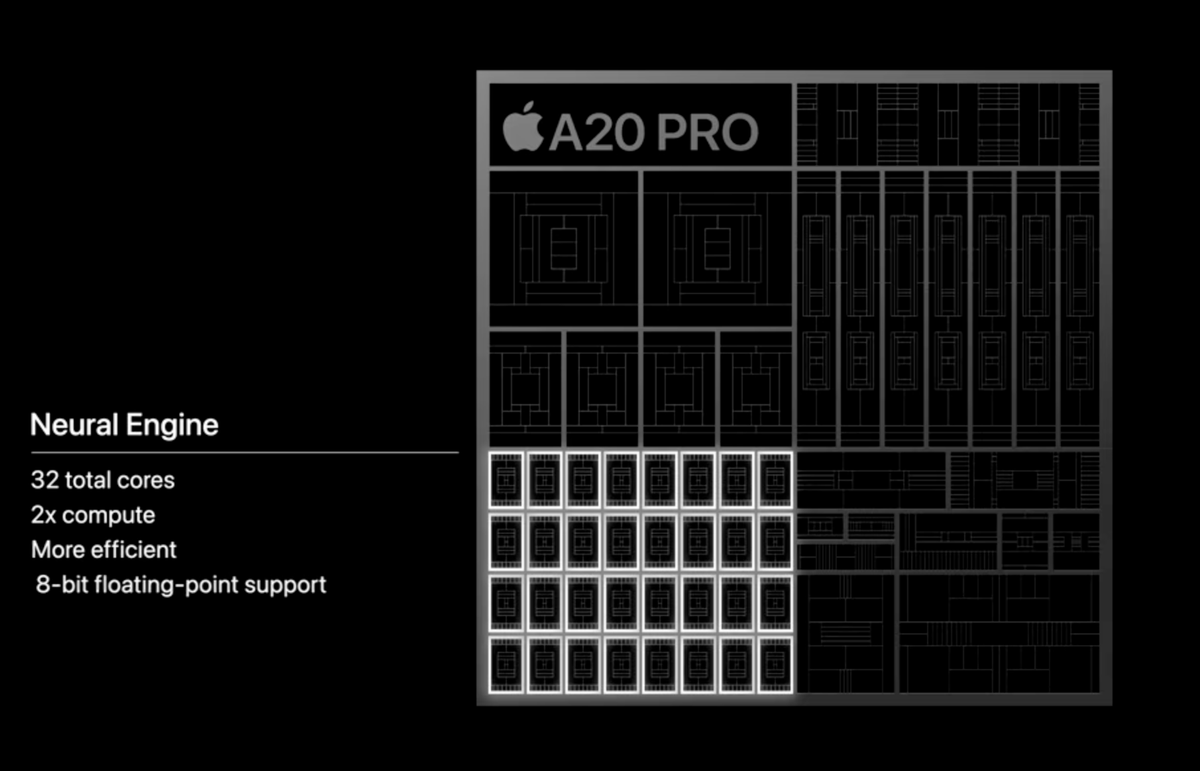
Apple heard the community! 🗣️
Background Neural Engine access is BACK in the iOS 27 Public Beta.
Huge win for on-device AI. Thanks to @argmax for fighting for it.
On-device inference stays fast and efficient
Apple restricted background access to the Neural Engine on iOS 27... and it's back!
This would have broken on-device inference for many apps that rely on this access, including many of our customers.
We made a strong case to Apple that this access should be reinstated, channeling our customers' voice.
We are elated that Apple reinstated this capability in the first iOS 27 Public Beta!
Here is the step-by-step guide in our docs: https://t.co/hiohTLatwf
I am pretty impressed what open source EDA tool can achieve already. This is an programmable instrumentation amplifier. And yes. Its design and the IHP PDK used is open source :-)
Learning computer architecture by building a full GPU from scratch.
▪️ 16-bit ISA & assembler
▪️ High-level programming language (J++) & compiler
▪️ Branch divergence & warp scheduling
▪️ 2 compute cores
Running AI model inference at 81 MHz on a 30$ FPGA
🧵