I published an OpEd in NikkeiAsia, where I wrote about regulatory moves in India and Singapore to de-link worker protections from worker status, and to give greater protections for platform workers without undermining their flexibility. More can be done. https://t.co/YNO0smbe0X
Public services in the UK don’t require reform. They need transformation. Our latest @InstituteGC report w @kmei_ & @ryan_wain makes the case for a public sector fit for the 21st c, enabled by modern digital infrastructure and #digitalID. #FutureofBritain
https://t.co/QNw4yobVmR
Democratising the way governments spend their money can lead to increased trust and better outcomes. This brilliant thought piece by Nick Romeo in @NewYorker takes a deep dive into the transformational potential of #ParticipatoryBudgeting https://t.co/qCDi5rX5NO
New week, new Oped! @Olliel24 and I wrote about algorithmic mgmt in @restofworld. How are algorithms affecting the world of work? We start by examining the gig / platform economy.
Article by @peichintay & me in @restofworld highlighting our user-centred research on algorithmic management of platform workers, how this should concern us all & what policy outcomes gov’ts should pursue in response
https://t.co/zYbT7QdTK8
Article by @peichintay & me in @restofworld highlighting our user-centred research on algorithmic management of platform workers, how this should concern us all & what policy outcomes gov’ts should pursue in response
https://t.co/zYbT7QdTK8
This report involved design thinking methodology, significant stakeholder engagement & a considerable team effort
My thanks in particular to @kmei_, @a_iosad, and the project co-lead @peichintay
You can read the full report here (9/9)
https://t.co/EcMHYICkAR
We go into more detail in the report on worker insights and what each of these policy outcomes might look like
Next year we hope to create policy programmes to achieve these outcomes in specific locations
We invite our readers (you!) to contribute to this conversation (8/9)
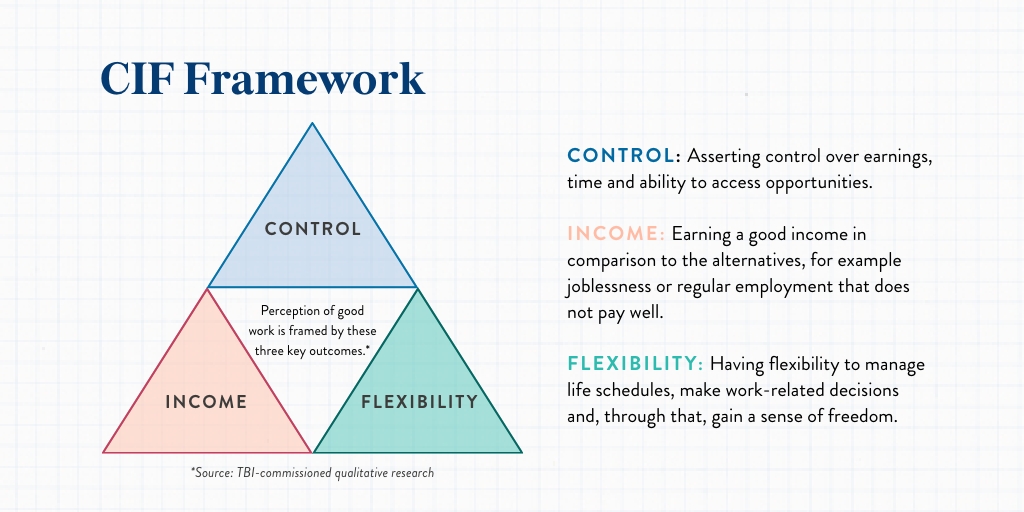
Gov'ts must better serve worker needs around control, income & flexibility without undermining the DLP model
When regulating DLPs, they should consider how to achieve 3 policy outcomes:
👩💼Empower workers
📱Encourage platform innovation & improvement
🪜Extend DLP benefits (7/9)
While many workers experience these elements of good work, more can be done. Our research found that:
🎛️ a lack of transparency & recourse undermine workers' control
🗣️Discrimination, unexpected costs & platform errors threaten incomes
💻Platform features can limit flexibility
The key finding from our research is that, across different locations and platform types, DLP workers’ perceptions of good work are framed by control, flexibility and income
Platform work was a positive choice for most workers, often in comparison to traditional employment (5/9)
Yet gov't regulatory approaches (where they exist) have often failed to consider DLPs actual and potential benefits or to factor in worker preferences
To help fill this gap, @InstituteGC commissioned new user-centred research to gain insights on DLP workers’ experiences (4/9)
By maximising efficiency, information aggregation & flexibility, DLPs have created value for workers, customers, businesses and gov'ts
Although there are sometimes challenges to achieving these positive effects, especially for workers, gov'ts must acknowledge the benefits (3/9)
DLPs leverage a digital platform to connect workers with paid tasks, often facilitated by algorithmic tools and a flexible workforce
Although DLPs still represent a small section of the working population, millions of workers from across the world have joined platforms (2/9)
Today, the Digital Government Unit at @InstituteGC published a new report on digital labour platforms, that helps to answer the following questions:
How do workers perceive platform work? How should governments respond to worker preferences?
Here are the key messages👇🧵 (1/9)
Digital labour platforms are a growing part of the global economy and can support access to better working opportunities and conditions. @InstituteGC@Olliel24 make the case to empower, encourage, and extend platforms in our new research #FreedomJobs https://t.co/wZQLeLQYhB
Published the second part of my blog on @SDinGov today - with a summary of a workshop I ran on creating strong cultures of human-centred design in gov.
Also some reflections on running my first in-person session!
https://t.co/KWttaKLn92
Finally, the Digital Ministry in the Netherlands are implementing the Digital Failure Awards - which are examples where gov’t has learned from their mistakes.
It’s an interesting way to incentivise failure in gov’t, which is an essential pre-requisite to success
🏆 This week, instead of the usual report/briefing, #ResearchOfTheWeek goes to @Olliel24 at
@InstituteGC for this new article exploring how platform workers should be supported through periods of high inflation. ⬇️ (1/6)
https://t.co/WmBJMjE324
Government services should be reliable, cost-effective, frictionless and delightful. This is not a pipe dream.
New from @mwendowangu and myself for @InstituteGC: proactive public services! What are they, why do we need them and what stands in the way? https://t.co/fCNqZkyjQP