Kaikai Wang (ENG’11), a graduate of Penn Engineering’s Digital Media Design (DMD) program, reflects on how his time at Penn shaped his path in computer graphics and how it brought him and his wife together.
"Penn is not only where I discovered my professional passion, but it's also where I met my wife, Jia (W’12). Our shared experience at the University created a special bond, and we often look back fondly on our time at Penn as the place where our lives intertwined."
Now leading trusted computing efforts at Meta Ads, Wang’s career spans Microsoft, Google, and Meta, with work across privacy-preserving machine learning, VR, and live streaming.
As part of The Sugi and Millie Widjaja Entrepreneurship Fellows Program at Penn Engineering, Arianna Alonso Bizzi (GEng’26) is exploring how brain–computer interfaces (BCIs) can reconnect the brain with the outside world.
Last summer, Alonso Bizzi interned at @BlackrockNeuro_, a Utah-based leader in brain–computer interface (BCI) technology that is already helping people living with paralysis restore movement and communication. There, she developed systems to analyze the electrodes used to record neural activity and improve how these components are tested at scale.
"Thinking like an engineering entrepreneur means starting simple and then relentlessly improving,” she says.
#TechEntrepreneurship #InnovationLeadership
https://t.co/bdMkMGnGCl
As Philadelphia prepares to host six FIFA World Cup 26 matches, Paulo Arratia (@MEAM_Penn) breaks down the science of natural grass vs. synthetic turf.
Natural grass absorbs energy and cushions impact, while turf is more rigid, affecting traction, ball movement and player biomechanics. “Beneath the cleats or tennis shoes, there’s a world of applied physics and mechanical processes at play,” says @ArratiaPaulo.
Philadelphia's matches begin Sunday with Côte d'Ivoire vs. Ecuador.
@FWC26Philly@FIFAcom | #WeAre26 #WeArePhilly #FIFAWorldCup26
https://t.co/ptcxkRjPMb
A new mathematical shape is challenging long-held assumptions about visual paradoxes.
Penn Engineering's Robert Ghrist (@prof_g, @eseatpenn) coauthored a Scientific American article with Zoe Cooperband of @USNRL on the "impossible Klein ladder," the first known impossible object to exhibit a nonabelian property, which happens when the order of two loops changes the outcome.
“The essence of a paradox is: you walk around a loop, and something has changed,” says Ghrist. “It’s a mismatch between where you are and where you thought you were.”
In EAS 5500: Applying Your Thesis to the Real World, Penn Engineering Ph.D. students explore how their research can create real-world impact. Taught by @VanessaZChan, the course explores the market, policy, manufacturing and adoption challenges that shape whether new technologies succeed beyond the lab.
https://t.co/vk9AExJ5hs
"When the answer isn't obvious, when the incentives are loud and the timelines are tight, may our class have the integrity to pause. To think. To choose wisely."
Watch remarks from Penn Engineering's 2026 Undergraduate Speaker, Julia Fremberg (ENG'26).
Congratulations to Harrison Chong (MEAM’27, W’27) on being named to the @Forbes 30 Under 30 Asia 2026 list in the Social Impact category.
Chong cofounded Jalan Journey, a social enterprise that creates online educational games designed to help students develop emotional skills and engage more deeply with social issues. Since its founding in 2022, the platform has reached more than 25,000 learners across Southeast Asia.
“When I started Jalan Journey, I simply wanted to create learning experiences that helped young people feel, reflect, and care more deeply,” says Chong. “To have that work recognized by Forbes is surreal and deeply humbling. It reminds me how far I have come, but also how much more I have to do.”
Congratulations, Harrison!
Ferrari CEO Benedetto Vigna joins Vijay Kumar in episode 12 of Penn Engineering’s Innovation & Impact podcast to discuss electric vehicles, innovation leadership and balancing new technologies with Ferrari’s legacy of performance and design.
Quantum science is becoming more hands-on at Penn Engineering thanks to ESE 3200: The Qubit Lab, where students work directly with optical and solid-state quantum experiments using research-grade equipment from @thorlabs.
Led by Lee Bassett and Anthony Sigillito (@Penn_ESE), the course brings quantum concepts to life.
Interested students can register for ESE 3200: The Qubit Lab in Fall 2026.
Ottman Tertuliano, AMA Family Assistant Professor in @MEAM_Penn, has been selected into the 2026 CIFAR Global Scholars program (@CIFAR_News).
Tertuliano's research explores how cells communicate mechanically within bone tissue during development and is already expanding into new collaborative questions, including how changes in the mechanical properties of the placenta during pregnancy could help predict health outcomes.
The CIFAR Global Scholars program supports emerging research leaders worldwide through collaborative opportunities, international convening and unrestricted research funding.
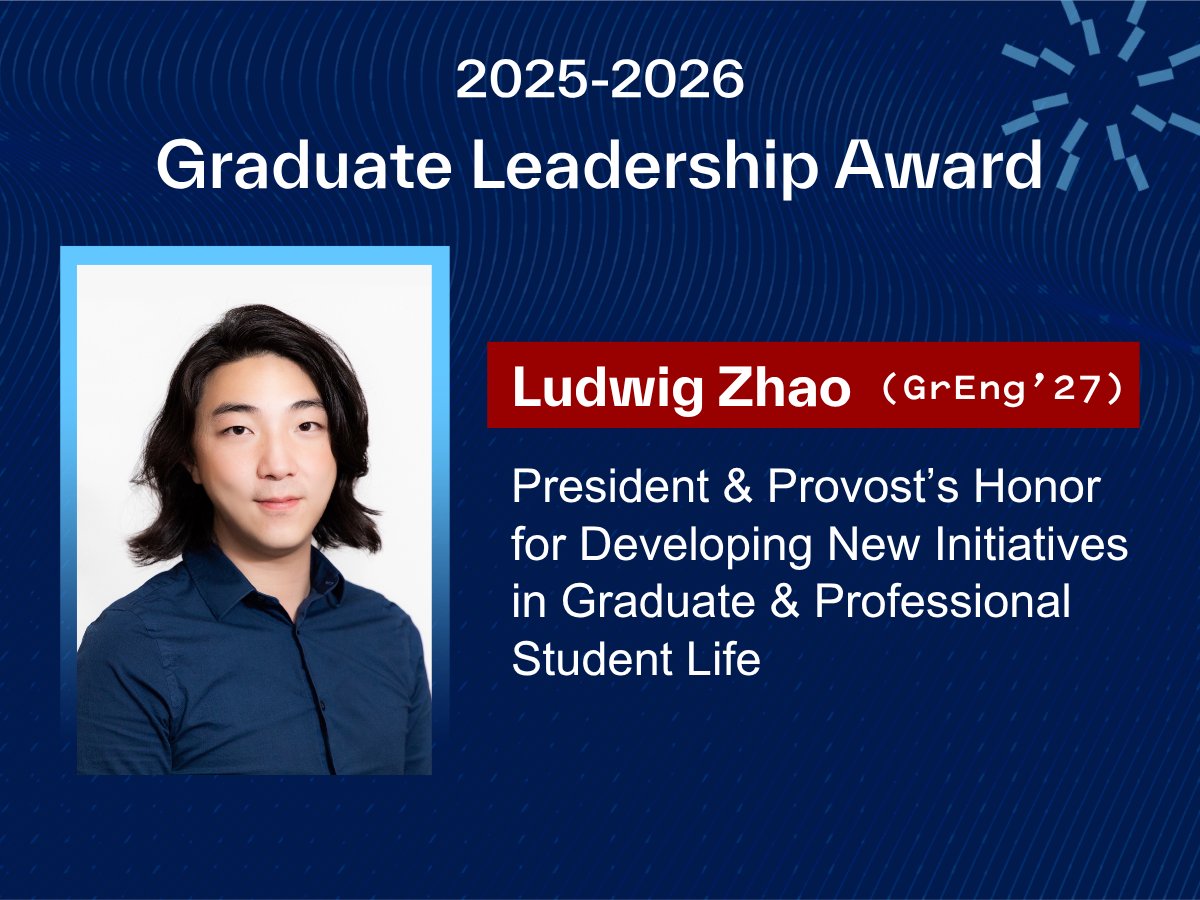
Congratulations to Ludwig Zhao, @pennbioeng Ph.D. candidate, on receiving the 2025-26 President & Provost’s Honor for Developing New Initiatives in Graduate & Professional Student Life. Zhao was recognized for his leadership within GAPSA, service on University committees and advocacy for research students at Penn.
Congratulations on this well-deserved recognition, Ludwig!
https://t.co/ckaBqKeCDP
Ferrari CEO Benedetto Vigna joins Vijay Kumar on the Penn Engineering podcast to discuss his journey from physicist and semiconductor innovator to leading one of the world’s most iconic automotive brands.
The conversation explores Ferrari’s evolving approach to electrification, digital transformation and high-performance engineering, as well as the importance of pairing deep technical expertise with long-term vision.
https://t.co/R5SGAArY0Q
@PennEngAI
In a recent conversation, @jamiecgrant (C’98, GEd’99), Senior Associate Director for @PennEngineers at @PennCareerJobs, discussed how students can use AI while continuing to build the judgment and foundational skills employers value. https://t.co/nRaeTlqPvz #AIandCareer
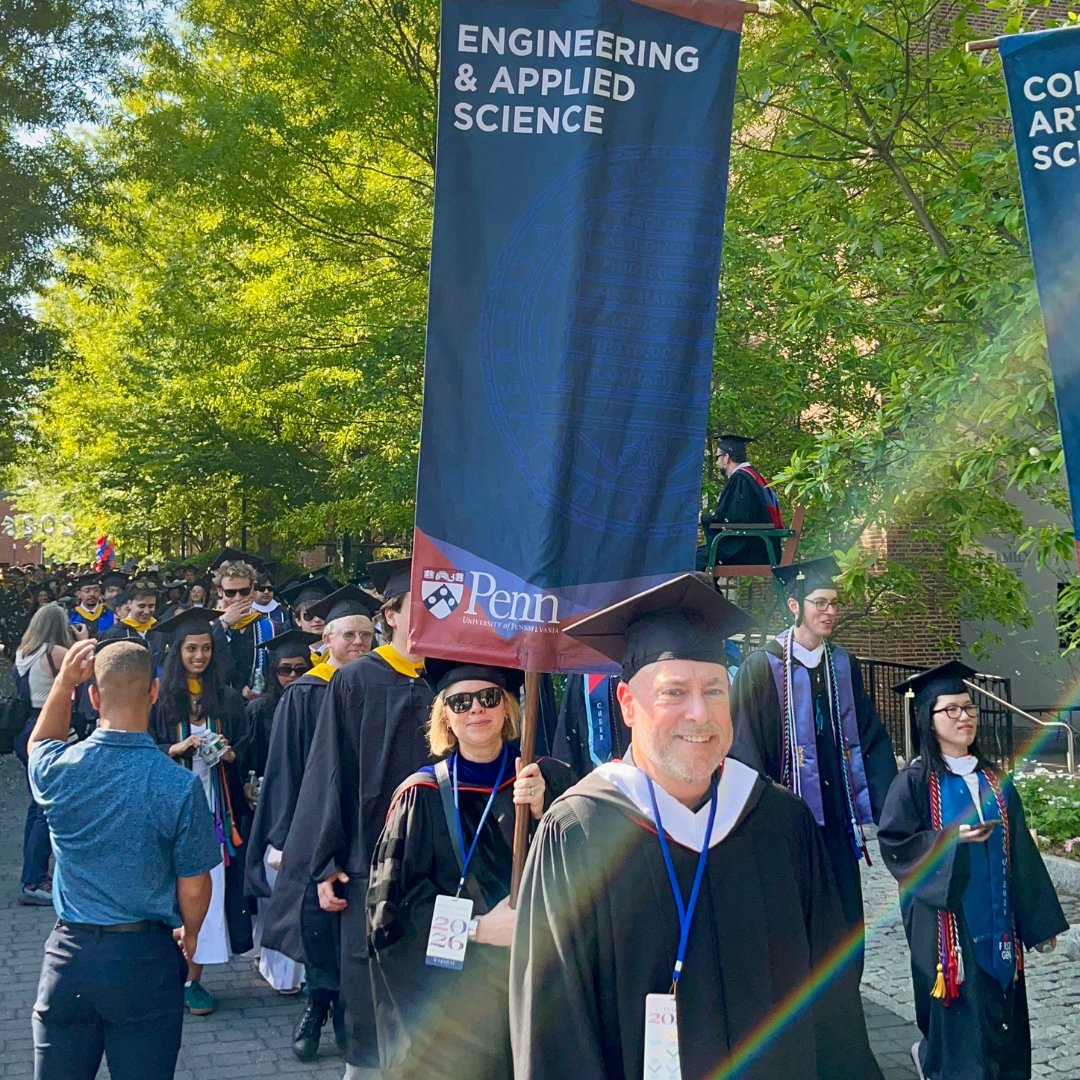
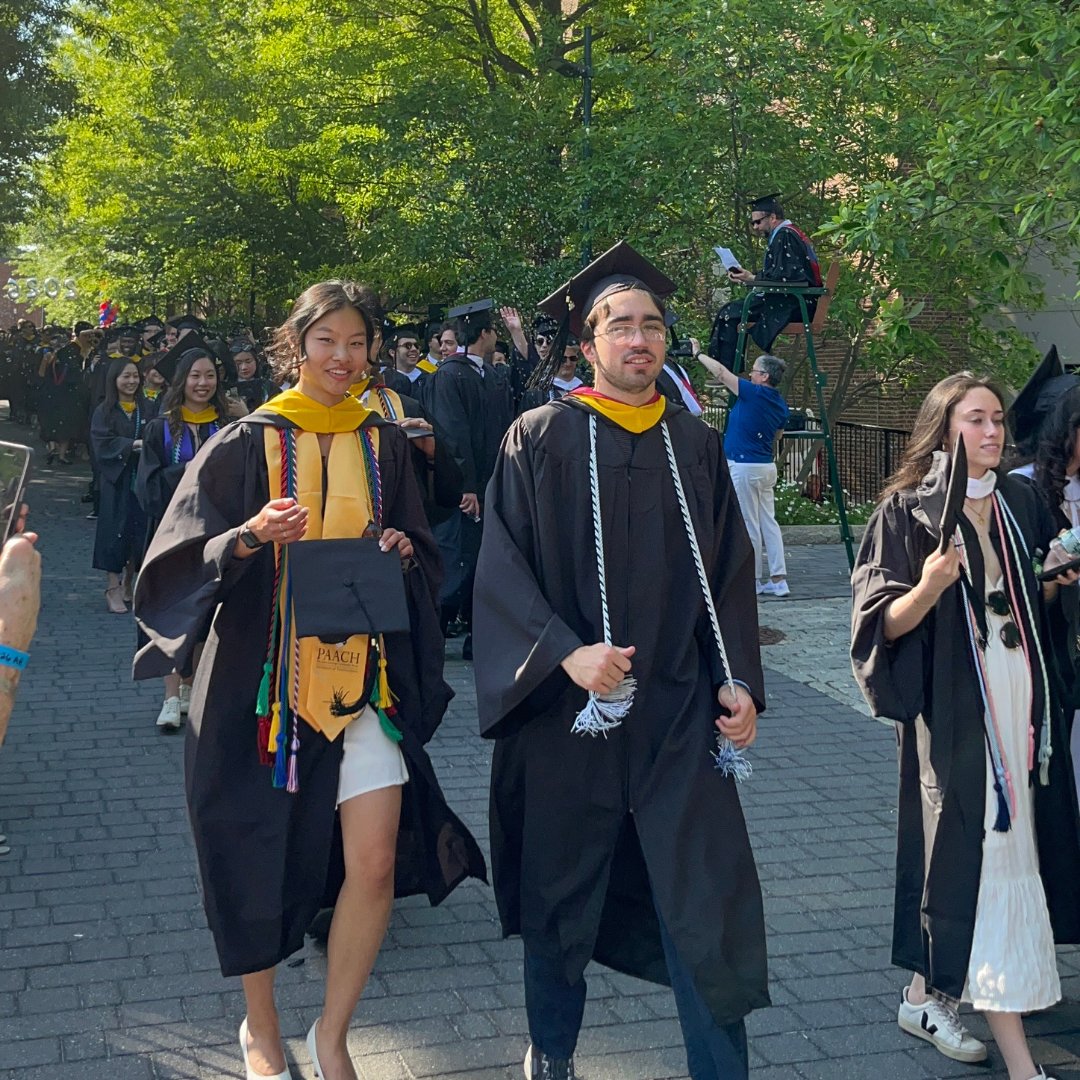
Leading the University of Pennsylvania's 270th Commencement procession, Penn Engineering's Class of 2026 marches into the future with excitement and the knowledge they need to accomplish their goals and responsibly impact the world.
Congratulations, Class of 2026!
#PennEngineeringProud #PennGrad
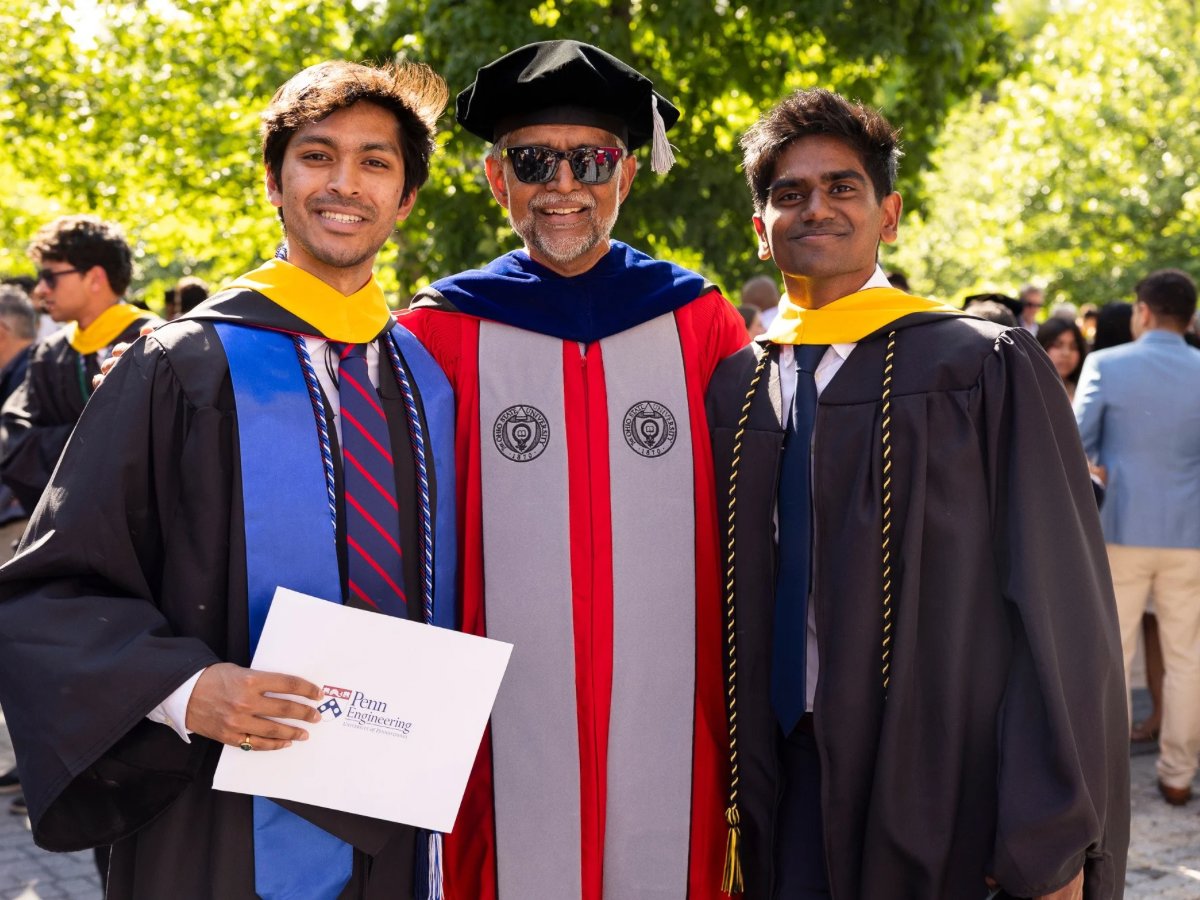
Congratulations to Penn Engineering's Class of 2026!
In her speech, student speaker Julia Fremberg (ENG’26) drew a parallel between Penn’s interconnected buildings and the vital bonds between students.
"As you move from place to place, from goal to goal, never forget to cherish those in-between moments. The E-Quad tunnels were never just about getting somewhere faster. They were about who you found—and who you became—along the way."
#PennEngineeringProud #PennGrad
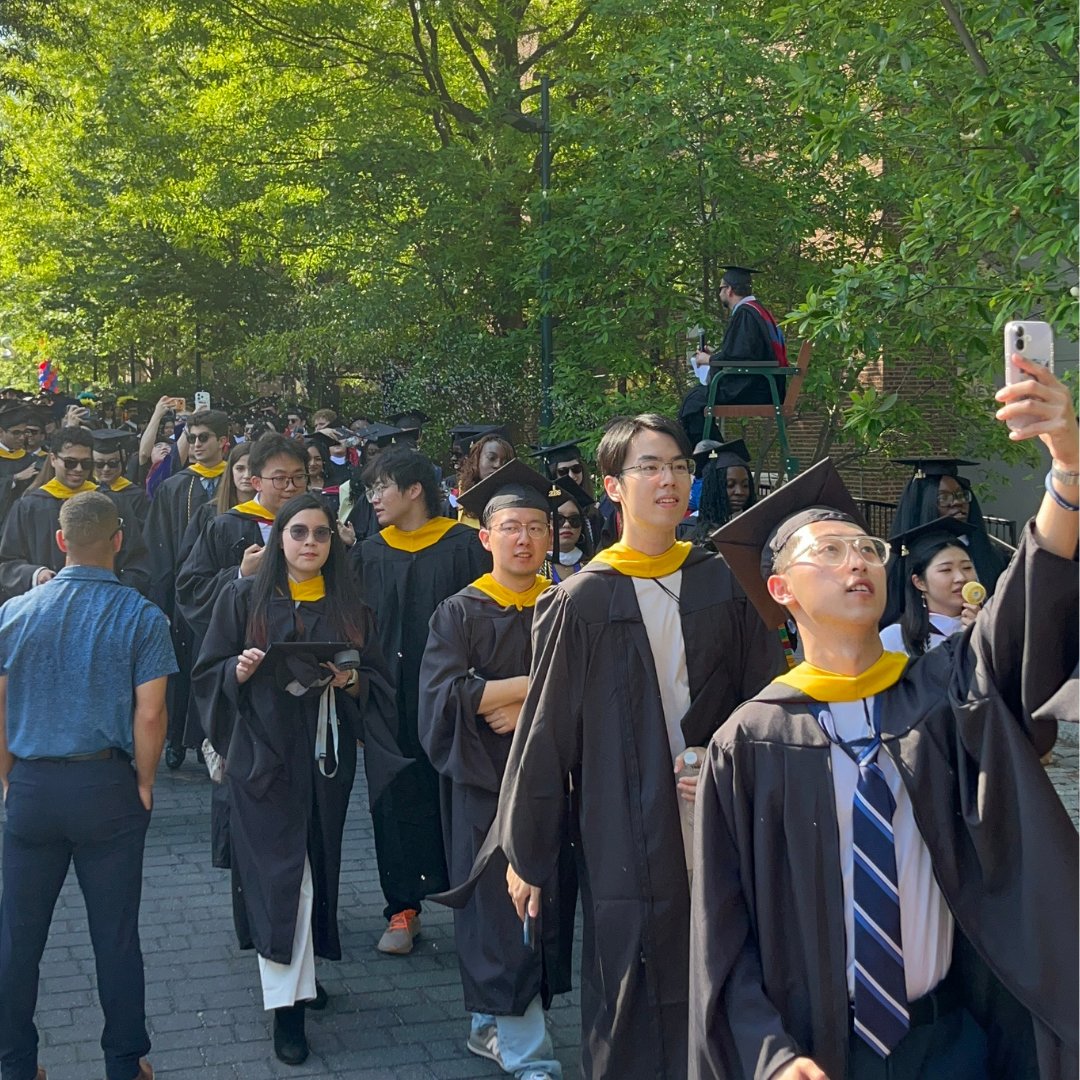
Penn Engineering’s Class of 2026 master’s graduates have turned their tassels and are prepared to step into the next chapter equipped with the knowledge, experience and determination they’ve accumulated at Penn.
Keynote speaker Vanessa Lyon (GEng'24) encouraged the graduates to embrace lifelong learning and use their skills to solve humanity’s biggest challenges: "Tools change fast. Faster than you realize. What doesn't change is your ability to reason about what's underneath."
Congratulations, master's graduates!
#PennEngineeringProud #PennGrad