Frontend developer in love with the Web, browsers, bicycles, and podcasting. He/him, @MozDevNet technical writer, @webstandardsdev editor, @GoogleDevExpert
CSS is filling the gaps with rules. @utilitybend introduces column-rule, row-rule, rule-break, rule-inset, rule-overlap, and rule-visibility-items for styling gaps in grid and flex layouts. The rules are animatable too. #css#layout
https://t.co/yZSYHVykWf
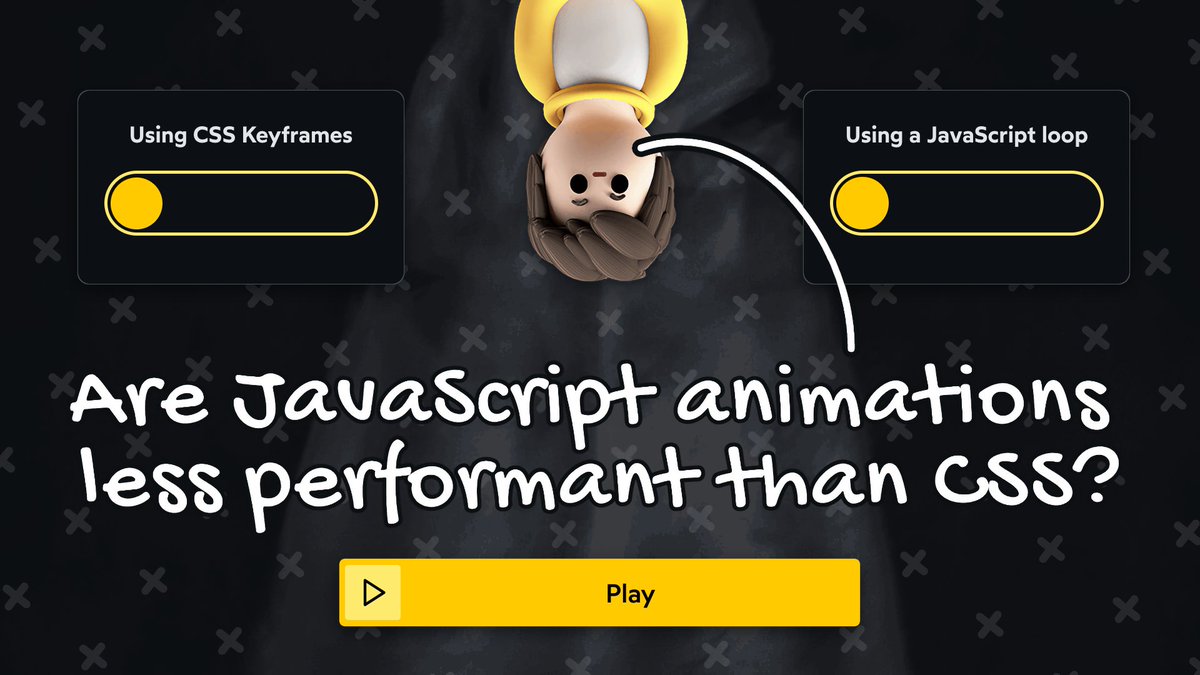
CSS vs. JavaScript animations. Josh Comeau shows CSS and the Motion library stay smooth when the main thread is busy, while JS and the GSAP library freeze. Use native CSS when you can, and reach for JS only for what CSS can’t do. #animation#performance
https://t.co/DRuGoIohiy
Better fluid sizing with round(). @shadeed9 shows how the CSS round() function complements clamp() by snapping fluid values to consistent intervals, avoiding awkward decimals like 19.7px in typography, spacing, and baseline grids. #css
https://t.co/wfqfJCfnJE
600+ million people write right-to-left: two fixes your app needs. Nina Torgunakova from @evilmartians shows how dir="auto" handles RTL input in English apps, while dir="rtl" plus logical CSS properties enable fully localized UIs. #css#a11y
https://t.co/COaXUoaDLf
Modern web guidance. A set of expert-vetted skills from the Chrome team that guide AI coding agents toward accessible, performant, and secure web practices, helping with modern features like <dialog>, popover, container queries, passkeys, CSP. #tools#ai
https://t.co/BgSdrqDBna
Soon we can finally banish JavaScript to the ShadowRealm. Mat Marquis walks through the TC39 proposal for isolated execution contexts with pristine globals, perfect for sandboxing third-party scripts. Still at Stage 2.7. #js#ecmascript
https://t.co/Pk3kd4m4K0
How to control infinite CSS animations. In part 1 of 2, @ChallengesCss shows how to speed up, slow down, and reverse infinite CSS animations on demand using animation-composition, CSS variables, and abs() and sign() functions. #css#animation
https://t.co/lL66sfjY19
From React to native web with nanotags: a migration that saved 100 KB. Pavel Grinchenko from @evilmartians replaced React and Ark UI with native Web Components and a 2.5 KB wrapper, nanotags, cutting 100 KB of JavaScript. #webcomponents#react
https://t.co/fG95Ij614k
Using safe-area-inset to build mobile-safe layouts. The Polypane blog covers env(safe-area-inset-*), viewport-fit=cover, calc() for extra spacing, and safe-area-max-inset-* that stays stable when the address bar hides. #css#layout
https://t.co/KenNvtxQdY
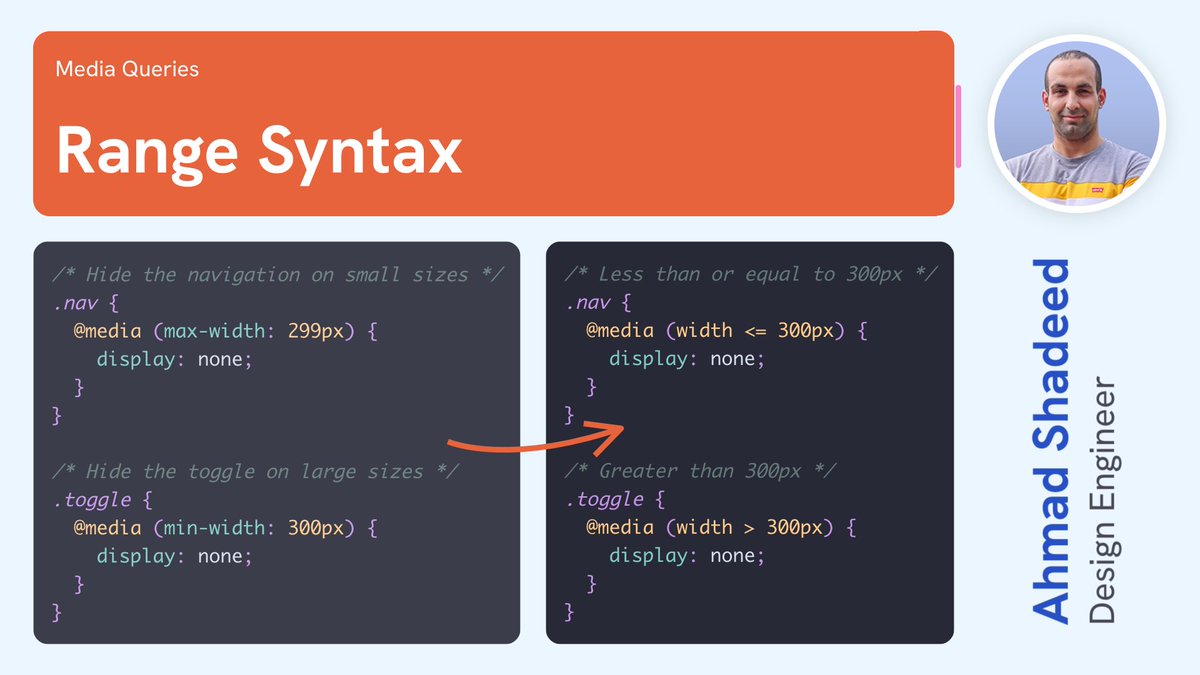
Media queries range syntax. @shadeed9 shows how min-width and max-width create overlap bugs at identical breakpoints. The fix: CSS range syntax with operators like <=, >=, and >, supported since March 2023. #css#layout
https://t.co/MkJWarP9La
SVG from scratch. @carmenansio presents SVG not as a graphics format but as a DOM where every shape is an element, every attribute is a style, that could be selected with CSS, animated with transitions, and targeted with JavaScript. #svg#animation
https://t.co/95Nt5xVhrQ
The web is fun again: first experiments with HTML in <canvas>. @amit_sheen explores Chrome’s experimental Canvas Draw Element API that renders HTML into <canvas> while keeping semantics, with pixel effects, mouse interaction, and WebGL shaders. #html#api
https://t.co/BOe9L4vdhC
Scroll-driven animations. Josh Comeau explains CSS animation-timeline, which maps keyframes over scroll distance instead of duration, with ranges, scroll progress timelines, and linked timelines. Around 85% browser support. #scroll#animation
https://t.co/jzpJX9Ek6r
The end of responsive images. Mat Marquis revisits a decade of sizes headaches and shows how sizes="auto" with loading="lazy" finally hands that work back to the browser. Supported in Firefox, Safari, and Chrome. #html#performance
https://t.co/kN9Ed13m2u
Firefox 150 release notes for developers. The release adds sizes="auto" for images, color-mix() with multiple colors, media pseudo-classes for <audio> and <video>, animation range properties, and ariaNotify(). #firefox#browser
https://t.co/jACjozLZCG
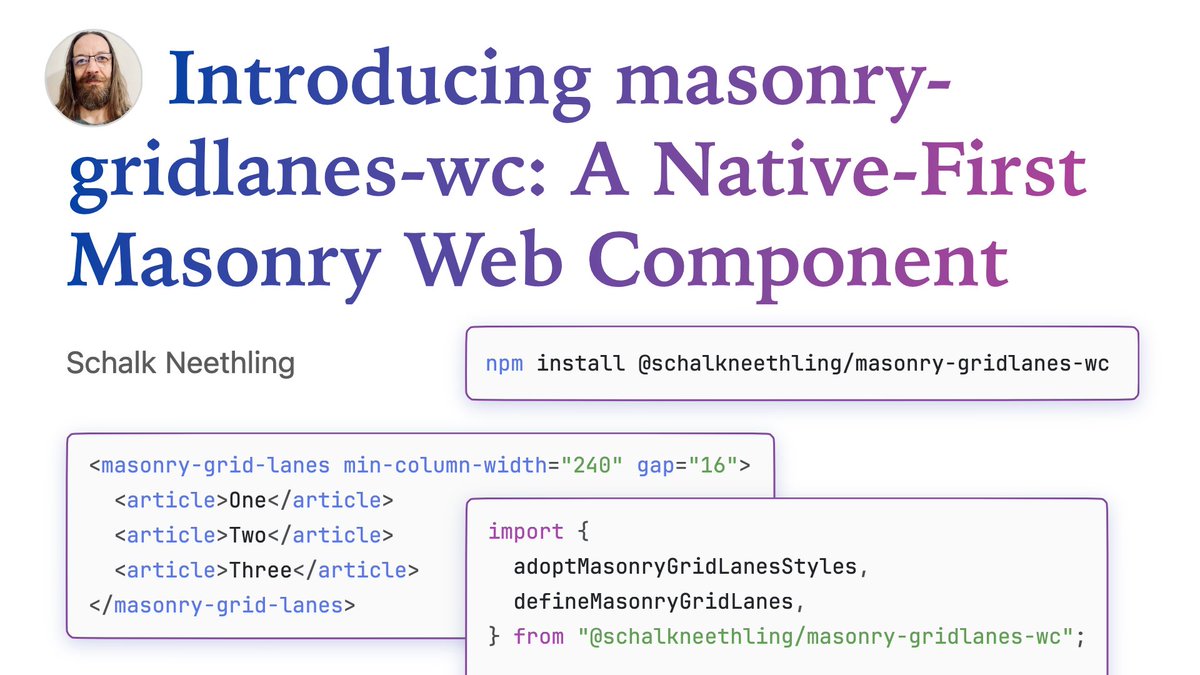
Introducing masonry-gridlanes-wc: a native-first masonry web component. @schalkneethling built a web component for masonry layouts based on display: grid-lanes from CSS Grid Level 3, with a JS fallback when needed. #webcomponents#layout
https://t.co/sbjrdB4isD
State of AI 2026. Devographics launched a new survey on how developers use AI tools, models, and coding assistants in their daily workflows. #ai#survey
https://t.co/R1aIH0nCdL
Modern CSS feature support for shadow DOM. Adobe Spectrum Web Engineering tracks CSS features like :has(), @scope, and anchor positioning across the shadow DOM, with browser test results and spec issue links. #css#webcomponents
https://t.co/OTh0nDMM2r
Progressive web components. Ariel Salminen introduces Elena, a 2.6 kB library for building web components that prioritize HTML and CSS, then hydrate with JavaScript. #webcomponents#js
https://t.co/N6Vi12dnuC
Under the hood of MDN’s new frontend. Leo McArdle explains how MDN replaced React with web components and Lit, using server components for static content and lazy-loading interactive islands. #mdn#webcomponents
https://t.co/iARL11OdaY