The greatest tragedy is that it is the peoples of the #Horn of #Africa who continue to bear the heaviest burden of policies that undermine #peace and #security. Every act of brinkmanship, inflammatory rhetoric, and disregard for the #sovereignty and territorial integrity of states diverts scarce resources from development, weakens regional trust, discourages investment, and prolongs uncertainty for millions.
PP, that turns violence against its own people, can hardly inspire confidence that it will live in peace with its neighbors. Leadership that normalizes coercion, repression, and confrontation at home inevitably erodes trust abroad and fuels regional instability.
Equally regrettable is that those with the influence to help reverse this dangerous trajectory too often choose to look the other way. By extending diplomatic cover, political backing, and financial support without demanding genuine accountability or restraint, they risk emboldening the very policies that fuel instability. Silence and selective engagement are not neutral; they carry consequences for the entire region.
The #Horn of #Africa deserves a different path, one founded on mutual respect, sovereign equality, good-neighborliness, and strict adherence to international law. The region's future lies not in revisionist ambitions, manufactured grievances, or threats of force, but in dialogue, cooperation, and a genuine commitment to peaceful coexistence.
#Djibouti #Eritrea #Ethiopia #Sudan #SouthSudan #Somalia
Visma | Lease a Bike turns to a surprising Eritrean to fill a Simon Yates-shaped hole
"Daniel Tesfatsion is known as an excellent all-rounder, with both strong climbing ability and a fierce sprint. His versatility would be a great asset".
https://t.co/vyV30VMqJi
🇪🇷⚖️ Eritrea Calls for an End to the Politicization of the UN Human Rights Process
💬 “Justice loses its credibility when it ceases to be impartial.”
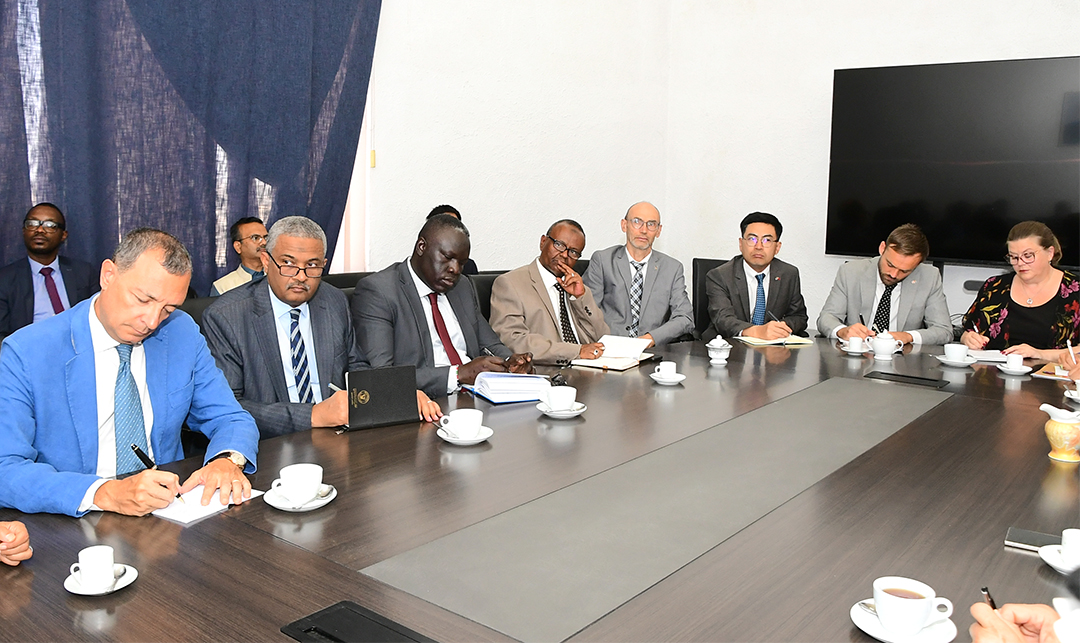
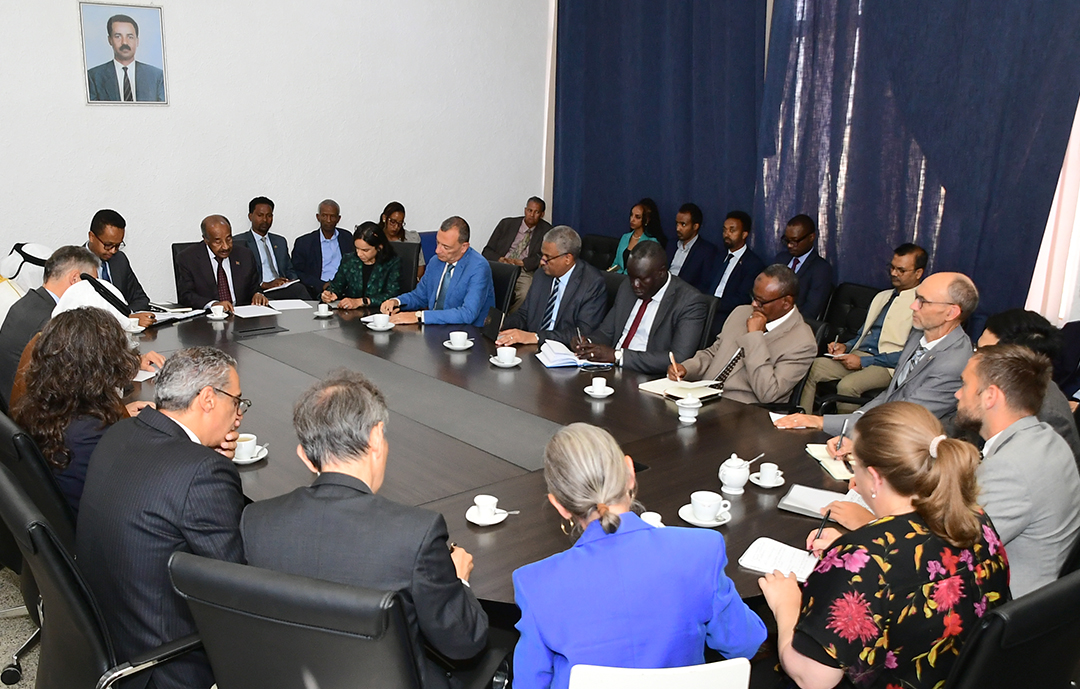
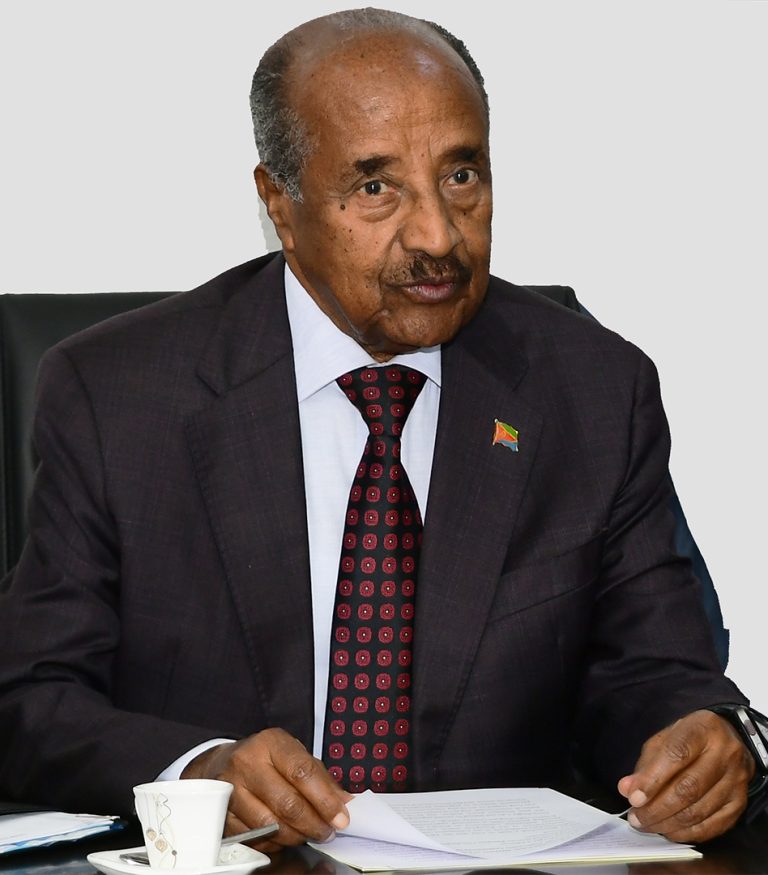
At a briefing to the foreign diplomatic community in Eritrea, Foreign Minister Osman Saleh reaffirmed Eritrea's longstanding position regarding the UN Human Rights Council (UNHRC) process.
🔍 Key Messages from the Briefing
🟥 1) End the Politicization
Eritrea argues that, for 14 years, the Special Rapporteur mechanism has evolved into a politicized process rather than a constructive human rights dialogue.
🟦 2) Sovereignty & Mutual Respect
Eritrea reiterated its commitment to international engagement based on:
• 🤝 Sovereign equality
• 🤝 Mutual respect
• 🤝 Non-interference
• 🤝 Genuine cooperation
🟩 3) Economic Consequences
According to Eritrea, the continued mandate has contributed to:
🔹 A negative international perception
🔹 Reduced investor confidence
🔹 A weaker tourism climate
🔹 Obstacles to economic development
🟨 4) Better Use of UN Resources
Eritrea contends that resources devoted to the mandate could instead support:
✅ Capacity building
✅ Development programs
✅ Practical cooperation that directly benefits citizens
🟪 5) Engagement—But Not Selective Targeting
Eritrea emphasized that it remains committed to internationally recognized human rights mechanisms, including:
📌 Universal Periodic Review (UPR)
📌 Treaty body processes
📌 Technical cooperation based on dialogue and consent
🌍 The broader question extends beyond Eritrea:
Should international human rights mechanisms primarily emphasize dialogue, technical cooperation, and capacity-building, or should they continue relying on country-specific mandates that some states view as politically selective?
Constructive engagement is most effective when it is credible, impartial, and applied consistently.
“Lasting solutions are built through trust and cooperation—not perpetual confrontation.”
🇪🇷🕊️ Peace, development, and human dignity are best advanced through principled dialogue, mutual respect, and equal treatment under international law.
#Eritrea 🇪🇷 #UNHRC #UnitedNations #HumanRights #Diplomacy #InternationalLaw #UPR #Africa #Peace #Development #Multilateralism
«#Eritrea does not reject engagement with the international #humanrights system. We remain fully committed to fulfilling our obligations through the Universal Periodic Review (UPR)…What Eritrea rejects is the politicization & selective targeting of that system.»
#EritreaPrevails
Eritrea is committed to fulfilling its obligations through UPR, treaty body mechanisms...predicated on equal participation and consent.
https://t.co/tfCszzo5GV
Briefing by FM Osman Saleh on UNHRC Process to Foreign Diplomatic Community in #Eritrea
For the past 14 years, certain countries have cynically weaponized the UNHRC Annual Session in Geneva as a platform for politicized harassment against Eritrea. This charade has gone beyond limits and Eritrea is earnestly and firmly requesting its termination.
Excerpts from FM Osman Saleh's speech:
*"...While we welcome the opportunity to engage with international partners on issues of mutual interest, Eritrea remains committed to interactions anchored on the tenets of sovereign equality, mutual respect, non-interference, and genuine cooperation. For fourteen years, Eritrea has maintained a consistent, principled stance across the Human Rights Council, the General Assembly, and bilateral channels. Our position is settled. Continuing engagement bilaterally on the Special Rapporteur yields no constructive utility, and we will no longer expend diplomatic capital or finite institutional time debating a mechanism whose continuation has evidently become an end in itself".
*"...The mandate has evolved into a textbook case of institutional inertia and a recurring political ritual. This ongoing campaign has inflicted severe reputational damage by broadcasting a distorted, one-sided narrative through (some) official United Nations channels, manufacturing a false global perception that overshadows our domestic realities. It has acted as a clearinghouse for state-sponsored defamation, inciting external hostility and systematically polarizing international forums. Furthermore, by painting Eritrea as a volatile, high-risk state, it has artificially stifled the country’s tourism investment climate, deterring foreign direct investment and impeding economic development".
*"...Equally concerning is the profound financial burden this mandate imposes. For fourteen consecutive years, the Human Rights Council and the OHCHR have funneled substantial financial and institutional resources into a failed mandate. The millions of dollars in cumulative Programme Budget Implications represent a significant expenditure of scarce UN resources at a time of acute liquidity constraints".
*"....The pen-holders face a definitive choice: they must choose between encouraging the financing of endless, sterile political confrontation or supporting tangible, state-led capacity building that directly enhances the lives of our people".
*"...Let me dispel a persistent misconception: Eritrea does not reject engagement with the international human rights system. We remain fully committed to fulfilling our obligations through the Universal Periodic Review (UPR), treaty body mechanisms, and consensual technical cooperation, universal, cooperative instruments predicated on equal participation and consent. What we reject is the politicization and selective targeting of that system".
https://t.co/fsNsD4qHGj
"Eritrea stands firm in its resolve, anchored in legal permanence and historical facts. Those who look to externalise their domestic ruin through regional destabilisation will find that Eritrea’s sovereignty is neither negotiable nor penetrable,"
A Mother’s Legacy
She never asked history to remember her.
She simply lived with grace.
In quiet dignity,
with unwavering faith,
she raised a son whose life became woven into the story of a nation.
While the world remembers leaders,
today we remember the mother
whose love, sacrifice, and example helped shape one.
Her greatness was not found in speeches,
nor in monuments of stone,
but in the character she nurtured,
the values she lived,
and the humility she carried for almost a century.
She made decency look effortless.
She made modesty look powerful.
She made motherhood look sacred.
In her, the world catches a glimpse
of the quiet strength so often celebrated in Eritrean womanhood—
resilient in hardship,
steadfast in faith,
rich in compassion,
and generous without seeking recognition.
Today, Eritrea bids farewell
not only to the mother of a national figure,
but to a woman whose life reminds us
that behind every chapter of history
there are mothers whose names may be spoken softly,
yet whose influence echoes through generations.
May her memory remain a blessing.
May her example continue to inspire.
And may her legacy live on
where all true greatness begins—
in the heart of a mother.
AlJazeera - Ethiopia is not being ‘dragged into war';
by Mr. Ali Ibrahim Ahmed, #Eritrea's Ambassador to Qatar
*"... The recent opinion article by senior Ethiopian officials Redwan Hussein and Getachew Reda, published on Al Jazeera English’s website, attempts to portray Ethiopia as an innocent victim being reluctantly 'dragged' into conflict by external actors. In doing so, the piece seeks to absolve the ruling Prosperity Party of responsibility for Ethiopia’s mounting domestic crises".
*"...More dangerously, this narrative serves as a diplomatic smoke screen designed to normalize the unprovoked hostility, state-sponsored inflammatory rhetoric and aggressive military mobilizations that the Ethiopian government has directed towards Eritrea since late 2023".
*"...This coordinated campaign seeks to normalize the idea that colonial boundaries in the Horn of Africa are negotiable in order to attempt to challenge inviolable principles of sovereignty and territorial integrity that have long underpinned regional stability".
*"...The broader pattern extends beyond Eritrea. Ethiopia’s recent foreign policy conduct has increasingly generated tensions with several neighboring states. The Memorandum of Understanding signed with Somaliland, which sought access to coastal territory without the consent of Somalia’s central government, triggered a major diplomatic crisis and raised serious questions regarding respect for established principles of sovereignty and territorial integrity".
*"...Similarly, Ethiopia has repeatedly pursued interventionist policies in neighboring conflicts in the quest for short-term geopolitical objectives. Whether in Somalia, Sudan or elsewhere, Addis Ababa’s reckless regional agenda of expansionism has contributed significantly to regional mistrust and destabilization".
https://t.co/MwqtJQeYx2 via @AJEnglish
Gedion’s "development" pivot on Red Sea access isn’t soft diplomacy—it’s a cold strategic repositioning.
By framing sea access as an economic necessity for 130M people, Addis is no longer asking permission. They are weaponizing the narrative: to oppose Ethiopia’s ports is now framed as opposing the entire Horn’s prosperity.
This isn't a retreat. It's the prelude.
It is a sign of do or die moment!
#Ethiopia #RedSea #Geopolitics #HornOfAfrica #Eritrea
A 1910 map of #Abyssinia, #Eritrea and #SaudiArabia! There was no nation state called #Ethiopia at a time; let alone a historical ownership of Red Sea coast!
Talk of the Town: The Art of Asking Nicely After Three Years of Not Asking Nicely
By Alula Frezghi
In London this week, Ethiopia’s Foreign Minister arrived at Chatham House with the air of a man who had misplaced something important and was hoping no one remembered where he last claimed to have seen it. He spoke softly about “dialogue,” “regional integration,” and “peaceful access to the sea,” as though the Red Sea were a shy housecat that might come closer if addressed in a soothing tone.
This was a noticeable shift from the previous three‑year period, during which Ethiopian officials described Eritrean ports with the tenderness of a long‑lost heirloom and the urgency of a fire drill. #Assab, in particular, was treated less like a foreign port and more like a sentimental family driveway that had been accidentally left on the wrong side of a border.
Back then, the rhetoric was bold. Existential, even. Ethiopia was a “prisoner of geography,” a phrase repeated so often that geography itself began to look over its shoulder. Commentators spoke of “historical mistakes” and “natural horizons,” concepts that sounded suspiciously like the preface to a land claim. Military metaphors were deployed. Maps were invoked. The atmosphere was not subtle.
But atmospheres have a half‑life, and in London the minister attempted a kind of diplomatic amnesia. He explained that Ethiopia simply wanted development corridors, trade efficiency, and cooperative arrangements. The audience nodded politely, as audiences do, though several appeared to be mentally scrolling through Ethiopia’s recent public statements like a person searching for a missing receipt.
Eritrea, for its part, has maintained the same position throughout: commercial access is negotiable; sovereignty is not. This consistency has caused some confusion among those who assumed Eritrea might be more flexible with its coastline, perhaps willing to loan it out like a library book.
The minister’s new tone suggests that Ethiopia is now in the “asking nicely” phase of its maritime strategy. This is a welcome development, though it raises the question of what happened to the previous phase, the one involving destiny, grievance, and the occasional hint of inevitability. No official explanation has been provided. It appears the government is hoping the region will simply move on, the way one moves on from an embarrassing voicemail.
In Asmara, the reaction has been calm. Eritrea has heard many things before and is prepared to hear many things again. The coastline remains where it has always been, unmoved by rhetoric, rebranding, or the sudden rediscovery of diplomatic manners.
#Eritrea #Assab #RedSea #HornOfAfrica #Sovereignty
#UnderstandSatire
@Eritrea_UN@NewYorker@MFAEthiopia@Yehdavid@ForeignPolicy@HornPolitics@tewerwari_1@GhideonMusa@ERiTV_Official
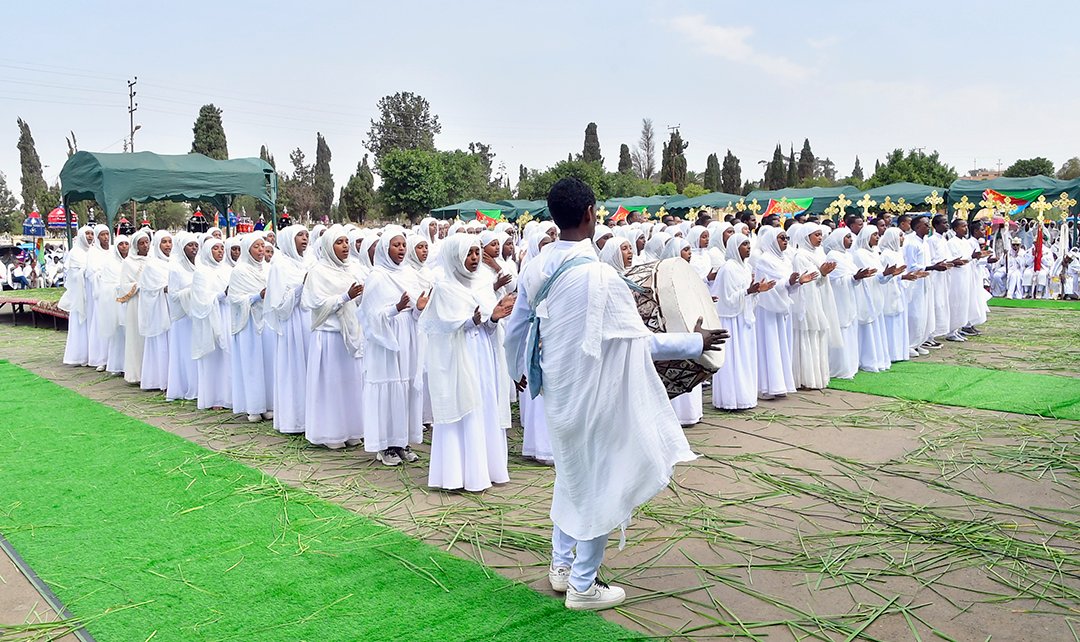
Sermons & Prayers in Commemoration of Martyrs Day presided by Religious Leaders of the Tewahdo Orthodox; Catholic; & Luthern Christian denominations held at St. Michael's Church in Asmara in mid-morning hours today.
Similar ceremony at Asmara Grand Mosque scheduled for later in the day
ሃገር ኣብ ረዚን ዝኽሪ ሓበን!
Profile Q & A - Eritrea: A Model of a Primary Health Care System; Professor Mohamed Yakub Janabi, WHO Regional Director for Africa
Senior Officials (visiting and resident) of UN Development Agencies in Eritrea invariably portray a balanced, nuanced, and positive account of the development challenges and prospects as the interview (link below) illustrates.
*"...Eritrea’s model of largely free or highly subsidized health care is rooted in very strong principles of health equity. It is a notable achievement. However, any free or highly subsidized program usually faces financial, structural, and system-level challenges. To sustain it, the government must work on expanding physical infrastructure and domestic financing. If you want to maintain it, you have to sustain it, and to sustain it, you need a very stable financing process – whether through tax collection and subsidizing the health budget, or by increasing the health budget directly".
*"...I think that with more investment in health – and health has never been a cost; it is an investment that pays back quickly – if you have a healthy community and a healthy population, your people will be more productive. I was very impressed with this initial stage. Eritrea has 98% immunization coverage – you see that level in developed countries. Thus, investment in health is not a cost; in the long run, it contributes to the economic development of any country".
https://t.co/eGYncXoPSU
#Eritreancycling: Congrats to All!
What a sprint! What a stellar performance! Biniam Girmay wins Stage 1 of Baloise Belgium Tour (https://t.co/Vm3CPd8jI7) 188.3 km
https://t.co/kI0wegeDOR