The Dynamic Strength Index (DSI) has been proposed as a practical tool to help guide strength training priorities by comparing an athlete's ballistic force production to their maximal force capacity.
Being sedentary isn't just being out of shape. It's a mitochondrial disease.
A new study from Iñigo San Millán's @doctorinigo lab measured what happens inside muscle cells when people stop moving. The results show sedentary individuals have the same coordinated cellular dysfunction you'd see in metabolic disease—even when they're otherwise healthy.
Researchers compared nine sedentary and ten physically active healthy males using skeletal muscle biopsies, high-resolution respirometry, metabolomics, isotope tracing, and cardiopulmonary exercise testing. The sedentary group showed coordinated reductions across every component of mitochondrial substrate handling.
Complex I respiration was 36% lower. Complex II was 28% lower. Total electron transport system capacity was 34% lower. ATP-synthase-coupled respiration was 30% lower. These aren't subtle shifts—they represent broad depression of oxidative phosphorylation capacity in otherwise healthy adults.
The most striking finding was a 49% reduction in mitochondrial pyruvate carrier 1 (MPC1) expression in sedentary individuals, alongside a 37% decline in pyruvate oxidation. MPC1 is the transporter that moves pyruvate from glycolysis into the mitochondrial matrix for oxidation.
GLUT4 expression—the glucose transporter at the cell membrane—was identical between groups. So glucose uptake into the cell was preserved, but the downstream step of getting pyruvate into mitochondria for oxidation was dramatically impaired. This creates a metabolic bottleneck.
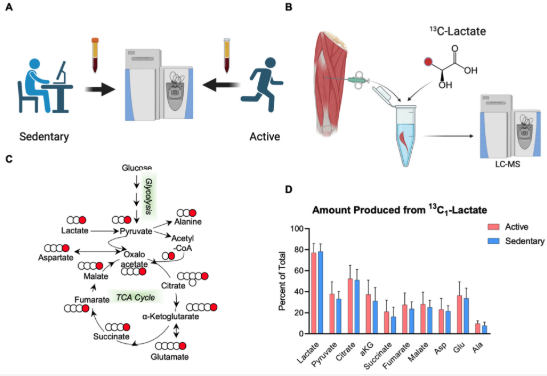
When the researchers traced 13C-labeled lactate through metabolic pathways, sedentary muscle showed 40% less citrate labeling and 35% less malate labeling. Lactate-derived carbon wasn't entering the TCA cycle efficiently, confirming that the pyruvate transport deficit has functional consequences.
Fatty acid oxidation showed parallel impairments. CPT1 activity—the enzyme that transports long-chain fatty acids into mitochondria—was 51% lower in sedentary individuals. Palmitoylcarnitine-supported respiration was 35% lower. Octanoylcarnitine was 32% lower.
Sedentary muscle also showed lower cardiolipin content, particularly tetralinoleoyl cardiolipin (L4CL), the dominant molecular species required for organizing respiratory supercomplexes and maintaining efficient electron transfer. When cardiolipin composition is disrupted, electron flow becomes less efficient and ROS production increases.
Reactive oxygen species production per unit of O2 flux was higher in sedentary individuals, particularly after mitochondrial inhibition. This suggests either greater electron leak from the respiratory chain or lower mitochondrial antioxidant buffering capacity. The study design can't distinguish which.
During incremental exercise testing, sedentary individuals showed 38% lower VO2max, 35% lower fat oxidation, and blood lactate accumulation that was over 60% higher at moderate workloads (125W and 150W). The metabolic inflexibility observed at rest translated directly to whole-body exercise performance.
The correlation structure is what makes this study compelling. Resting mitochondrial pyruvate oxidation correlated with exercise fat oxidation (r=0.65, p<0.01). MPC1 expression correlated with fat oxidation during exercise (r=0.71, p<0.001). Blood lactate during exercise correlated inversely with MPC1 (r=-0.73, p<0.001).
In active individuals, fat oxidation and lactate showed nearly perfect inverse coupling during exercise (r=-0.99, p<0.001), reflecting efficient substrate switching. In sedentary individuals, lactate rose sharply even at low workloads while fat oxidation remained suppressed—a clear signature of metabolic inflexibility.
The crossover point between fat and carbohydrate oxidation occurred at significantly lower workloads in sedentary individuals. They transitioned to glycolytic metabolism prematurely, accumulated lactate earlier, and couldn't sustain fat oxidation across the intensity range that active individuals handled efficiently.
This creates a noninvasive diagnostic framework. Blood lactate above 2.5 mmol/L combined with fat oxidation below 0.4 g/min during moderate exercise (50-60% VO2max) may serve as an early physiological signature of subclinical mitochondrial dysfunction, detectable years before overt metabolic disease.
The preserved GLUT4 alongside reduced MPC1 is the outstanding differential observation. A generalized reduction in mitochondrial content would scale most mitochondrial proteins together. The selective 49% reduction in MPC1 (the largest effect in the study, d=2.1) suggests mitochondrial pyruvate entry may be disproportionately affected.
Whether this is causally upstream of broader mitochondrial decline or develops in parallel cannot be resolved by cross-sectional design. Future studies with direct mitochondrial content quantification (citrate synthase, mtDNA, electron microscopy) and longitudinal training/detraining protocols will be needed to establish temporal sequence.
From an evolutionary perspective, mitochondria were selected under near-constant physical demand. When that demand disappears, mitochondrial structure and function undergo coordinated downscaling. Sedentarism isn't a neutral baseline—it's a recent biological insult that produces measurable molecular atrophy.
The clinical implication is that cardiopulmonary exercise testing with lactate measurement (CPELT) can provide a scalable, noninvasive window into mitochondrial health. The ΔLactate + ΔFATox dyad captures both arms of substrate oxidation and maps directly onto the cellular pyruvate and fatty acid transport deficits identified in this study.
Sedentarism produces a coordinated reduction in tissue-level mitochondrial oxidative capacity, substrate-handling markers, cardiolipin abundance, and metabolic flexibility. Within that phenotype, the 49% MPC1 reduction alongside preserved GLUT4 and lactate dehydrogenases identifies mitochondrial pyruvate entry as a priority target for mechanistic follow-up.
Resistance training adaptations don't happen on a single timeline.
Myokine secretion begins shifting within days. Senescent cell clearance takes months. Systemic metabolic remodeling extends across years.
The gap between what happens after one session and what emerges after five months reveals why consistency—not intensity or volume alone—determines longevity outcomes.
Most discussions of resistance training focus on acute responses: muscle damage, protein synthesis, strength gains. But the adaptations that influence healthspan operate on a completely different temporal scale.
For decades, training has been optimized around weeks and months. But the biological processes that govern cellular aging, immune function, and metabolic health require a multi-year lens to understand fully.
The relationship between training stimulus and adaptation splits across three distinct timescales:
Weeks 0–4 = Acute Signaling and Early Myokine Shifts
Weeks 4–20 = Systemic Clearance and Metabolic Remodeling
Years 1–30 = Cumulative Protection Against Age-Related Decline
Stimulus, adaptation, and protection. If a single session triggers temporary stress responses, something else must be compounding across months and years to reverse cellular aging at the systemic level.
By week 2, resistance training increases circulating myokines detectably—even before strength or muscle mass changes.
Myokines are signaling molecules secreted by contracting muscle. Over 3,000 distinct myokines have been identified, many of which directly influence immune function, inflammation, and cellular senescence.
IL-6 spikes immediately after a session. Irisin and IL-15 rise within 2–4 weeks of consistent training. These early shifts in myokine profiles precede the structural and metabolic adaptations that follow.
The acute response isn't the adaptation. It's the signal that initiates the adaptation.
By week 6, myokine profiles have shifted enough to influence systemic inflammation and immune surveillance.
In untrained older adults, baseline inflammation is elevated and senescent cell clearance is impaired. After 4–6 weeks of resistance training performed 3x per week, circulating inflammatory markers like IL-6 and TNF-α begin declining.
This isn't about reducing inflammation caused by training. It's about suppressing chronic baseline inflammation that existed before training began.
The systemic effect reflects enhanced immune surveillance—myokines reactivate the body's natural senescent cell clearance system, which had been gradually deteriorating with age.
By week 12, senescent cell burden begins declining measurably in adipose tissue surrounding trained muscle.
Senescent cells are one of the primary drivers of biological aging. They've stopped dividing but refuse to die, instead secreting inflammatory signals that damage surrounding tissue and convert neighboring cells into senescent states.
In resistance-trained older adults (average age 72), senescent cell abundance in thigh adipose dropped by 60% after five months of training—roughly 20 weeks.
That's not local tissue remodeling. It's systemic clearance driven by months of accumulated myokine signaling.
The timeline reveals something critical: meaningful senolytic effects require 12+ weeks of consistent stimulus. Training for 4–6 weeks produces detectable myokine shifts, but those shifts don't translate into systemic senescent cell clearance until months later.
Without sustained stimulus, the long-term adaptation doesn't occur.
By week 20, the cumulative adaptations extend beyond senescent cell clearance into metabolic remodeling.
Mitochondrial content increases. Capillary density improves. Insulin sensitivity rises. Inflammatory signaling in adipose tissue declines. Each of these adaptations compounds with the others, creating systemic metabolic flexibility that wasn't present at baseline.
The mechanisms driving these changes aren't independent. They're converging:
Myokine secretion influences immune function and inflammation across distant tissues. Enhanced immune surveillance clears senescent cells that had been promoting chronic inflammation. Reduced inflammatory signaling improves insulin sensitivity and mitochondrial function. Improved metabolic health reduces the cellular stress that generates new senescent cells.
None of these is transformative alone. Together, they compound into something substantial.
By year 1, the protective effects become difficult to separate from the training itself.
Resistance-trained individuals in their 60s and 70s show metabolic profiles that more closely resemble untrained individuals in their 40s and 50s. The gap isn't just muscle mass or strength—it's systemic metabolic and immune function.
The implication: the benefits of resistance training aren't just about preserving what you have. They're about reversing decline that has already occurred.
By years 5–10, the cumulative protection against age-related decline becomes the primary outcome.
Individuals who maintain consistent resistance training across multiple decades show lower rates of cardiovascular disease, type 2 diabetes, osteoporosis, and functional decline compared to sedentary age-matched controls.
The effect size isn't small. It's comparable to pharmaceutical interventions—without the side effects or diminishing returns.
By years 20–30, the decisions made in the fourth and fifth decades of life shape the functional capacity and disease burden of the seventh and eighth.
Cellular aging is a slow, cumulative process across multiple tissues simultaneously. So is the adaptive response to resistance training.
The most important variable isn't the perfect protocol. It's consistency across the decades during which myokine signaling, immune function, and metabolic health are quietly remodeling in one direction or the other.
In our Healthspan Research Review, I analyze how resistance training influences cellular aging across multiple timescales, the mechanisms driving both acute and chronic adaptations, and why the long-term trajectory matters more than any single session.
Supplements like sodium bicarbonate, beta-alanine, beetroot juice, and caffeine can boost endurance by ~1-3%. What about their impact on adaptation? Read the blog: https://t.co/xIcZxRwqDH
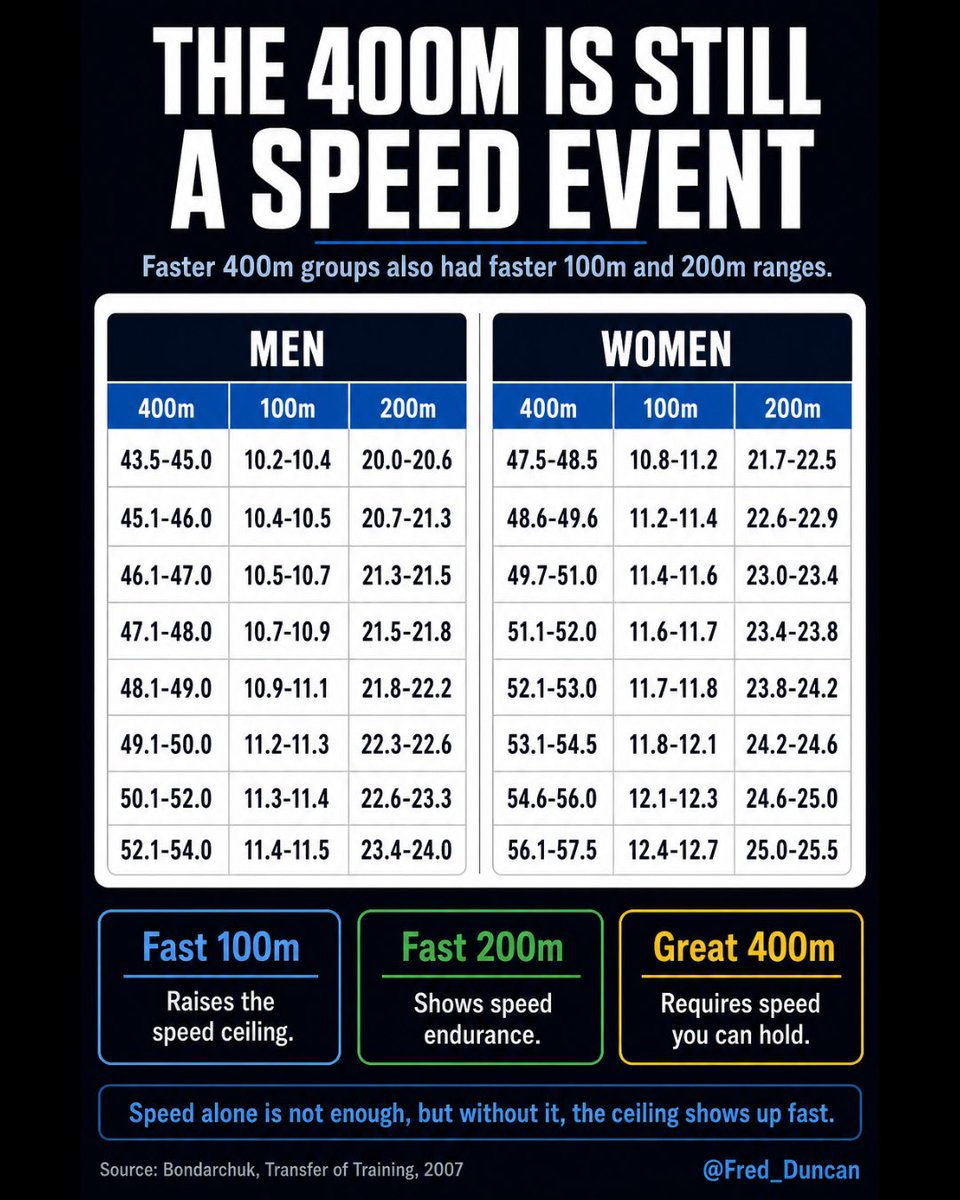
One of the biggest lessons from Bondarchuk’s work wasn’t a specific exercise or program, it was the process.
He tracked his athletes, looked for patterns and let the data shape his coaching. If you haven’t read Transfer of Training, I’d recommend starting there.
Whether you
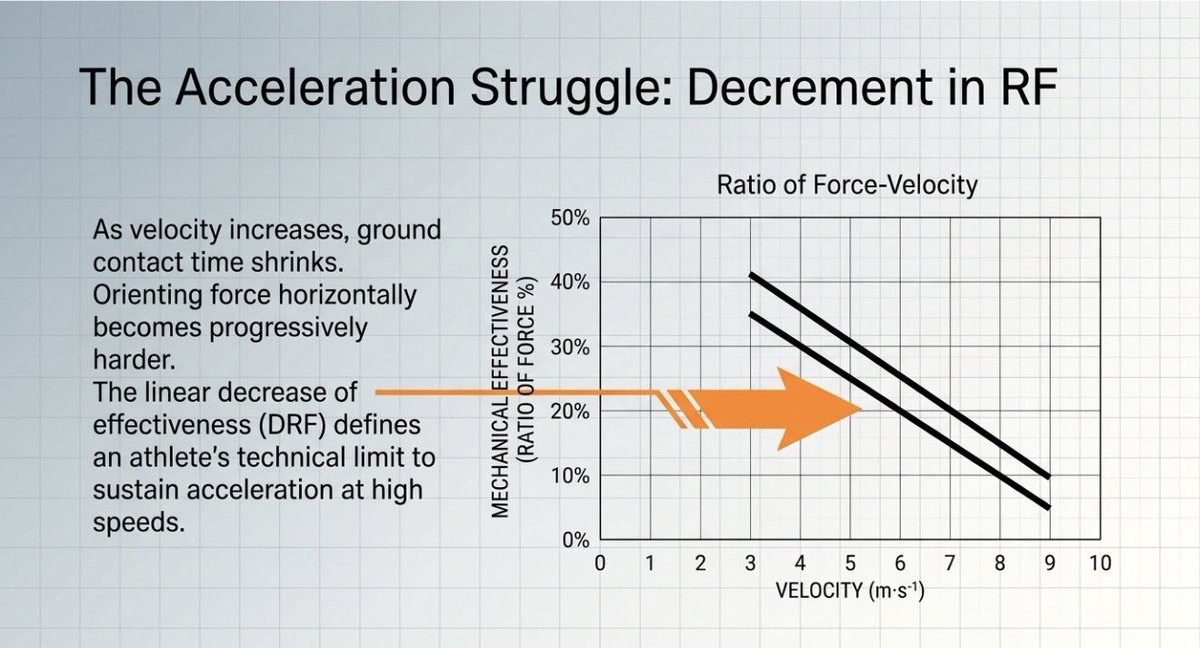
A recent study found that athletes with better acceleration weren���t just “staying low” … they were organizing the foot, shank & ankle in positions that allowed more force to be directed horizontally.
GPP Reloaded is my 4-week general preparation program designed to build work
Target the glutes and get the buns burning with these 3 exercises!! 🔥
Reference:
Collings TJ, Bourne MN, Barrett RS, Meinders E, GONçALVES BAM, Shield AJ, Diamond LE. Gluteal Muscle Forces during Hip-Focused Injury Prevention and Rehabilitation Exercises. Med Sci Sports Exerc. 2023 Apr 1;55(4):650-660.
Cross-training is a great way for injured athletes to maintain fitness. Look for options that are comfortable in terms of symptoms and easily accessible for the patient.
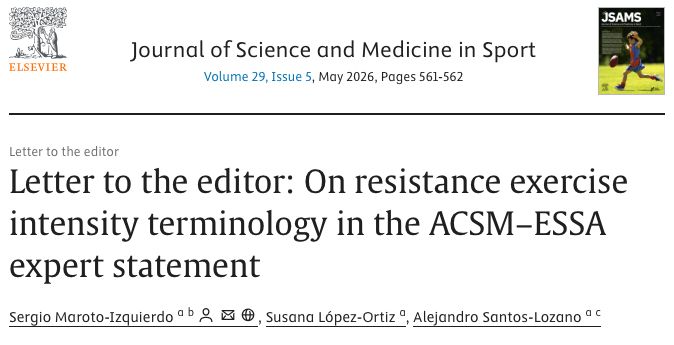
Pleased to see that our joint ESSA & ACSM expert statement on “Physical Activity and Exercise Intensity Terminology” https://t.co/65KQB1wwww & https://t.co/GdGPD7SR8F received some thoughtful feedback from the research community https://t.co/xNaHlhtUAJ https://t.co/EdryOU1DRk
Effects of resisted movement training on change-of-direction speed in recreationally active and trained individuals: A systematic review with network meta-analysis and meta-regression
https://t.co/FLDJir53NL
F= ma
(Stavridis et al., 2019)
Game speed emerges when athletes maximize net horizontal force, optimize segmental mass distribution, and sustain high ratios of force in the direction of play as contact times shrink.
#force#sprint#vector#sportscience
This paper helped re solidify something I have believed for a long time:
Human performance is not just a collection of methods. It is a process.
What stood out to me in this paper was not any single model. It was the consistency underneath it all. The paper keeps coming back to the same ideas: the demands of the environment matter, the person has to be understood against those demands, practice has to reflect reality, and the process has to be adjusted over time.
That is what continues to stand out to me.
For me, that reinforces a simple process:
1.Define the demand
2.Assess the individual against that demand
https://t.co/0lDFgkgGeC and apply the intervention
4.Monitor the response
5.Refine and repeat
The paper is focused on sport, and that is its claim. My opinion, based on experience, is that the same process holds across other demanding environments as well. What changes is the intervention. The process does not.
That is also why, over time, it starts to feel less like a checklist and more like a living ecosystem. Each step feeds the next. Assessment shapes intervention. Intervention exposes new gaps. Monitoring sharpens the next decision.
And when things feel off, you do not need to invent a new system. You go back to the process and ask which step is weak, missing, or out of alignment.
That is probably what this paper reinforced most for me.
Here’s an entire great article @DerekMHansen wrote on how to periodize and use the High-Low Method.
Meaning how to actually balance speed days and capacity.
Learn and take notes! https://t.co/na9sCqNEmm
This sounds logical… until you look at the trade-offs.
A lot of runners treat the long run like a badge of honor.
Longer must be better.
More miles must mean more preparation.
That belief sticks around because long runs do matter — just not endlessly.
The confusion usually comes from mixing goals.
People assume the long run’s job is to match race distance,
when its real job is to build enough endurance to support the rest of training.
Here’s the coach truth:
long runs work best when they stop short of breaking you.
For shorter races, the aerobic base caps quickly.
For half marathons, you don’t need to rehearse the full distance.
For marathons, the benefit peaks well before 26.2.
And for ultras, time-on-feet matters more than chasing arbitrary mileage.
Past those points, the cost changes.
Recovery stretches out.
Quality workouts suffer.
Injury risk quietly climbs.
This isn’t about being lazy or cutting corners.
It’s about knowing when preparation turns into punishment.
More miles feel productive in the moment.
But fitness is built across the whole week — not just the longest day.
If this challenges how you’ve been planning long runs, that’s usually a good sign.
So let me ask you something specific:
what race are you training for right now — and how long is your longest run supposed to be?
#running
I teamed up with @Liz_Bayley_Physio to create this progressive rehab programme for Plantar Heel Pain.
We've called it 'LiTHE' (Liz and Tom's Heel Exercises) and it's aimed at active and sporty patients. It's not a recipe though so it's best to adapt it to suit individual needs.
How to pick the right eccentric overload 🤔
Eccentric overload isn’t about chasing the biggest number just because you can. As Jan Seiler explains, the goal of exposing athletes to the highest braking forces only matters if the concentric still looks right
Because with motorized resistance, although each phase can be controlled independently, the eccentric and concentric are still connected. Bumping the eccentric still raises the concentric, at least slightly
The 💡💡 is eccentric load is always chosen relative to the concentric looks, not in isolation
Maximizing the eccentric overload 1:3 or 200% ratio is about finding the highest eccentric load while keeping the concentric as low as possible, exposing athletes to higher braking forces will keeping the movement athletic
Snippet from a sit-down with Jan in 🇬🇧 Manchester. Link to the full chat 👇👇
EL ENTRENAMIENTO INTERVÁLICO DE ALTA INTENSIDAD POTENCIA LA FLEXIBILIDAD METABÓLICA Y LA EFICIENCIA INSULÍNICA EN VARONES CON OBESIDAD La realización de tres sesiones de entrenamiento interválico de alta intensidad, igualando el gasto energético con entrenamiento continuo moderado, incrementa la flexibilidad metabólica y reduce la demanda secretora pancreática durante una carga glucémica, mejorando la eficiencia insulínica y la oxidación lipídica en varones con obesidad. (lee el artículo completo en BLOG JL Chicharro en https://t.co/ghlyA0rsYU) https://t.co/phrXUmByrT