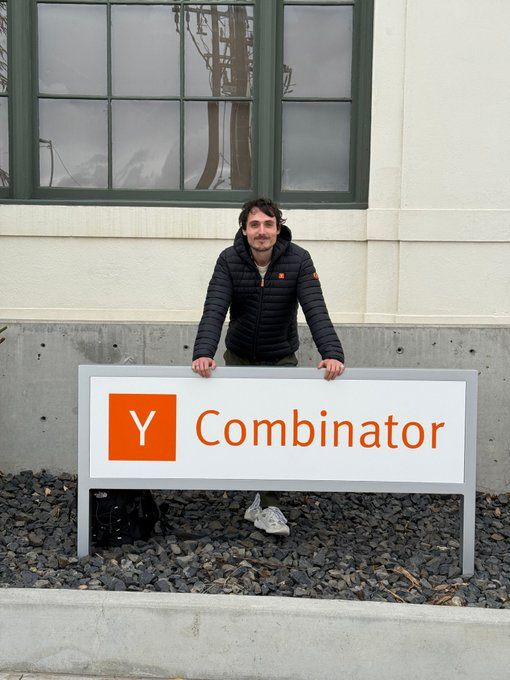
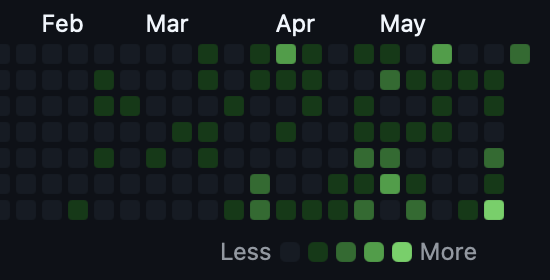
We went from 0 to 2,200 paying customers in under a year by following @ycombinator's 15 rules:
1/ Do things that don't scale. Get your first 10 customers by hand.
2/ Launch now, not when it's "ready". A mediocre product in front of real users teaches you more in a week than 6 months of polishing in the dark.
3/ Charge from day one. If nobody will pay, you don't have a startup, you have a hobby.
4/ Talk to users every single day. The roadmap you need is sitting in your customers' heads, and they'll hand it to you for free
5/ Always hunt the 90/10 solution. For almost any feature there's a way to capture 90% of the value with 10% of the effort.
6/ There are only two real jobs: write code and talk to users. Everything else (conferences, press, VC coffees, corp dev calls) is fake work.
7/ You pick your customers as much as they pick you. 10 users who love you beat 1,000 who kind of like you.
8/ Growth is an output, not a strategy. Grow before product market fit and all you're buying is churn.
9/ Do less, really well. Pick one or two metrics and judge every task against them.
10/ Know if you're default alive. Paul Graham's question: on current growth and current burn, do you reach profitability before the money runs out?
11/ Don't hire until it hurts. Headcount is not progress, it's burn. Every great startup was embarrassingly small for embarrassingly long.
12/ Momentum is the only real moat in year one. Ship something every week, even something tiny.
13/ Every great startup is badly broken at some point. The game isn't avoiding fires, it's how fast you put them out. Again. And again
14/ Ignore your competitors. Startups die of suicide, not murder. In year one, the only company that can kill yours is your own
15/ Startups rarely die from running out of money. They die because the founders fall out. Brutal honesty with your cofounder is the cheapest insurance you'll ever buy
Good luck !
I see the exact same thing, yet those around me keep insisting that, for them, it is mostly useless and churns out nothing but garbage. And to think we’re working on the very same project…
i have seen enough proof now that using a coding agent is a deep skill
it's confusing because the people you see heavily using them produce horrible results
but that's because it's a skill! you can get better and the ceiling seems pretty high - this is very exciting to me
Imagine living in a building where numerous apartments are rented out via @Airbnb. It is a terrible experience. Ultimately, no one is satisfied - not the guests, not the hosts, and not the neighbors. Why, then, does this still exist?
Same, I really don't like @Airbnb after booking my last one in Brazil
I used the shower for 3 minutes and it was already flooding, so I told the host, who started blaming me for it
Then contacted Airbnb Support, who called us etc.
Then in the end the host gave me a bad review with fake made up shit, and Airbnb wouldn't let us post a review about the host!
Just speechless really
Today we reduced headcount by 22%. The business is the strongest it's ever been. So I think it's important to be direct about what I'm seeing and why.
First, I made this decision and I own it. I did it because the way to operate at the highest level of productivity is changing, and to win the future, ClickUp needs to change with it.
Second, this wasn't about cutting costs. Most savings from this change will flow directly back into the people who stay. We'll be introducing million-dollar salary bands. If you create outsized impact using AI, you'll be paid outside of traditional bands.
Most importantly, I have the deepest gratitude for those affected. We're doing this from a position of strength specifically so we can take care of people properly. Everyone affected receives a package aimed at honoring their contributions and easing the transition.
I only see two options: wait for this to play out gradually in the market or be honest about what I'm seeing and act proactively.
THE 100X ORGANIZATION
The primary change is that we're restructuring around what I call 100x org. The goal is 100x output. The roles required to build at the highest level are fundamentally different than they were a year ago.
Incremental improvements to existing systems won't get us there. We need new ones. That means creating enough disruption to rebuild rather than iterate on what's already broken.
The common narrative is that AI makes everyone more productive. It doesn't. Many of the workflows of today, if left unchanged, create bottlenecks in AI systems.
These roles will evolve. But waiting for that to happen naturally means falling behind now.
The 100x org is actually heavily dependent on people - infinitely more than today. This is only possible with 10x people that have embraced and adopted new ways of working.
THE BUILDERS, AGENT MANAGERS, AND FRONT-LINERS
— THE BUILDERS: 10X ENGINEERS
I don't think most companies have internalized what's actually happening with AI in engineering. The common narrative is that AI makes all engineers more productive. That may be true in isolation, but at an organization level - that is the farthest thing from reality.
Here's what we've validated recently at ClickUp: the great engineers, the ones who can orchestrate, architect, and review, are becoming 100x engineers. They're not writing code. They're directing agents that write code. The skill is judgment.
AI makes the best engineers wildly more productive, and everyone else using AI slows these engineers down.
Think about it - the bottlenecks are (1) orchestration - telling AI what to do, and (2) reviewing - what AI did. Everything is leapfrogged and no longer needed.
So who do you want orchestrating and reviewing code?
And how do you want your best engineers to spend their time?
If your best engineers are spending time reviewing other people's code, then this is inherently an inefficient bottleneck. These engineers can review their agent's code much faster than reviewing human code.
The new world is about enabling your 10x engineers to become 100x.
The wrong strategy is to push every engineer to use infinite tokens. Companies doing this are celebrating 500% more pull requests. But customer outcomes don't match the volume of code being generated.
I call this the great reckoning of AI coding, and every company will face this soon if not already.
More code is just another bottleneck to the best engineers, and ultimately to your company's impact as well.
— THE BUILDERS: 10X PRODUCT MANAGERS
Product management and design roles are merging.
Designers that have customer focus, become more like product managers.
And product managers that have intuition for UX become more like designers.
The bottleneck of user research is gone. It takes us just one mention of an agent to kickoff research and analyze results.
The bottleneck of product <> design iteration is also gone. The product builder iterates on their own, along with agents and skills that ensure alignment with quality and strategy.
Also controversial today - I believe that the wrong strategy is to have your PMs shipping code - that just introduces another bottleneck that the best engineers will waste their time on.
To be clear, PMs should be coding but they should do this in a playground to iterate, validate, and scope. That code should not go to production.
Everything outside of managing systems, orchestrating AI, and reviewing output becomes a bottleneck.
That's why the other roles that are critical along with these are the systems managers (to reduce bottlenecks) along with a bottleneck you can't replace - customer meeting time.
— THE SYSTEM MANAGERS
Ironically, the people that automate their jobs with AI will always have a job. They become owners of the AI systems - agent managers. We have many examples of these people at ClickUp.
The underlying systems in which we operate are absolutely critical to get right. I think most companies are delusional to think they can iterate on existing systems and compete in this new world.
You must create enough disruption so that old systems are deprecated entirely. If there's any definition for 'AI native' that's what it is.
— THE FRONT-LINERS
In a world that will become saturated with AI communication, the human touch will matter more than anything to customers.
This is a bottleneck that you shouldn't replace - even when agents are high enough quality to do video meetings.
One-on-one meeting time with customers is something that shouldn't be automated. The systems around the meetings should be - so that front-liners spend nearly 100% of their time with customers.
REWARDING 100X IMPACT
In a world where companies are able to do so much more with less, where does that excess money go?
In our case, much of the savings in this new operating model will flow directly back to those that enabled it.
We must reward people that create productivity accordingly. This aligns incentives on both sides. Plus, in a world where your best people create 100x impact, you can't afford to lose them.
You should aim to retain these employees for decades. The context they have and their ability to efficiently orchestrate and review will be nearly impossible to replace.
Compensation bands of today should be thrown out the door. We're introducing $1 million cash/year salary bands with a path available to nearly everyone in the company if they produce 100x impact by creating or managing AI systems.
THE FUTURE
Nearly every company will make changes like these. The ones that do it proactively will define what comes next.
The future is not fewer people. It's different work, new roles, and better rewards for those who embrace it. We're already seeing entirely new roles emerge, like Agent Managers, that didn't exist a year ago.
ClickUp is positioning to lead this shift, not just internally, but for our customers too. I've never been more certain about where we're headed.
"I don't think people managers will have any value in the future."
Airbnb CEO said on a recent pod the people most screwed by AI will be people managers.
Perhaps we had this all wrong. The future belongs to ICs. There is now more use for them than ever before.
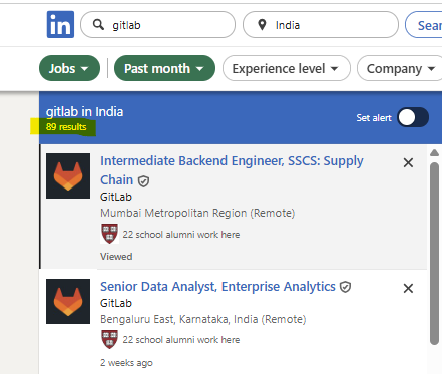
GITLAB ACTIVELY HIRING REMOTE INDIA ROLES WHILE ANNOUCING LAYOFFS
The CEO is writing essays on shifting to AI agents, but a quick search on LinkedIn is showing multiple open jobs in India.
Is this actually just another company using AI as an excuse in 2026?
Monitoring.
🇩🇪 The perpetrator in the terrorist car rampage in Leipzig is allegedly the German boxing trainer Jeffrey Kloß.
He’s a known boxing training in Leipzig.
What happened to him?
@paulg You’re forgetting that in Europe, we have good public transport, sidewalks, and parks. Here, you aren’t trapped in a garage somewhere in the suburbs. I'm not justifying it - I'm just explaining.
I’ve shipped backend in Java since 2005. Coded in many other languages. Built an Android app in 2018 — it fought me.
iOS dev has humbled me for 4 years.
Claude Code finally got me unstuck — but mobile is genuinely harder than the rest of the stack pretends.
Am I alone here?
During the Nuremberg Trials, Hermann Göring gave an interview to psychologist Gustave Gilbert and said:
“Of course the people don’t want war. Why would some poor farmer want to risk his life in a war when the best he can hope for is to come back to his farm in one piece?
Naturally, people don’t want war. No one wants war in Russia, England, America — not even in Germany. That’s obvious.
But in the end, it’s the leaders of a country who determine policy. And it’s always a simple matter to drag the people along, whether it’s a democracy, a communist state, a parliament, or a fascist dictatorship.”
Gilbert objected:
“But there is one difference in a democracy — the people have a voice through their elected representatives.”
To which Göring replied:
“That’s all well and good, but whether the people have a voice or not, they can always be brought to the bidding of the leaders. That is easy. All you have to do is tell them they are being attacked, and denounce the pacifists for lack of patriotism and for exposing the country to danger. It works the same in any country.”
— Nuremberg Diary, April 18, 1946
Doesn’t it sound familiar?