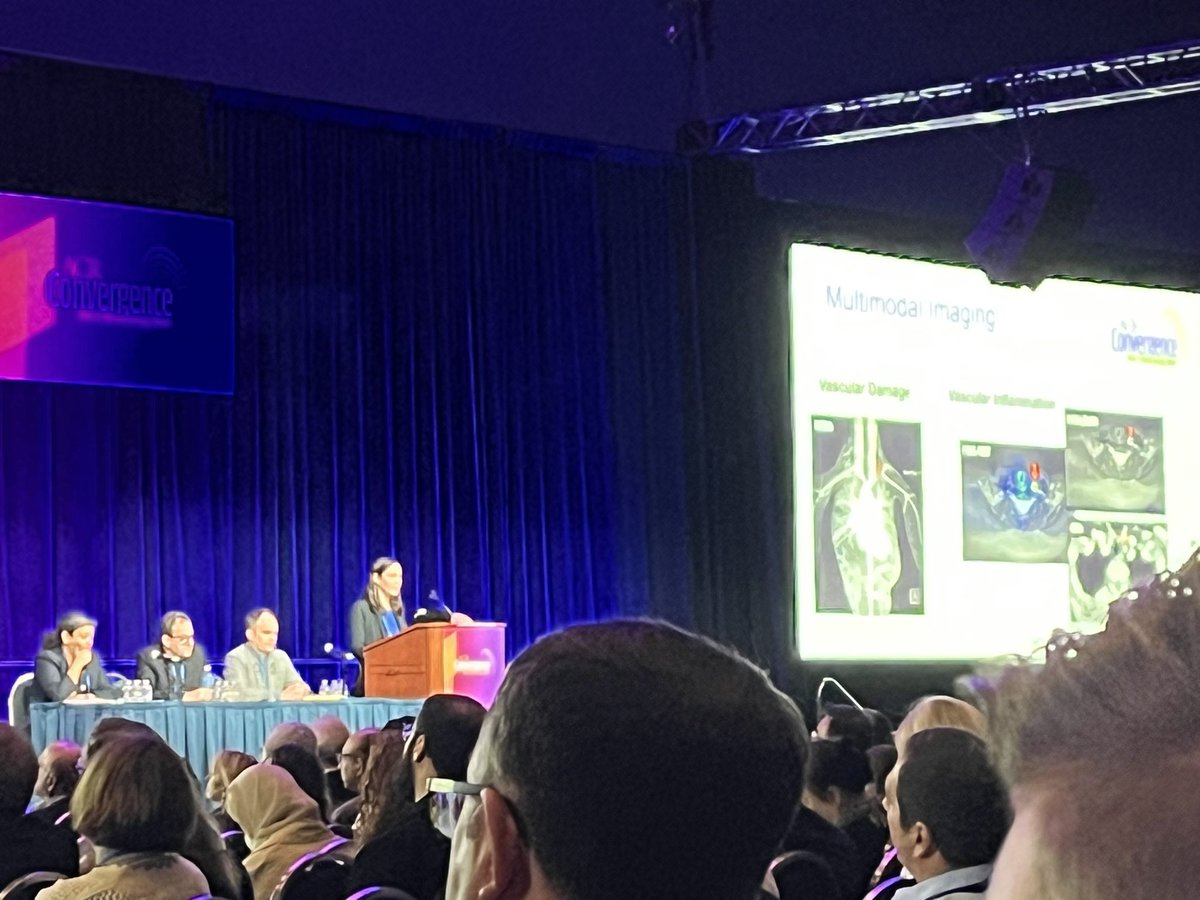
@SgRheumer@ACRheum I think your pic from the Takayasu’s session was a little early! The session was completely full for the talks - which is a big deal for a rare disease that certainly needs more attention!
@EBRheum@RheumNow Didn’t they allow patients with a prior history of TCZ to be included but specifically excluded those patients who were previously treatment refractory to TCZ?
@drdavidliew @VasculitisUMCG @RheumNow Lots of data converging to this observation. Only scary if it impacts longterm outcomes. Treat to target with imaging based outcomes has not proven to be wise across a spectrum of rheum diseases. Maybe future drugs will eliminate vascular inflammation. Maybe won’t matter.
News: Skin manifestations in VEXAS syndrome are common and provide an important early clue to the diagnosis of this life-threatening disease.
Read the full NIAMS-led study via @JAMADerm 🔒. Abstract: https://t.co/2DVCbJosX2
Many thanks to our French colleagues for hosting the first international VEXAS Congress in Paris. The only thing that was better than the science was the friendship. We had the best time with you! @SophieGeorgin @TerrierBen @mekinian2@bhavishap29@emmamgroarke@maferradastrong
Population databases have shown very different findings related to VEXAS, reflecting selection bias. In AllofUs, 74 people with VEXAS mutations, 62 of them were female, 100% were p.Met41Leu, unclear if they have any disease phenotype. Terrific work led by @rheumrob !!!
Somatic mutations in UBA1 cause VEXAS, a severe inflammatory syndrome. For the first time, researchers have found 74 people with the mutation who don't have VEXAS. Studying them may give a peek into the earliest phases of disease.
In A&R
https://t.co/vrknbiYBMK
@rheumrob
Clonal haematopoiesis across the age spectrum of vasculitis patients with Takayasu’s arteritis, ANCA-associated vasculitis and giant cell arteritis https://t.co/WfsL2Tlsnv
New collaborative work from rheum and heme at NIH @fergutierrezro1@bhavishap29@KQuinnRheum@NealSYoung1
We looked at CH prevalence in three forms of vasculitis that span the age spectrum.
Found that:
1. Age stronger driver of CH than vasculitis
2. Mostly small clones in DNMT3A and TET2
3. Association of clone size and relapse in GCA (unclear direction of association)