@nicknorwitz Public proteomics data in @tesorai_bio Trove lines up with the mechanism 👇
K2 fuels GGCX, which activates MGP. In 21 human carotid plaques, calcified ones carry ~4.8× more MGP (adj. p = 0.006): it's concentrated right where calcium builds up.
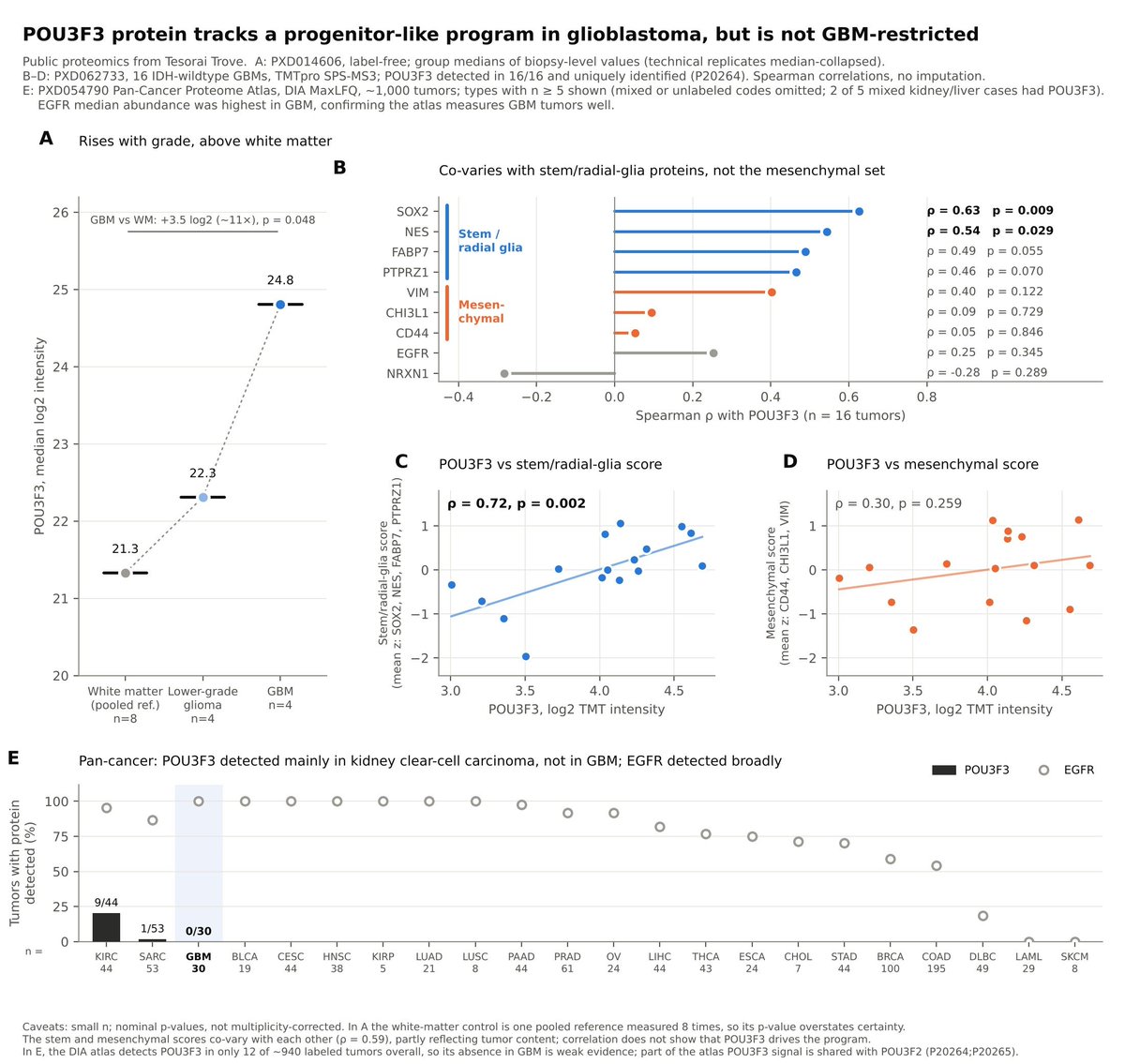
@NeuroCellPress Nice work. Independent protein-level check from public datasets in @tesorai_bio: across 16 IDH-wt GBMs, POU3F3 tracks SOX2/Nestin/FABP7/PTPRZ1 (ρ=0.72), not the mesenchymal set. Caveat: low-abundance and also appears in kidney cancer in a pan-cancer atlas.
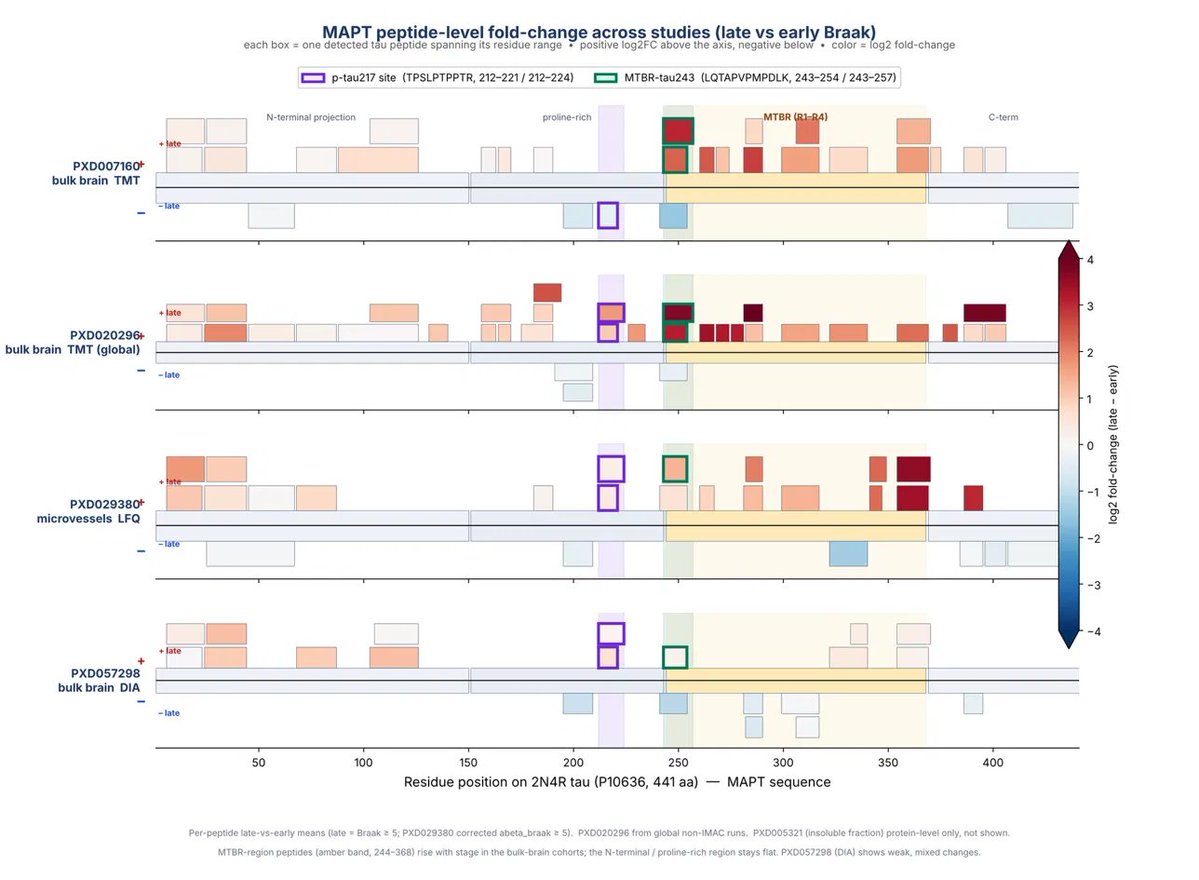
@beshoyarmanios@EricTopol But 243 isn’t special. The whole MTBR lights up with stage — the known species (243/299/354) all rise, and some peptides outside the standard panel (e.g. 281–290, 260–267) track Braak as well or better.
@beshoyarmanios@EricTopol A data point from the tissue side that supports both takes: in brain proteomics across several AD cohorts, MTBR-tau243 climbs steeply with Braak tangle stage — ~5–9× in the cleanest cohorts, p<1e-6. It’s a bona fide readout of aggregated tangle tau.
@momoni_dev@EricTopol@tesorai_bio Not in blood yet: plasma mass spec barely sees GZMK. But maybe something closer to the point: in 58 human liver biopsies (MASLD cohort), GZMK rises with biopsy fibrosis stage (ρ=0.40, ~1.4x in F2–F3), even after adjusting for T-cell content. Not linked to age.
@larsencc Very similar story here. But I just decided to return back to a small village in Slovenia after 15 years in SV. Would love to grab a coffee next time you visit.
@momoni_dev@EricTopol We checked human liver proteomes in @tesorai_bio Trove: GZMK rises and falls with the collagen-rich, immune part of the tissue (top 5% of 6k proteins), alongside fibrillin and integrin β5, while hepatocyte proteins move the other way. Fits the fibrosis story. Exploratory, n=26.
@Nature We checked this in human data. Across 1k normal tissue samples in @tesorai_bio Trove, GZMK barely changes with age (ρ=0.07). But in normal liver it tracks fibrillar collagen (COL1A1/3A1, ρ 0.62–0.68), partly independent of T-cell content. Same fibrosis axis as the mice.
I thought about this a lot during my time at Verily. My conclusion was that replacing today's ordinal scoring systems with quantitative measurements isn't automatically an improvement—those measurements are often just as noisy. And when you're ultimately trying to predict patient outcomes, that extra precision can have surprisingly little impact.
Where I think AI gets really interesting is finding signals that humans aren't looking for yet, ie discovering new biomarkers.
@Ronalfa Agreed. And to add - alphafold solves a static problem. Even narrowly scoped virtual cell models require modeling dynamics, where learning causal mechanisms matters far more than non-causal coevolution signals in sequence alignments.
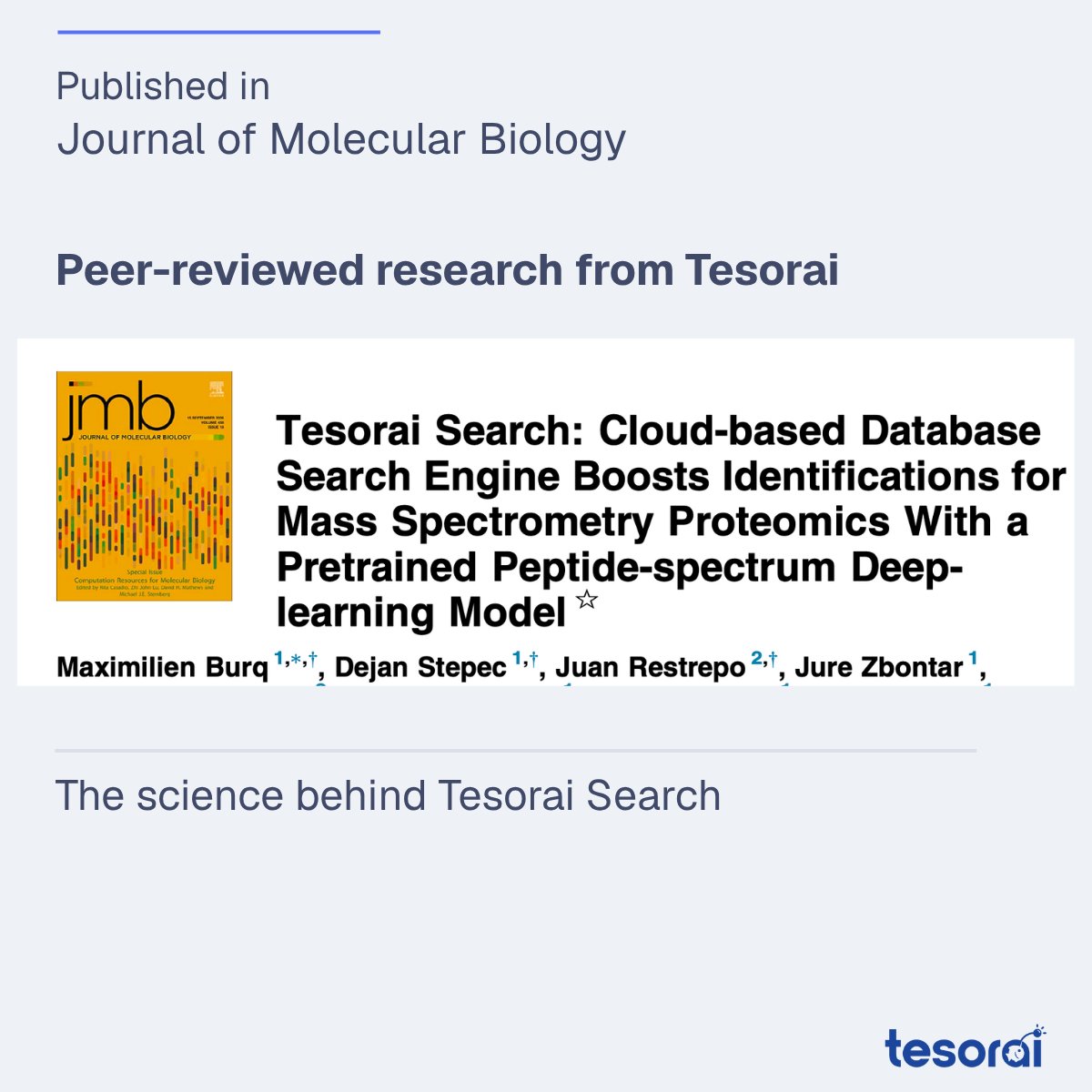
We're excited to share that our latest research has been published in the Journal of Molecular Biology. The paper describes the deep-learning approach behind Tesorai Search and the research that powers our mass spectrometry database search engine. Huge thanks to @PeterCimerman, our collaborators at @MPI_Biochem, the team at @JMolBiol and everyone who contributed.
https://t.co/cY4e5plzdS
#Proteomics #MassSpectrometry #MachineLearning
In a collaboration with @FrankLI55917967 and @yarmo111 at @NotreDame and @NYU, Tesorai Search identified up to 136% more high-confidence peptide identifications than standard search engines.
The resulting analysis contributed to a pan-cancer atlas of 28,446 tumor-specific antigens.
Publication: https://t.co/kRftq7VFU5
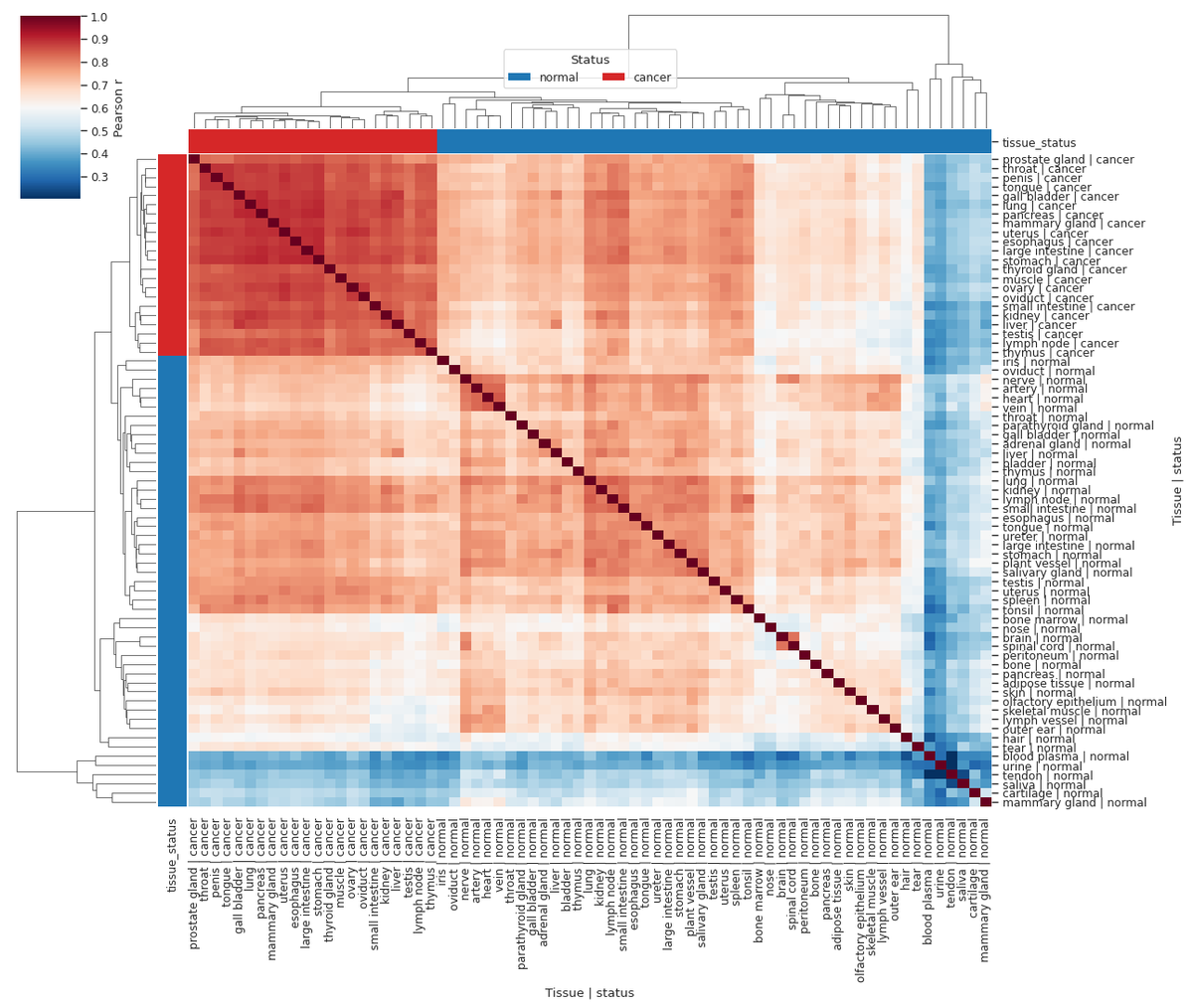
Great dataset��really impressive scale and tissue coverage. One pattern that stood out in my exploratory re-analysis is that cancer profiles can look more similar to other cancers than to normal tissue profiles. That’s potentially provocative, so I’d treat it cautiously: this could reflect biology, but it could also be influenced by data representation and analysis choices (aggregation level, normalization, filtering, pathway/protein selection, etc.). Interestingly, the same broad impression seems visible in Figure 2 of the paper, so it may be a real signal worth discussing. Curious how others interpret this and what analysis setup best tests it rigorously.
It was incredibly exciting to see our platform ingest and process 4 TB of proteomics data in only 7.5 hours. With MS proteomics studies getting bigger every year, there’s a lot of concern about whether tools can keep up — so seeing it work this smoothly was a massive relief.
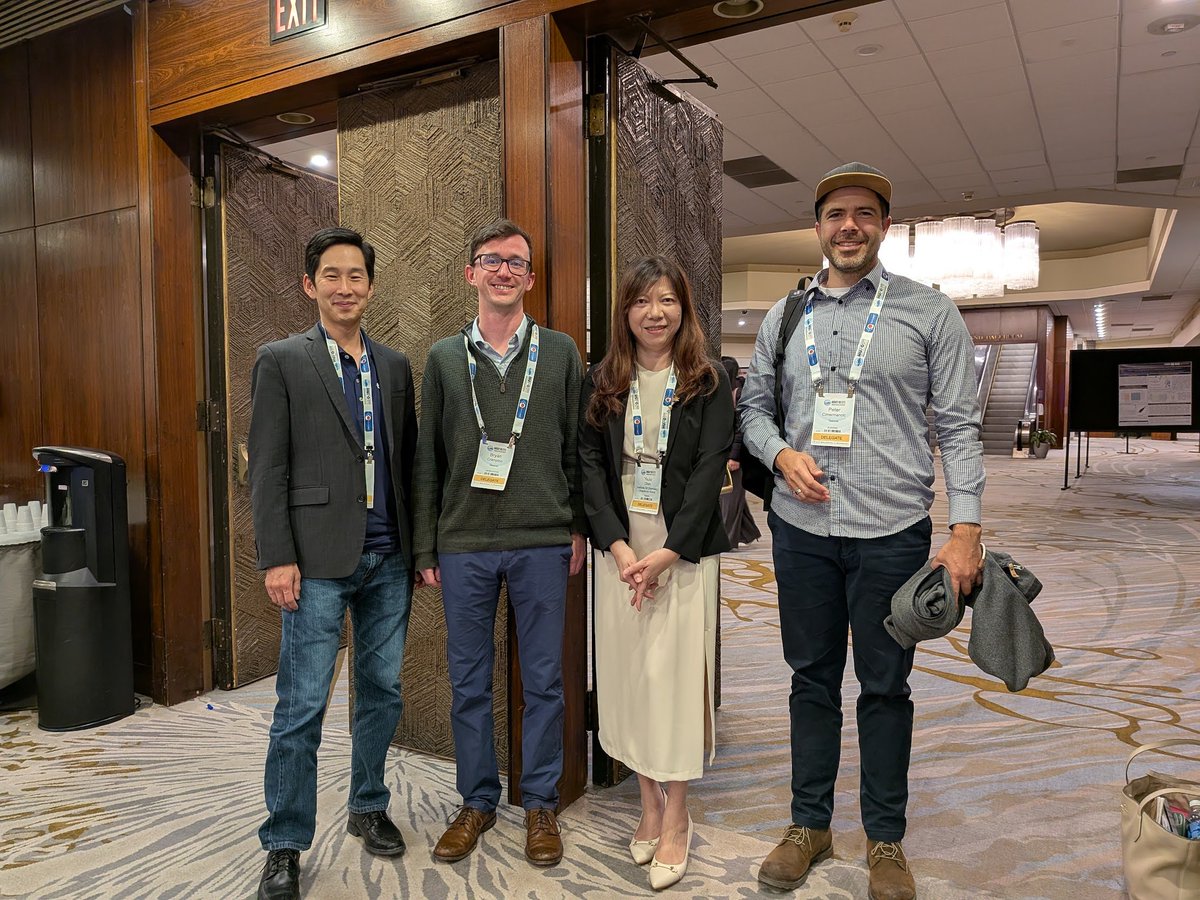
Honored to see our work highlighted by Dr. Yu-Ju Chen (Academia Sinica, Taiwan) in her #HUPO2025 plenary talk yesterday.
We’re thrilled to support her and her team's groundbreaking research in proteomics and lung cancer. And huge congratulations to Dr. Chen for receiving the HUPO 2025 Distinguished Achievement in Proteomic Sciences Award!
#proteomics #AI #massspec #Tesorai #HUPO2025
Intro to Tesorai (Search + Chat)
If you're working with proteomics data and tired of writing custom code or clicking through clunky tools, we built something that might help.
Tesorai lets you process raw mass spec files quickly, and now you can explore your results just by asking questions in chat.
Watch a short demo: https://t.co/XarLfysEia
Try it here: https://t.co/2US8CLBmVD
We're still in beta and would love your feedback.
#proteomics #massspec #bioinformatics #computationalbiology #AIinProteomics
@michaellazear@NIH@NIGMS @NIGMSgenes Hm, I also think academic labs should be able to sell/license software, especially when it's used for commercial purposes. Same with any small molecules/protein targets they discover and that eventually get turned into drugs.