Neither threats nor a U.S. military strike are likely to move Iran from its current position, especially when Tehran views Washington as inconsistent and unreliable in its commitments.
A return to a broader military confrontation would make a diplomatic agreement less likely, not more. From the Iranian perspective, recent actions in the maritime domain are already being interpreted as violations of the ceasefire framework.
One can certainly be frustrated with Iran's position. But if the objective was to reach an agreement, it would have been wiser to keep alive figures such as Ali Khamenei, the ultimate decision-maker, and Ali Larijani, who historically played an important role in bridging gaps between the parties. If the purpose was to topple the regime, why negotiating with them?
The current situation is the direct result of profound mistrust on both sides, combined with a growing recognition that the status quo is unsustainable. Without an agreement in the near future, further escalation is likely. Yet escalation by itself is unlikely to produce meaningful Iranian concessions.
The bottom line is that no military operation, whether limited or extensive, short or prolonged, is likely to compel Iran to accept a deal in the US terms. More likely, an Iranian response would push the parties even further away from diplomacy.
That is the reality facing the administration today. If President Trump genuinely wants a deal, he will have to engage with at least some of Iran's core demands. If he is unwilling to do so, then he should be prepared for a prolonged confrontation rather than a negotiated settlement.
#IranWar
This is extraordinarily rare.
In fact, according to a key figure in the German business community (who is a dear friend of mine), it's unprecedented.
An op-ed, two pages, centerpiece, in Germany’s most important economic newspaper (the Handelsblatt) that begs the German establishment to stop looking at China via the prism of propaganda. And it's by their Shanghai bureau chief - not some outside contributor.
The title is "The China debate cannot continue like this!" and the article makes the case that it's suicidal, from a German and European standpoint, to keep reducing China to false caricatures rather than facts.
In effect it's rubbish in, rubbish out: if you tell people lies about China - whichever direction they go (anti or pro) - then obviously the policies that come out will be rubbish, designed for a mirage of a country that exists only in people's imagination.
Needless to say, this is absolutely music to my ears because it's literally the main point I've been making in my advocacy around China for now almost 10 years. Some are finally seeing the light...
I also believe, as I argued in my article "Are Western media turning China-friendly?" last year (https://t.co/Xg1hoSRtNy) that this type of coverage was bound to happen, and there will be more and more of it.
Why? For a very simple structural reason: China is now too powerful to coerce. The West, and Europe in particular, just don't have the leverage anymore. Which means that if you tell China to do something and they don't want to, they just won't do it. Period.
In this situation, incapable of coercing, your only remaining choice is... convincing. And what do you need if you want to convince someone? Well, you need to understand them: understand how they think, how they behave, what drives them, what they actually want.
In other words: the moment coercion stops being an option, not only does propaganda stop being useful, it begins to be actively harmful as genuine understand becomes a strategic necessity. Reality is finally becoming profitable again.
Which means, if you're a journalist reading this and you're peddling some of your usual lies, describing China as some sort of cartoonish dictatorial dystopia that's simultaneously on the verge of collapse yet a "threat" to the whole world (in short, if you write on China for The Economist or the FT), be on notice: the real threat to your country isn't China. It's you.
⚡️JUST IN: Iran's State TV announces that maritime traffic in the Strait of Hormuz will increase, as Iran is now ready to provide 24-hour transit services
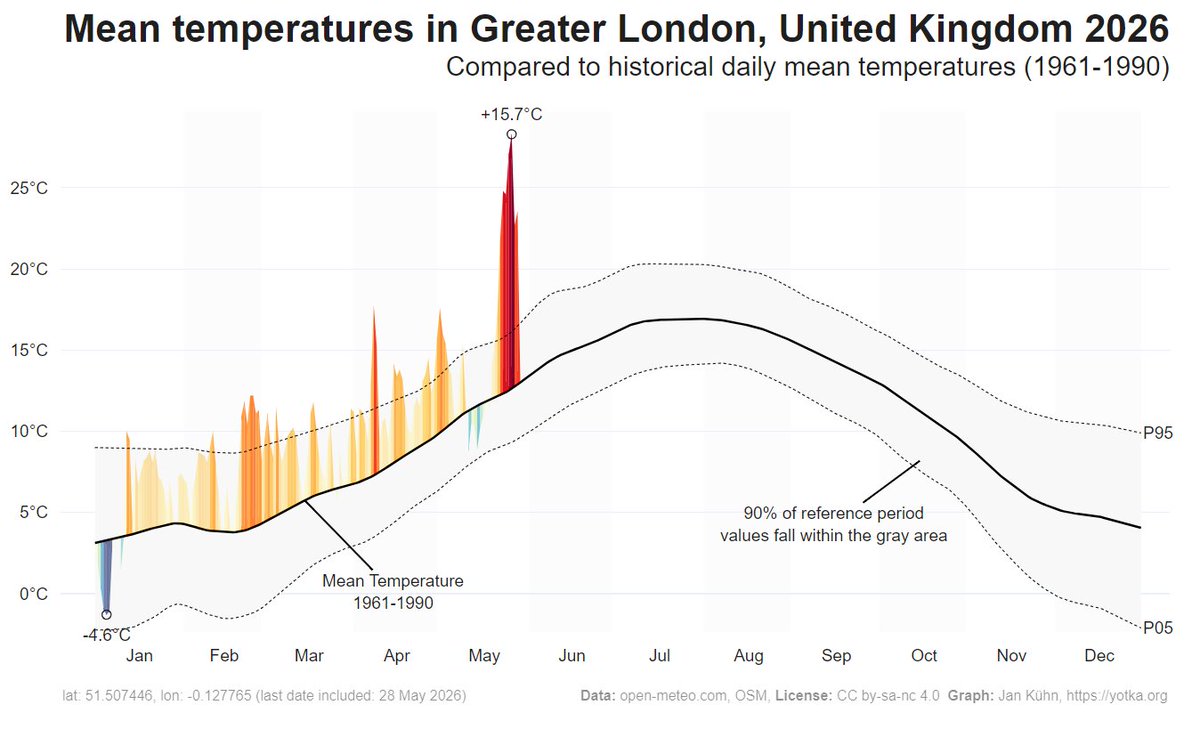
📉Après une #canicule exceptionnelle, les températures vont repartir à la baisse sur la #France d'ici le début de semaine prochaine, repassant même temporairement en-dessous des normales pour débuter le mois de juin sur certaines régions !
Animation : TropicalTidBits
#Commodities
The Bloomberg Commodity Total Return Index (BCOM) is heading for a monthly loss of around 3%, its first decline in five months. Hopes for a Middle East peace deal gathered momentum during the month, weighing heavily on energy prices and sending the BCOM Energy Index down more than 8%. The decline would have been even steeper had it not been for a strong 12% rebound in natural gas.
Broad-based losses across the agriculture sector, led by corn, wheat, sugar, and livestock, also weighed on overall performance, more than offsetting a 5% gain in the BCOM Industrial Metals Index, where #copper and zinc led advances. It was another challenging month for precious metals, with silver strength largely compensating for a decline in gold.
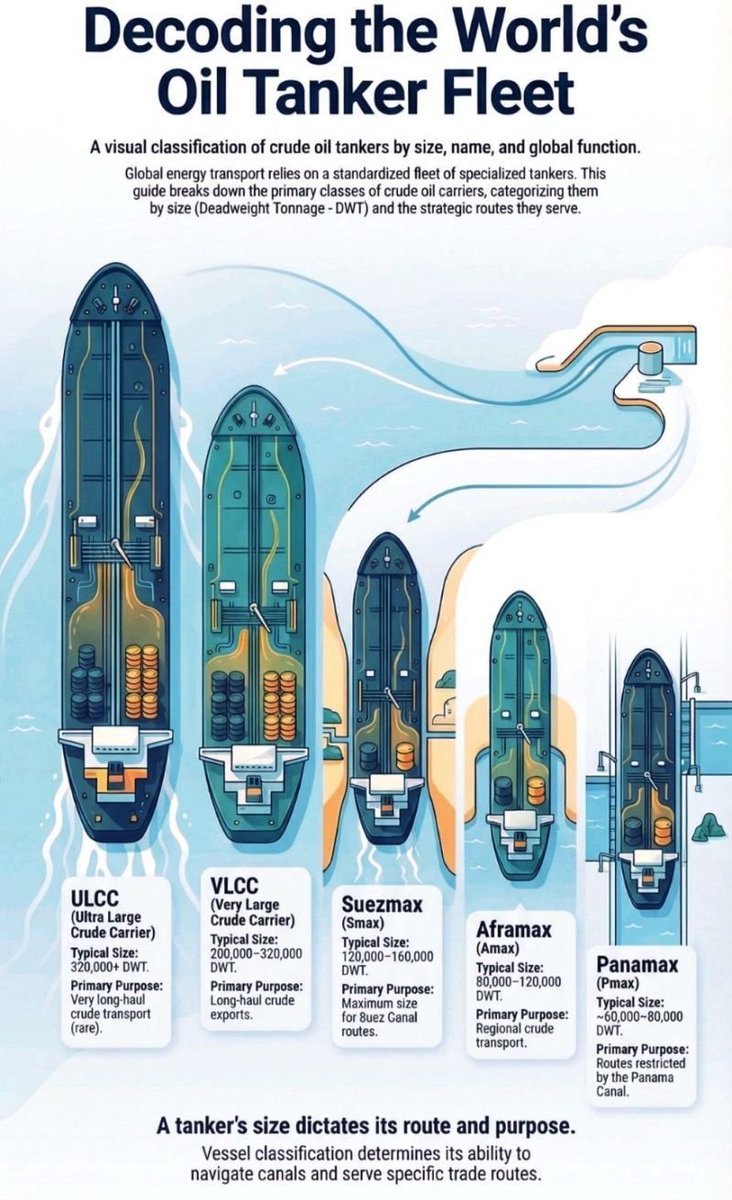
#CrudeOil fell to a five-week low after the US and Iran tentatively agreed to extend their ceasefire by 60 days, with Brent heading for its biggest monthly decline since 2020 on expectations the agreement could pave the way for a gradual reopening of the Strait of Hormuz. While significant hurdles remain, the market is reacting to the prospect of a supply surge once hundreds of tankers loaded with crude oil and refined fuels are released from the Persian Gulf. In the months ahead, however, demand to replenish depleted global inventories is likely to provide support, potentially lifting the price floor compared with pre-war levels.
#Gold survived another attempt to break below its 200-day moving average, currently near USD 4,400, as technically driven short sellers were squeezed by improving prospects for a US-Iran deal. The easing of energy-driven inflation concerns helped push bond yields and the dollar lower, providing support to bullion. Having successfully tested this key support level twice during the conflict, gold remains caught in a challenging technical environment, with a break above USD 4,575 and ultimately the 50-day moving average at USD 4,628 needed to improve the near-term outlook.
#Malaysia has confirmed that its new #B15#biodiesel blend — a fuel mixture containing 15 per cent palm‑based biodiesel and 85 per cent #petroleum diesel — will be introduced across the entire transportation sector from 1 June.
https://t.co/lWWvugSErM
#biofuels#biodiesel
UAE temperatures to hit 48°C on Friday as hot early summer weather grips inland areas, with stable conditions and calm seas forecast by NCM.
https://t.co/YZmoOKXvBT
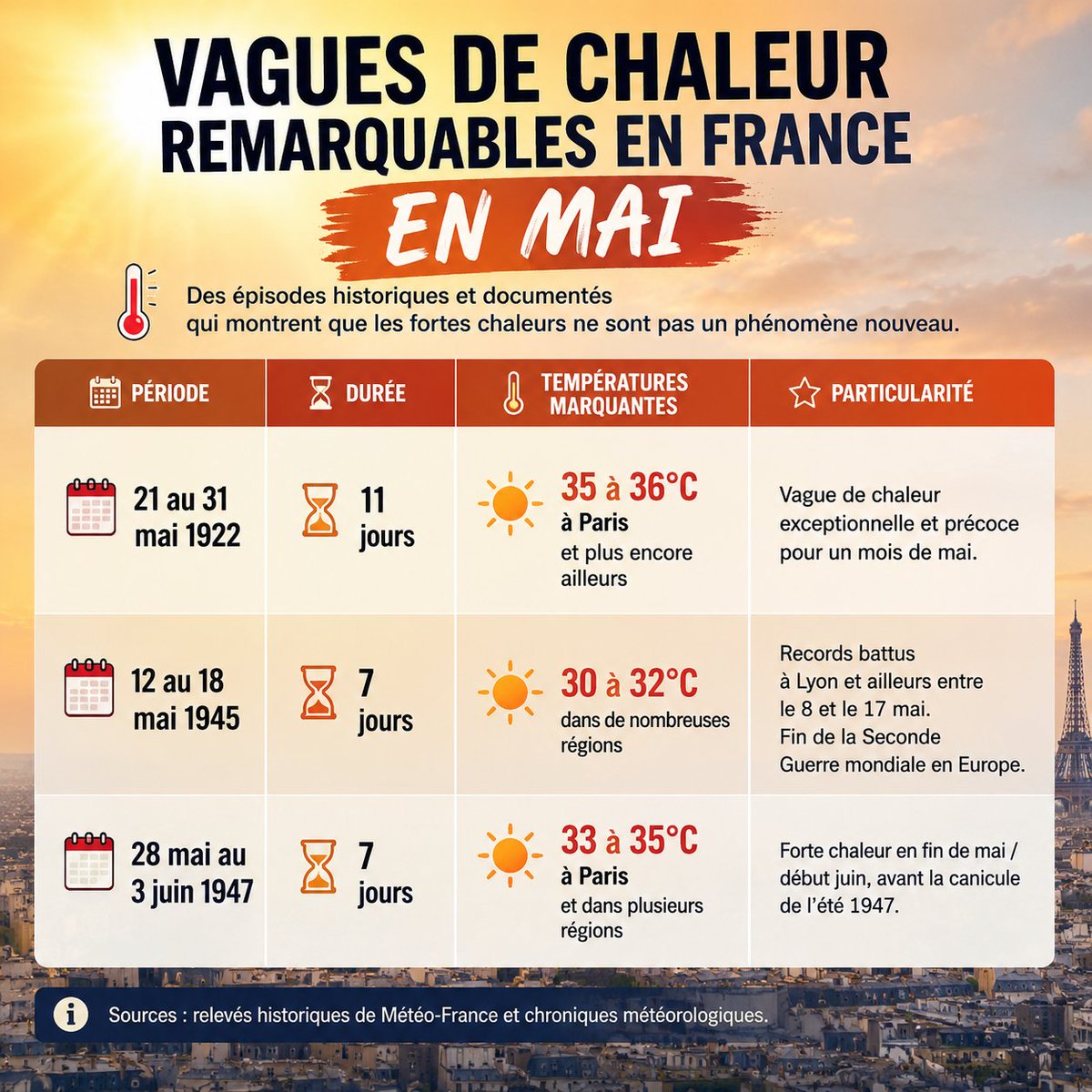
LA VAGUE DE CHALEUR ACTUELLE EST UN OVNI CLIMATIQUE ! Ce tableau largement diffusé sur les réseaux sociaux (reprenant d’ailleurs des éléments de mes recherches https://t.co/KaFytolV9G) montre que des épisodes de forte chaleur en fin mai ont déjà existé par le passé. Mais ce que beaucoup oublient de préciser, c’est que l’épisode actuel se distingue par son ampleur exceptionnelle. La vague de chaleur actuelle est un ovni climatique, comme celle d'août 2003.
The underlying problem here is that trading oil—specifically the prompt—is becoming completely untradable.
To be fair, I have to respect their execution. They’ve completely killed off liquidity and volume, effectively driving traders from futures into options.
what kind of trader has the courage to size up in this tape? The constant 2 way VaR shocks we're getting are completely out of hand.
They’re using vol itself to suppress prices. It’s a highly sophisticated playbook.
#oott #iran
بسم الله الرحمن الرحیم
حساب رسمی مدیریت آبراه خلیج فارس (#PGSA) در ایکس به منظور اطلاعرسانی فعالیتهای این سازمان آغاز به کار مینماید.
برای اطلاع از آخرین وضعیت #تنگه_هرمز ما را دنبال کنید.
Let’s be honest: the negotiations aren’t stalled because of the Pakistani mediators, whether they’re hosting Iranian aircraft or not.
The core issue is much simpler: the United States failed to impose a decisive military defeat on Iran, and Tehran emerged from the conflict believing it came out stronger, not weaker. As a result, Iran sees no reason to accept the administration’s terms for ending the war.
You can rotate mediators indefinitely - Pakistanis, Qataris, Egyptians, Turks but it won’t change the fundamental reality. Iran does not believe it lost. On the contrary, the leadership in Tehran appears convinced it gained the upper hand strategically and politically.
That is why the identity of the mediator is ultimately secondary. And regardless of how much Washington tries to frame the deadlock as the result of internal disagreements within the Iranian regime, the underlying problem remains unchanged: Iran believes it won this round of the confrontation, and states that feel victorious rarely negotiate from a position of .surrender.
#IranWar