If you’re restoring forests, the question isn’t just: “Did trees get planted?”
It’s also: “Are they growing into healthy forests?” That is what canopy height can help tell you.
Today, @landcarbonlab is sharing Version 2 of Global Tree Canopy Height, the 1-meter resolution global map that can detect individual trees, now upgraded for significantly better performance in tall and complex forests.
Accuracy improved by about 60% in independent validation (R² 0.53 → 0.86), which sharpens how this data supports:
🌿 restoration progress tracking over time
🌿 carbon storage and removal estimates grounded in forest structure
🌿 biodiversity monitoring that depends on habitat complexity
Built with AI at Meta using the open-source DINOv3 model, supported by the @BezosEarthFund, and openly available on AWS and Google Earth Engine.
Learn more: https://t.co/v94E1yD8no
Read the pre-print: https://t.co/jlV0FvQkAU
I love the NASA astronaut photography map. something about this UI. super fast and clean, extremely easy to filter things down by spatial resolution, cloud cover, date. imagery projected nicely. just a ton of cool images and a really nice way to access them
NO TE LO PIERDAS ‼️ El galardonado documental “The Present” está finalmente disponible online (gratis). Una conmovedora, importante, inspiradora travesía en bicicleta de 18.000km (que incluye a Chile) para la enfermedad de Huntington. Lo puedes ver en : https://t.co/lx11o7xeou
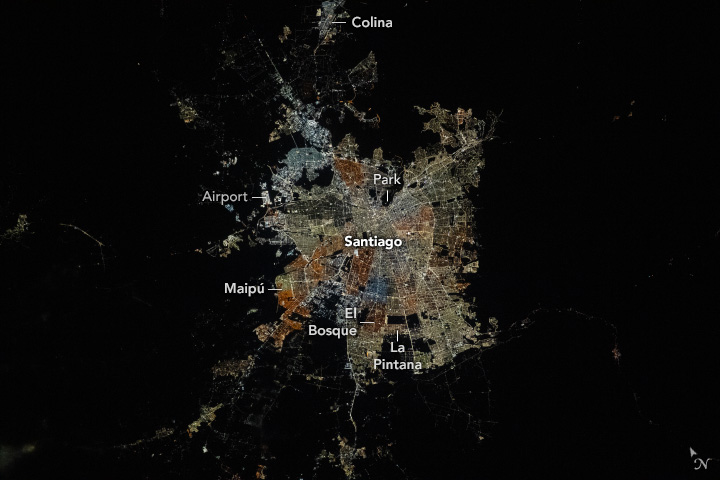
Santiago at night 💡
A @Space_Station astronaut captured this image of Santiago, Chile highlighting the city’s array of colors and densities at night. The unlit surroundings represent rugged terrain and agricultural fields along the valley. https://t.co/UKbQ2jwqeA
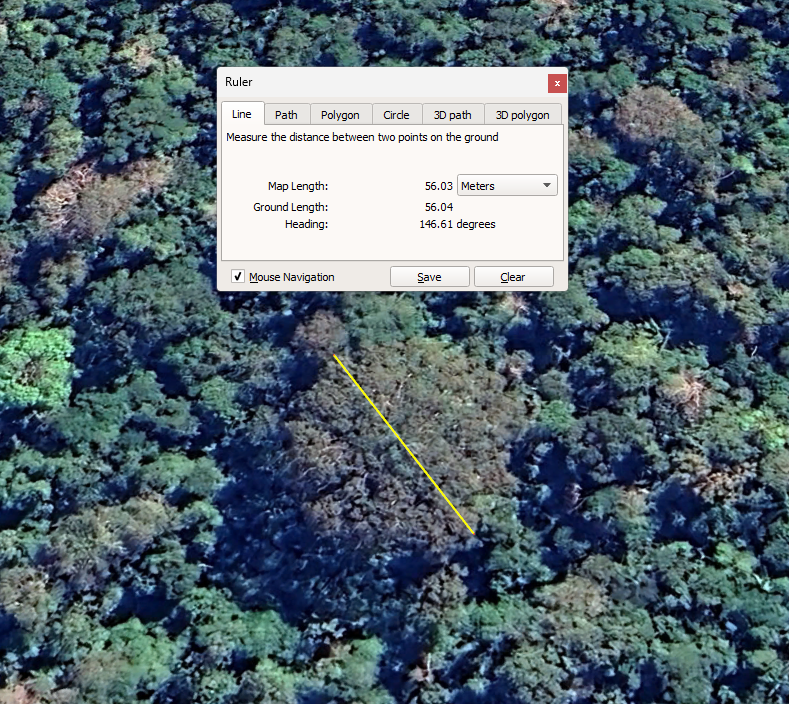
Just discovered the most massive tree I've ever seen in the Amazon rainforest via satellite image—over 50 meters in crown diameter and more than 50 meters in height! 🛰🌳@CTrees_org@RicardoDalagnol
Making forest data fair and open https://t.co/WckCfZfdQR
The people who make ground forest measurements are extremely disadvantaged compared to those who use them. A new approach should focus on the needs of data originators, and ensure users and funders contribute properly.