I sat down with @lukaszkaiser to get into whether the architecture he helped invent is actually enough, and what's next in generalization, coding agents, RL and more. Lukasz co-authored "Attention Is All You Need," the paper that introduced the transformer and worked on reasoning models at OpenAI so he’s been a key part of major shifts in the field. We hit on:
▪️ The case for and against a new architecture coming after the transformer
▪️ What’s required for model generalization in the physical world
▪️ How much coding agents have improved his AI research productivity
▪️ The next domains for RL
▪️ Why Anthropic initially won coding
▪️ Future research directions he’s excited about
0:00 Intro
1:12 Transformers vs. Human Learning
8:37 How Do We Get Physical World Generalization?
10:52 What Comes After Transformers
13:59 How Much Have Agents Improved Lukasz's AI Research Productivity?
17:21 How Close Is an AI Research Intern?
26:06 RL Beyond Verifiable Tasks
35:38 App Companies: Build Models or Lean on Labs?
46:21 Multimodal Is Still Missing Something
49:46 OpenAI's Bet on Reasoning
55:26 The AI Coding Wars
59:26 Focus vs. Keeping Embers Burning
1:02:09 Open Source vs. Closed Source Gap
1:05:15 Quickfire
YouTube: https://t.co/wetErBD4B8
Spotify: https://t.co/FSYWR39ep2
Apple: https://t.co/j2omVI8xEa
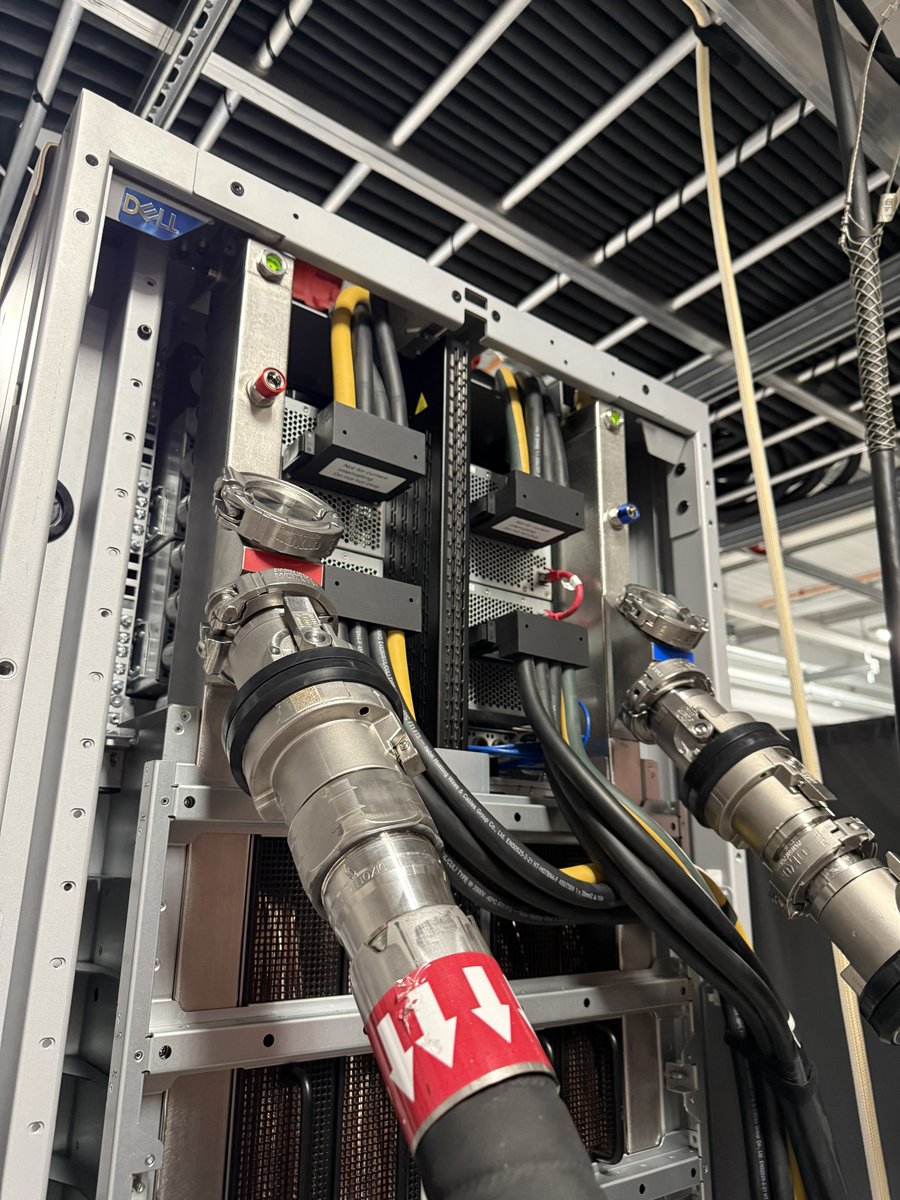
Some cool visuals.
Dell Delivers world's first Nvidia Vera Rubin NVL72 rack to CoreWeave.
It packs 72 Rubin GPUs, 36 Vera CPUs, 3.6 exaFLOPS of FP4 inference, 75 TB of fast memory, and 260 TB/s NVLink bandwidth
@godaddy compliance suspended my account. All sites are down. same story again: they need my passport proving the crook from the US sanction list… and ofc they assigned one of the slowest humans in their org to handle it. So it’s just hanging now.
Ai? What ai?
Dr. Lawrence White’s eight-hour course: Monetary Theory, is available now.
In this course, @lawrencehwhite1 explores the debate between market-based and government-controlled monetary systems, combining theory with historical evidence from gold standards to modern fiat currencies. We examine how money can emerge through market forces, the mechanics of fractional-reserve banking, and how central banks influence inflation.
The course also addresses banking stability, market failure arguments, and the causes of inflation, including seigniorage. It concludes by evaluating monetary policy rules, inflation targeting, and alternatives like Bitcoin, and asks whether sound money requires commodity backing or if proper institutional design can achieve stability in fiat systems.