💊 Digital Health Pharmacist, Product Manager & Health Informatician
Any comments provided are personal in nature and do not represent the views of the employer
Product Management is:
Define where are we going (vision) > How we choose to get there (strategy) > Break down Outcomes > Discover customer problems (discovery) > Build-Measure-Learn (delivery) > Pivot bases on results
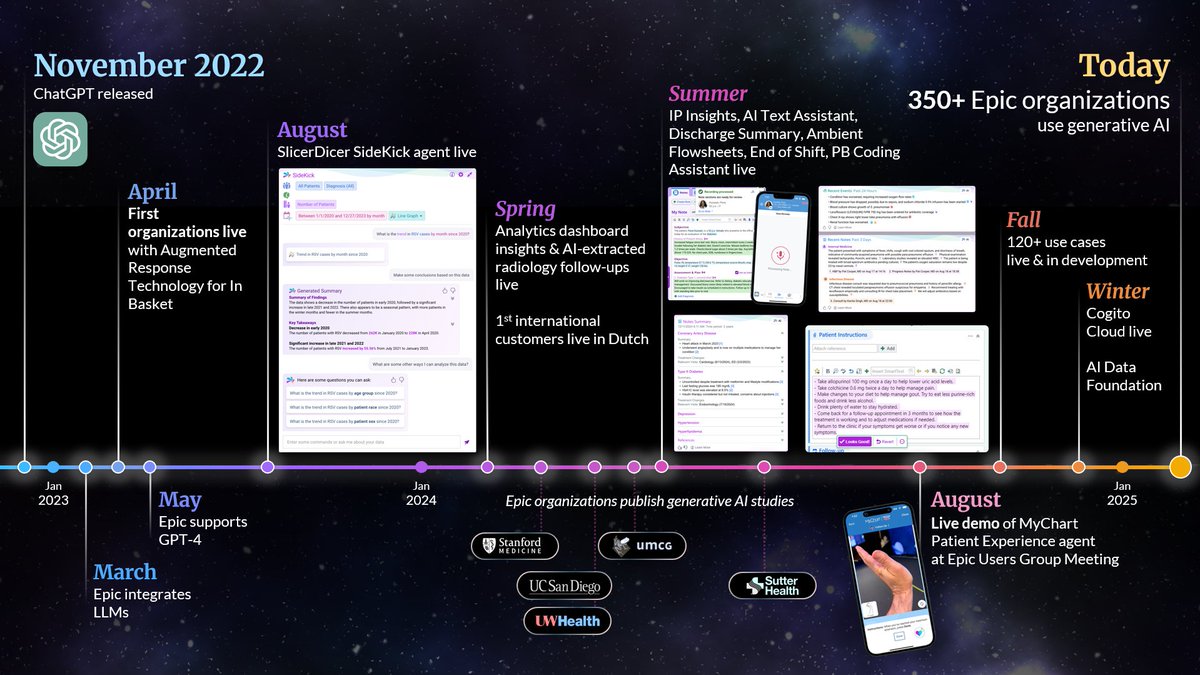
Here's a timeline of gen AI at Epic, starting with ChatGPT's release in November '22.
LLMs were in Epic by March 2023, and by April, clinicians were using Epic gen AI in practice.
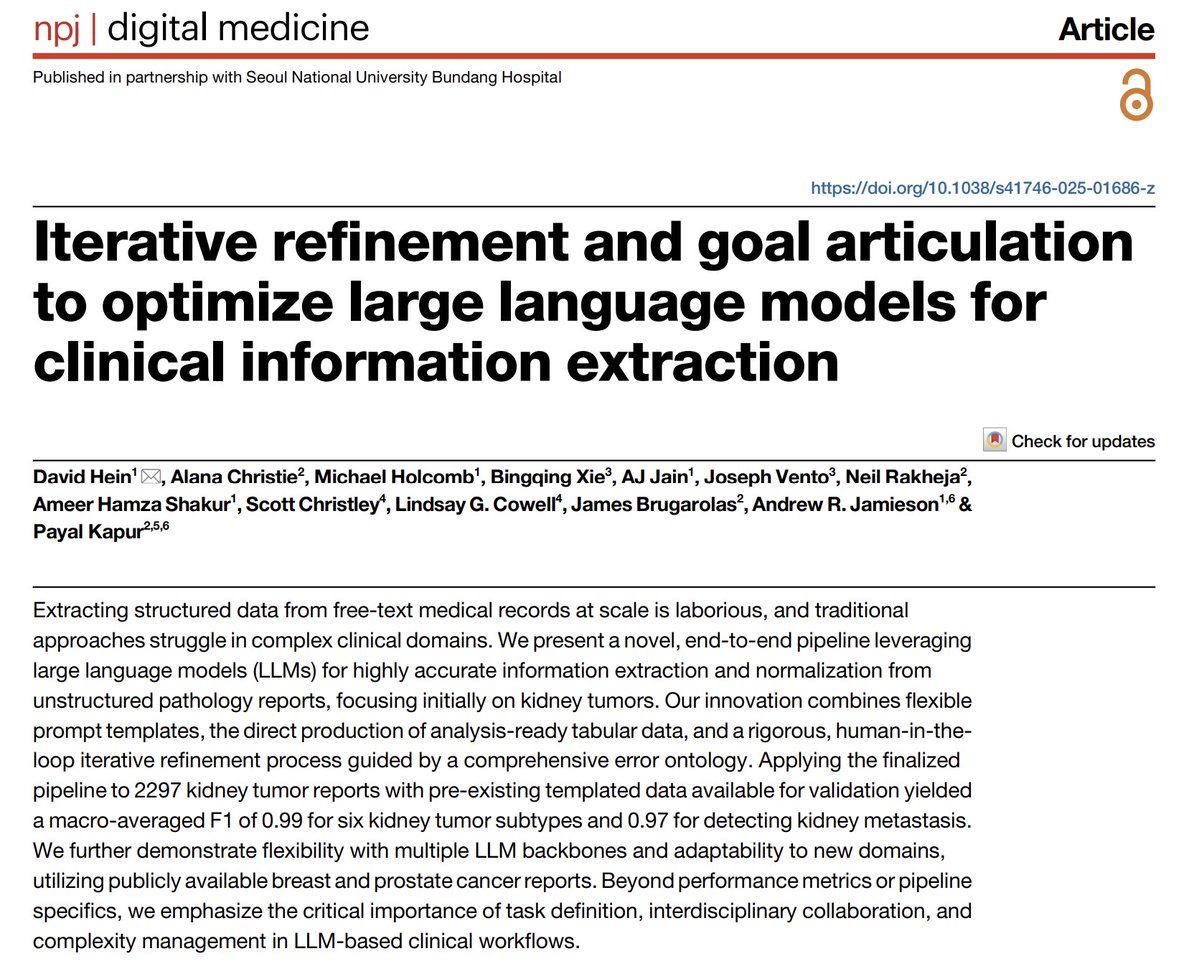
LLMs excel in extracting data from electronic health records! 🚀🩺 Top models show high accuracy & consistency, streamlining healthcare research.
Find out more: https://t.co/BfoNsjPIHg
#AIinHealthcare#LLM#MedicalData#BMJHCI
There is a lot of buzz about our new paper in Nature Medicine on the effects of LLMs (GPT-4) on physician management reasoning! I had TONS of fun working on this -- but what it MEANS requires some unpacking.
A 🧵⬇️
https://t.co/yLZJw1U5IE
The largest medical #AI randomized controlled trial yet performed, enrolling >100,000 women undergoing mammography screening, was published today @LancetDigitalH
The use of A.I. led to 29% higher detection of cancer, no increase of false positives, and reduced workload compared with radiologists without A.I.. https://t.co/GGrLqdG5yq
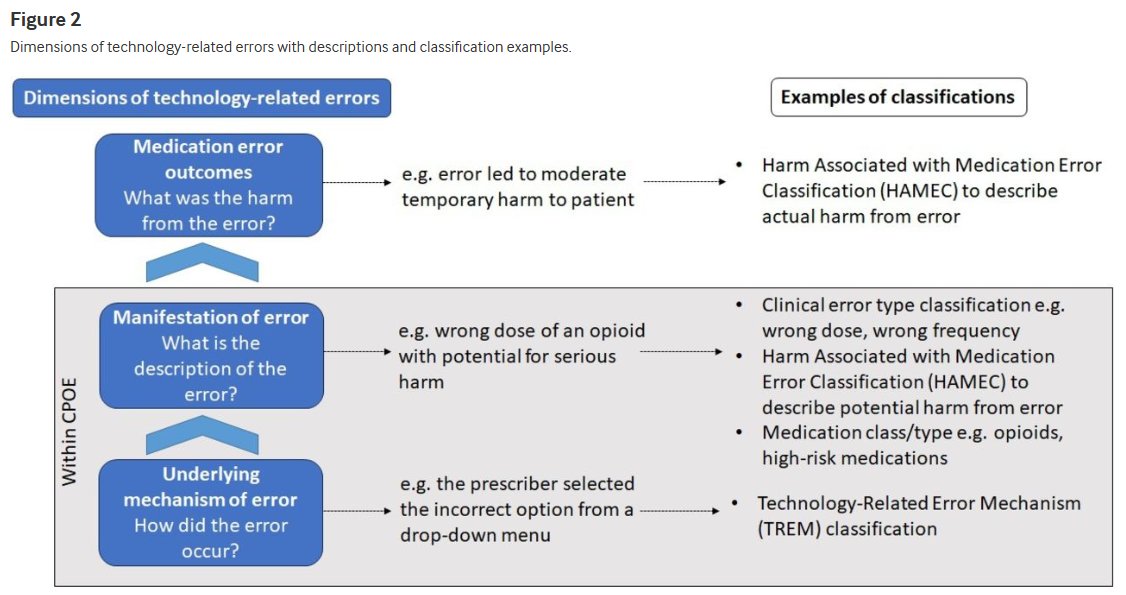
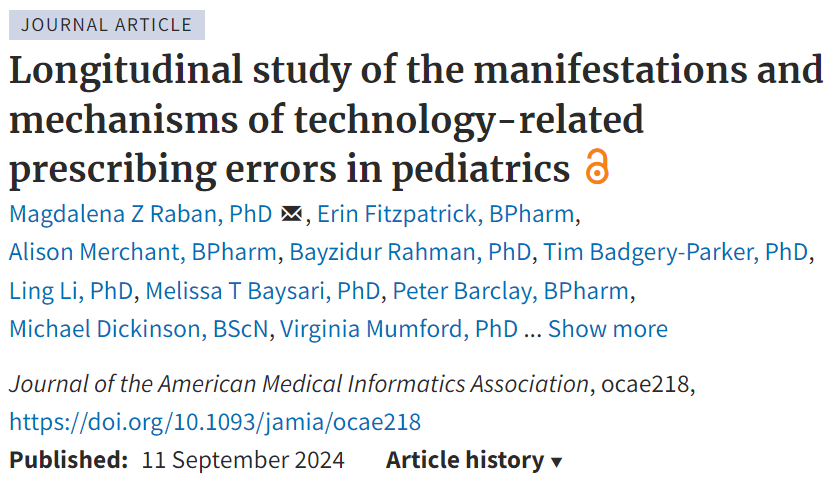
Want to understand how to optimise #EHR to prevent medication errors?
Read about our Technology-Related Error Mechanism (TREM) classification in our new paper:
https://t.co/G0MdLHaMlS
@JWestbrook91#MedTwitter#MedEd#MedSafetyWeek#medication
Introducing an upgraded Claude 3.5 Sonnet, and a new model, Claude 3.5 Haiku. We’re also introducing a new capability in beta: computer use.
Developers can now direct Claude to use computers the way people do—by looking at a screen, moving a cursor, clicking, and typing text.
📢1 in 3 potentially serious prescribing errors are technology-related (i.e. the design of the system likely led to the error).
We need better oversight and governance of #EHR systems to realise #patientsafety gains.
#medicationsafety#MedTwitter#MedEd
https://t.co/p8T9nx70Em
Time for a medicines stewardship approach to transitions-of-care, to address the intractable problem of medication errors and harms following hospital discharge. Editorial with @ManyaAngley@Deequm@JonPenm@ShaniaLiu_ https://t.co/Z2AMMRPwOZ
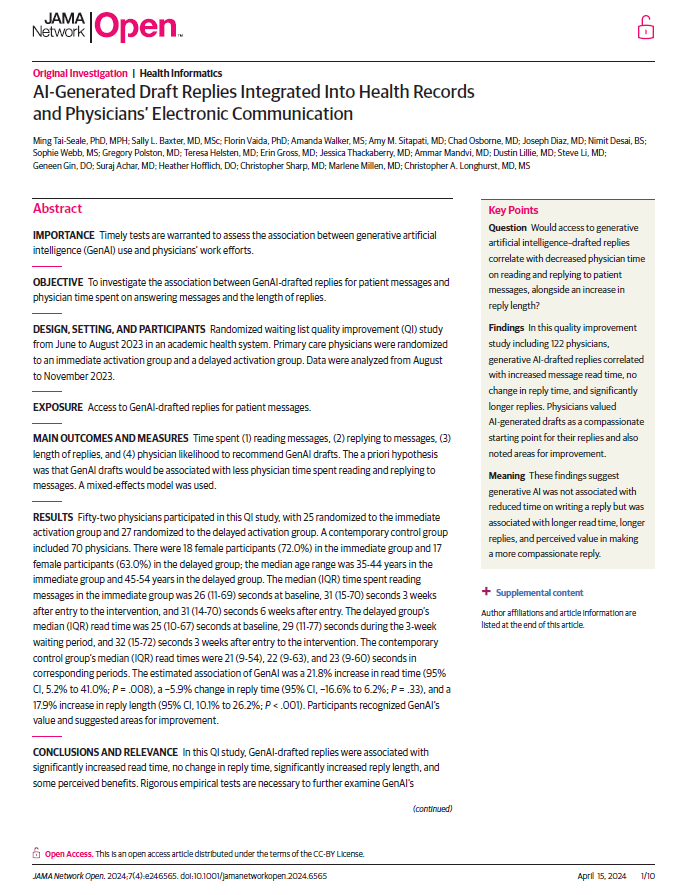
𝐆𝐞𝐧𝐀𝐈 𝐢𝐧 𝐭𝐡𝐞 𝐄𝐇𝐑 - what have we learned so far? 🧵
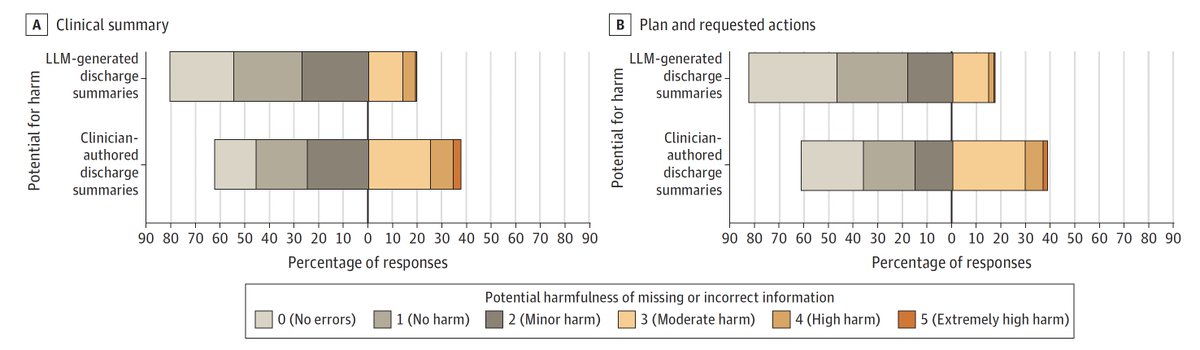
One year ago @UCSDHealth and @StanfordHealth were announced as pilot sites for generative AI in Epic, and we have both published initial outcomes in @JAMANetworkOpen! (1/9)
Our new paper on: Risk factors associated with medication administration errors in children highlights the dangers of IV medications, oral medications requiring solvents and increased errors among children >11 @magdazr@AIHI_MQ@lli_sydney
https://t.co/bASyXWsrWr
This is a breakthrough in practical application of AI!
Klarnas AI assistant, powered by @OpenAI, has in its first 4 weeks handled 2.3 m customer service chats and the data and insights are staggering:
- Handles 2/3 rd of our customer service enquires
- On par with humans on customer satisfaction
- Higher accuracy leading to a 25% reduction in repeat inquiries
- Customer resolves their errands in 2 min vs 11 min
- Live 24/7 in over 23 markets, communicating in over 35 languages
It performs the equivalent job of 700 full time agents... read more about this below.
So while we are happy about the results for our customers, our employees who have developed it and our shareholders, it raises the topic of the implications it will have for society.
In our case, customer service has been handled by on average 3000 full time agents employed by our customer service / outsourcing partners. Those partners employ 200 000 people, so in the short term this will only mean that those agents will work for other customers of those partners.
But in the longer term, as more companies adopt these technologies, we believe society needs to consider the impact. While it may be a positive impact for society as a whole, we need to consider the implications for the individuals affected.
We decided to share these statistics to raise the awareness and encourage a proactive approach to the topic of AI. For decision makers worldwide to recognise this is not just "in the future", this is happening right now.
More in our press release
https://t.co/vLL05BvbNT
🏥 Does Computerised Clinical Decision Support Prevent Medication Errors and Adverse Drug Events?
How do you keep up with the latest in #DigitalHealth, #AI and #ProductManagement?
Subscribe to Digital Pharmacist Digest, the free newsletter for you.
https://t.co/AawpCn2jzq
💊 How does the administration of high-risk drug combinations change when using intensive care tailored computerised decision support alerts?
Subscribe to Digital Pharmacist Digest to keep up with the latest in #DigitalHealth, #AI and #ProductManagement
https://t.co/QrUJZqQCRd
How are #digital systems used to enhance #antimircobial stewardship in your hospital? New work by @bethanyvandort showing the importance of digital interventions aligning with #AMS team workflows and existing systems. https://t.co/kzeLTddPBF @BritPharmSoc@sydneykidneys
🏥 How often do diagnostic errors happen in adult patients who are transferred to the intensive care unit or die in the hospital?
How do you keep up with the latest in #DigitalHealth, #AI and #ProductManagement?
Subscribe to Digital Pharmacist Digest
https://t.co/AdG4jjY8J4