Official Twitter feed for ADAM - a multi-organizational alliance leading the role of Monash Uni and it’s partners in DH. Retweets / likes are NOT endorsement.
My new piece in @NEJM_AI, "Vibe Coding versus Clinical Reality": the barrier to building has dropped, but the barrier to building safely hasn't. Physicians can now prototype; getting it safely to patients still takes engineers working alongside us.
https://t.co/s5xkGWrXQe
So AI scribe (Heidi at least) saves 1-2 minutes, bloats notes, and doesn't actually improve closure time or RVUs. I'm not shocked... the notes aren't the problem it's pre-charting and all the other clicking it takes to close a note!
https://t.co/ZNTaASOcca
For persistent low back pain, combining digital and in-person exercise may improve pain and disability after treatment versus no treatment.
@PatrickOwenPhD@belavyprof@LarsDonath@NiamhMundell
https://t.co/Nkp5HXPoFA
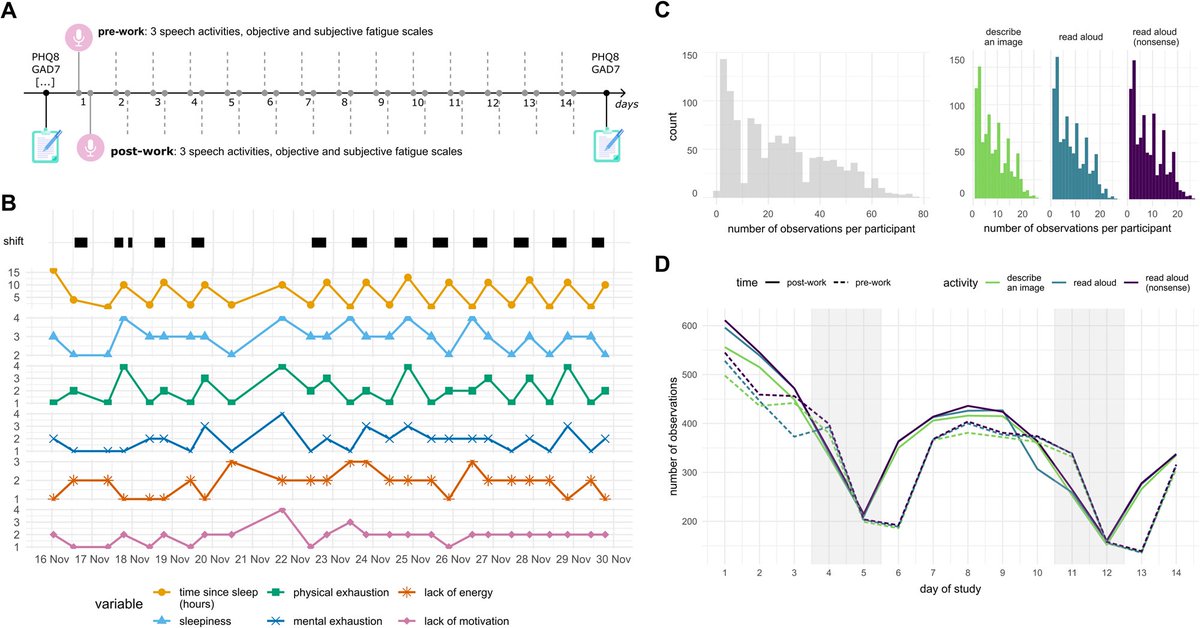
Could your voice help track fatigue? In this study of shift workers, brief speech samples helped predict self-reported sleepiness, suggesting a possible method to monitor fatigue.
@Culture_Ada@ayla_pollmann@nickcummins41@AgnesNorbury
https://t.co/SqrWD41HZA
At Open@Epic, Epic announced Connectors, which let agents built in Agent Factory (which apparently Art, Emmie, and Penny are) invoke external Model Context Protocol servers.
In today’s Daily Ping, I walk through how Connectors work (to the greatest extent of information available today), the MCP plumbing underneath them (far more familiar than the hype suggests), and where Agent Factory fits in the broader Epic developer and marketplace ecosystem.
We see the race among systems of record to keep agents inside their walls manifesting via various patterns. My take is that this is a reasonable, even mundane, architecture. Vendors list their servers in Showroom, Epic’s agents call out via a standards-based protocol, and customers can still connect servers they build or choose themselves. Whether it ends up good or bad depends on details Epic hasn’t shared yet, especially pricing and review.
I also dig into Epic’s new MCP server for open.epic documentation and why every vendor should do the same.
AI scanning notes helped clinicians find 225 missed specialist referrals at 7 Singapore clinics. A possible safety net for patients whose referrals were planned but never ordered.
https://t.co/OUXVKXy8n9
Southeast Asia's #DigitalEconomy is growing rapidly & will have a transformative impact.
Via #Aus4ASEANFutures, 🇦🇺 is supporting @ASEAN to explore pathways for digital talent mobility, recently bringing together policymakers to review ways to expand ASEAN’s digital economy 💻
Training language models in simulation for psychiatric intake
Multi-turn reinforcement learning in simulations can train language models to conduct psychiatric intakes, outperforming identically prompted base models in doctor-evaluated clinical trials.
https://t.co/OOUuivDc0m
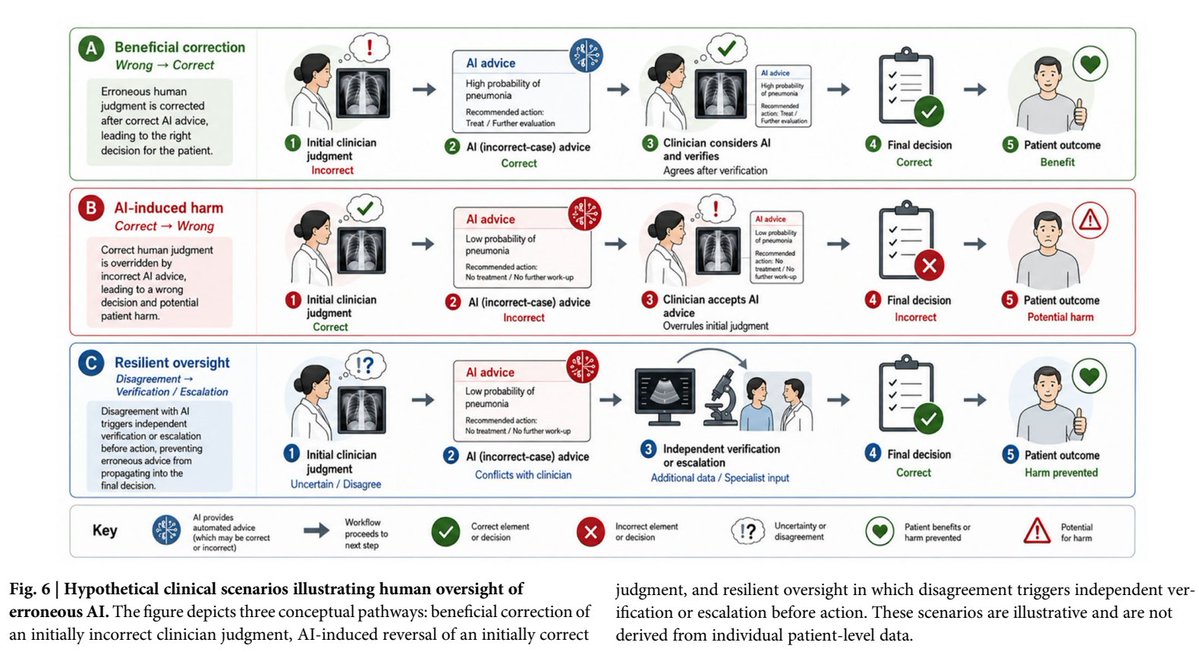
Having a clinician check AI does not guarantee safety. A new review finds that incorrect advice can sway clinical decisions. To protect patients, hospitals might need to test whether staff can spot and stop errors.
https://t.co/xn6KYTa0vq
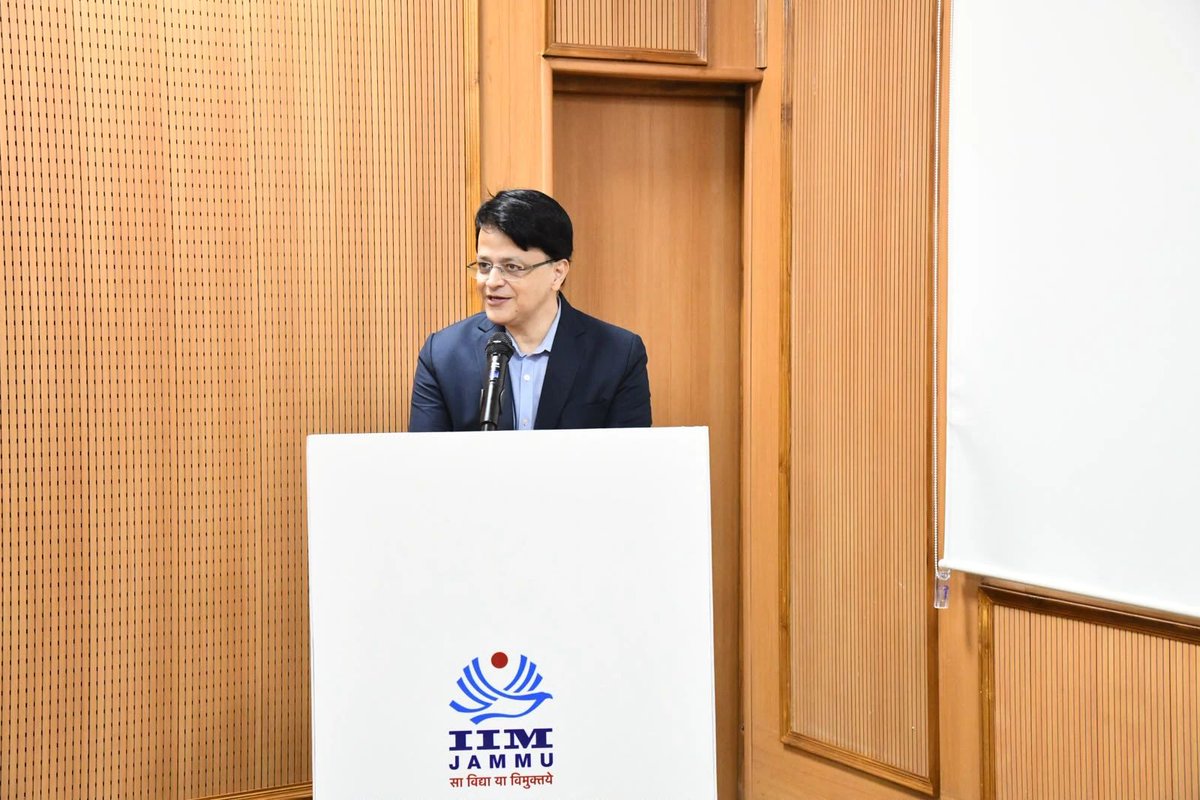
The valedictory session was graced by Prof. Prashant Mishra, Chairperson, Executive Education and Consultancy, IIM Jammu. The programme was led by Programme Directors, Prof. Nitin Upadhyay and Dr. Chinmay Kr. Swain,
"Some sort of AI is the first thing that people reach for."
@DBatesSafety says AI is changing diagnosis faster than anything he's seen, and unlike past efforts to change how doctors diagnose, this one is spreading from the bottom up.
Full episode 👇
How is AI reshaping radiology? A recent STAT article explores how practices are integrating AI to address growing demand, workforce shortages, administrative work, and what it takes to demonstrate clinical benefit.
🔗 https://t.co/5l9MoImebe
#StanfordAIMI#Radiology
AI messages can sound like a doctor but may not be as useful. A UCLA study found text-similarity scores missed quality differences in independently written replies. Human review is still important when evaluating AI.
@KhaliliJosh
https://t.co/WCyk0W3VWK
About 90% of mammograms can be read by AI as normal without a physician overread.
Radiologists focus on the rest, and agreement between readers goes up.
@DBatesSafety on a case where AI made the whole process work better.
Full episode 👇
The KCDH Digest is here! | Volume 3, Issue 2
Five years of KCDH: A milestone worth reflecting on, and a future full of possibilities.
👉 Click here to read the latest issue of the KCDH Digest: https://t.co/zuEtMgLdiN (1/5)
Adoption Strategies and Workarounds in the Evolution of Information Infrastructures Integrating Health and Social Care Providers in Scotland: Multimethod Qualitative Case Study of the Key Information Summary. https://t.co/Dxoj9Bzbvu