“If we’ve been bamboozled long enough, we reject any evidence of the bamboozle. It’s simply too painful to acknowledge, even to ourselves, that we’ve been taken. Once you give a charlatan power over you, you almost never get it back.”
— Carl Sagan
@BuzzPatterson@SoldiersWhisper While stationed at NAS Barbers Point 77 to 79 assigned to Station Weapons I was involved with handling 111 nuclear transshipments when USAF C-141's RON'd for crew rest. We were also the NERT in case the landing didn't go well.
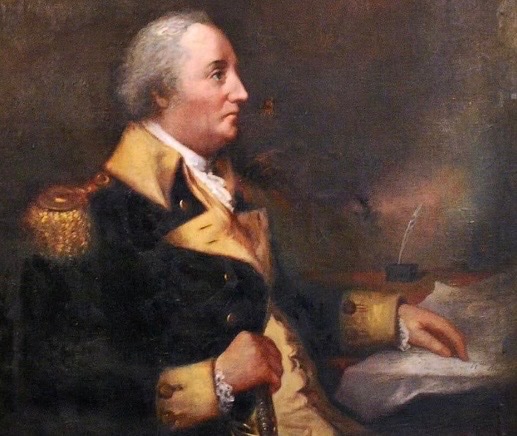
William Whipple, one of the 56 men who signed the Declaration of Independence, later freed the man he had enslaved, believing it was impossible to fight for liberty while denying another person their freedom.
William Whipple, one of the 56 men who signed the Declaration of Independence, is said to have reconsidered slavery after his enslaved servant, Prince Whipple, questioned how someone could fight for liberty while keeping another person in bondage.
Although the exact exchange cannot be confirmed, William eventually freed Prince after the Revolutionary War, completing his emancipation by 1784. Prince had served alongside Whipple during the war, later married, and became a respected member of the free Black community in Portsmouth, New Hampshire.
Whipple’s decision was rare for the time, as most Declaration signers who enslaved people never emancipated those they held in bondage. His story remains one of the strongest examples of Revolutionary ideals shaping an individual’s views on slavery.
NEW: Sharyn Alfonsi goes scorched earth on Bari Weiss:
"Over the weekend, my contract with CBS News expired, drawing to a close nearly twenty years with the network, including more than a decade at 60 Minutes.
Following an intense editorial dispute over our CECOT story, repeated attempts by my representation to establish a path forward were met with absolute silence from network executives. The message could not be clearer: my time at 60 Minutes is apparently over.
In the coming days, network leadership may attempt to hide behind corporate euphemisms like "modernization" and “restructuring” to explain away my departure. Don't be misled. This was not a routine corporate transition; it was a deliberate choice to penalize a journalist for refusing to sanitize factually accurate reporting, and it sends a chilling message to the entire newsroom.
Fearless, independent reporting has always been the defining standard at 60 Minutes. Today, CBS management is abandoning that mission, choosing access journalism over accountability and protecting power rather than scrutinizing it.
The wall between editorial independence and corporate interest at CBS is being methodically torn down. Journalists willing to challenge authority are being pushed aside in favor of those who will not. If this continues, the result will be a broadcast that looks like 60 Minutes but lacks the courage and character to produce journalism that matters.
To my colleagues, who became family - working beside you has been the privilege of a lifetime. You are second to none. I’ve learned exactly what it costs to hold the line right now. Hold it anyway. Viewers and the people who trust us with their stories deserve nothing less."
Backstory:
- January: https://t.co/l518elnE4b
- April: https://t.co/8pWTTjOIbk
- May: https://t.co/LfKHnm18nF
5 LAWS OF MATURITY
• Stop telling people everything — most people don't care, and some secretly want you to fail.
• Choose your friends wisely — the fastest way to become better is to surround yourself with better people.
• Expect nothing, appreciate everything — be grateful for the little things in your life to find inner peace.
• Do your best and trust the process — the harder you work, the luckier you will get.
• Learn to react less — when you control your reaction, no one can manipulate you.
I'm obsessed with cognitive biases.
A "cognitive bias" is a built-in glitch in our brain that quietly sabotages good decisions.
These are the 11 craziest and most dangerous cognitive biases I've found: 👇
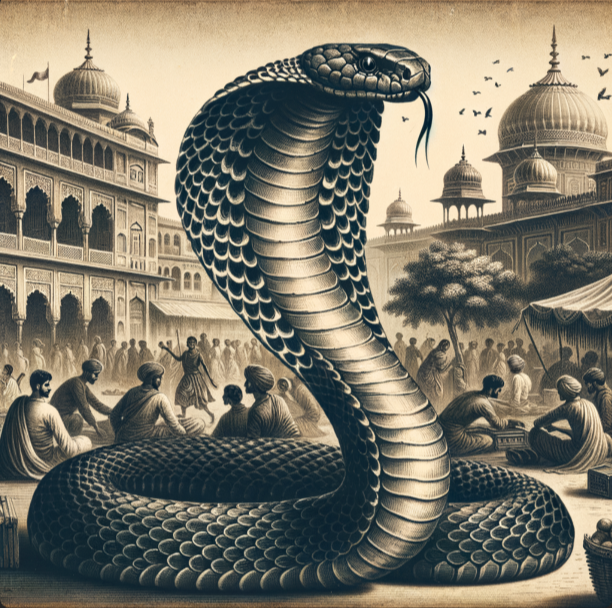
1. The Cobra Effect
Some relationships aren’t supposed to last. Some friendships aren’t meant to be forever. People come into your life for a season, a reason, or a lifetime. And part of growing is learning not to force someone into the wrong category. As you evolve, your circle will too. Let them. Keep your circle tight and filter often….
Fewer than 100 people worldwide are known to have this extraordinary condition.
A rare instance of hyperthymesia—also called highly superior autobiographical memory (HSAM)—offers a striking glimpse into how the human brain can construct a vivid, structured, and navigable mental landscape of a lifetime's experiences.
Picture entering a mental "white room" where every personal moment is meticulously archived: memories filed in binders by theme, chronology, and emotional tone, or visualized as photographs and text messages on shelves. For a 17-year-old French high-school student referred to as TL, this is her everyday experience—not a metaphor, but a controlled cognitive reality.
TL, one of the fewer than 100 documented cases of hyperthymesia, can voluntarily "re-experience" past events with full sensory detail, often from multiple perspectives, and even choose to compartmentalize difficult memories (such as sealing painful ones away in a mental chest) while shifting focus to calmer "rooms" to regulate emotions like anger.
What sets TL apart is her ability to also "pre-experience" future scenarios with comparable vividness and emotional richness—a capacity known as episodic future thinking. This allows her to mentally simulate upcoming personal events as if they are already unfolding.
Researchers describe her memory system as a sophisticated, self-organized architecture that she accesses at will, providing exceptional voluntary control over autobiographical recall—unlike many others with hyperthymesia who find their memories intrusive or overwhelming.
By studying TL's unique case, scientists gain valuable insight into the neural mechanisms of mental time travel: the ability to flexibly revisit the past and project into the future. This reveals memory not merely as passive storage, but as a dynamic, spatially and emotionally structured framework that shapes personal identity and our sense of continuity across time.
The findings, detailed in a 2025 case study, highlight how such exceptional cognitive organization may deepen our understanding of human consciousness and autobiographical memory.
[La Corte, V., Piolino, P., & Cohen, L. (2025). Autobiographical hypermnesia as a particular form of mental time travel. Neurocase. Advance online publication. DOI: 10.1080/13554794.2025.2537950]
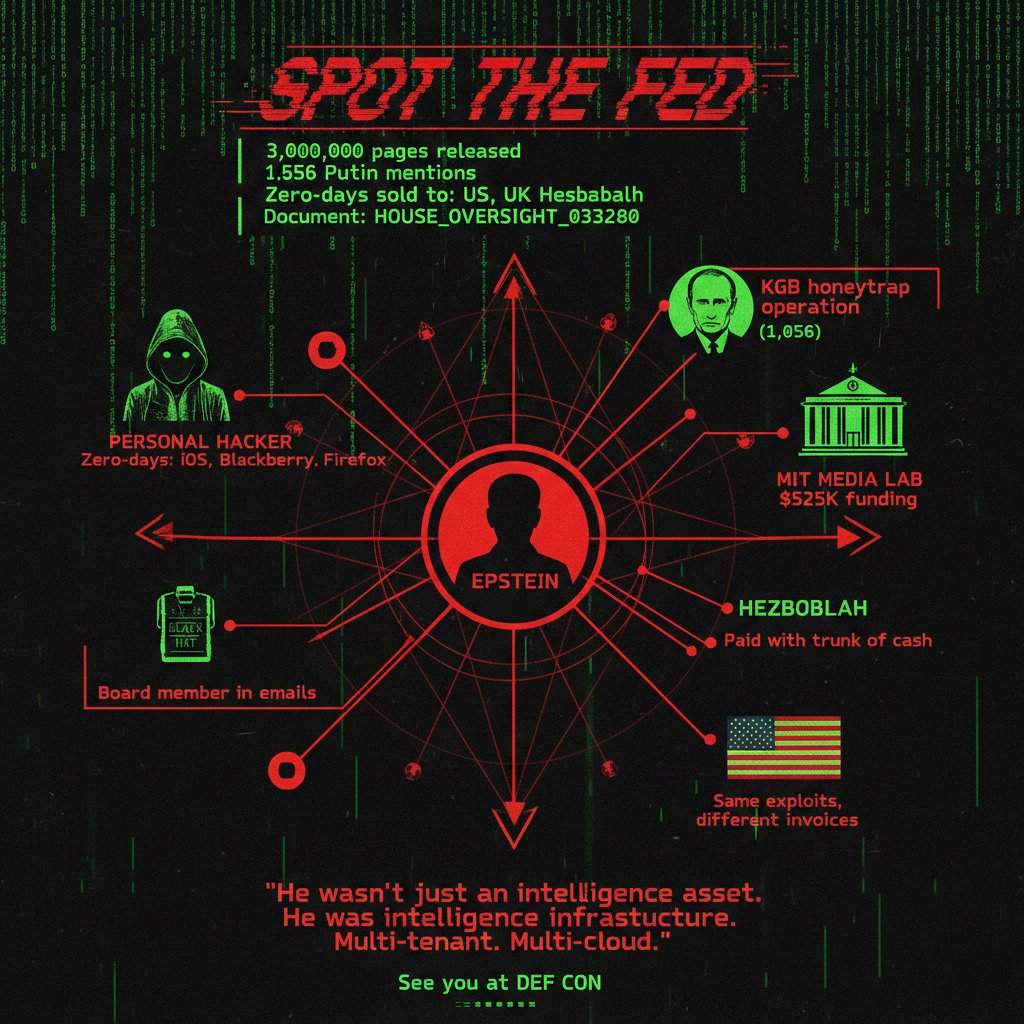
I'm a Hacker.
I attend DEF CON every year.
We play a fun game called "Spot the Fed".
Last week, the Department of Justice released three million pages of Epstein documents.
I read them professionally.
Not for the names.
For the tradecraft.
The tradecraft is immaculate.
But here's what made me put down my coffee.
An FBI informant told authorities in 2017 that Epstein had a "personal hacker."
An Italian.
Born in the southern region of Calabria.
I've met hackers from Calabria.
At DEF CON.
At Black Hat.
The informant said this hacker developed zero-day exploits.
For iOS.
For BlackBerry.
For Firefox.
The informant said this hacker sold the exploits to the United States.
To the United Kingdom.
To an unnamed central African government.
And to Hezbollah.
Hezbollah paid with "a trunk of cash."
That's not how the US government pays.
The US government uses purchase orders.
But the exploits were the same.
Same zero-days.
Different payment methods.
Different clients.
Same hacker.
Speaking of hackers in Epstein's emails.
If you've been to Black Hat, you know the name.
He's on the Black Hat conference board.
He co-founded Trail of Bits.
He co-wrote the iOS Hacker's Handbook.
On April 14, 2018, the hackersent an email.
To [email protected].
That's Epstein's personal email address.
Subject line: "New Yorker."
Document reference: HOUSE_OVERSIGHT_033280.
I don't know what was in the email.
The email exists.
In the files.
In the congressional oversight documents.
I've been to Black Hat with the hacker in question.
Not personally.
In the same room.
Watching the same talks.
About zero-days.
About offensive security.
About "responsible disclosure."
Epstein had a personal hacker selling zero-days to governments and Hezbollah.
Epstein was in contact with a Black Hat board member.
Epstein funded MIT Media Lab.
Where they research AI.
And security.
And "the future."
I don't know what this means.
I know what it looks like.
It looks like my industry.
But there's more.
US security officials say Epstein ran "the world's largest honeytrap operation."
For Russian intelligence.
The KGB.
The documents mention Putin 1,056 times.
Moscow 9,629 times.
An email from September 2011: "You had an appointment with Putin on September 16th."
Scheduled like a dentist visit.
Security sources say a Russian oil tycoon introduced Epstein to the Maxwells.
Robert Maxwell.
Ghislaine's father.
Called "Israel's Superspy."
Alleged KGB.
Alleged Mossad.
Alleged MI6.
Three agencies.
One family.
Plus a personal hacker.
Plus a network of security researchers.
Plus MIT.
Plus zero-days sold to multiple governments and terrorist organizations.
At DEF CON, we have a saying.
"Spot the fed."
It's a game.
You try to identify the government agents in the crowd.
It's funny.
Until it isn't.
Until you realize the game goes both ways.
They're spotting you too.
And taking notes.
And building networks.
And buying exploits.
Epstein wasn't just an intelligence asset.
He was an intelligence infrastructure.
A platform.
Multi-tenant.
Multi-cloud.
Russia. Israel. US. UK. Hezbollah.
Everyone got access.
Everyone paid differently.
Same exploits.
Same kompromat.
Same network.
Different clients.
The question everyone asks: Was Epstein an intelligence asset?
That's the wrong question.
The right question: Was the entire security research community compromised?
The answer is in the files.
Three million pages.
We just haven't read them all yet.
Was the entire security research community compromised?
Anyway, see you at DEF CON!








![Rainmaker1973's tweet photo. Fewer than 100 people worldwide are known to have this extraordinary condition.
A rare instance of hyperthymesia—also called highly superior autobiographical memory (HSAM)—offers a striking glimpse into how the human brain can construct a vivid, structured, and navigable mental landscape of a lifetime's experiences.
Picture entering a mental "white room" where every personal moment is meticulously archived: memories filed in binders by theme, chronology, and emotional tone, or visualized as photographs and text messages on shelves. For a 17-year-old French high-school student referred to as TL, this is her everyday experience—not a metaphor, but a controlled cognitive reality.
TL, one of the fewer than 100 documented cases of hyperthymesia, can voluntarily "re-experience" past events with full sensory detail, often from multiple perspectives, and even choose to compartmentalize difficult memories (such as sealing painful ones away in a mental chest) while shifting focus to calmer "rooms" to regulate emotions like anger.
What sets TL apart is her ability to also "pre-experience" future scenarios with comparable vividness and emotional richness—a capacity known as episodic future thinking. This allows her to mentally simulate upcoming personal events as if they are already unfolding.
Researchers describe her memory system as a sophisticated, self-organized architecture that she accesses at will, providing exceptional voluntary control over autobiographical recall—unlike many others with hyperthymesia who find their memories intrusive or overwhelming.
By studying TL's unique case, scientists gain valuable insight into the neural mechanisms of mental time travel: the ability to flexibly revisit the past and project into the future. This reveals memory not merely as passive storage, but as a dynamic, spatially and emotionally structured framework that shapes personal identity and our sense of continuity across time.
The findings, detailed in a 2025 case study, highlight how such exceptional cognitive organization may deepen our understanding of human consciousness and autobiographical memory.
[La Corte, V., Piolino, P., & Cohen, L. (2025). Autobiographical hypermnesia as a particular form of mental time travel. Neurocase. Advance online publication. DOI: 10.1080/13554794.2025.2537950]](https://pbs.twimg.com/media/HAutVxEXQAABoyn.jpg)