@iamaniku@TheStalwart IFIs are the closest thing you can have in a democracy and can help solve collective action problems. A fully independent fiscal policy setting body is basically an attempt to depoliticize politics. Not just unrealistic but also undesirable.
In this video, @phkrause explores the evolving role of finance ministries in modern economies. He discusses the key drivers and implications of the shift of finance ministries in shaping economic policy.
Video: https://t.co/pwCASyjVLF
Of course, we weren't foolish enough to try such a thing on our own, so we handed the task over to the stellar cast of experts. All the new and interesting things in PFM I'm thinking about today, I picked up in one of their chapters.
!!New book alert!!
Contemporary Issues and Challenges in Public Financial Management: Responding to Global Crises
This is Richard Allen's and my attempt to capture how PFM has evolved, especially how global crises since 2008 changed PFM (or not).
https://t.co/ofVcWYzIWw
On 5th Feb, @phkrause, an international expert in public finance and public administration will explore the evolving role of finance ministries in modern economies.
Venue: XKDR Forum
Please register to attend. - https://t.co/dbSLXyym90
@MartinBraml@jsuedekum@Arnd_Diringer Gut, die Antwort im Haushalt müsste natürlich der Rechtfertigung entsprechen, aber das darf man ja spätestens seit 2023 hoffentlich voraussetzen.
@MartinBraml@jsuedekum@Arnd_Diringer Aber so ein Krieg ist doch dynamisch und der von 2022 eben nicht der von 2025. Wenn sich die Lage verschärft und der BT dann e.g. die UK-Hilfe verdoppelt, dann sagt Art 109 doch nicht, sorry, das hättet ihr aber vor drei Jahren wissen müssen.
@MartinBraml@jsuedekum@Arnd_Diringer Aha, wenn die Antwort auf einen Kriegsverlauf im dritten Jahr eine erhebliche Belastung des Haushalts bedeutet, dann gilt das leider nicht? Notlagen sind nur frische Kriege? Und dem BT darf man das Urteil darüber nicht zutrauen? Ob das BVerfG das mal so gemeint hat…
Man mag die Idee ja theoretisch gut finden, aber DFID nur ein Bsp dagegen. Ich kenne keinen positiven Fall einer Fusion. Wer sich um Effizienz sorgt, sollte eher die humanitäre Hilfe vom AA zum BMZ geben…
Ob eine Zusammenführung von AA und BMZ zu mehr Effektivität führt oder zu weniger Wirkungskraft, hängt davon ab, wie sie in Angriff genommen wird. Die Erfahrung mit der Integration von DFID in UK sollte da Mahnung sein.
@scepticalranil@dosima_org This is surely right. And similar to Germany, there isn't much to gain in the external structure, the embassies are integrated anyway. To then make a mess of the HQ structure for very dubious gain is just not a great idea.
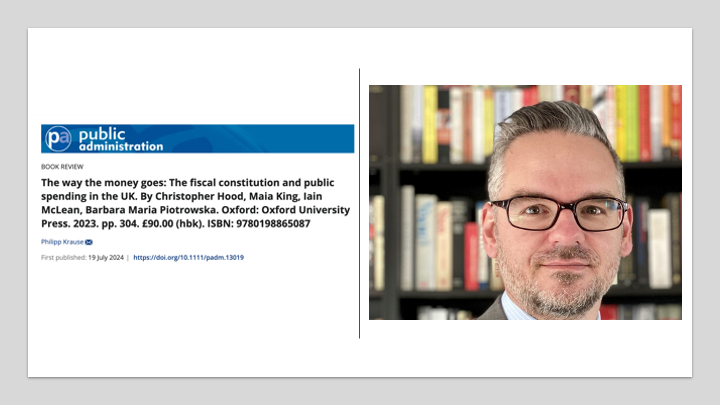
Another brand new book review out @journal_pa!
@phkrause reviews "The way the money goes: The fiscal constitution and public spending in the UK" by Christopher Hood, Maia King, Iain McLean & Barbara Maria Piotrowska.
Check out his excellent review here: https://t.co/oTpGSNrC9P
The article rather underscores that: mission-something government = modern government setting priorities = no automatic cure for horizontal coordination = nothing new except for the weirdly Christian label. 2/2
There's an great deal of nuance in @QQMendizabal's analysis that merits careful consideration. Especially now as coalition government is about to change a lot of well-established assumption about fiscal policymaking in South Africa.
📝 "Would a UK think tank “success” work in South Africa?" by @QQMendizabal analyses Krause's study of fiscal policy #thinktanks.
Think tanks are key to improving fiscal policy debate. Would that approach work in South Africa?
Read the article: https://t.co/uvyyOp8Ck1