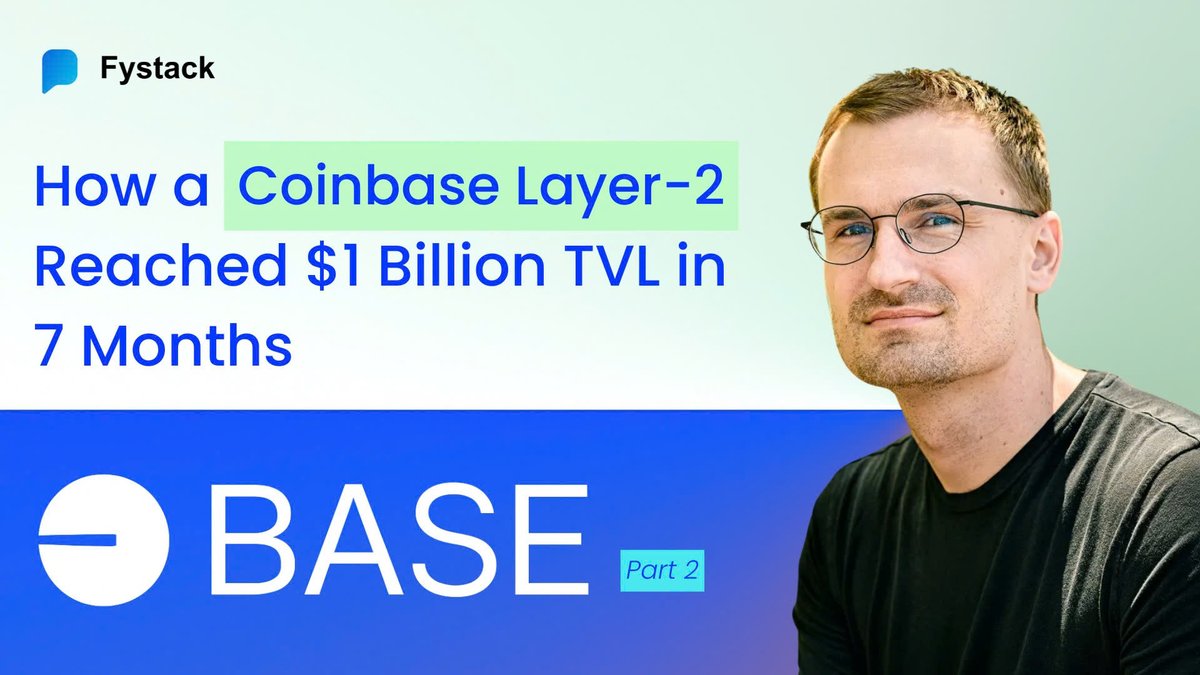
Huge thanks to everyone who read and shared part 1 ❤️Just published part 2 of my Base deep dive - how they reached $1B TVL in 7 months.
Everyone saw Base’s hype, but few actually studied how they kept the momentum.
Turns out, it wasn’t luck or brand power, it was smart sequencing:
1️⃣ Distribution first (Onchain Summer → massive top-of-funnel)
2️⃣ Builder incentives next (grants, ecosystem push)
3️⃣ Then user retention through consistent onchain experiences.
This is how a Layer 2 turned brand awareness into real network effect.
https://t.co/bzOcZMcMTl
Hey @X algorithm 👋
Looking to connect with people interested in:
→ Web3 & Crypto
→ Fintech Rails
→ Stablecoin Ecosystem
→ APAC Market Trends
→ Tokenomics
→ On-chain Data Research
→ Building in Public
→ DeFi Solutions
I'm documenting my journey, mapping out global fintech infrastructures, and breaking down complex Web3 concepts into simple, actionable insights.
Say hi. Let's learn, build, and grow together!!
@itsnodesigner@X What’s the one tool or process you’d not do without to keep consistency growing?Consistency does trump talent sometimes, but I wonder how much tooling and feedback loops help sustain that over time.
@KalLee_SI Hey Kal! I'm all about building in public too. Have you found any specific platforms or tools that really enhance the collaboration among builders? Would love to hear what’s working for you!
@Camilau5lo Glad you’re back! Ghost bans are the worst. It’s like, how do we make sure our voices are heard in the space? I wonder if there are better ways to engage with the community to prevent that from happening again. What do you think?
The APAC stablecoin landscape is moving faster than ever. ⚡
If you are building or researching in Web3, understanding the infrastructure layer driving regional payment adoption is non-negotiable.
Here is the ultimate map of the Top 20 Infrastructure Players in APAC across 6 core pillars:
1️⃣ Issuers: @StraitsX , @circle , @Ripple , @Paxos
2️⃣ Custody: @Cobo_Global , @FireblocksHQ , @fystack
3️⃣ Merchants: @TripleaPayments , @FOMOPayOfficial , @AlchemyPay
4️⃣ B2B/Treasury: Saber, Due, @conduitxyz , @getTransFi
5️⃣ Card & Consumer: DST, @RedotPay
6️⃣ Super-App & Enterprise: @GrabSG, @OKX, @xendit_co , META C MP
💡 Bookmark this map for your next market research report!
Which infra layer do you think will scale fastest in APAC this year? Let's discuss below 👇
@harshil_jani28 Hi Hashil! I'm Phoebe from Fystack. Love what you're building with CoinsBench! I couldn't DM you, so I'm reaching out here instead. I'd love to explore contributing to CoinsBench if you're accepting guest writers. 😊
Fystack has partnered with @MSTBlockchain to bring production-ready wallet infrastructure, MPC custody, and treasury controls to enterprises and fintechs building on MST's infrastructure-driven Layer-1 ecosystem.
As an infrastructure-driven Layer-1 ecosystem, MST Blockchain delivers over 4,000 TPS with average transaction fees of just 0.00004 MSTC, providing the foundation for real-world blockchain applications to scale efficiently. Fystack provides the secure asset infrastructure needed to operate and scale with confidence.
Together, MST Blockchain and Fystack are helping enterprises and fintechs operate digital assets with institutional-grade security while maintaining full ownership and control.
#Fystack #MSTBlockchain
Excited to share that we have joined the @Circle Alliance Program, a global
community of teams focused on bringing the world on-chain, powered by USDC!
Running USDT flows on #TRON?
A single transfer can cost ~12–20 TRX without energy.
At scale, that turns into real overhead.
• Constant TRX top-ups
• Failed transactions
• Inefficient operations
Today, Fystack fixes this at the infrastructure layer.
We’ve integrated TronZap Energy Renting (TRON Builders League) directly into Gas Station.
→ Reduce costs by up to 60%
→ No need to hold excess TRX
→ No more "Out of Energy" failures
→ Fully automated gas management
Energy is rented on-demand - exactly when transactions happen.
Setup guide: https://t.co/P6cvJNWGvp
Bitcoin (BTC) is now fully supported on Fystack!
#BTC has been one of the most requested chains from teams building on Fystack, so we've integrated it directly into our infrastructure.
You can now send, receive, and monitor BTC alongside your stablecoins - same policies, same approval steps. The auto-sweeping feature is also ready to go for better hot-to-cold liquidity management.
No separate tooling. No different operational process.
→ Try it here: https://t.co/kiztlaDwYe
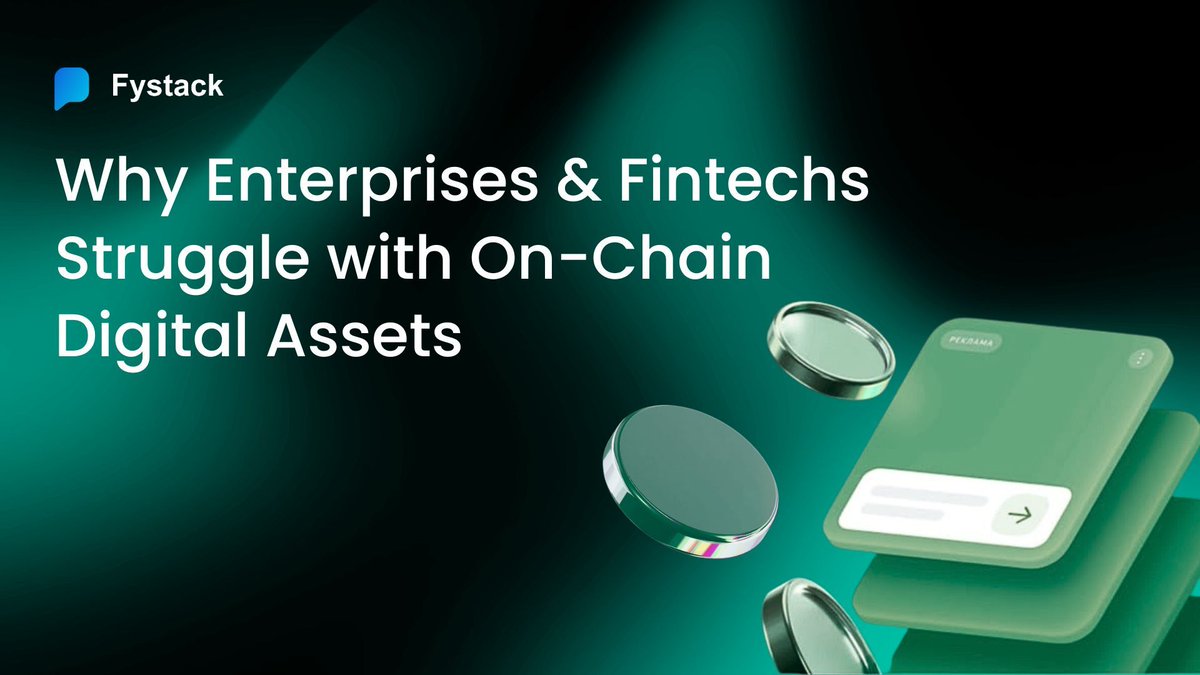
By 2026, enterprise blockchain adoption is no longer constrained by access to technology. Most organizations can already build PoCs, experiment in regulated sandboxes, and move value on-chain at a small scale.
The real challenge begins at production.
When scaling from pilot to live operations, both enterprises and fintech startups tend to hit four barriers:
- Regulatory uncertainty across jurisdictions
- An expertise gap between blockchain systems and traditional finance
- High custody risk and cost
- Blockchain fatigue from fragmented tooling
This is where most on-chain initiatives stall before reaching production scale.
Read the full analysis:
https://t.co/0pxm3fyb9m
Fystack is now live on Lisk!
Emerging Market apps run high transaction volume from day one - payments, payouts, payroll, settlements. At scale, execution becomes the real risk.
Fystack brings a governance-driven transaction layer to operate securely on Lisk. Integration supported locally by @LiskSEA & @LiskVietnam, with backing from @LiskHQ.
#Stablecoin rails operate across regions with very different regulatory requirements.
No finance team has the time - or the headcount - to manually double-check every transaction against every local rule. And scaling a separate legal or accounting team for each market is not realistic.
So the real question becomes:
🔹 How do enterprises move fast on-chain without breaking existing control and compliance frameworks?
For enterprises, moving into stablecoins is often seen as a tooling change:
“Just use a Web3 wallet.”
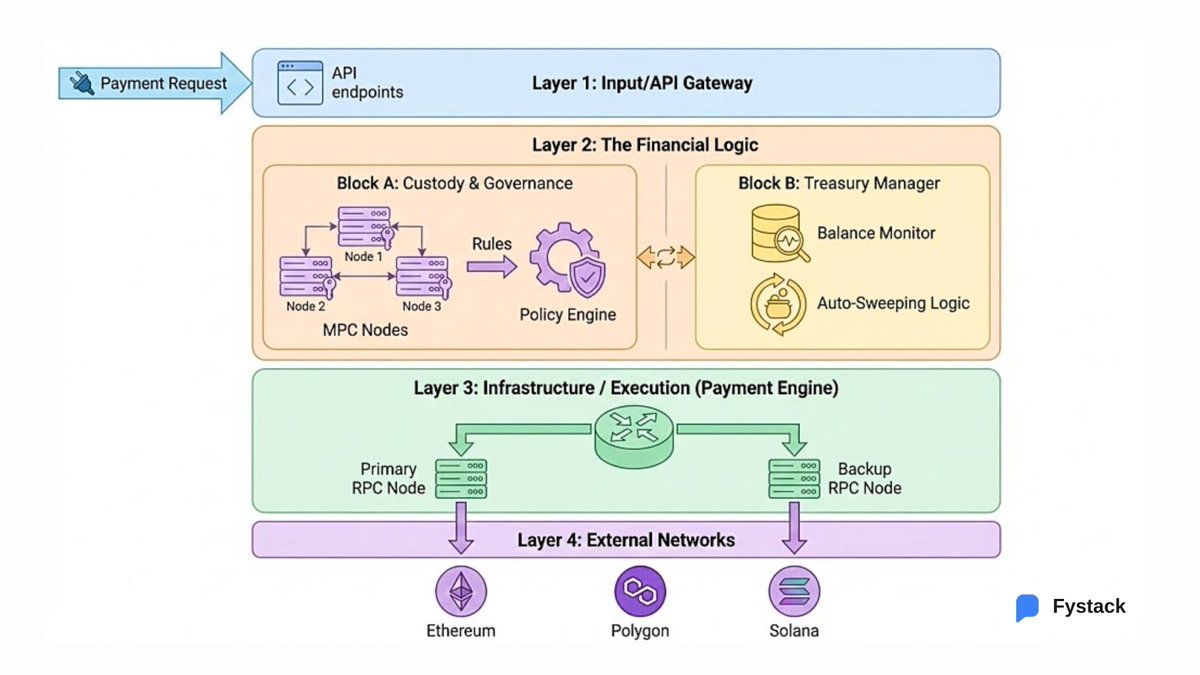
In practice, a wallet is only the surface layer of a much deeper infrastructure stack.
When @BlackRock & @PayPal entered the market, they didn’t use consumer wallets like @MetaMask. They knew a critical principle:
Infrastructure > The Asset itself.
Here is why 👇