Announcing the Ecosystem Security Team at The PHP Foundation! Thanks to a grant from @AlphaOmegaOSS at @linuxfoundation this effort will improve security across the entire PHP ecosystem. The amazing Volker Dusch will be filling this role.✨ https://t.co/RlzS4isbiX #php#security
⚠️ Critical Linux Kernel Flaw ‘ssh-keysign-pwn’ Exposes SSH Keys and Shadow Passwords
Source: https://t.co/wzp6CCp2lT
A newly disclosed Linux kernel vulnerability is raising serious concerns across the security community, as it allows attackers to access highly sensitive data, including SSH private keys and password hashes, on affected systems.
Tracked as CVE-2026-46333, the flaw has been nicknamed “ssh-keysign-pwn” and impacts a wide range of Linux distributions. The GitHub PoC ssh-keysign-pwn demonstrates exactly how to weaponize this race condition on pre‑31e62c2ebbfd kernels.
#cybersecuritynews #Linux
🚨 NGINX bug (CVE-2026-42945) now under active exploitation.
Critical heap overflow in rewrite module. Attackers can crash workers with one request (possible RCE).
Patch now if using NGINX ≤1.30.0. Check rewrite/if/set rules.
Full details: https://t.co/b0fOIW3dze
LINUX FILE SYSTEM HIERARCHY (FHS – /, /home, /etc, /var, /usr)
The Linux File System Hierarchy Standard (FHS) defines how directories are structured
→ ensures consistency across Linux distributions
→ makes system navigation predictable for users and developers
ROOT DIRECTORY (/)
/
→ top-level directory of the entire file system
→ everything starts here
Contains
→ all other directories and files
→ mounted devices and partitions
HOME DIRECTORY (/home)
/home
→ stores user personal data
Structure
→ /home/user1
→ /home/user2
Contains
→ documents
→ downloads
→ configurations (user-level)
Purpose
→ separates user data from system files
→ safe for backups and restores
CONFIGURATION DIRECTORY (/etc)
/etc
→ system-wide configuration files
Contains
→ system settings
→ service configurations
→ startup scripts
Examples
→ /etc/passwd → user account info
→ /etc/hosts → hostname mappings
→ /etc/nginx → server configs
Purpose
→ central place for configuration
→ easy system management
VARIABLE DATA DIRECTORY (/var)
/var
→ variable and frequently changing data
Contains
→ logs
→ caches
→ spool files
→ databases
Examples
→ /var/log → system logs
→ /var/cache → cached data
→ /var/lib → application state
Purpose
→ stores dynamic system data
→ grows over time
USER PROGRAMS DIRECTORY (/usr)
/usr
→ user utilities and applications
Contains
→ binaries
→ libraries
→ documentation
Structure
→ /usr/bin → user commands
→ /usr/lib → libraries
→ /usr/share → shared resources
Purpose
→ read-only user programs
→ shared across system
HOW THEY WORK TOGETHER
System Boot
→ kernel mounts root (/)
System Services
→ read configs from /etc
User Logs In
→ accesses files in /home
Applications Run
→ binaries from /usr
System Activity
→ logs stored in /var
KEY DESIGN PRINCIPLES
Separation of Concerns
→ system files vs user data
Consistency
→ same structure across distributions
Scalability
→ supports small systems to enterprise servers
Security
→ controlled access to critical directories
SIMPLE FLOW EXAMPLE
User Command
→ executed from /usr/bin
Configuration
→ read from /etc
User Data
→ accessed in /home
Logs
→ written to /var/log
SUMMARY
/
→ root of everything
/home
→ user data
/etc
→ configuration
/var
→ dynamic data
/usr
→ applications and libraries
Together
→ form a structured, predictable, and scalable Linux file system
For a complete deep dive into Linux, system internals, and real-world engineering → get the Linux Mastery Ebook:
https://t.co/mCaIRlvD0A
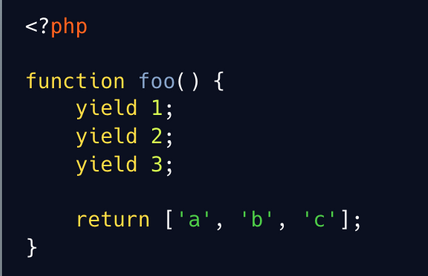
Passing array by value, and updating its elements.
Nothing new, it is the readonly and array_fill() syndrom for arrays. Better know about it.
#phptip#phptrick
https://t.co/7MSG3Go4j5
NEW POST
Thoughtworks internal IT use a workflow for agentic programming called Structured-Prompt-Driven Development (SPDD). @WeiZhang595190 and Jessie Jie Xia describe how this works with a simple example plus details in a github project.
https://t.co/6cHnSPWr6L
📘 "Domain-Driven Design in PHP" just got a 2nd edition — now with PHP 8.5 examples.
Entities, Value Objects, Aggregates, CQRS, Hexagonal Architecture, Bounded Contexts… all with real code.
By @carlosbuenosvinos @theUniC@keyvanakbary
🔗 https://t.co/J4PrxpAJpb
#DDD#PHP
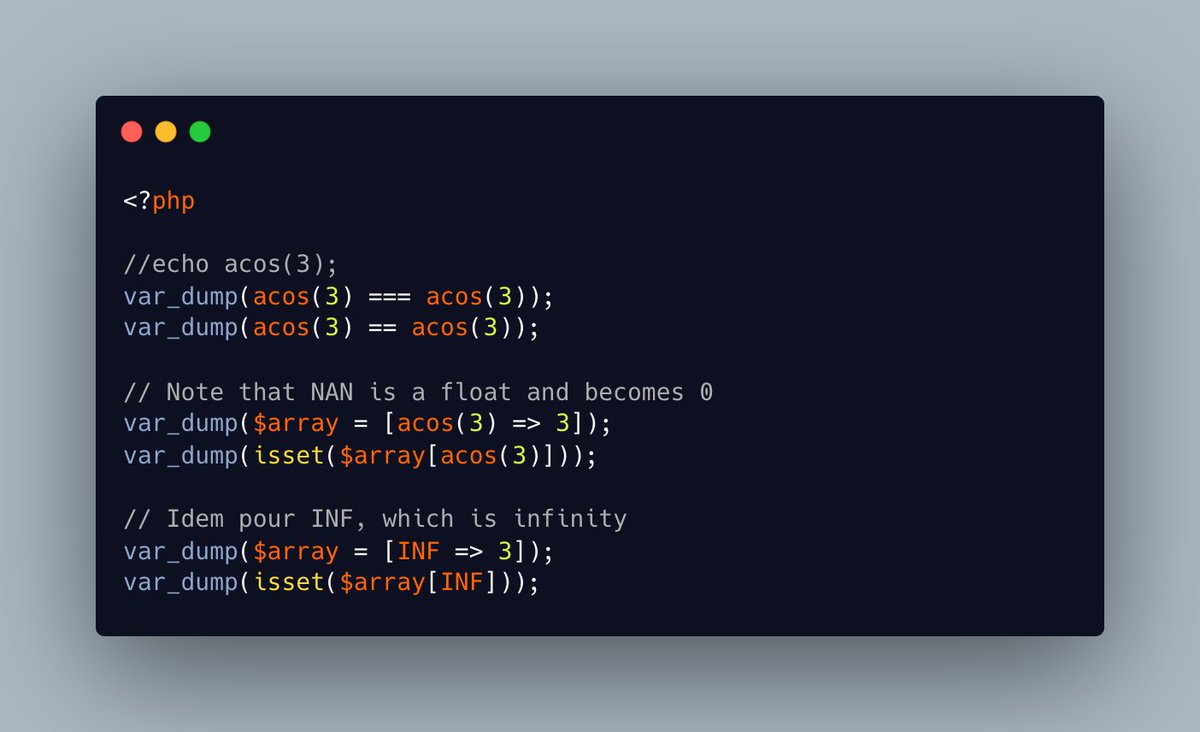
#PHP's NAN is 0 as an integer, 'NAN' as a string and not comparable with itself.
Also, there are now warning when using them, so no one can get hurt by this.
#phptip#phptrick
https://t.co/6BCeIdsThp
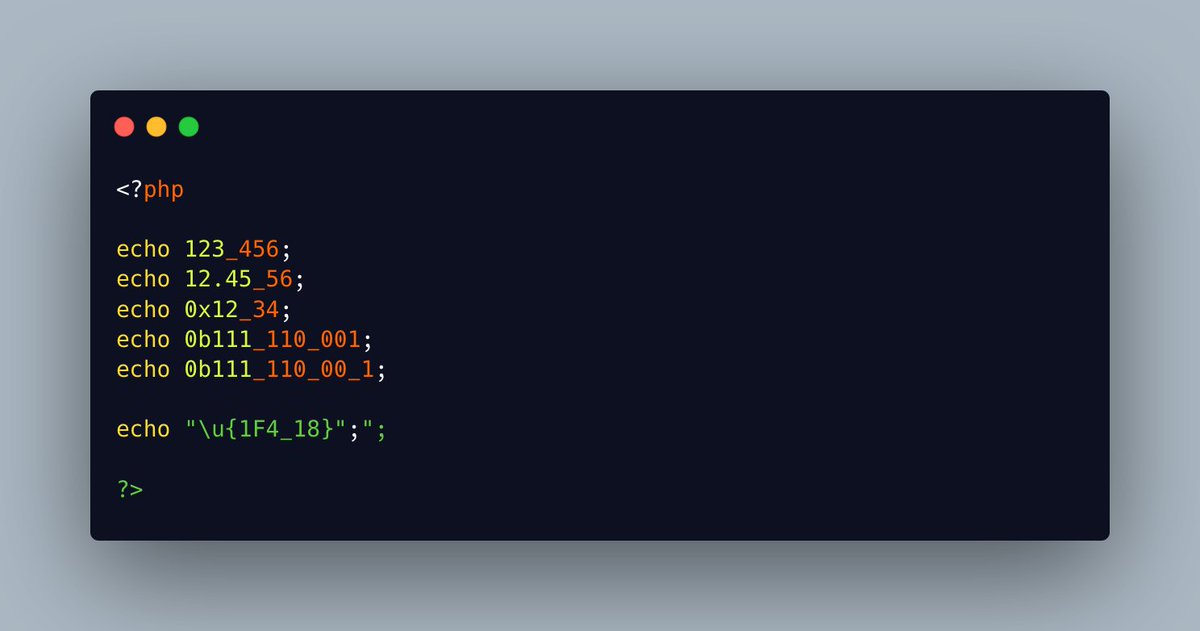
#PHP numeric separator works well on integer, floats and also hexadecimals, octals and ... binary. And most useful in the latter, right?
0b1111_00_111_101_111
#phptip#phptrick
https://t.co/s4RlSV4fMD
PHP 8.5 Released! 🎉
In this new release we have:
– URI Extension
– Pipe Operator
– Clone With
– A new #[\NoDiscard] attribute
– Closures and first-class callables in constant expressions
– Persistent cURL share handles
Read all about it: https://t.co/RNfkvZSyHY
If you’re serious about becoming great in tech, here’s the hard truth:
learn C or C++ not because they’re trendy, but because they build your brain.
once you truly understand them:
> every new language feels like an easy dialect.
> you stop memorizing syntax and start understanding systems.
> you finally see what’s happening behind every line of code.
pair that with solid CS fundamentals + DSA, and you’re no longer just a coder you’re an engineer.












![ThePHPF's tweet photo. PHP 8.5 Released! 🎉
In this new release we have:
– URI Extension
– Pipe Operator
– Clone With
– A new #[\NoDiscard] attribute
– Closures and first-class callables in constant expressions
– Persistent cURL share handles
Read all about it: https://t.co/RNfkvZSyHY https://t.co/En81Wb2ZFc](https://pbs.twimg.com/media/G6OIpwEXkAAqlKC.jpg)


