Medical Oncologist (Breast/ Gyn). Book lover. Brazilian National Cancer Institute/ Huna Artificial Intelligence Powered Solutions/ Oncoclínicas. T/ RT my own.
@JovemPanNews De que espécie são os de Varginha? Aqui no Brasil, eu acho que eles ficam disfarçados de “Anão de Jardim” durante o dia. Pode ver em qualquer jardim que tenha aqueles anões como eles estão lá num dia em um lugar e no dia seguinte em outro. O que vão fazer à noite?
In mBC, not all imaging changes mean your therapy has stopped working and switching too early is a real risk.
1/ RECIST 1.1 sets a clear bar for progression: ≥20% increase in the sum of target lesion diameters (with ≥5mm absolute increase), unequivocal progression of non-target lesions, or new lesions. Not every change on imaging meets this threshold.
2/ Three scenarios commonly and incorrectly flagged as progression: new asymptomatic sclerotic bone lesions, small mm asymptomatic changes in known lesions, and increased SUV on PET without corresponding size change. None of these, in isolation, trigger a therapy switch for me.
3/ Sclerotic bone lesions deserve particular attention. When effective therapy kills tumor cells in bone, the body lays down new bone matrix appearing dense and white on CT. This is a healing response, not new disease.
4/ The consequences of switching too early are real: loss of disease control from a working regimen, premature exhaustion of sequencing options.
5/ My approach: I integrate clinical symptoms, tumor markers, and serial scans together before making any decision to change therapy.
6/ Bottom line: confirm true progression before changing course. When in doubt, a short interval rescan is almost always preferable to an unnecessary switch.
#BreastCancer #MedOnc
AI writing has so many tells. Once you see it, it's fairly easy to identify (and exhausting to see everywhere).
If you don't know how to spot it, please read: https://t.co/FU3hIq9Opn
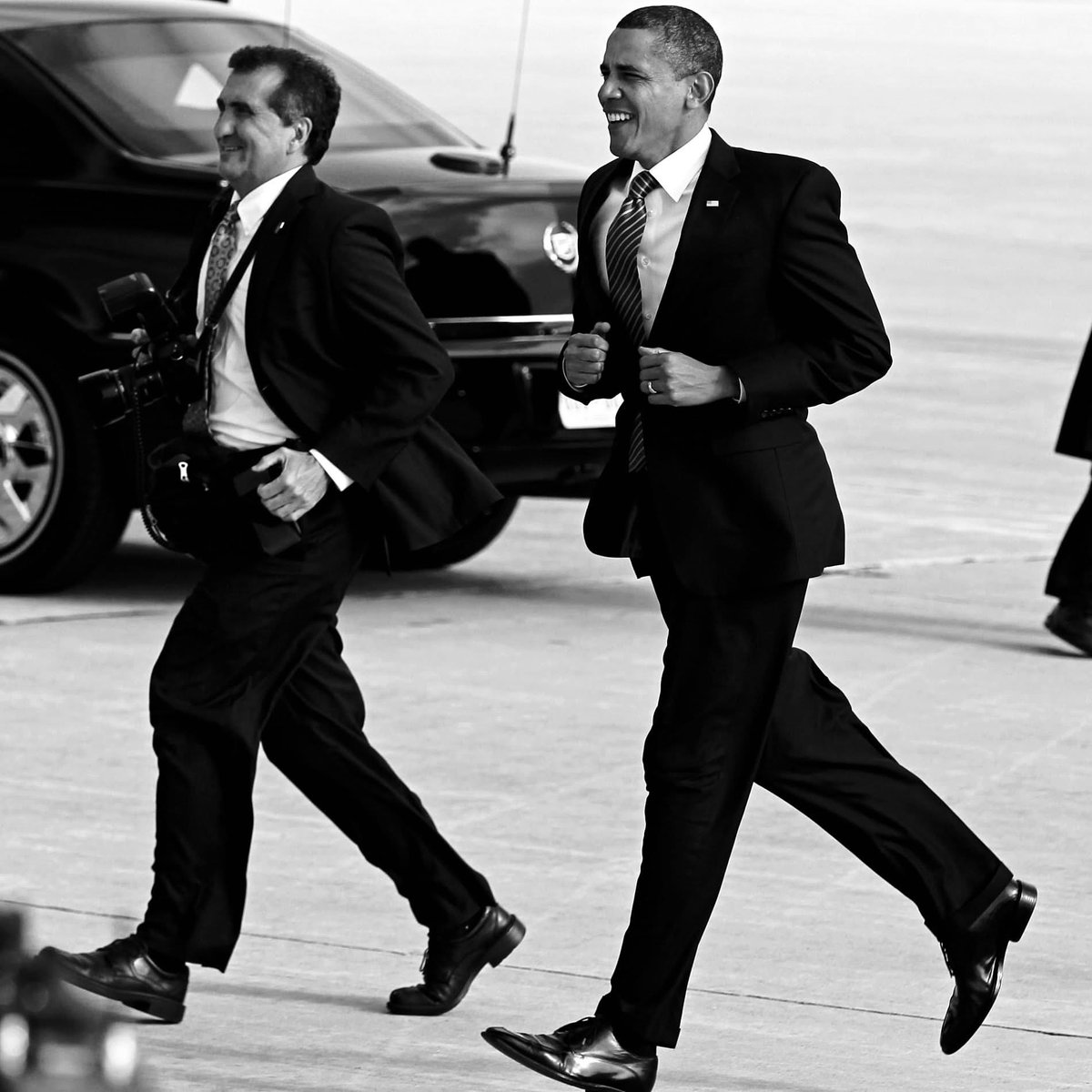
The history books quietly bypassed is that Barack Obama, during the most pressure-saturated nights of his presidency, would retreat alone to the Treaty Room on the second floor of the White House residence — not to strategize, not to take calls, but to handwrite personal letters to ten ordinary American citizens every single night, a practice he maintained with almost monastic devotion across all eight years, selecting the letters himself from the 40,000 that arrived daily at the White House, and his longtime correspondence director Fiona Reese confirmed that Obama would often weep privately while reading certain letters, folding them carefully before writing responses so personally detailed and emotionally present that recipients frequently described the experience of receiving them as the most significant moment of their lives, with one Ohio steelworker writing back to say that Obama's letter had physically stopped him from making a decision that would have permanently altered his family's future. What makes this practice almost unbearably moving is the detail that surfaced later — Obama never used a computer for these letters, always a black felt-tip pen, always legal yellow paper first as a draft, always rewritten onto White House stationery by hand a second time, because he believed, as he told historian Doris Kearns Goodwin in a rare private conversation later recounted in her 2018 work, that the physical act of pressing pen to paper forced a quality of attention that typing simply could not replicate, a philosophy rooted in his years as a constitutional law professor at the University of Chicago from 1992 to 2004 where he developed the conviction that democracy only functions when its leaders remain genuinely, uncomfortably close to the specific gravity of individual human suffering rather than processing it from behind the insulating distance of institutions and screens."
Commit to a craft. Do it with care and integrity. Support people who keep the main things the main things and do them with care and integrity.
Be wary of people who prioritize entertainment value over real value.
Yesterday marked the end of the most important Clinical Oncology meeting (ASCO 2025). It’s impressive to see how knowledge of cancer’s molecular biology is being transformed into treatments that are changing the reality for cancer patients. At the same time, this progress presents a huge challenge for societies: ensuring that these advances reach those who need them.Having "extra-oncology" knowledge is essential to think critically and put everything we see into perspective.
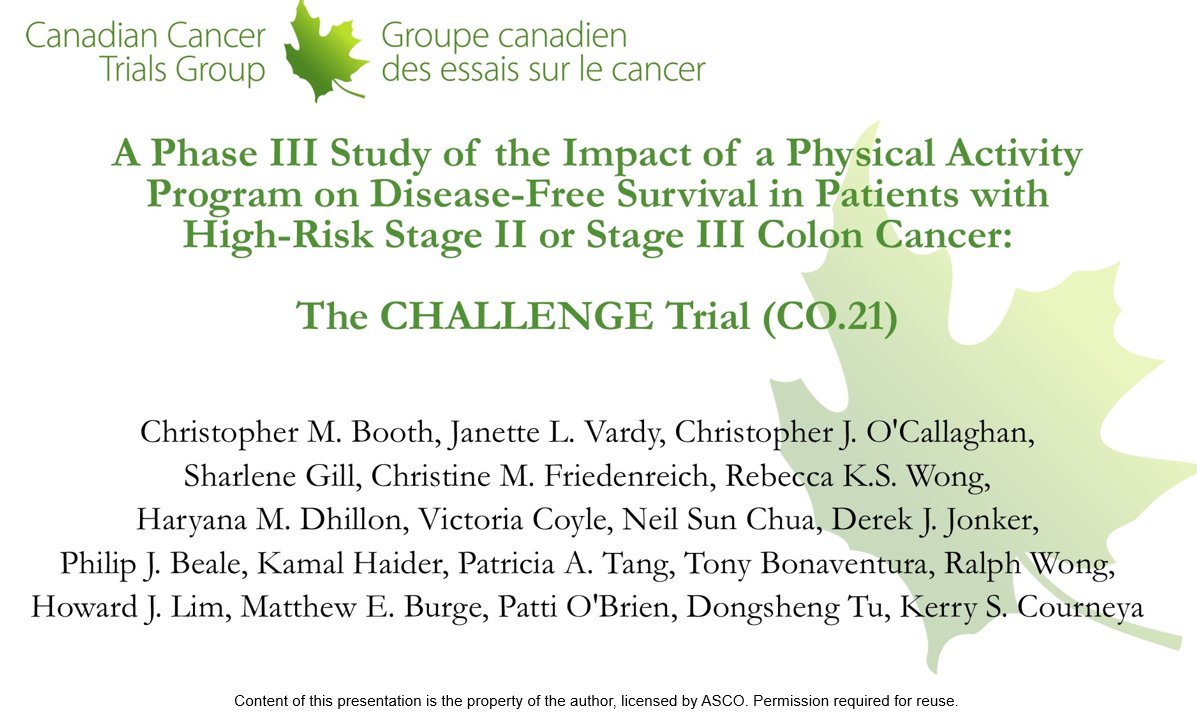
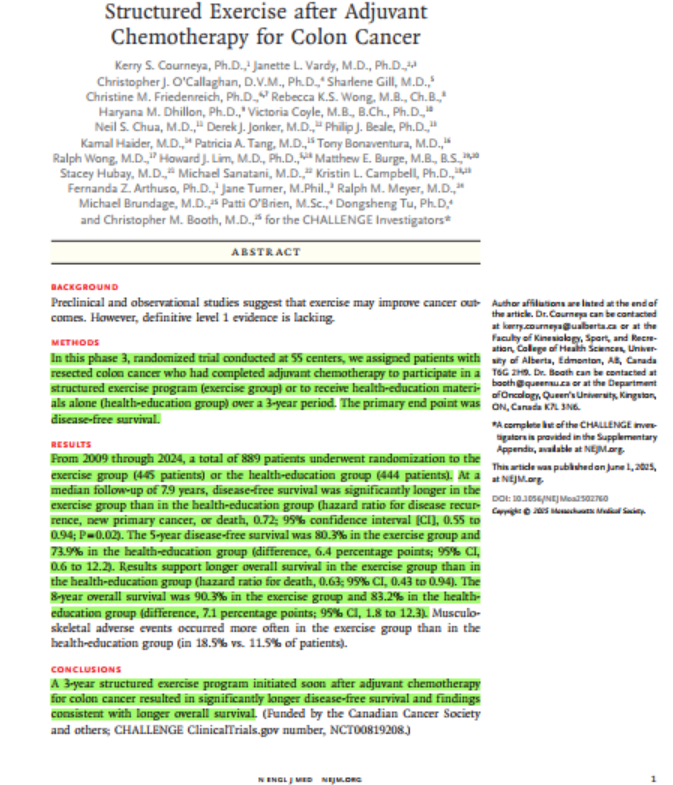
This is a new standard of care! The first randomized clinical trial to evaluate the impact of physical exercise on survival in cancer patients.
Exercise Group x Health-education Group:
🔴 5-year DFS: 80,3% x 73,9%
🟢 8-year OS: 90,3% x 83,2%
🔵 Every 16 people➡️ exercise prevented 1 recurrence/new cancer
🟡 Every 14 people➡️exercise prevented 1 death
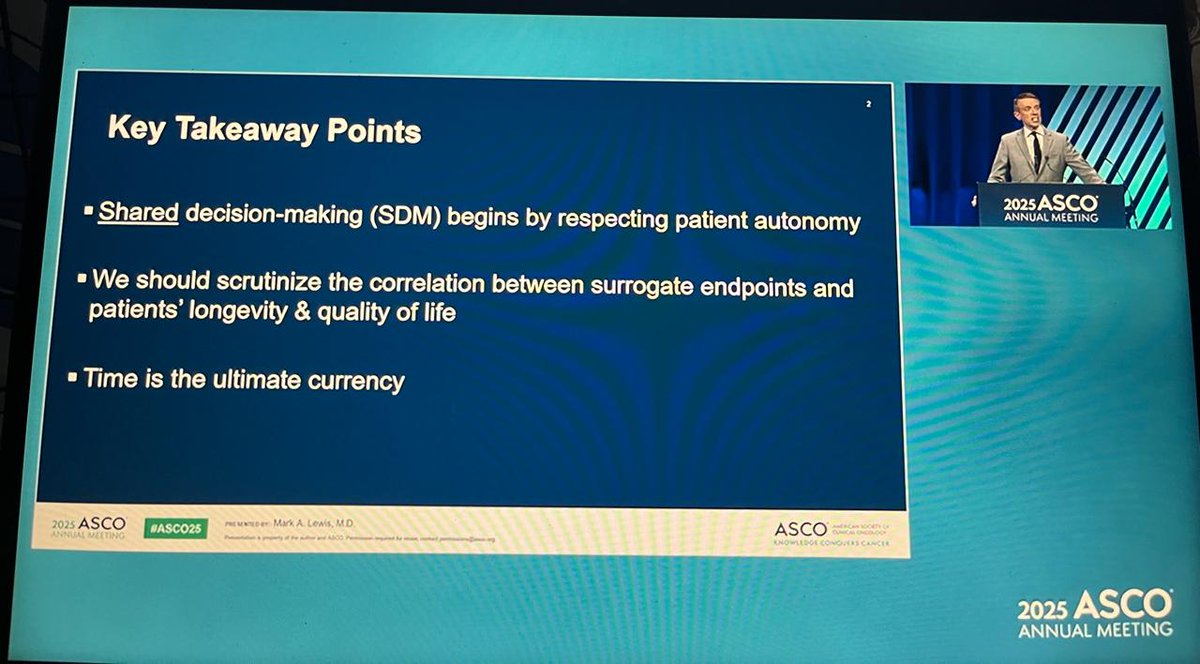
Great paper to complement @marklewismd presentation at yesterday’s ASCO Plenary.
"Overall Survival and Quality-of-Life Superiority in Modern Phase 3 Oncology Trials".
https://t.co/OYLtaqxVKe
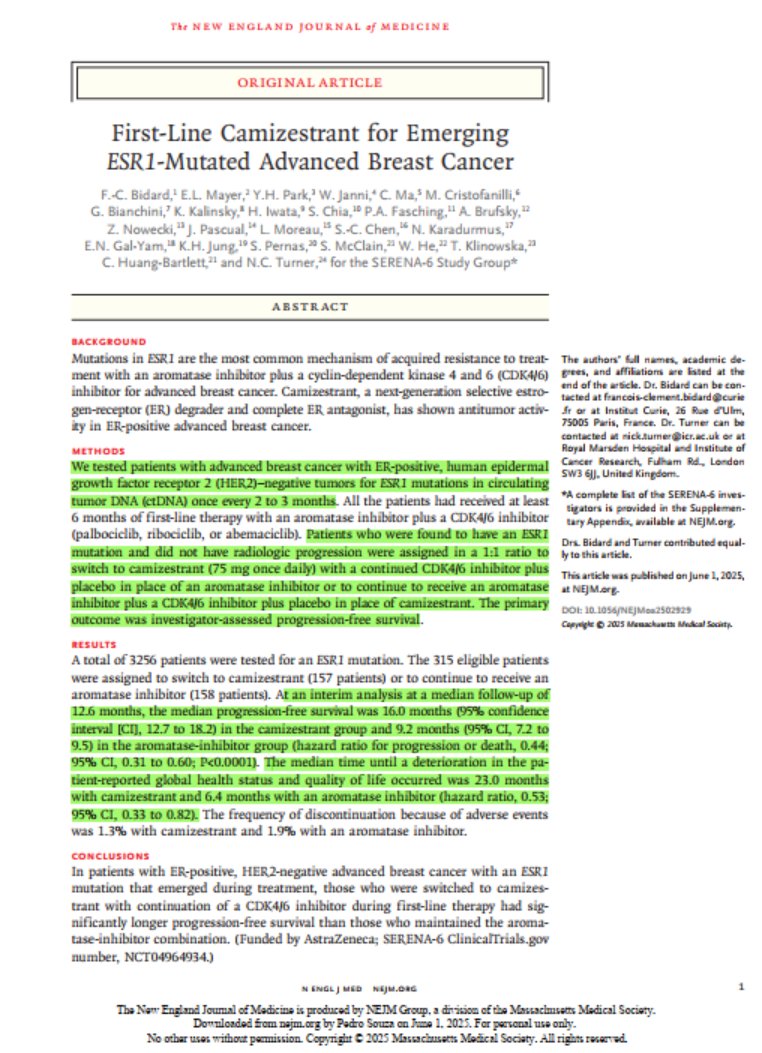
SERENA-6. It's not yet a practice-changing study, but I believe it will be soon. Conceptually, it shows how we’ll be treating these patients in the very near future. And the discussion was perfect — @AngieDemichele asked all the right questions!