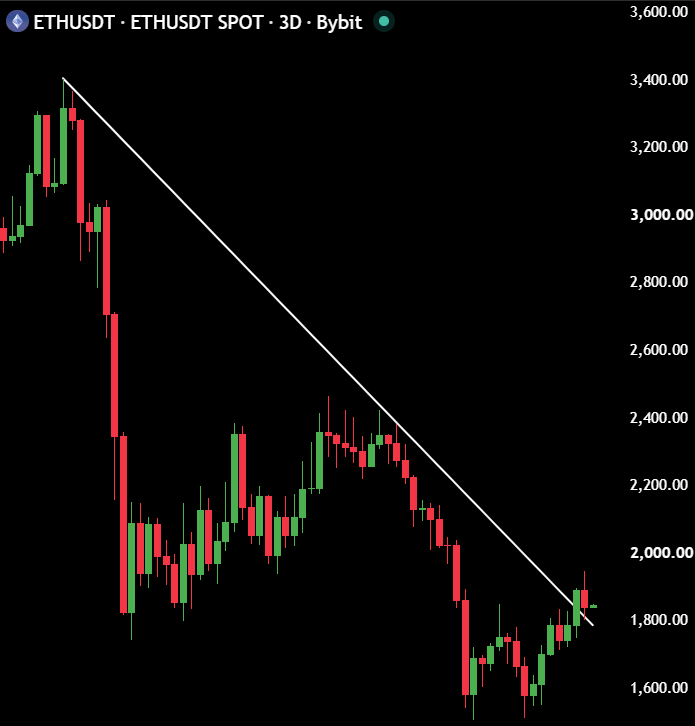
Feels good to bull post $ETH again.
Last cycle, I was doing the same all the way up to the ATH, and exited with you all around the top.
Time for round two.
Ethereum.
Raoul Pal: “The entire banking system will go to ETH”
“I find it hilarious that 1.5-2 years ago people were like, ‘ETH is dead.’ I’m like, ‘No, the entire banking system will go to ETH.’ That doesn’t mean it’s a mono-chain world, but I know how banks work… It’s really for them about Lindy effects — things that survive; things that you don’t get fired for; things that are proven.”
Etherealize co-founder Danny Ryan adds to Raoul’s point:
“I had to learn this. We’ve worked for a decade to make sure Ethereum is resilient, multi-client, is distributed across the world, has 100% uptime. And I had no idea until I talked to the banks: I’ve found a customer of decentralization. They just don’t know it. They care about uptime. They care about resilience. They care about the thing that’s been around for the longest. They care about the thing that no one can turn off. You just have to translate the language to them. And yes, the ‘no one gets fired for picking Microsoft’ dynamic is very real, and it’s in Ethereum’s favor.”
Raoul points to Ethereum’s developer network effect as well.
Source: @RaoulGMI (Apr 2026)
Tom Lee: Ethereum is moving from its 1.0 era to its 2.0 era.
Ethereum 1.0 was defined by crypto-native cycles: ICOs, NFTs, DeFi, ETFs, and stablecoins. Those waves proved demand, but the market still treated $ETH mostly as a speculative asset.
Ethereum 2.0 is different.
Wall Street is now building on Ethereum. Tokenized assets, institutional settlement, L2 chains, stablecoin rails, and real-world finance are starting to move onchain. Robinhood’s chain using ETH as gas is a simple but powerful signal: ETH is not just an asset people trade. It is becoming working capital for digital finance.
This is how 2.0 moments usually look.
Amazon was “just e-commerce” before AWS changed the addressable market. Nvidia was “just GPUs” before AI made CUDA the center of a new economy. Ethereum may be going through a similar transition: from crypto infrastructure to the settlement layer for finance, AI agents, and tokenized assets.
The market may still be pricing ETH like 1.0.
But if Ethereum becomes the base layer where value moves, settles, and gets secured, then ETH starts to look less like a trade and more like money for the next financial system.
> be me
> young anon w newly minted CS degree
> come of age during occupy wall street
> banks are obviously parasites
> the system is obviously captured
> we are the 99%
> we need bottoms up p2p coordination
> occupy piddles out
> we need foundations for lasting change
> we need to be idealist but also pragmatist
> learn about bitcoin
> learn about etheriem
> this could be it
> hope.gif
> MFW lets disrupt the intermediaries
> MFW we can empower the 99% for real
> get into crypto bc banks are parasites
> tell my mates, let’s go Bankless !
> 8 years of toil
> 8 years of chaos
> 8 years of fun
> dust settles
> 8 years later we’re all selling tech to banks
> 8 years later all the podcast eps are bankers
> 8 years later all the funding is from banks
> was it all just a LARP?
> infighting.png
> despair.gif
> MFW we lost the plot again
> MFW were enabling the intermediaries
> MFW were building tech for the 1%
> MFW lost in the dark again
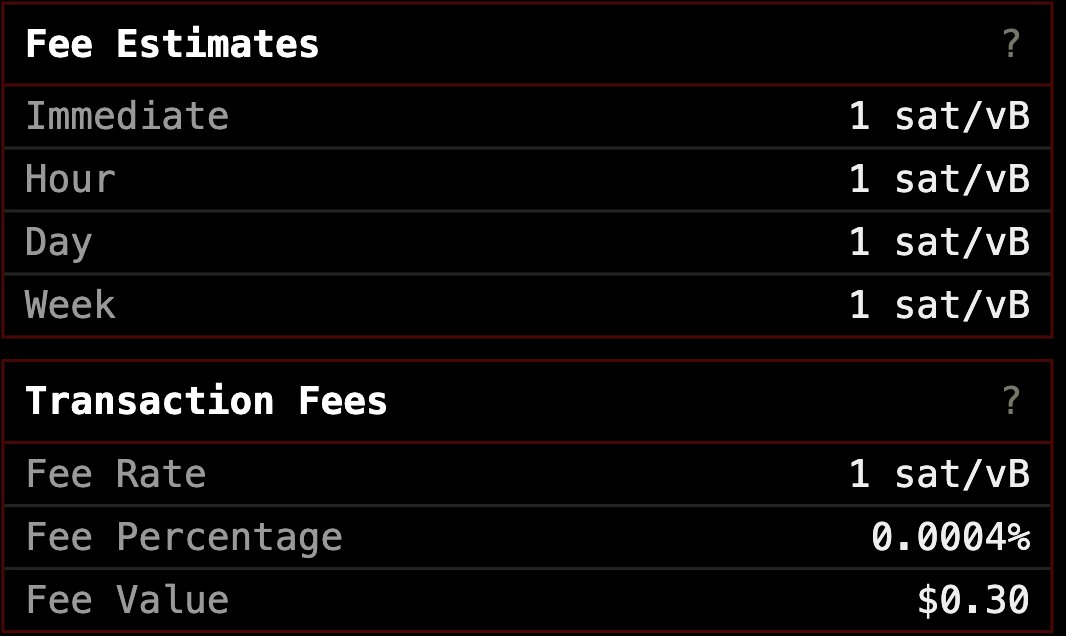
After a decade of blockspace fears and non-monetary-use panics, Bitcoin still has no spam problem. Fees are 1 sat/vB: anyone can move any amount globally with immediate processing for ~$0.30. The free market has always solved Bitcoin’s blockspace challenges. $BTC
TOM LEE: IF YOU'RE BEARISH TODAY, YOU'RE SELLING AT THE BOTTOM
He's not hedging this call:
-Bearish on Bitcoin right now means selling at the bottom
-Bearish on Ethereum right now means selling at the bottom
-Ethereum treasuries are primed for the next bull cycle