Rogue Trooper surprised me in the best way and it definitely needs to be seen in theaters. The sound design, score, and soundtrack are built for the big-screen experience.
Visually, it feels like a video game brought to life. It is slightly uncanny at times, but interesting nevertheless.
I was also invested in the characters from the start, and the humor genuinely worked for me. It's light, well-placed, and not overdone.
I need more of it. I need more of GI 19.
Review coming to @NexusPointNews soon.
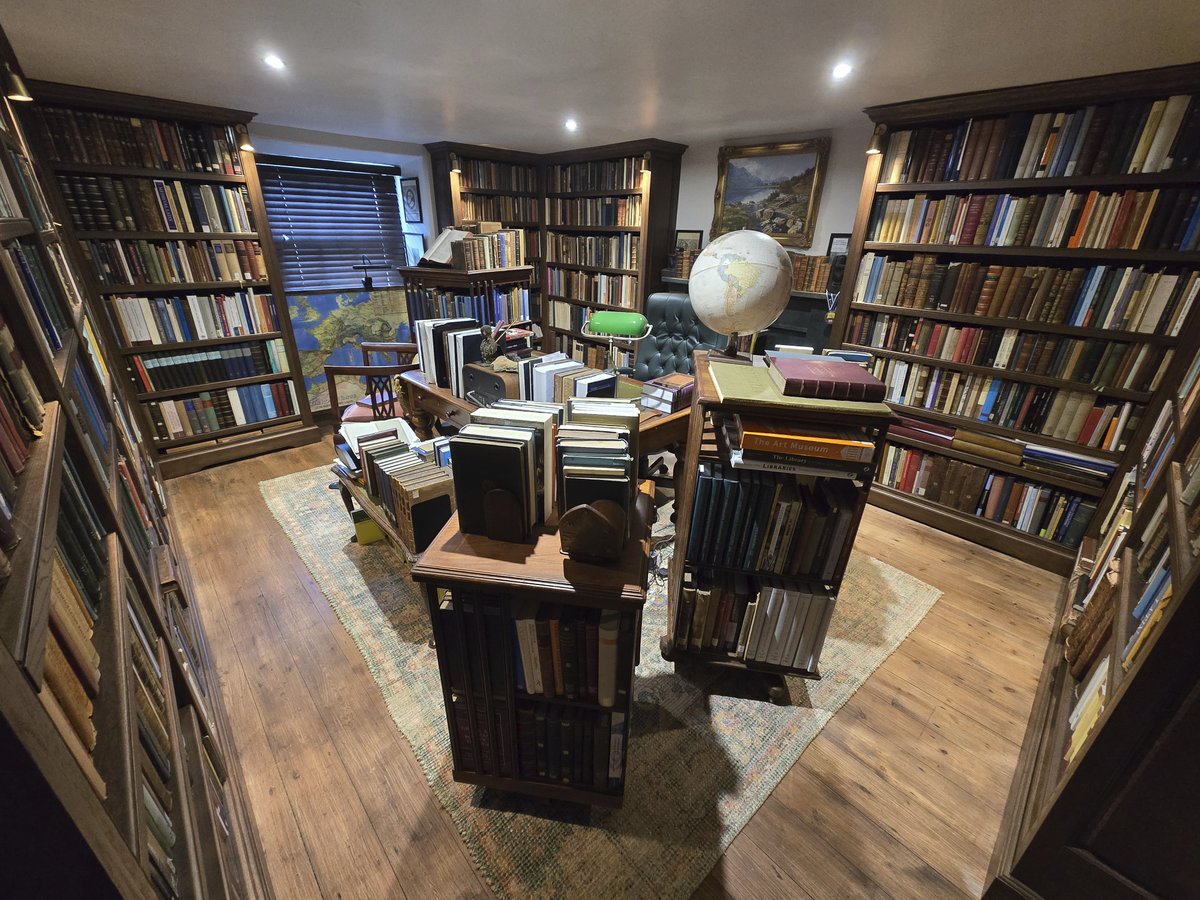
Much enjoyed showing @timothy_kenny around my library, talking about different sorts and sets of Classics books, the history of scholarship and publishing, and all sorts of topics that happened to come up here and there. Full YouTube video linked below (it's not short!)
@VenetiaJane@Beechcrow @AlnwickGarden Yes, they pointed out the poisonous plants and gave me strict instructions never to eat them. And they also kept an eye on me when I was very young. I have to say I really love the appearance of laburnum trees; it reminds me of my childhood.
@VenetiaJane@Beechcrow @AlnwickGarden Aged 4 my family moved to a house that had in the garden a laburnum, deadly nightshade and foxgloves, not to mention two small ponds. Somehow I survived.
Saddened beyond belief by the sudden passing of our boss Ian Shipsey. Ian was remarkable, in his science & as a passionate unselfish force for good, who made a huge contribution to @OxfordPhysics @VRubinObs & much else. https://t.co/UZ3tS6e7uc
@MaryannCorbett All art is derivative. Your friends pooh-pooh it because they have read too many poems on the same subject and are jaded. To others less well read the poem might appear new and fresh. The main thing is to avoid cliche when writing.
Time-lapse of the aurorae over Oxford last night! This sequence of 5.5 hours compressed into 1 minute. North is at the top. At times the aurorae were so bright that parts of the images saturated and so lost colour. An amazing display of the dynamical northern lights! #aurora
Ten months ago, we launched the Vesuvius Challenge to solve the ancient problem of the Herculaneum Papyri, a library of scrolls that were flash-fried by the eruption of Mount Vesuvius in 79 AD.
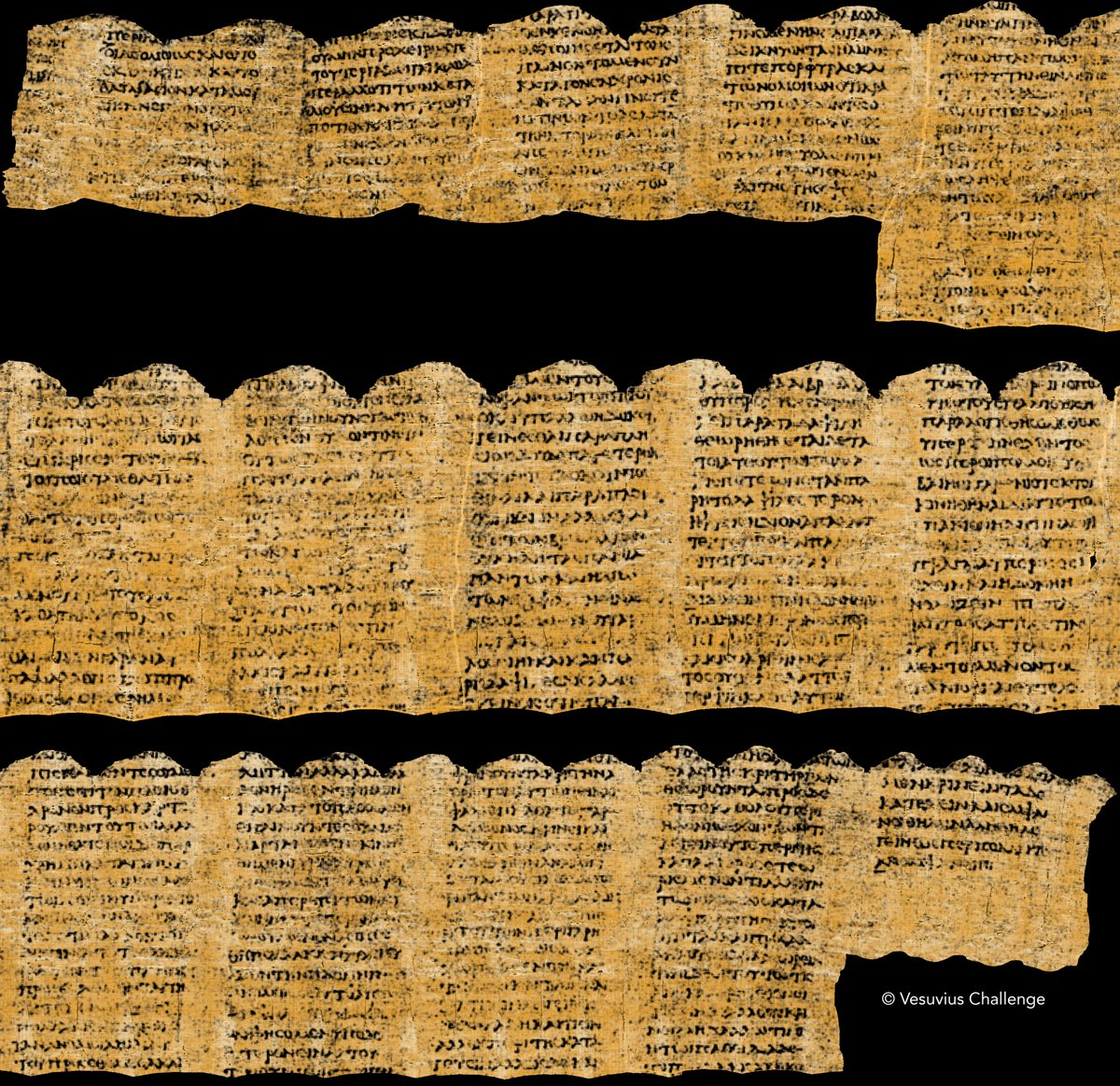
Today we are overjoyed to announce that our crazy project has succeeded. After 2000 years, we can finally read the scrolls:
This image was produced by @Youssef_M_Nader, @LukeFarritor, and @JuliSchillij, who have now won the Vesuvius Challenge Grand Prize of $700,000. Congratulations!!
These fifteen columns come from the very end of the first scroll we have been able to read and contain new text from the ancient world that has never been seen before. The author – probably Epicurean philosopher Philodemus – writes here about music, food, and how to enjoy life's pleasures. In the closing section, he throws shade at unnamed ideological adversaries – perhaps the stoics? – who "have nothing to say about pleasure, either in general or in particular."
This year, the Vesuvius Challenge continues. The text that we revealed so far represents just 5% of one scroll.
In 2024, our goal is to from reading a few passages of text to entire scrolls, and we're announcing a new $100,000 grand prize for the first team that is able to read at least 90% of all four scrolls that we have scanned.
The scrolls stored in Naples that remain to be read represent more than 16 megabytes of ancient text. But the villa where the scrolls were found was only partially excavated, and scholars tell us that there may be thousands more scrolls underground. Our hope is that the success of the Vesuvius Challenge catalyzes the excavation of the villa, that the main library is discovered, and that whatever we find there rewrites history and inspires all of us.
It's been a great joy to work on this strange and amazing project. Thanks to Brent Seales for laying the foundation for this work over so many years, thanks to the friends and Twitter users whose donations powered our effort, and thanks to the many contestants whose contributions have made the Vesuvius Challenge successful!
Read more in our announcement: https://t.co/rUlrdGXBMs
This is an incredible paper, with the discovery of a pile of free-floating planets in a young star-forming region (Orion/Trapezium).
The craziest part: 9% are binaries! Like, two Jupiters orbiting each other -- but not orbiting a star!
https://t.co/c0OTkwc6LH
"The toll includes the University Library in Kharkiv, which held 3 million volumes, including many early printed books and manuscripts. In March 2022 a missile exploded in the Rare Book Library, destroying or damaging more than 60 000 precious volumes."
https://t.co/ySjgssW1rn
Morning.
Another nice illustration of just how much mid-infrared astronomy is about to improve, comparing part the Large Magellanic Cloud as seen by Spitzer & now by #JWST 👍
Spitzer: 85cm primary, IRAC 8 microns
JWST: 6.5m primary, MIRI 7.7 microns