Five servings of fruits and vegetables per day may not be enough for heart health benefits.
Only 20% of people who meet these guidelines have an estimated flavanol intake of 500 mg/day, a level associated with lower cardiovascular disease risk in randomized controlled studies.
It doesn't take much fat from plants to make a difference either. For example, just three grams of fat in an entire meal may be enough to boost nutrient absorption. Dark green leafy veggies are the most nutrient-dense foods on the planet. https://t.co/XSLM2LVAzx
5 supplements commonly discussed in chronic pain care & their potential benefits:
1. Vitamin D: muscle + immune health
2. Vitamin B12: nerve health + fatigue
3. Magnesium: muscle relaxation + nerve function
4. Zinc: antioxidant support
5. Turmeric: anti-inflammatory support
Repetition changes your brain.
Repetition changes your brain.
Repetition changes your brain.
Repetition changes your brain.
Repetition changes your brain.
Repetition changes your brain.
Repetition changes your brain.
That’s why it works.
Emotional intelligence and communication ability is at least 75% autonomic regulation - which also unlocks control over your own time perception and thus what does and doesn’t need to be said in a moment, the rest becomes easy.
The Blue Whale produces milk so rich and thick it has the consistency of soft butter or flowing cream. It’s 50% fat—nearly 15 times more concentrated than human milk.
Why? Because in the vastness of the ocean, a liquid would dissolve into the salt water before it ever reached the calf. Instead, this "liquid gold" stays intact, allowing the baby to gain 200 pounds every single day.
"He who fashioned the depths of the sea left nothing to chance."
From the gargantuan heart the size of a car to the microscopic precision of a mother’s milk, we are witnessing a masterpiece of engineering. This isn't just "survival"—it is divine intentionality.
Every ripple in the ocean and every breath in your lungs is a quiet, powerful reminder: Every detail was crafted. Every need was anticipated.
Nature isn't just magical; it’s a witness.
God is Amazing. 💙
#Creator #BlueWhale #NatureIsArt #GodsDesign #DeepOcean #WondersOfWorld
Sulforaphane may be one of the most powerful natural compounds for helping your body clear harmful chemicals
It activates NRF2, a built-in defense pathway that turns on detoxification genes and may also support the excretion of BPA, based on strong mechanistic logic and animal data
You can get it from cruciferous vegetables like broccoli and broccoli sprouts, or from stabilized supplemental forms made from its precursor, glucoraphanin (Rhonda takes Avmacol Extra Strength)
One of the clearest examples comes from broccoli sprout extracts, which increased excretion of airborne carcinogens like benzene by about 60% within 24 hours
Dr. Rhonda Patrick just dropped a 3-hour masterclass on the Huberman Lab podcast.
She shared 8 shocking insights about everyday things that are slowly making you sick:
1) Drinking water from glass bottles (has higher levels of microplastics than in plastic ones)
Taking around 2 grams of omega-3s per day might be one of the highest-ROI habits for lifespan and cardiovascular protection
At that dose, most people can move their omega-3 index from ~4% to ~8%, a range associated in observational studies with about a 5-year increase in life expectancy and ~90% lower risk of sudden cardiac death
Omega-3s also support brain function and mood, with clear benefits for depression and cognition
Yet nearly 90% of Americans fall short of recommended EPA and DHA intake
Few interventions this impactful are this easy
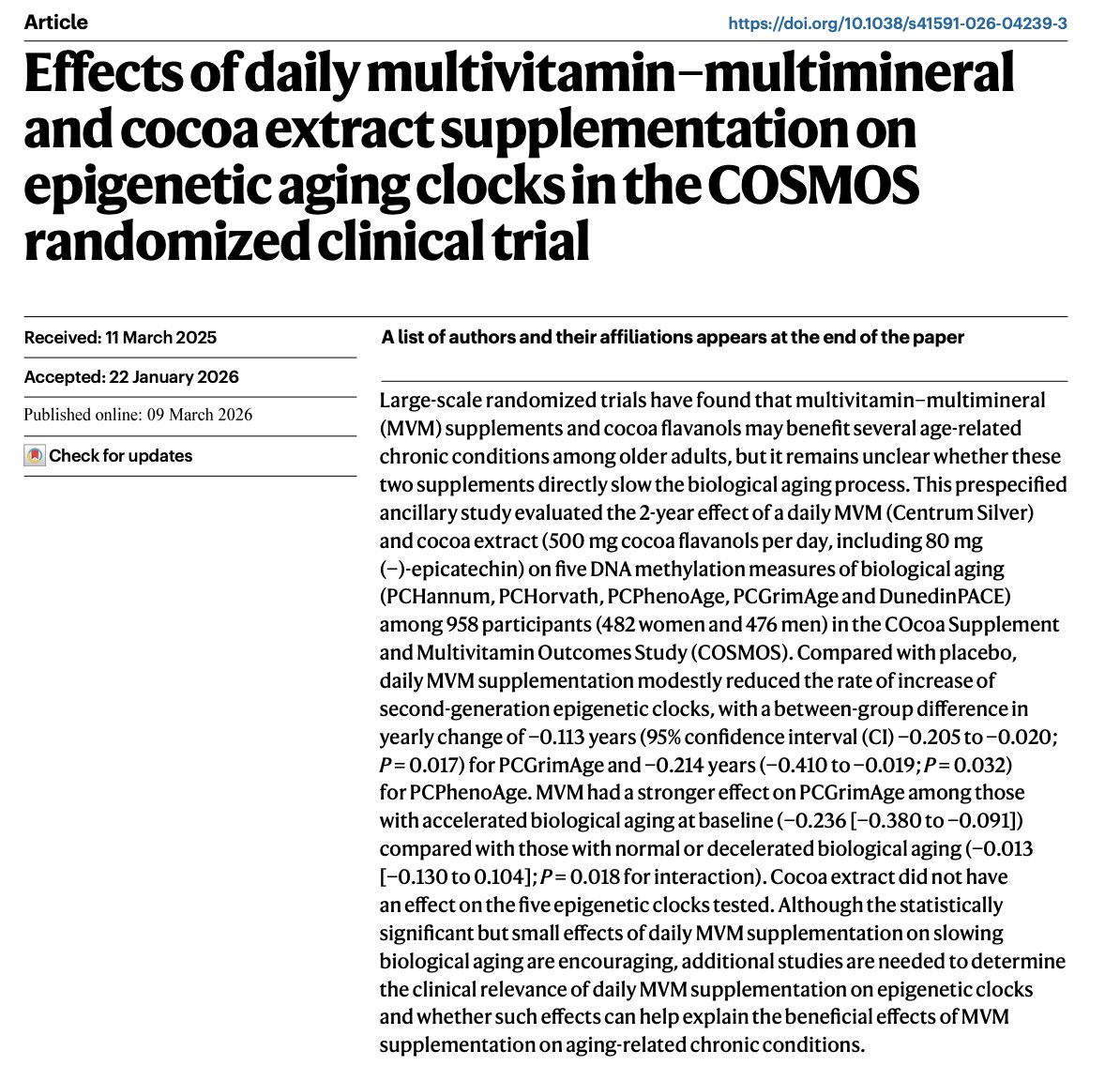
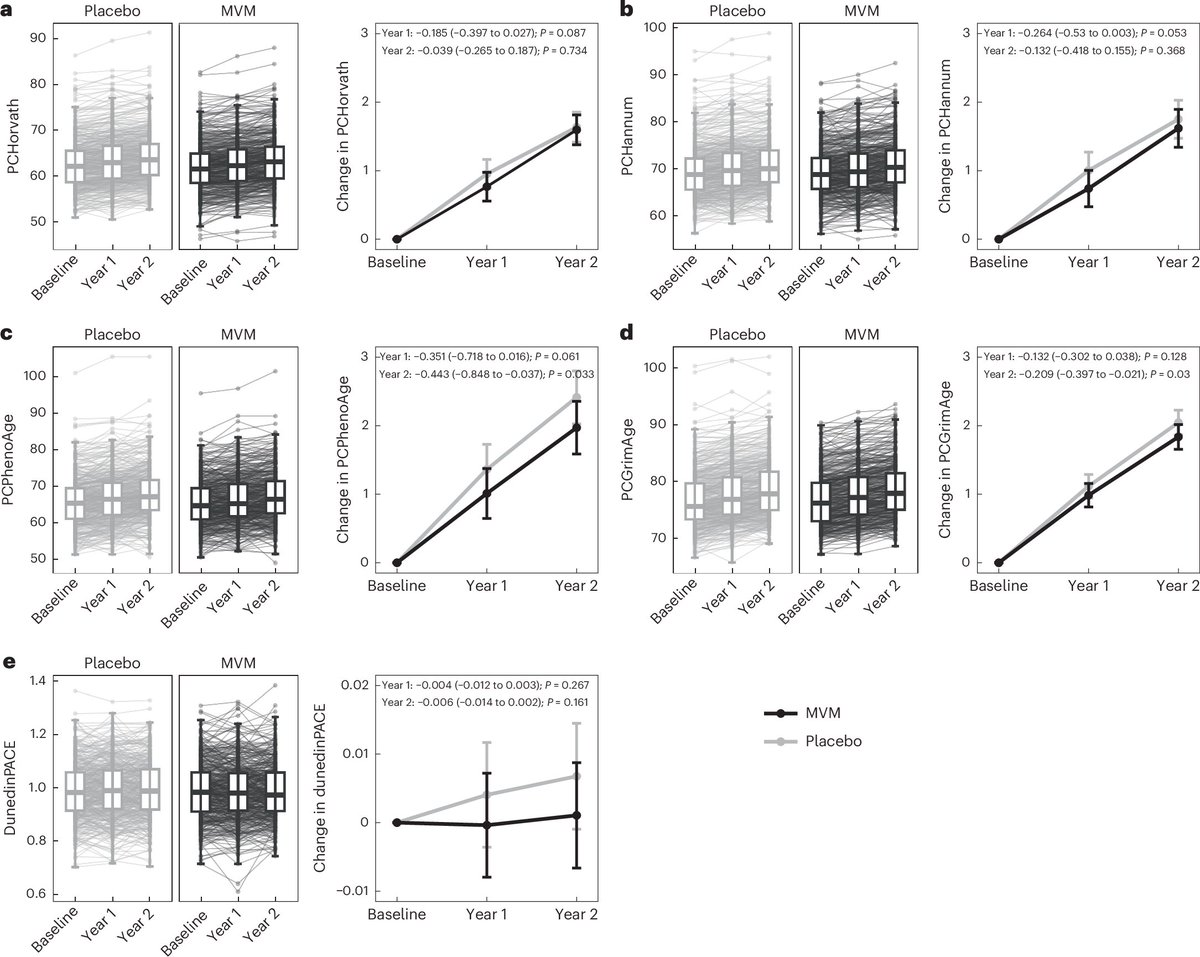
Multivitamin supplementation slows biological aging.
Older adults taking a daily multivitamin for 2 years reduced their pace of epigenetic aging by 0.1–0.2 years compared with placebo. The effect was strongest in people with accelerated biological aging.
Interestingly, cocoa flavanol supplementation showed no effect on epigenetic aging in the same trial.
The effect is small, but it adds to evidence from the COSMOS trial, where multivitamin supplementation improved cognitive function, despite showing no clear benefits for cancer, cardiovascular disease, or all-cause mortality.
The data challenge the idea that multivitamins are “completely useless," even if their benefits appear modest and context-dependent.
This figure outlines how cells use glucose.
Why would a psychiatrist care about this?
Because these processes can be disrupted in people with schizophrenia, bipolar disorder, depression, and other psychiatric disorders.
Time-restricted eating (TRE) may not improve cardiometabolic health if you don't change what or how much you eat.
Women with obesity who practiced early TRE (eating from 8 AM to 4 PM) or late TRE (1 to 9 PM) but kept their calorie intake and physical activity levels the same experienced no changes in their insulin sensitivity, blood glucose, blood lipids, inflammation, oxidative stress, or body composition makers.
The late TRE group did see a later shift in their circadian phase (~24 minutes) compared to the early TRE group.
Circadian-timed eating is important, but without an emphasis on dietary quality, metabolic improvements seem to be modest.
Engaging in creative, skill-based activities like dance, music, visual arts, or gaming can reduce your brain's biological age by ~6 years.
Researchers measured the 'brain age gap' (the difference between predicted and actual brain age) and found that creative experts had significantly younger brains.
This expertise translates to greater neural connectivity in brain regions responsible for motor control, precise timing, mental imagery, and salience detection. They also had more efficient local and global neural networks, which is a signature of robust cognitive function.
Healthy brain aging isn't just about nutrition and exercise protocols. Deliberately challenging your brain with creative and skill-intensive pursuits profoundly enhances neural resilience and longevity.
New study: Scientists used a neural network (a computer program that learns patterns like the brain) to separate EEG data (brain electrical signals measured with scalp electrodes) tied to different events.
Examples of events:
•Hearing a sudden sound → mismatch negativity (MMN)
•Seeing a face → N170 wave
•Reading a word that doesn’t make sense → N400 wave
•Reacting to a target in a task → P3 wave
The network pulled out cleaner, more specific signals than older methods, making it easier to see how the brain responds to these events.
Why it matters: Better brain signal mapping could help researchers study attention, learning, and brain disorders more accurately.
Full paper: https://t.co/lOCJFTzymD
Acknowledgements
•Published in IEEE Transactions on Neural Systems and Rehabilitation Engineering (2025; 33:3271–3280).
•DOI: 10.1109/TNSRE.2025.3598795 | PMID: 40811193
•Authors: Jamie A. O’Reilly, Hassapong Sunthornwiriya-Amon, Naradith Aparprasith, Pannapa Kittichalao, Pornnaphas Chairojwong, Thanabodee Klai-On, Edward W. Lannon
I’d be curious if @bryan_johnson attributes his 93% microplastic drop more to TPE or vigilance—avoiding processed foods, tap water, and plastic packaging.
I would credit avoidance most; it’s the first step we should all take.
While chemical detox via sauna (sweating) is definitely plausible (removes BPA, BPS, phthalates, and heavy metals), microplastic particle elimination via this method currently lacks support.
Most of this success is probably due to the practical implementation of strategies to avoid environmental sources of exposure versus specific elimination methods, though both likely play a role.