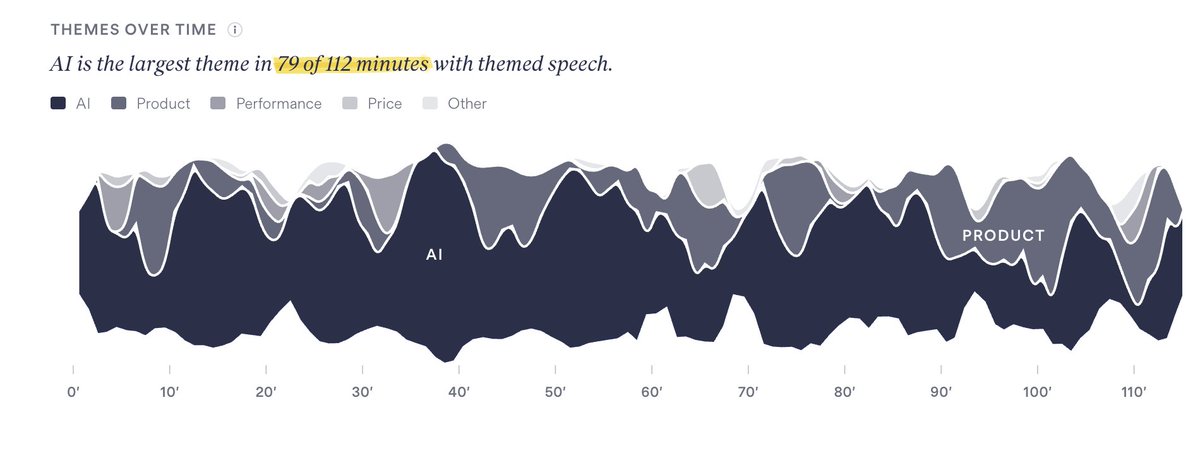
Releasing a fun little side project: Narrata, a tech keynote analyser. Pick a keynote and get a visual read of what was said, by whom, for how long, and what got the room going. Six keynotes so far, from Apple, Google and OpenAI. Claude reads, Jev sorts, I steer. A thread.
My morning so far after the Arc sunset announcement... hunting for that same level of polish, plus sidebar support and live folders. So far, ardia by @barre_of_lube is getting very close 😍
We've decided to sunset Arc on December 22, 2026.
That's not an easy sentence to write. We spent years building Arc and celebrating each and every release along the way: we have so much pride and love for what we made alongside the Arc community.
Our priority is to deliver best-in-class security for our members. Keeping a browser secure takes constant, dedicated work that is only increasing in the age of AI. Dia was built from the ground up to meet today’s security standards, so that's where our engineering and security teams will focus moving forward.
We've worked to make switching to @diabrowser as easy as possible for Arc members. Here's how:
· Your passwords, bookmarks, extensions and history come over to Dia seamlessly.
· Spaces, Folders, and Tab Groups are in Dia and import over with your data intact.
· Dia now surpasses Arc benchmarks in stability, speed, and security.
· The browser features you use in Arc are free in Dia, and the AI is optional.
Thank you for using Arc, for pushing us to make it better, and for building alongside us. The team that made Arc is the same team behind Dia, and some of our most ambitious work is just ahead. We'd love for you to be there with us when it lands.
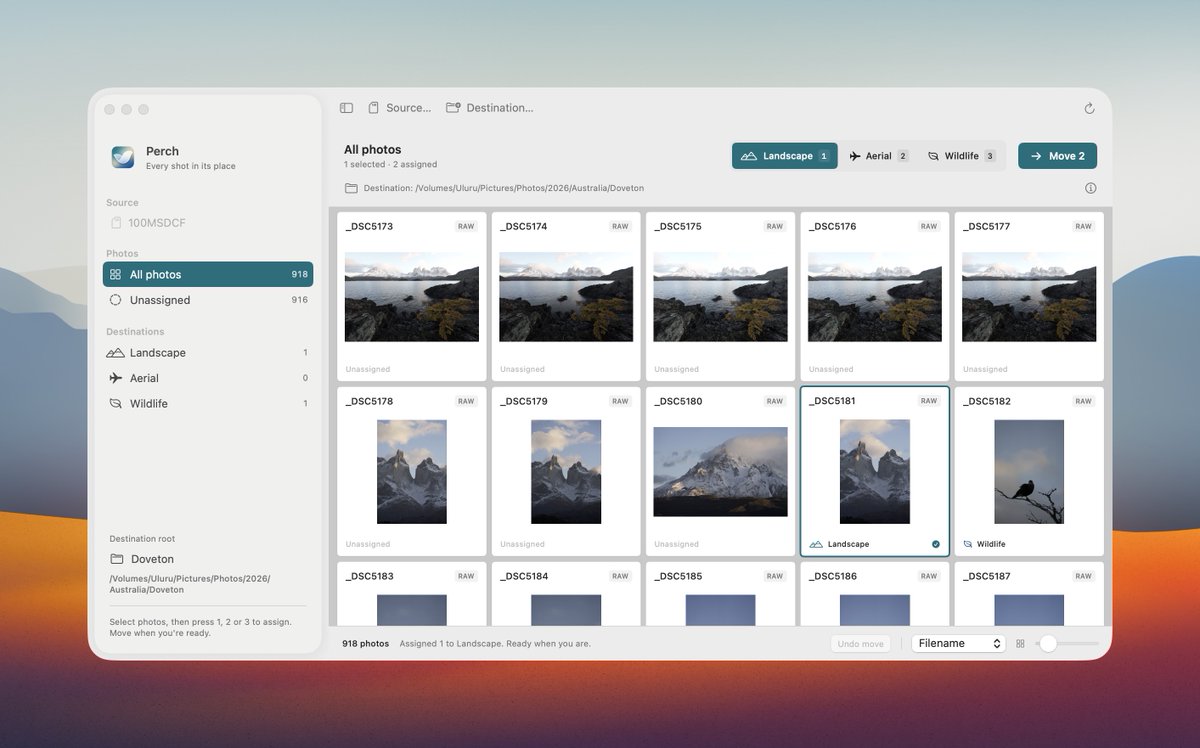
Years of manually sorting photos into folders for different editors. Finally vibe-coded a tiny Mac app to do it: Perch.
RAW previews, single or batch moves, and a trip to the Trash for the misses.
Built with LLMs during a photo import. What a time.
Six keynotes are in: Apple's September event and WWDC, Google I/O 2025 and 2026, OpenAI DevDay 2025 and 2026. It's live, no login, no tracking. Have a look and tell me which keynote I should run next! https://t.co/Wfbt9guHOe
One rule I’m proud of: models never output numbers or timestamps. They just point to sentence indices. Code handles the boring stuff like seconds, word counts, and airtime. Every answer gets schema-checked too. If it fails, back it goes with the error attached
The animation and timing ate a surprising share of the time. Page transitions on one axis, charts that only reveal when they scroll into view, an intro that plays once per session. Not perfect but sill happy with where it landed
Second Jev job: checking Claude's speaker claims. For every "here's Craig" Claude cites, Jev is asked whether that line really hands over to that person; for every self-introduction, whether the person is presenting or talking inside a film. 157 checks so far, for pennies
Narrata asks it one question per sentence: which of seven themes is this about (product, performance, design, AI, privacy, price, environment), or none? Batches of 20 with a few lines of context. Six keynotes, 4,875 sentences. The longest (I/O 2025) labels in about a minute
Jev, if you haven't met it: a "System One" model from @typesafeai. You don't ask it to write, you ask it typed questions (pick one of these, yes or no, score this) and it answers with a calibrated confidence. Fast, and a fraction of a frontier model's price per token
Data next. Models are good at text, so the raw material is the YouTube transcript, timestamped captions and all. yt-dlp fetches it, code splits it into sentences, and from there two models take over
The split: Claude gets the jobs that need the whole transcript in view (which stretches are announcements, who hands over to whom). Jev gets the jobs that are thousands of small, typed decisions. Different tools for different shapes of work