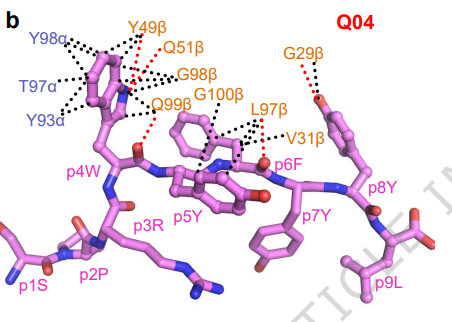
Structural insights into clonal restriction and diversity in T cell recognition of two immunodominant SARS-CoV-2 nucleocapsid epitopes @NatureComms 🇺🇸🇨🇳
https://t.co/fySt5O6JTX
[SAVE THE DATE] MLCB 2025 is happening Sep 10-11 at the NY Genome Center—NYC!
Attend the premier conference at the intersection of ML & Bio, share your research and make lasting connections!
Submission deadline: Jun 1
Details: https://t.co/yI9YZV676c
Spread the word—please RT!
Structural characterization and AlphaFold modeling of human T cell receptor recognition of NRAS cancer neoantigens @ScienceAdvances
• This study reveals crystal structures of the human T cell receptor (TCR) N17.1.2 in complex with NRAS Q61K and Q61R neoantigen peptides bound to HLA-A1, uncovering the structural basis for mutant-specific recognition critical for immunotherapy.
• TCR N17.1.2 demonstrates exquisite specificity for mutant NRAS neoantigens, discriminating effectively against wild-type NRAS peptides through direct targeting of the P7 Lys/Arg mutation, a key determinant for immune recognition.
• Surface plasmon resonance assays confirm high-affinity binding (1.2 μM for Q61K and 3.4 μM for Q61R) of the TCR to the mutant neoantigens, while no binding is observed with wild-type peptides.
• The study highlights the dominant role of the TCR Vα domain in MHC interactions and the Vβ domain in peptide recognition, particularly through the CDR3β loop forming critical salt bridges with the mutant residues.
• AlphaFold2 and AlphaFold3 models accurately predicted the TCR-peptide-MHC complexes when enhanced sampling methods (e.g., 1000-model generation) were applied, showcasing the potential and limitations of AI-driven structural prediction for immune complexes.
• This work advances the understanding of TCR neoantigen recognition, providing a structural framework to design optimized TCRs for adoptive cell therapy targeting NRAS mutations in aggressive cancers like melanoma.
📜Paper: https://t.co/2tSHewOHzf
#Immunotherapy #CancerNeoantigens #AlphaFold #StructuralBiology #TCellReceptors #Bioinformatics #OpenScience
AlphaFold2 (via TCRmodel2) and AlphaFold3 were tested for modeling of these new structures, and both generated accurate models. However, modeling of additional structurally uncharacterized complexes gave us low confidence scores, indicating room for improvement in this area.
Happy to share this collaborative study with @UMD_IBBR@UMDCBMG Mariuzza Lab and @NCI_CCR_SB Paul Robbins, led by @DaichaoW, on structural characterization of a human TCR engagement of NRAS cancer neoantigens, published in @ScienceAdvances.
https://t.co/NgZRYWgTzb
BREAKING NEWS
The Royal Swedish Academy of Sciences has decided to award the 2024 #NobelPrize in Chemistry with one half to David Baker “for computational protein design” and the other half jointly to Demis Hassabis and John M. Jumper “for protein structure prediction.”
Awesome work on this by stellar undergraduate student Valerie Lin, as well as Ragul Gowthaman and Melyssa Cheung in the lab, and thanks to Maya Eisenberg and Brian Baker for critical help putting this together.
Happy to share an update to our TCR structure database, TCR3d, now online at @NAR_Open! More structures of TCR complexes, as well as TCR mimic antibodies, pep-MHC complexes, tools, and affinities.
@UMD_IBBR@UMDCBMG#tcell
https://t.co/hf5XWldEPQ
https://t.co/gNuu5Ei7tL
The MLSB 2024 call for papers is live at https://t.co/wv9C4we1CQ !
New this year: we're excited to use MLSB to highlight importance of benchmarks. We'll have 2 tracks for models evaluated on https://t.co/X34vSEgXA4 / https://t.co/0tTgKxEK4m from @vant_ai @nvidia@MIT_CSAIL !
Congratulations to stellar (former) graduate student Dr. Rui Yin (@ruiyin222), the second Ph.D. from the lab, hooded last week at the UMD graduate ceremony! It was nice to see Dean @VarshneyAmitabh at the reception. All the best at @abscibio, Rui!
How well does AlphaFold3 model an unseen TCR complex? Happy to share this collaborative study with @UMDCBMG@UMD_IBBR Mariuzza lab and @NCI_CCR_SB Paul Robbins revealing how a TCR engages two NRAS cancer neoantigens. (1/2)
https://t.co/A7Yg7RcFE7
We then tested and compared AlphaFold2, AlphaFold3, and TCRmodel2 predictive performance on those complexes. TCRmodel2 and AF3 both outperformed AF2 in this context. Looking forward to more testing of AF3 soon! (2/2)
Great to see our paper on Proscan, a web server to identify favorable proline substitutions for vaccines and other targets, out in @NAR_Open. Congrats to Nate Felbinger in the lab on his first first-author paper! @UMDCBMG@UMD_IBBR
https://t.co/Zoqsu1Ynrc
Fun to be part of this @ScienceAdvances study led by the Sundberg Lab @EmoryMedicine on engineering antibodies using Rosetta and library screening.
Combinatorially restricted computational design of protein-protein interfaces to produce IgG heterodimers https://t.co/Pg29FibYNG
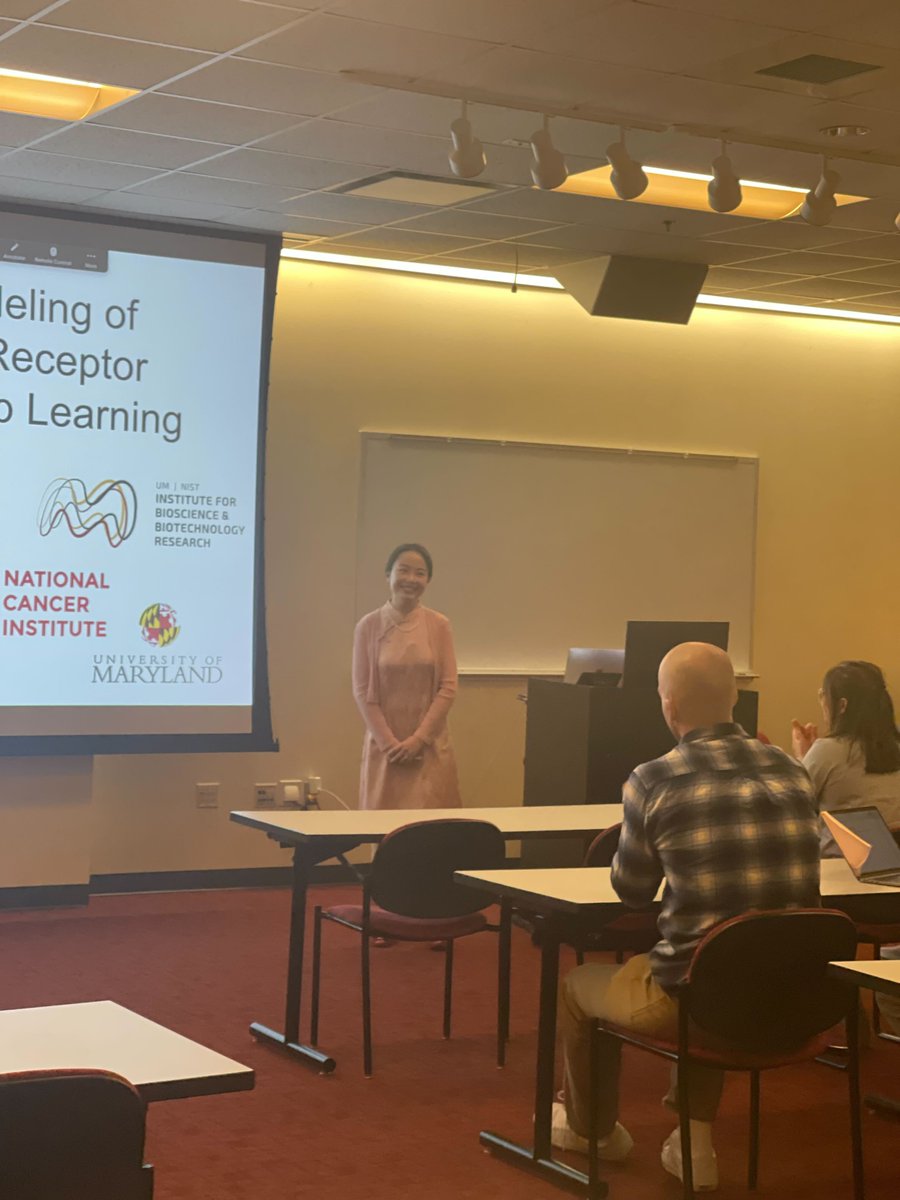
Congratulations to Rui Yin (@ruiyin222) on her successful Ph.D. defense yesterday, with title: "High Resolution Modeling of Antibody and T Cell Receptor Recognition Using Deep Learning". Awesome job Rui! @UMDCBMG@UMD_IBBR@BISIumd @NCIResearchCtr
IBBR and CBMG Graduate Assistant Rui Yin Receives Outstanding Graduate Assistant Award along with NCI-UMD Fellowship
@pierce_lab@UMD_IBBR
https://t.co/OOMmvoQTm1
Now out in published form, @ruiyin222's assessment of antibody-antigen complex modeling in AlphaFold. Shows success determinants, and AF2.3 and massive sampling leading to improvements over default/previous versions. @ProteinSociety@UMD_IBBR@UMDCBMG
https://t.co/BavM6iDDOb