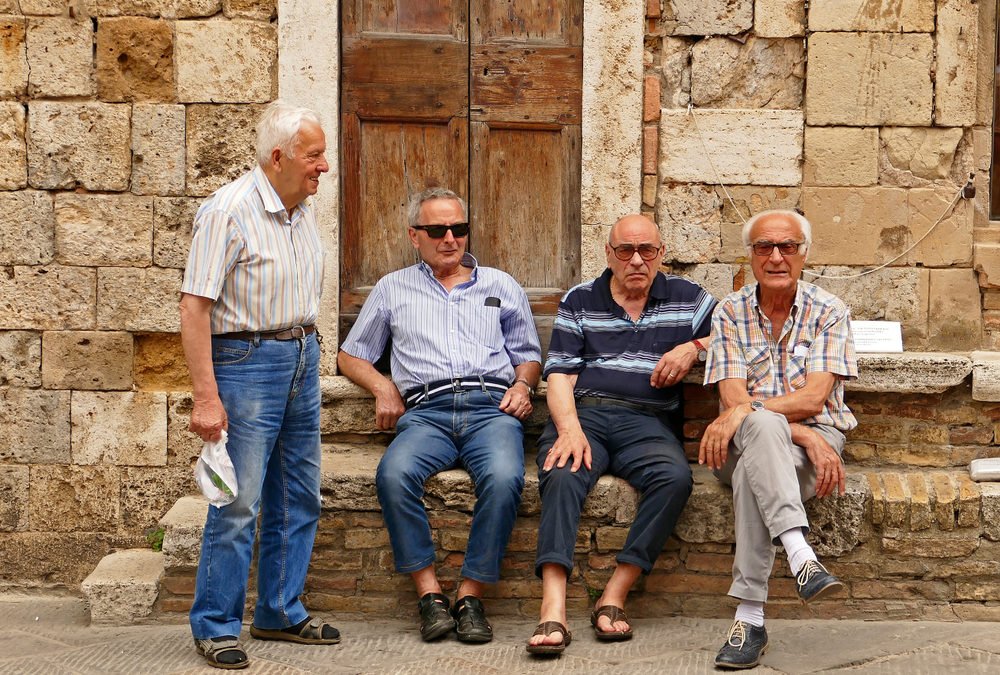
Europeans can be in amazing shape & live to 100+ while:
• Eating carbs 24/7
• Rarely going to the gym
• Drinking alcohol every day
But when Americans do it?
They become obese & get sick.
It took some time...
But I think I found what EXACTLY is going on:
🧵
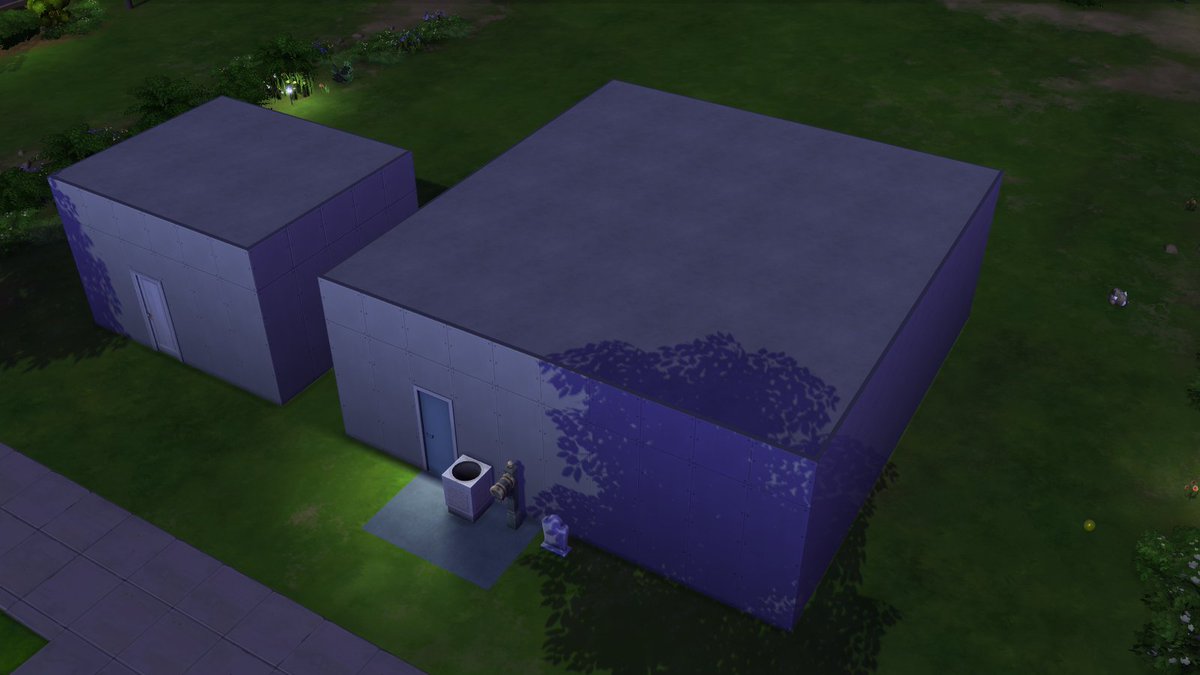
9 years ago, long before I became an animator, I installed the Sims 4 and made “My Sweatshop Family.”
With my starting money, I was able to build a bedroom and a separate factory for the workers.
Dear old people:
Waking up at 6am, tending to a garden, eating dinner at 5pm, reading books, and going to bed at 9:30pm feels amazing.
I was wrong. You were right.
12 Reasons Why Cities Need More Trees:
1. Temperature Control
One large tree is equivalent to 10 air conditioning units, and the shade they provide can reduce street temperature by more than 30%.
2. Noise Reduction
Trees can reduce loudness by up to 50%. In urban areas filled with the sound of cars, construction, sirens, aeroplanes, and music, trees are essentially the best way to block noise and keep cities — along with the homes and workplaces in them — quieter.
3. Air Purity
Trees remove an astonishing amount of harmful pollutants and toxins from the air. In urban areas air quality is often disastrously bad — with severe consequences for our health. Trees make the air we breathe much cleaner.
4. Oxygen
And, while absorbing all those pollutants, trees also put more oxygen back into the urban environment. Oxygen levels are significantly lower in cities compared to the countryside; trees help to solve that problem.
5. Water Management
Trees do more than just shelter us and our buildings from rain — which is, in fact, extremely important. They also absorb huge quantities of water, reduce run-off, neutralise the severity of flooding, and make flooding more unlikely altogether. Not to forget that their roots absorb pollutants and prevent them from feeding back into a city's water supply.
6. Psychological Health
Studies have proven what we instinctively know to be true: that human beings are significantly happier when surrounded by nature rather than sterile urban environments. Our emotions, behaviour, and thoughts are shaped by the places we spend time — and trees have a profoundly positive effect on our psychology. The consequential benefits of being happier and more peaceful — as individuals and as a society — are immense.
7. Physical Health
Beyond all the other ways in which trees improve air quality and the urban environment, much to the benefit of our health, they also encourage people to go outside. Cycling, running, and walking are all more common in urban areas with plenty of trees. A knock-on effect of people spending more time outdoors is also social integration and stronger communities.
8. Privacy
A simple point, but not inconsequential, is that trees provide privacy.
9. Economics
The total economic benefit of urban trees is hard to calculate. There are costs, of course, including the repair of infrastructure damaged by roots and maintaining the trees themselves. But the total economic benefit — a consequence of everything else in this list and more — far outweighs the expenditure. Trees make cities wealthier.
10. Wildlife
Trees are miniature cities all of their own, serving as a habitat for hundreds of different species, including birds and mammals and insects.
11. Light Pollution
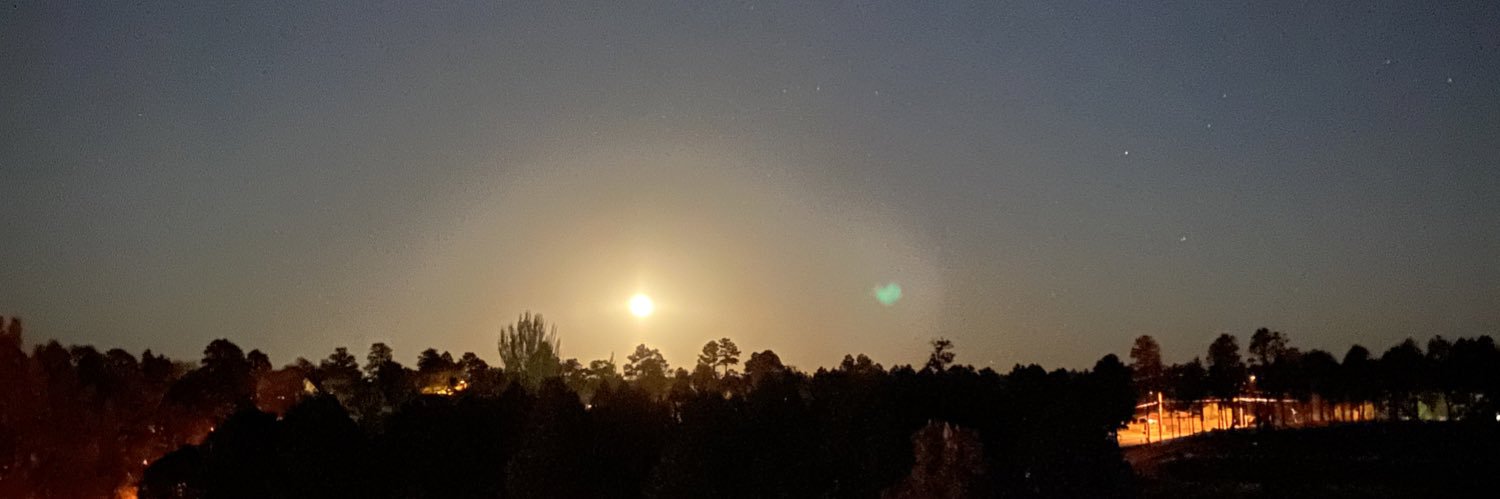
Trees don't only block the light shining down, therefore keeping us and our cities cooler — they also disrupt light shining up, from street lighting, cars, houses, and billboards. Skies are clearer in cities with more trees.
12. Aesthetics
And, finally, trees are beautiful. They break up the potential monotony of urban environments — the sharp geometry, the greyscale roads and buildings, the endless rows of cars — with their trunks, boughs, canopies, and flowers.
Just think: the gold and red of falling leaves in autumn, the white and pink blossom of spring, the vast green canopies of summer, and the branches lined with hoar-frost in winter. Every single tree is a myriad of intricacy and texture, of colour and scent, of dappled light on the pavement, mottled bark, knotted roots, of clustered leaves and delicate petals and stern boughs.
Few streets would not be improved by the kaleidoscopic aesthetic delights of a tree, not to mention the many different species of tree, all over the world, whether willow, oak, lime, cherry, aspen, maple, birch, horse chestnut, dogwood, hornbeam, ash, sycamore... the list goes on.
There are some drawbacks to urban trees, most of them context-specific, and they are not — of course — universally appropriate. But it seems fair to say that many cities would benefit from at least a few more trees here and there.
Create a place where people want to be, and they’ll come.
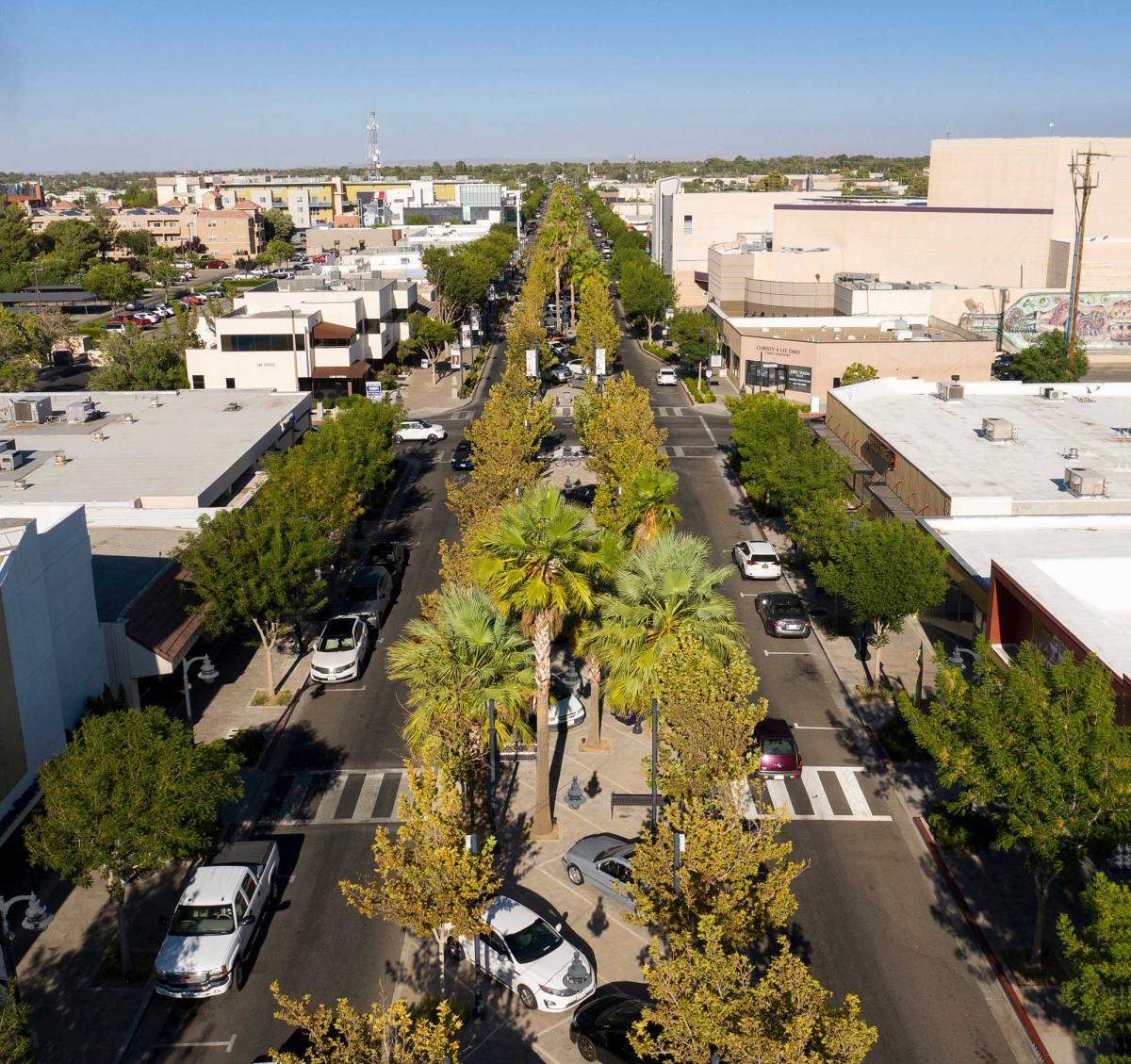
It is scientifically proven that the human brain boosts serotonin and dopamine when exposed to green spaces. For the happiness of mankind, we need more Lancaster’s!
Lancaster, CA transformed its downtown in just 8 months by redesigning it's main street from a mini-highway to a tree-lined boulevard.
For the cost of just $11.5M, the project has generated $273M in economic output since 2010, creating 800 jobs, and nearly doubling tax revenue!
In 1969, Judy and Jerry Griffin crossed paths for the first time at the iconic Woodstock festival. Their encounter lasted only 48 hours, but it was enough time for them to form a deep connection. Surprisingly, over 50 years have passed since that fateful meeting, and the couple is still happily together. They now have two sons and five grandchildren.
Judy was on her way to Woodstock with two friends when their car suddenly broke down. Fortunately, a Volkswagen van pulled up beside them, carrying Jerry and three of his friends. They decided to travel together to the festival, setting the stage for their unexpected romance.
In a recent interview, Jerry expressed their remarkable journey by saying, "For 50 years we've been looking for a picture of ourselves, and out of the blue one shows up.. We'd known each other less than 48 hours when that was taken."
Judy added, "By the time we got out of the car and set up camp, we were into each other, and we basically were together from that point on."
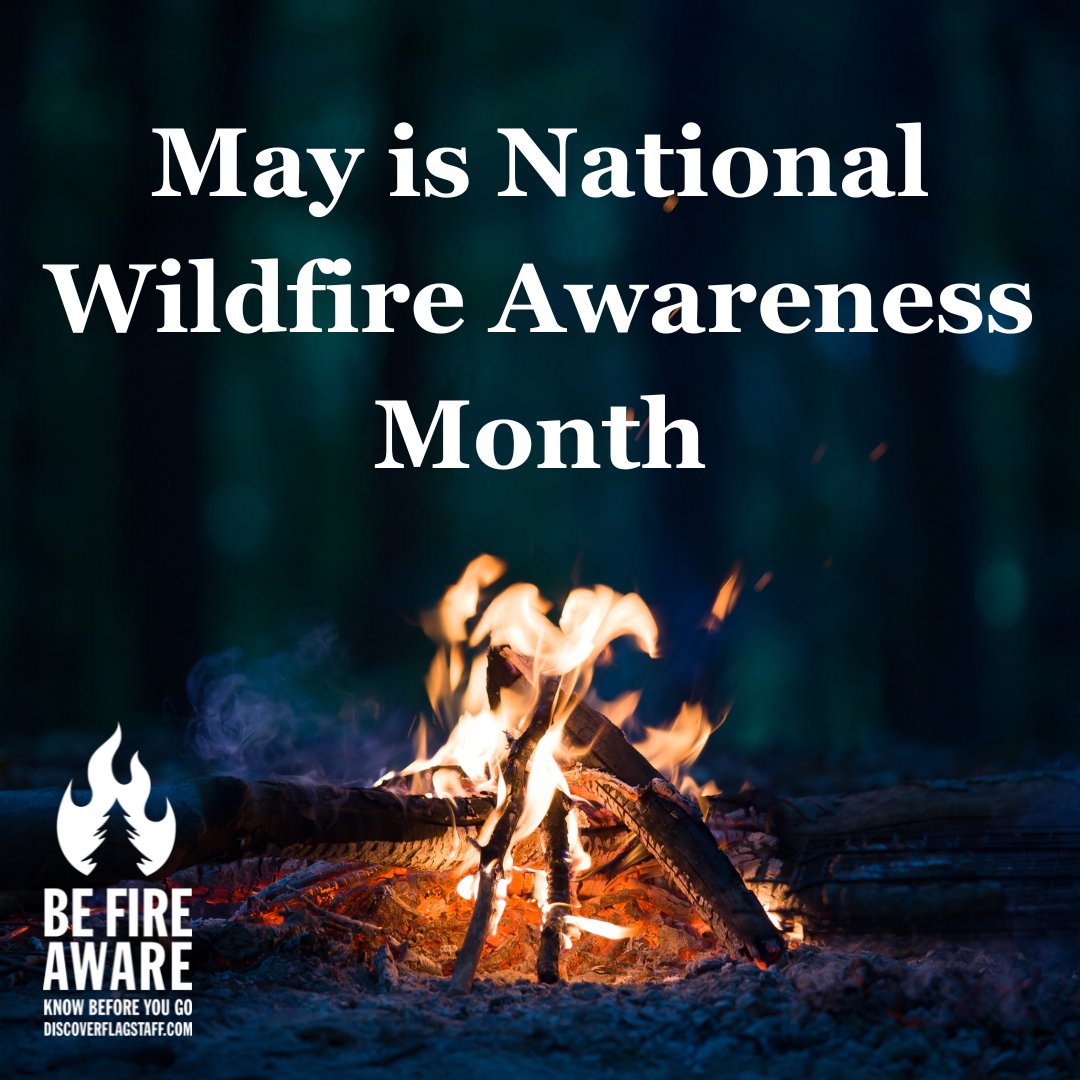
May is National Wildfire Awareness Month! 🌲🤎
As the weather becomes warmer and wildland vegetation, or fuels, begin to dry out, it is time to plan for wildfires. 🔥
To learn how to mitigate wildfire risk around your property and community, visit https://t.co/zpydkg7pxc