Apparently ChatGPT fully autonomously generated the novel mathematical proof of this problem with no human intervention.
Imagine being a mathematician in modern times. I guess the mathematicians must make sure the AI’s math is absolutely correct. Do they get any credit at least for checking the 125 page proof?
Today, we share a breakthrough on the planar unit distance problem, a famous open question first posed by Paul Erdős in 1946.
For nearly 80 years, mathematicians believed the best possible solutions looked roughly like square grids.
An OpenAI model has now disproved that belief, discovering an entirely new family of constructions that performs better.
This marks the first time AI has autonomously solved a prominent open problem central to a field of mathematics.
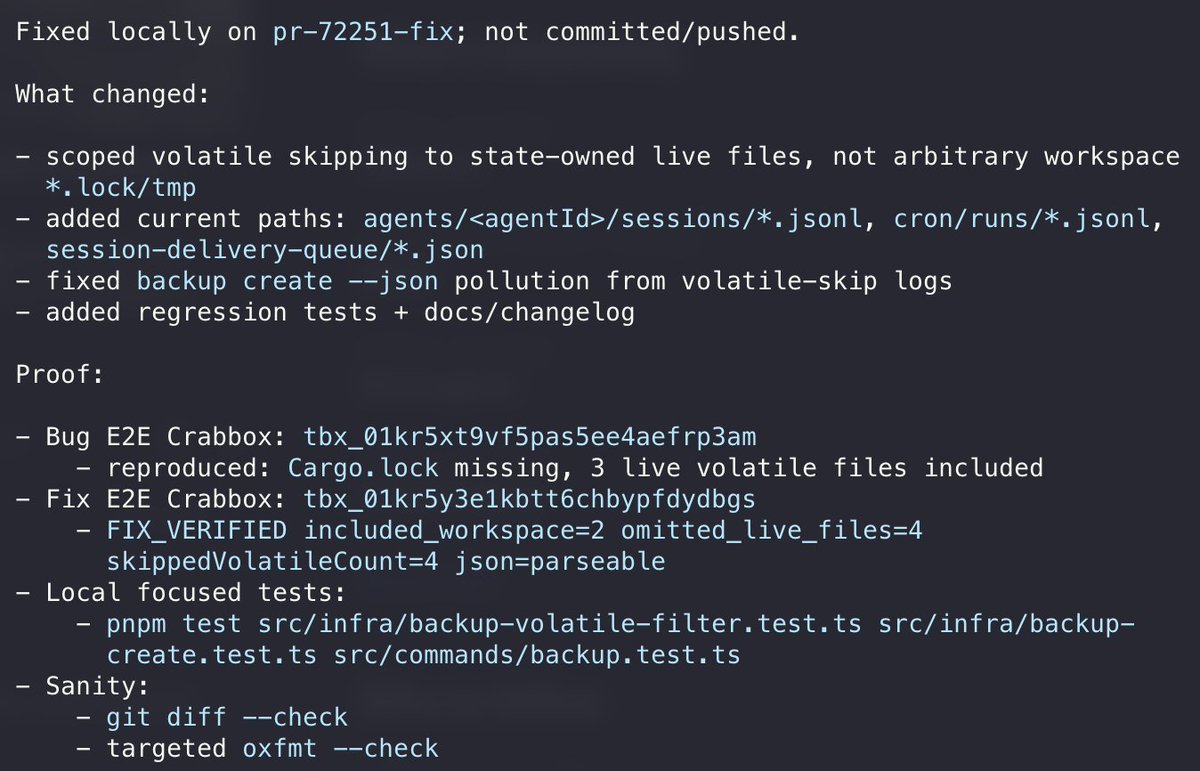
Whenever I investigate a bug, I let codex recreate the exact state in an emphemeral crabbox, verify the bug, fix it, verify the fix.
No messy state because local system might be polluted, and no slowdown because I run 10 sessions in parallel. https://t.co/SEj2XRpaD1
We’ve agreed to a partnership with @SpaceX that will substantially increase our compute capacity.
This, along with our other recent compute deals, means that we’ve been able to increase our usage limits for Claude Code and the Claude API.
A 5-year-old asks 107 questions per hour. By 5th grade: 0.48 questions per hour. The school system doesn't fail kids on math. It fails them on curiosity. And curiosity is the one skill AI can't replace.
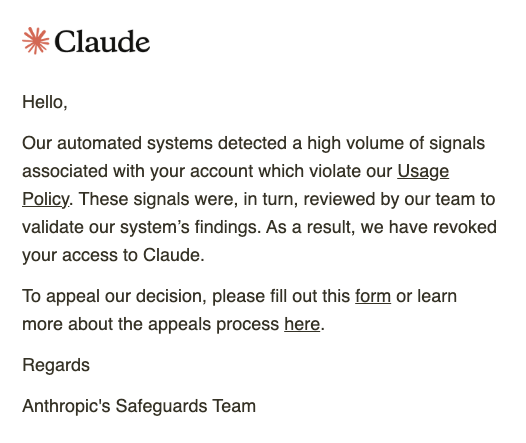
@claudeai you took down our entire organization with 60+ accounts belonging to a legitimate company for no apparent reason, without any explanations. The only way to appeal the decision is by filling out a Google Form? Very bad UX and customer service.
Software horror: litellm PyPI supply chain attack.
Simple `pip install litellm` was enough to exfiltrate SSH keys, AWS/GCP/Azure creds, Kubernetes configs, git credentials, env vars (all your API keys), shell history, crypto wallets, SSL private keys, CI/CD secrets, database passwords.
LiteLLM itself has 97 million downloads per month which is already terrible, but much worse, the contagion spreads to any project that depends on litellm. For example, if you did `pip install dspy` (which depended on litellm>=1.64.0), you'd also be pwnd. Same for any other large project that depended on litellm.
Afaict the poisoned version was up for only less than ~1 hour. The attack had a bug which led to its discovery - Callum McMahon was using an MCP plugin inside Cursor that pulled in litellm as a transitive dependency. When litellm 1.82.8 installed, their machine ran out of RAM and crashed. So if the attacker didn't vibe code this attack it could have been undetected for many days or weeks.
Supply chain attacks like this are basically the scariest thing imaginable in modern software. Every time you install any depedency you could be pulling in a poisoned package anywhere deep inside its entire depedency tree. This is especially risky with large projects that might have lots and lots of dependencies. The credentials that do get stolen in each attack can then be used to take over more accounts and compromise more packages.
Classical software engineering would have you believe that dependencies are good (we're building pyramids from bricks), but imo this has to be re-evaluated, and it's why I've been so growingly averse to them, preferring to use LLMs to "yoink" functionality when it's simple enough and possible.
Groundbreaking clinical trial for aggressive breast cancer, where a new treatment approach achieved a 100% survival rate over a critical three-year period
[🎞️ hashem.alghaili]
Unveiling our new startup Advanced Machine Intelligence (AMI Labs).
We just completed our seed round: $1.03B / 890M€, one the largest seeds ever, probably the largest for a European company.
We're hiring!
[the background image is the Veil Nebula - a picture I took from my backyard, most appropriate for an unveiling]
More details here:
https://t.co/eWHyGLXwCA
A software engineer's casual weekend experiment spiraled into one of the most startling smart-home security failures on record: he unintentionally gained control over nearly 7,000 DJI Romo robot vacuums scattered across 24 countries.
Sammy Azdoufal, a Barcelona-based tech strategist, simply wanted to have fun steering his new DJI Romo (a high-end robot vacuum priced around $2,000) using his PlayStation 5 controller. He turned to an AI coding assistant (Claude Code) to reverse-engineer the device's communication protocol with DJI's cloud servers, extract his own authentication token, and build a custom remote-control app.
What he didn't expect was that the backend system—a vulnerable MQTT message broker—lacked proper topic-level access controls. Instead of restricting data to his single device, the server treated his token as a master key, granting him real-time access to thousands of other Romo units worldwide. Within minutes, Azdoufal could remotely pilot the robots, view live camera feeds from inside strangers' homes, activate onboard microphones for audio, generate detailed 2D floor plans mapping every room and obstacle, monitor battery levels and cleaning progress, and even approximate locations via IP addresses.
He responsibly reported the flaw to The Verge, which contacted DJI; the company quickly patched the core vulnerability (though Azdoufal noted some residual issues, like a PIN bypass for video streams, lingered initially). DJI confirmed it had identified and remediated a "backend permission validation issue" affecting MQTT communication.
The incident underscores the growing dangers of the smart-home boom: as more devices pack cameras, microphones, and mapping sensors into our most private spaces, even a basic authentication oversight can transform helpful gadgets into powerful, mobile surveillance tools—without owners ever being notified.
With AI-assisted coding making it easier than ever to probe and expose such flaws, experts warn that consumer convenience is increasingly skating on thin ice when it comes to digital privacy. As humanoid robots and more advanced home automation enter the mainstream, episodes like this serve as urgent reminders that robust security must keep pace with connectivity.
[DeGeurin, M. (2026, February 21). Man accidentally gains control of 7,000 robot vacuums. Popular Science]
“programming is becoming unrecognizable. You’re not typing computer code into an editor like the way things were since computers were invented, that era is over.”
It is hard to communicate how much programming has changed due to AI in the last 2 months: not gradually and over time in the "progress as usual" way, but specifically this last December. There are a number of asterisks but imo coding agents basically didn’t work before December and basically work since - the models have significantly higher quality, long-term coherence and tenacity and they can power through large and long tasks, well past enough that it is extremely disruptive to the default programming workflow.
Just to give an example, over the weekend I was building a local video analysis dashboard for the cameras of my home so I wrote: “Here is the local IP and username/password of my DGX Spark. Log in, set up ssh keys, set up vLLM, download and bench Qwen3-VL, set up a server endpoint to inference videos, a basic web ui dashboard, test everything, set it up with systemd, record memory notes for yourself and write up a markdown report for me”. The agent went off for ~30 minutes, ran into multiple issues, researched solutions online, resolved them one by one, wrote the code, tested it, debugged it, set up the services, and came back with the report and it was just done. I didn’t touch anything. All of this could easily have been a weekend project just 3 months ago but today it’s something you kick off and forget about for 30 minutes.
As a result, programming is becoming unrecognizable. You’re not typing computer code into an editor like the way things were since computers were invented, that era is over. You're spinning up AI agents, giving them tasks *in English* and managing and reviewing their work in parallel. The biggest prize is in figuring out how you can keep ascending the layers of abstraction to set up long-running orchestrator Claws with all of the right tools, memory and instructions that productively manage multiple parallel Code instances for you. The leverage achievable via top tier "agentic engineering" feels very high right now.
It’s not perfect, it needs high-level direction, judgement, taste, oversight, iteration and hints and ideas. It works a lot better in some scenarios than others (e.g. especially for tasks that are well-specified and where you can verify/test functionality). The key is to build intuition to decompose the task just right to hand off the parts that work and help out around the edges. But imo, this is nowhere near "business as usual" time in software.
More young Australians are being diagnosed with cancers once thought to affect mostly older people. Doctors say environmental factors may be to blame, as one woman bravely shares her story, hoping to spark change.
The most valuable lesson?
Take full responsibility for your health.
No doctor alone, no matter how well-intentioned, can heal you.
Question and research everything, try approaches outside the mainstream, and listen to your body's wisdom.
Your health is in your hands.
3 months ago, I quit my job to chase a dream: to build an affordable, convenient, plastic-free coffee maker.
Grateful for everyone who has reserved ❤️
https://t.co/jxDgAirVsd





![Rainmaker1973's tweet photo. A software engineer's casual weekend experiment spiraled into one of the most startling smart-home security failures on record: he unintentionally gained control over nearly 7,000 DJI Romo robot vacuums scattered across 24 countries.
Sammy Azdoufal, a Barcelona-based tech strategist, simply wanted to have fun steering his new DJI Romo (a high-end robot vacuum priced around $2,000) using his PlayStation 5 controller. He turned to an AI coding assistant (Claude Code) to reverse-engineer the device's communication protocol with DJI's cloud servers, extract his own authentication token, and build a custom remote-control app.
What he didn't expect was that the backend system—a vulnerable MQTT message broker—lacked proper topic-level access controls. Instead of restricting data to his single device, the server treated his token as a master key, granting him real-time access to thousands of other Romo units worldwide. Within minutes, Azdoufal could remotely pilot the robots, view live camera feeds from inside strangers' homes, activate onboard microphones for audio, generate detailed 2D floor plans mapping every room and obstacle, monitor battery levels and cleaning progress, and even approximate locations via IP addresses.
He responsibly reported the flaw to The Verge, which contacted DJI; the company quickly patched the core vulnerability (though Azdoufal noted some residual issues, like a PIN bypass for video streams, lingered initially). DJI confirmed it had identified and remediated a "backend permission validation issue" affecting MQTT communication.
The incident underscores the growing dangers of the smart-home boom: as more devices pack cameras, microphones, and mapping sensors into our most private spaces, even a basic authentication oversight can transform helpful gadgets into powerful, mobile surveillance tools—without owners ever being notified.
With AI-assisted coding making it easier than ever to probe and expose such flaws, experts warn that consumer convenience is increasingly skating on thin ice when it comes to digital privacy. As humanoid robots and more advanced home automation enter the mainstream, episodes like this serve as urgent reminders that robust security must keep pace with connectivity.
[DeGeurin, M. (2026, February 21). Man accidentally gains control of 7,000 robot vacuums. Popular Science]](https://pbs.twimg.com/media/HCGd6MQWAAATRwJ.jpg)