That tiny red nub sitting between the G, H, and B keys on keyboards has been quietly dividing the tech world for over 30 years. Half the people who encounter it have no idea what it does. The other half refuse to use anything else.
It’s called the TrackPoint. And it was born out of a single frustrating observation.
In 1984, a researcher named Ted Selker conducted a study showing that it takes a typist 0.75 seconds to shift their hand from the keyboard to the mouse and a comparable amount of time to shift back. That 1.5 seconds of lost time, multiplied across an entire workday, felt like a solvable problem. So he built something that would eliminate it entirely; a pressure-sensitive nub planted right in the middle of the keyboard, so your hands never had to leave the keys at all. IBM introduced it commercially in 1992 on the ThinkPad 700 series.
The way it works is not what most people expect. It doesn’t move like a joystick. It responds to pressure. Beneath the rubber cap sit strain gauges that measure the force applied in different directions and translate it into cursor movement. The harder you press, the faster the cursor moves. There is no repositioning, no lifting your finger, no running out of space. Infinite cursor movement from a single fingertip that never moves more than a millimeter.
The red color almost didn’t happen. IBM’s product safety division had reserved red exclusively for emergency power-off switches on mainframe computers.
ThinkPad designer Richard Sapper got around this by calling the color IBM Magenta and when the first batch shipped, the engineers made it decidedly more crimson. A loophole dressed in plain sight.
Power users programmers, analysts, executives who live on their keyboards swear by it. The reason, according to Lenovo’s chief design officer, is that your hands never leave the home row. You type and navigate simultaneously, without the constant interruption of reaching for a trackpad. Once mastered, people say it feels less like using a tool and more like an extension of thought.
Most laptops abandoned it. Lenovo never did. And the people who know, know.
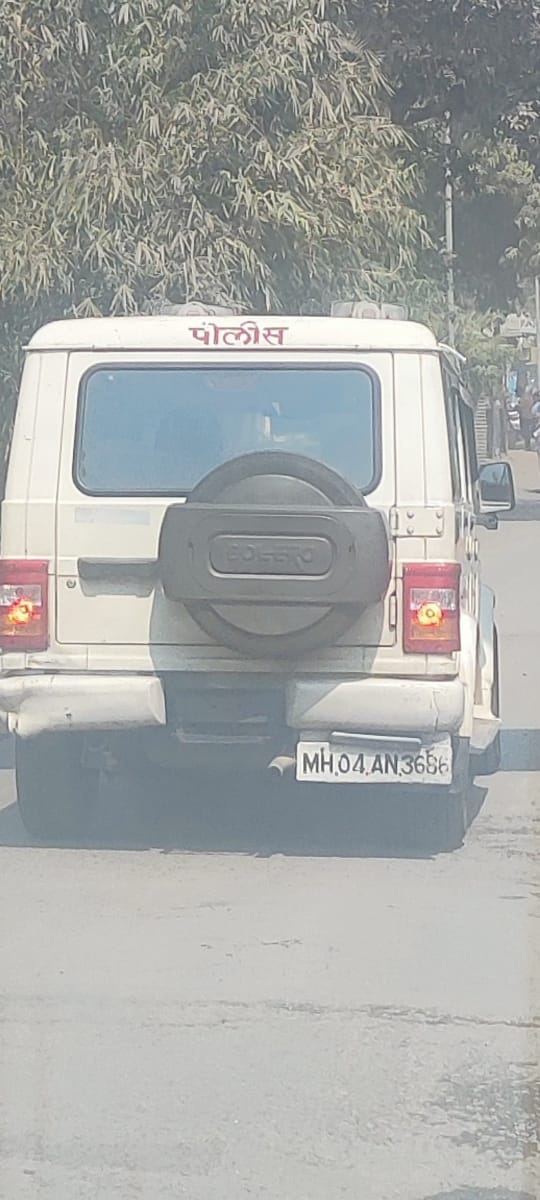
प्रत्येक वाहतूक पोलीसाला दररोज 15 ते 25 पावत्यांचं टार्गेट देणारे पुणे पोलिस आयुक्त साहेब!
सर्वसामान्य पुणेकरांकडून वसुली करताना कायदे दाखवले जातात. अगदी मोटार वाहन कायद्यात आहे नाही तेवढी कलम लावून हजारोंचा दंड केला जातो.
ही गाडी पुणे पोलीस आयुक्त म्हणजे तुमच्याच नावावर आहे. जबाबदार अधिकारी म्हणून अगोदर स्वतःचा कारभार नियमात ठेवणे ही आपली प्राथमिक जबाबदारी आहे. कारण आपण जनतेला नियम दाखवत असतो.
या गाडीचा इन्शुरन्स 2024 मध्ये संपलेला आहे. नंबर प्लेट अस्पष्ट आहे. आकड्यांची खाडाखोड झालेली आहे. मोटार वाहन कायद्यानुसार विविध कलमान्वये या गोष्टी दंडणीय अपराध आहेत.
आरटीओ आणि वाहतूक पोलीस यांनी तातडीने या गाडीवर विहित कलमान्वये कारवाई करून त्याच्या पावत्या जाहीरपणे येथे शेअर कराव्यात. जनतेला ही कळायला हवं कायदा सर्वांना समान असतो. Waiting.....
@CPPuneCity@PuneCityPolice@PuneCityTraffic@RtoPune@DGPMaharashtra@Dev_Fadnavis@CMOMaharashtra
@Mahindra_Auto@anandmahindra I need urgent help regarding my XUV 3XO purchased in Pune. The vehicle has had major safety & electrical failures for months. Service centers in Pune have not diagnosed or fixed anything. This is now a genuine safety risk for my family. A 🧵
A Heartfelt Tribute to Parag Parikh: Bharat’s Value Investing Legend.
@npparikh6@PPFAS@ActusDei
Ten years ago today, on May 3, 2015, Bharat lost a guiding light in the world of finance—Parag Parikh, the pioneer of value investing, who left us too soon in a tragic car crash in Omaha, USA.
His story is one of wisdom, humility, and a relentless passion for empowering the common investor. Here’s an emotional journey through his life.
1. The Humble Beginnings:
Parag Parikh, born in Mumbai, stepped into the chaotic world of Dalal Street in 1979 as a sub-broker.
Guided by his mentor, Chandrakant Sampat, he chose a path less traveled—value investing. Unlike the tip-driven frenzy of the time, Parag believed in research, patience, and buying businesses, not just stocks. His heart was set on creating wealth with integrity.
2. A Rebel with a Cause:
In the 1990s, when foreign investors flooded India post-liberalization, Parag stood out. His firm, Parag Parikh Financial Advisory Services (PPFAS), was among the first to offer detailed research reports, earning respect from global giants like Julian Robertson.
He wasn’t just a broker; he was a visionary who challenged the status quo.
3. The Contrarian Spirit:
Parag’s conviction was his superpower. During the dotcom boom, he shunned overhyped tech stocks, earning both critics and admirers. “En vazhi thani vazhi” (my way is a different way), he lived this Tamil proverb, proving that patience and discipline could outshine market mania.
His courage inspired a generation.
4. A Teacher of Behavioral Finance:
Parag wasn’t just an investor; he was a scholar of human emotions.
His books, Stocks to Riches and Value Investing and Behavioral Finance, became bibles for Indian investors.
He taught us to conquer fear and greed, urging us to wear a “cloak of patience.”
His words still echo in our hearts.
5. Building PPFAS AMC:
In 2013, Parag launched PPFAS Mutual Fund with a single scheme—PPFAS Long Term Value Fund.
He wanted every Indian, not just the elite, to access wealth creation. “I don’t want to market my fund; I want people to buy it,” he said.
His fund was his baby, built on trust and transparency.
6. Skin in the Game:
Parag practiced what he preached. He invested his own money in his fund, as did his employees. “How can we ask others to invest if we haven’t?” he asked.
This wasn’t just business; it was a moral code. His integrity made investors feel safe, like family.
7. The Omaha Pilgrimage:
A devout follower of Warren Buffett, Parag traveled to Omaha annually for Berkshire Hathaway’s shareholder meetings.
In a cruel twist of fate, it was in Buffett’s hometown, on May 3, 2015, that a car crash took him from us. He was 61, leaving behind his wife, Geeta, and sons, Neil and Sahil.
8. A Legacy in Mourning:
The news shook India’s investing community. “We’ve lost an original thinker, a contrarian investor, and a good human,” tweeted Nirmal Jain.
Parag’s death, just months after his mentor Sampat’s passing, felt like the end of an era. Yet, his philosophy lived on through PPFAS.
9. Neil Carries the Torch:
At 32, Neil Parikh faced the daunting task of filling his father’s shoes. With assets dipping to ₹450 crore, doubts loomed.
But Neil, fueled by Parag’s vision, grew PPFAS to ₹90,000 crore by 2024. Every rupee managed reflects Parag’s timeless wisdom. “He lives in our hearts,” Neil says.
10. Parag’s Eternal Lesson:
Today, as we mark a decade without Parag, his voice still guides us: “Investment success comes from following the emotionally difficult path.” Let’s honor him by investing with patience, humility, and courage.
Share his story, read his books, and keep his legacy alive. RIP, Parag Parikh. 🙏
My regards to this legend.🙏
https://t.co/1lMo87OZ3H
पुणे मेट्रो प्रकल्पाचा पहिला टप्पा पूर्ण झाला असून या टप्प्यातील सर्व मेट्रो स्थानके ही प्रवासासाठी खुली करण्यात आली आहेत. पेठ भागाला डेक्कन जिमखाना मेट्रो स्थानकाशी जोडणाऱ्या पादचारी पुलाच्या कामासाठी सुरक्षिततेच्या दृष्टीने भिडे पूल हा २० एप्रिल (रात्री १२ वाजेपासून) ते ६ जून २०२५ पर्यंत वाहतुकीसाठी बंद राहणार आहे.
भिडे पूल बंद असताना नागरिकांनी पर्यायी मार्गांचा अवलंब करावा. पुणेकरांच्या गैरसोयीबद्दल पुणे मेट्रो दिलगीर आहे.
#PuneMetro #DeccanGymkhana #BhideBridgeClosure #TrafficUpdate #InfrastructureWork #MetroConnectivity #SmartCityPune #SafeTravel
Today @BJP4India has proven that it really is a conservative party. Reducing taxes across all, growth, inflation control and fiscal conservatism. Took 10 years to do all, but it happened.
Absolutely agree! As someone with a bit of OCD, I find tasks like cleaning code, organizing jobs, or renaming output tables oddly therapeutic.
Those ‘mundane’ tasks aren’t so bad—they bring satisfaction and help reset my mind for the bigger challenges
We’re all chasing high-value, strategic work. But what happens when AI takes over all the mundane tasks?
Every task requires deep thinking. No mental breaks.
Maybe a little mindless, repetitive work wasn’t so bad after all.
#FutureOfWork#AIandAutomation#CognitiveFatigue